

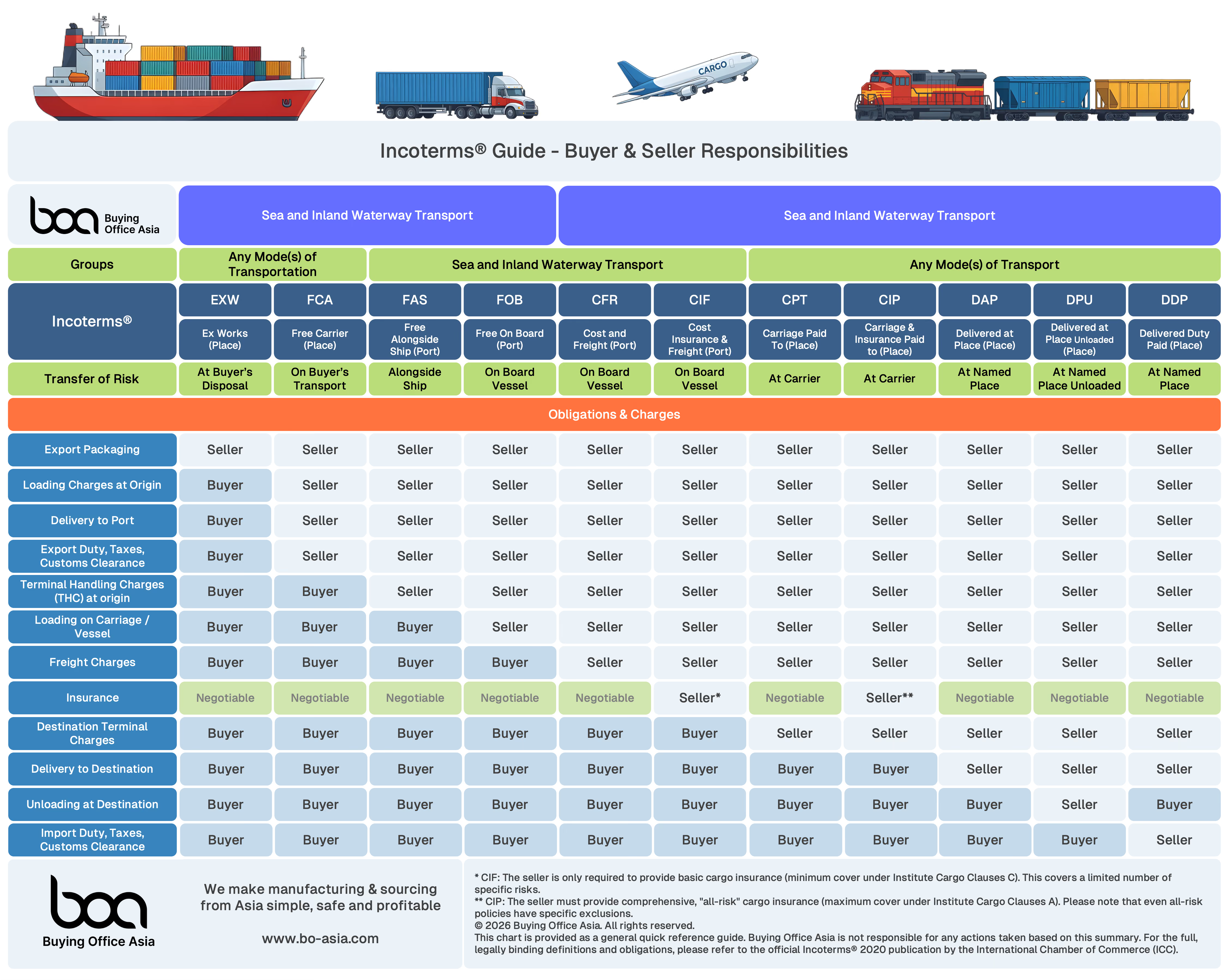
We frequently receive questions about Incoterms and how to handle shipping when sourcing from China and Asia. This page is here to answer those typical questions and outline exactly what you need to know to make your supply chain profitable and secure.
In this guide, we will cover:
Incoterms (short for International Commercial Terms) are a set of globally recognized rules published by the International Chamber of Commerce (ICC). They define the exact responsibilities of buyers and sellers in international trade.
Whenever you agree to a contract with a manufacturer, the chosen Incoterm will clearly state three main things:
It is important to note what Incoterms do not cover. They do not determine when the ownership of the goods transfers to you, and they do not dictate the payment terms of your transaction.
In our experience, roughly 50% of clients request EXW or FOB terms, while the other half typically asks for CIF, DDU, or DDP. Other terms are quite rare in this specific business sector. Here is a breakdown of these main terms.

FOB (Free on board)
This is arguably the most common term used when importing from China. Under FOB, the seller is responsible for all costs and risks up to the point where the goods are loaded onto your chosen vessel at the port of origin (for example, FOB Shenzhen). You have excellent control over the main freight costs and transit times because you choose the freight forwarder.
EXW (Ex works)
With EXW, the seller simply makes the goods available at their factory or warehouse. You are responsible for absolutely everything else, including loading the truck, export customs clearance, and all shipping. This term gives you total visibility into the true cost of the product without any hidden local transport markups.
CIF (Cost, insurance, and freight)
Under CIF, the seller pays for the freight and basic insurance to bring the goods to your destination port. However, the risk transfers to you as soon as the goods are loaded onto the ship in Asia.
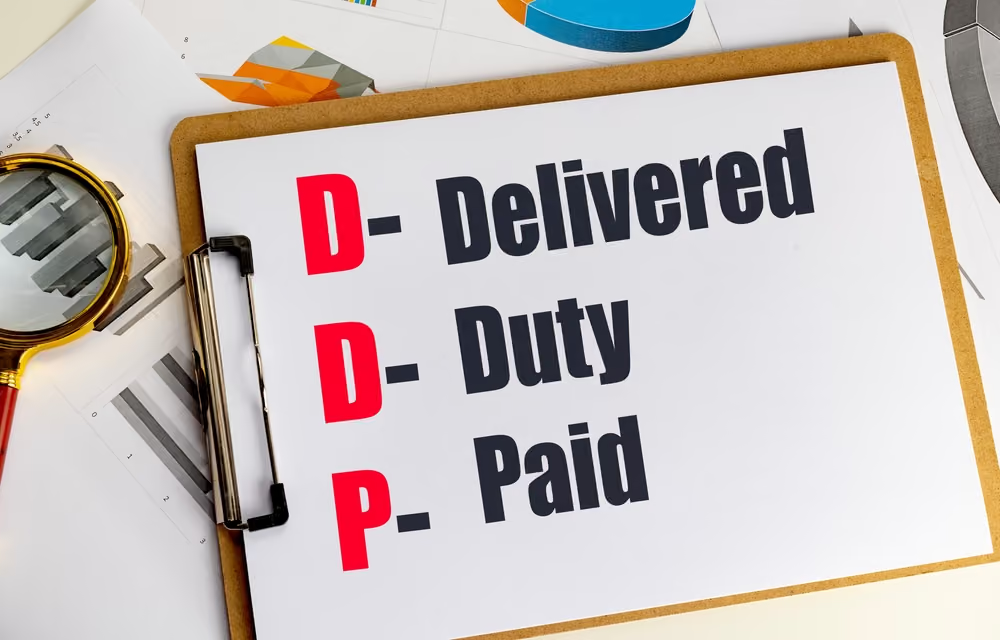
DDP (Delivered duty paid) and DDU (Delivered duty unpaid)
DDP represents maximum responsibility for the seller. They handle all costs, risks, freight, import duties, and final delivery to your warehouse door. DDU is very similar, but the buyer is responsible for paying the import duties and taxes upon arrival. (Note: DDU was officially replaced by DAP in the 2010 Incoterms update, but DDU is still widely used in daily factory negotiations).
When you ask a manufacturer for a standard DDP price, the seller takes on a significant amount of liability. Because they are responsible for end-to-end delivery, customs clearance, and potential delays, they will naturally add a heavy "risk margin" to the product price to protect themselves. Furthermore, if tariffs change unexpectedly, standard DDP contracts often exclude these changes anyway unless the factory has charged an incredibly high premium upfront.
To keep prices as low as possible for our clients, Buying Office Asia takes a different approach. Even when a client wants a fully managed, hands-off delivery (a DDP arrangement), we structure the purchasing differently.
We buy the goods from the manufacturers under EXW or FOB terms. This allows us to secure the absolute lowest, true factory price for the products because the seller does not have to price in any logistics risks. We then arrange the shipping, customs, and delivery separately, charging the client strictly based on actual costs.
This means you receive a seamless, "DDP-like" or "CIF-like" service, but you only pay the real cost of freight and duties, completely avoiding the manufacturer's inflated risk margins. In the long term, this is by far the most cost-effective way to manage procurement, even though the client retains the responsibility for actual tariff costs.
For clients importing into the United States, we employ highly effective, legally compliant strategies to drastically reduce the impact of tariffs.
Instead of the standard import process where tariffs are calculated based on the final, marked-up price paid by the US buyer, Buying Office Asia helps structure the transaction so the goods are imported using the manufacturer's internal pricing.
By utilizing legal customs valuation methods, we ensure the tariff is calculated on the much lower factory-gate value rather than the final retail or wholesale value. This completely legal mitigation strategy can sometimes reduce the final tariff burden to around 20% of what it would normally be under a standard purchasing arrangement.
When you are aiming for rapid growth and profitability, logistics cannot be an afterthought. Keep these insights in mind during your negotiations.
Beware of the CIF scams
Many new buyers are tempted by CIF or similar terms directly from manufacturers because the initial quotes look incredibly cheap. However, there are risks to be avoided. Sellers often get kickbacks from freight forwarders in Asia. When the goods arrive at your destination port, the local agents may hit you with massively inflated destination and handover fees before releasing your cargo. If transparency is important to you, FOB is usually a much safer and more predictable choice.
Always be specific with locations
Never just write "FOB." Always name the exact port or location, such as "FOB Ningbo" or "EXW Guangzhou." This removes any ambiguity about where the transfer of cost and risk happens.
Do not forget about insurance
Unless you are using CIF or CIP, insurance is generally negotiable or the buyer's responsibility. Cargo gets damaged, dropped, and delayed. Always ensure your goods are covered by a comprehensive policy once the risk transfers to you.
Setting up a reliable supply chain in Asia requires careful attention to detail, from vetting the right manufacturers to negotiating the most favorable commercial terms. Missteps in choosing the right Incoterms can lead to unexpected costs and delays that hurt your bottom line.
If you are looking for direct access to Asian manufacturers but want to avoid the complexity, hidden markups, and lack of transparency of traditional trading companies, we are here to support you. We act as your dedicated procurement team on the ground, ensuring your sourcing operations are transparent, highly cost-effective, and fully optimized.
Contact us today to discuss how we can streamline your manufacturing and sourcing from Asia.

If your current sourcing agent claims their services are free, you're likely paying a hidden tax of 10% to 30% through inflated unit prices and factory kickbacks. This lack of transparency doesn't just erode your margins; it creates a dangerous barrier between you and the factory floor. Finding a re...
A perfect golden sample is often the most dangerous document in your supply chain. If a prototype is handcrafted by a master technician rather than built using scalable factory processes, your sample development phase isn't a success; it's a liability. This gap between a one-off masterpiece and a hi...
Scaling production to millions of units isn't a purchasing task; it's a high-stakes risk management discipline where a single percent of quality fade can liquidate your annual margin. You likely understand that the leap from mid-scale orders to massive procurement runs often exposes cracks in even t...