


Why are 68% of international brands still losing up to 12% of their annual margins to "quality fade" during mass production? You've likely felt the frustration of receiving a perfect sample, only to find the bulk order doesn't meet the same standard. Managing oem manufacturing from a different time zone shouldn't feel like a gamble with your brand's reputation. You know that relying on opaque middlemen or remote sourcing often leads to hidden costs and a total lack of transparency with factory-direct pricing. Stop leaving money on the table because of unmanaged supply chains.
It's exhausting to wake up to production delays that could've been prevented by an on-site presence. We agree that you deserve the same level of oversight that large corporations enjoy. This guide will help you master the complexities of the OEM lifecycle so you can reduce costs and protect your IP with confidence. You'll learn to identify the right model between OEM and ODM while establishing a secure, transparent supply chain that makes global production simple, safe, and profitable. We're moving past the traditional agent model to give you the local expertise required for 2026.
• Navigate the strategic transition from low-cost labor to high-value production hubs to maintain your competitive edge in the 2026 Asian landscape.
• Determine if oem manufacturing or ODM is the superior path for your brand by weighing total product uniqueness against speed-to-market demands.
• Safeguard your investment by mastering the critical sampling phase, ensuring your project transitions seamlessly from prototype to mass production without technical delays.
• Stop leaving money on the table by identifying the hidden margins of traditional agents and professionalizing your procurement through transparent, on-site factory management.
• Implement a "simple, safe and profitable" production model that protects your intellectual property while providing the oversight of a dedicated, local sourcing team.
The global trade environment in 2026 demands more than just a supplier; it requires a strategic production engine. At its center lies oem manufacturing, a model that has evolved from simple assembly to a high-tech partnership. An Original Equipment Manufacturer (OEM) is a company that produces goods or components that are then purchased by another company and retailed under that purchasing company's brand name. This isn't about buying off-the-shelf items. It's about translating your proprietary designs into physical reality through a factory partner's specialized infrastructure.
The relationship is built on a clear division of labor. You, the brand owner, control the intellectual property, marketing, and customer experience. The factory partner provides the floor space, labor, and technical expertise to execute your vision. This model is the preferred choice for companies scaling custom products because it offers total control over product specifications without the burden of factory ownership. While white-labeling involves placing your logo on a generic product that 50 other brands might also sell, oem manufacturing ensures your product is unique to your brand. This distinction prevents the "race to the bottom" on price and protects your market share from competitors selling identical items.
The process begins with the flow of intellectual property. You provide detailed CAD files, material specifications, and quality benchmarks. The factory then sources specialized components, often from a network of sub-suppliers, to complete the final assembly. This ecosystem allows for granular control over every screw, circuit, and fabric choice. OEM is a partnership where the factory builds to your exact specs. By 2026, this flow is increasingly managed through transparent, cloud-based PLM (Product Lifecycle Management) systems that allow for real-time adjustments to production runs.
Building and maintaining a private factory is a massive financial liability. By utilizing oem manufacturing, you reduce capital expenditure on machinery and infrastructure by up to 65% compared to in-house production. This liquidity allows you to focus internal resources on R&D and aggressive marketing strategies. You aren't just buying a product; you're buying access to regional material clusters. For example, sourcing electronics from the Pearl River Delta or textiles from specialized zones in Vietnam gives you an immediate logistical advantage.
You tap into a workforce already trained in specific technical disciplines.
Factories located near raw material sources reduce your lead times by 15% to 20%.
You can ramp up production for seasonal peaks without hiring or firing staff yourself.
Working with a dedicated sourcing team ensures you stop leaving money on the table through opaque middlemen. We provide the on-site oversight that large corporations enjoy, making your supply chain simple, safe, and profitable. This professional rigor prevents reputational damage and ensures that your 2026 production targets are met with surgical precision.
By 2026, the era of chasing the absolute lowest labor cost has ended. Successful brands now prioritize high-value hubs that offer technical sophistication for their oem manufacturing needs. Mainland China remains the powerhouse for complex electronics and machinery, while Vietnam and India have captured 22% of the global footwear and basic electronics assembly market as of late 2024. Hong Kong continues to serve as the critical nexus. It provides the legal and financial infrastructure that protects your capital while you manage production across borders.
ESG compliance isn't a "nice-to-have" anymore. It's a hard requirement for entry into European and North American markets. If your factory doesn't meet these standards, your goods won't clear customs. This shift forces a move away from the "black box" sourcing model where you don't know who is actually making your product. You need to know your factory's energy source and labor practices to avoid catastrophic reputational damage.
Mainland China is evolving. It's no longer for simple plastic toys; it's the center for high-end oem manufacturing in sectors like renewable energy and robotics. Vietnam offers a strategic alternative for labor-intensive goods, but you'll face infrastructure bottlenecks that require local oversight. India's production capacity has grown by 12% annually since 2022, particularly in the Automotive Industry Supply Chain. You need a physical presence in these markets to navigate local regulations and sudden trade shifts. Remote management is a recipe for disaster.
Navigating local regulations requires more than a Zoom call. In 2026, trade barriers can shift in 48 hours. Having boots on the ground means you can pivot production or adjust logistics before your competitors even realize there's a problem. It's about being proactive rather than reactive.
The old model of using agents who take hidden margins is dying. In 2026, you should demand 100% transparency. This means knowing the exact cost of raw materials and the factory's actual profit. Hidden kickbacks can inflate your costs by up to 20% without you ever knowing. You'll stop leaving money on the table when you treat your supply chain as an open book. If you want to secure your production, it's time to build a dedicated sourcing team that works for you, not the factory.
On-site inspections are the only way to prevent "Quality Fade," where a factory slowly swaps out high-quality components for cheaper ones during a long-term contract. We've seen cases where material substitutions reduced product lifespan by 30% in just six months. Digital transparency tools now allow for real-time reporting, but they don't replace physical verification. You need someone in the factory to ensure that what you see on your dashboard matches the reality on the assembly line.
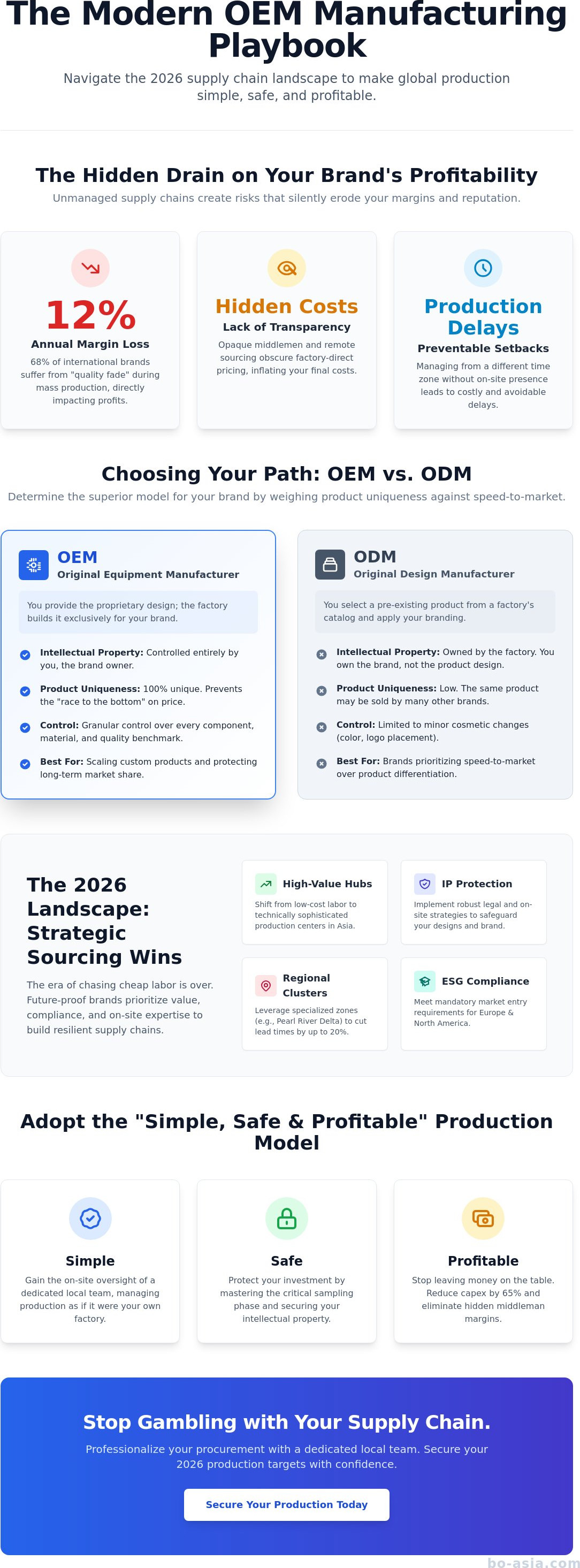
Deciding between these three models isn't just a logistical choice; it's a financial strategy. You're either buying speed or buying a competitive moat. Contract manufacturing serves as the broad category for hiring a factory to handle production, but the level of involvement dictates your long-term profitability and IP safety. Most brands fail because they choose the wrong path for their specific stage of growth, leaving money on the table through inefficient R&D or unprotected designs.
ODM allows you to select a pre-existing design from a factory and apply your branding. It’s the fastest route to market. In 2024, supply chain audits showed that ODM projects reached the shipping phase 40% faster than custom builds. You leverage the factory’s existing R&D, which eliminates the need for expensive prototyping. However, you sacrifice exclusivity. If the factory owns the design, they can sell a nearly identical version to your competitor. This model is ideal for rapid product testing or startups that need to prove a concept before committing to heavy investment.
True oem manufacturing requires you to provide the specifications and own the design from the ground up. This is where you gain total control over product uniqueness. The defining feature is custom tooling. You invest in proprietary molds and dies that belong strictly to your company. This creates a "moat" around your brand that generic competitors can't cross.
According to 2025 procurement benchmarks, brands utilizing proprietary tooling see 22% higher customer retention because the product cannot be easily replicated by generic sellers. You must ensure your local team verifies the physical location and condition of these molds regularly. Without on-site oversight, your custom tooling might be used during "ghost shifts" to produce unauthorized stock for the local market. Protecting these assets at the factory level is a non-negotiable step for any serious brand owner.
Think of contract manufacturing as the broader framework for diverse production needs. It often involves sub-assembly where a factory integrates components sourced from multiple vendors. It’s about scale and cost-efficiency. By 2026, the global contract manufacturing market is projected to reach $2.7 trillion, driven by brands seeking to decentralize their production.
Best for "Simple" market entry with low upfront costs.
Essential for "Safe" IP protection and "Profitable" long-term differentiation.
Ideal for complex products requiring multi-stage assembly.
Your choice depends on your budget for custom tooling versus your need for speed. If you don't own the mold, you don't own the product. We help our clients navigate these choices to ensure their supply chain remains transparent and their margins stay protected from opaque middlemen.
Successful oem manufacturing requires a disciplined transition from design theory to tangible output. This lifecycle is a high-stakes sequence where 65% of project failures occur during the sampling phase due to misaligned technical expectations. You cannot manage a production line effectively from a laptop thousands of miles away. You need eyes on the factory floor to ensure that the 10,000th unit matches the precision of the first. Establishing rigid Quality Control (QC) benchmarks before the assembly line moves is the only way to protect your margins and your reputation.
Managing the transition from small-batch testing to high-volume output is where most brands lose control. Scaling introduces variables that don't exist during prototyping, such as material consistency and worker fatigue. We mitigate these risks by implementing a "First Article Inspection" protocol. This ensures that mass production only begins once the factory proves it can maintain quality at speed. By removing the guesswork, we turn a complex overseas venture into a simple, safe and profitable operation.
Stop relying on digital reviews or "Gold Supplier" badges. These are often paid marketing tools rather than indicators of operational excellence. A physical on-site audit is the only way to verify a factory's true capacity. We verify business licenses and export permits against 2024 local government databases to ensure your partner is legally compliant. Our team assesses technical capability by inspecting machinery maintenance logs and staff turnover rates. If a factory can't demonstrate a clean 2025 ISO 9001 certification, they aren't equipped to handle your oem manufacturing needs.
The Golden Sample is your legal and quality anchor. It's the definitive reference for every QC check performed during the run. Once tooling is finalized, on-site inspections during the first 10% of production prevent catastrophic waste. We don't wait for the goods to reach the port to find a defect. We identify issues while they are still fixable on the factory floor. This level of oversight eliminates the 15% surcharge often hidden in the "all-in" quotes provided by opaque middlemen. Your logistics and shipping coordination are handled with the same rigor, ensuring high-volume orders move through customs without the typical 2026 compliance delays.
Don't leave your production quality to chance or remote promises. Secure your supply chain with our on-site factory audits and dedicated local oversight.
Traditional commission-based agents often present a facade of cost-effectiveness, yet their incentives rarely align with your bottom line. They frequently collect fees from both the buyer and the factory, creating a fundamental conflict of interest. This lack of transparency means you're likely paying hidden margins that can inflate your landing costs by 10% to 20% without your knowledge. To secure your oem manufacturing strategy for 2026, you must transition from "using an agent" to "owning the process" through a dedicated procurement partner.
Relying on remote sourcing in a volatile market is a recipe for instability. When you don't have a physical presence at the factory, you lose the ability to course-correct in real time. Professionalizing your supply chain means moving away from the frantic energy of reactive sourcing and toward the steady confidence of managed production. It's about building a system that is simple, safe, and profitable.
Many brands learn too late that "cheap" sourcing is an expensive illusion. When you rely on remote communication, you risk a 12% increase in production delays due to misaligned specifications or cultural misunderstandings. Professional procurement services provide a measurable ROI by eliminating these inefficiencies before they reach your warehouse. On-site presence is the only way to prevent costly recalls and protect your brand reputation. Our rigorous compliance checks ensure your supply chain meets 2026 ESG standards, keeping you ahead of shifting global regulations. Stop leaving money on the table by ignoring the hidden costs of unmanaged production.
We provide a European-managed advantage that combines high-level corporate consulting with deep local expertise. Buying Office Asia functions as your internal team, not an opaque middleman. We ensure factory-direct pricing with zero hidden markups, giving you total control over your oem manufacturing margins. This approach transforms a complex global market into a streamlined operation where you hold the power. By acting as your shield against production risks, we allow you to focus on scaling your brand while we handle the technical rigors of the factory floor. Take the first step toward total transparency and schedule a consultation with our sourcing experts today.
View every factory invoice and contract with zero hidden "kickbacks."
Manage your production schedule with real-time updates from on-site inspectors.
Protect your intellectual property with legally binding local agreements.
Reclaim the margins previously lost to traditional commission agents.
Success in 2026 requires moving beyond basic sourcing to a professionalized management model. You've seen how the distinction between oem manufacturing and contract production directly impacts your long-term margins. The 2024 Global Sourcing Report indicates that 72% of companies are now prioritizing supply chain visibility to combat rising operational costs. To stay competitive, you must bypass opaque middlemen and secure direct factory relationships that protect your bottom line. Don't leave your brand's reputation to chance by relying on remote agents who hide their margins behind complex layers.
Buying Office Asia acts as your dedicated on-site partner. We're a European-managed firm with established offices in Hong Kong and Helsinki, providing the local oversight you lack. We ensure 100% transparency with factory-direct pricing and deploy dedicated on-site quality control teams to verify every shipment. It's time to stop leaving money on the table and start building a supply chain that's simple, safe, and profitable.
Secure your supply chain with Buying Office Asia’s end-to-end procurement
Your path to a more resilient and transparent production cycle starts today.
OEM manufacturing involves producing goods based on your specific designs and blueprints, while ODM uses the factory's existing product designs. In an OEM arrangement, you retain full ownership of the intellectual property and technical specifications. According to WIPO data, owning your designs is vital for long-term brand equity. We ensure your custom specifications are met exactly, giving you total control over the final product's functionality and market position.
You protect your IP by using NNN agreements that are enforceable in the local courts where your factory operates. Standard western NDAs aren't enough in markets like Vietnam or China. Our on-site team ensures your designs stay within the designated facility to prevent unauthorized production. We act as your shield against the "back-door" sales that plague 15% of unmanaged production lines according to industry trade reports.
Working directly with an OEM manufacturer through a dedicated buying office is significantly cheaper than using traditional sourcing agents who hide their margins. Traditional agents often add a 5% to 15% markup on unit prices without your knowledge. We provide total transparency with direct factory billing and a flat service fee. You pay the actual production cost, which eliminates the opaque middlemen that cause you to leave money on the table.
Typical Minimum Order Quantities for OEM projects generally range from 500 to 1,000 units depending on your specific product category. For complex electronics, MOQs often start at 1,000 units to cover the specialized setup costs. Simple textile items usually require 500 pieces per color. We negotiate these thresholds directly with factory owners to align with your 2026 growth targets. This ensures your capital isn't tied up in excess inventory.
You verify a factory's legitimacy by conducting a physical site inspection and checking their business license against local government records. Never pay a deposit based on a professional website alone. We verify the Unified Social Credit Code in China or the Business Registration Certificate in Vietnam. Our local teams visit the facility to confirm the machinery and workforce actually exist. This step prevents the 10% of fraud cases reported annually in international trade.
A factory audit is a formal assessment of a supplier's quality systems, production capacity, and ethical compliance. It's necessary because it identifies operational risks before they become expensive failures. We use ISO 9001 standards to evaluate the shop floor and management processes. An audit ensures the factory can meet your 2026 volume requirements. Without this oversight, you risk production delays and reputational damage from poor working conditions or substandard materials.
Buying Office Asia handles quality control by placing our own inspectors on the production line at three critical stages. We perform Initial Production Checks, During Production Inspections, and Final Random Inspections using AQL standards. Our team catches defects before the goods leave the factory floor. This on-site presence ensures your shipment is simple, safe, and profitable. You get the same level of oversight that large corporations enjoy without the high overhead.
You can move your tooling if your contract explicitly states that you own the molds and they're clearly tagged with your company name. We ensure your tooling is registered as your asset during the initial setup phase. If a supplier fails to meet 2026 performance KPIs, we physically retrieve the molds for transfer. This prevents "hostage tooling" situations. Having a local team on the ground makes this transition seamless and protects your technical investment.
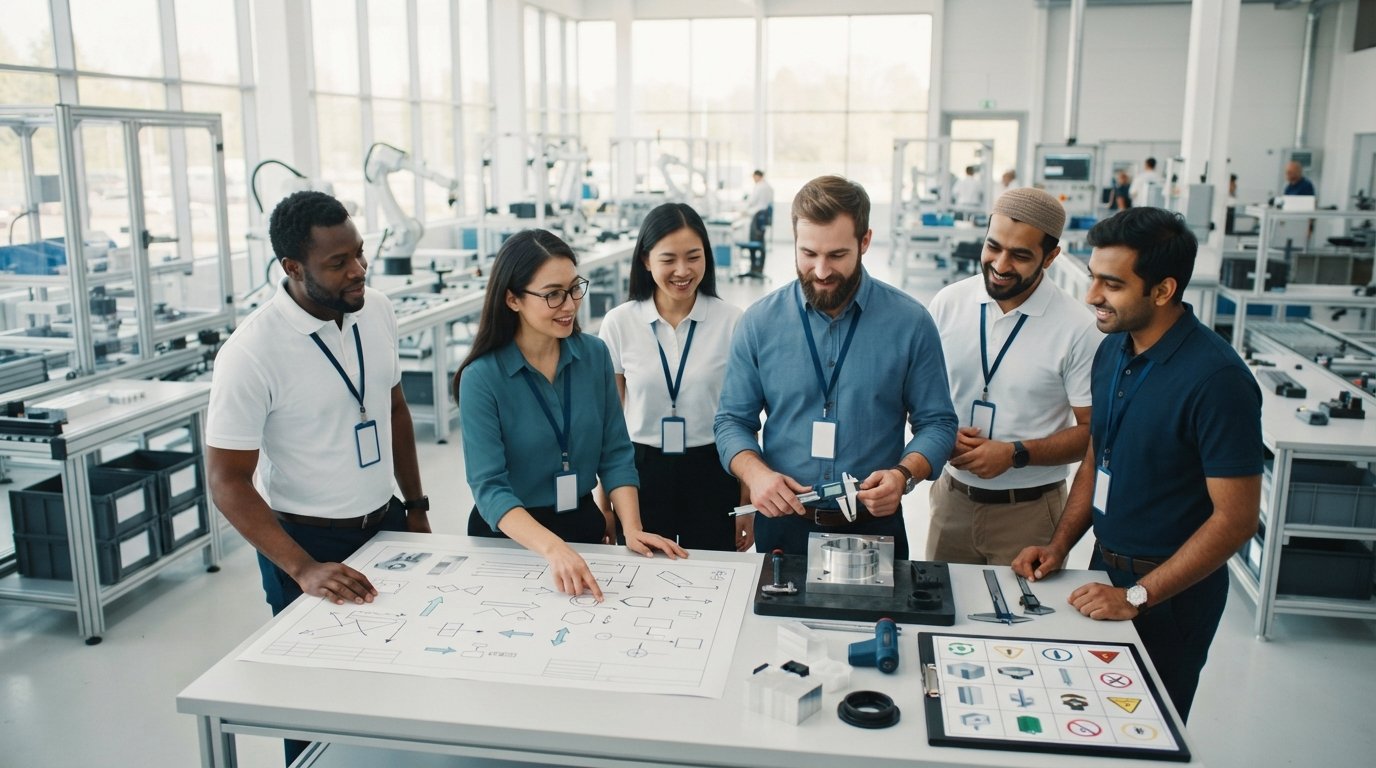
A technical drawing isn't just an engineering reference; it's your primary legal baseline against cost-driven supplier compromises. When sourcing abroad, vague manufacturing product specification sheets inevitably invite unauthorized material substitutions, delayed timelines, and sudden quotation in...
The traditional commission-based sourcing agent in India is no longer an asset; they're often your greatest financial risk in a market rapidly scaling toward a $2 trillion export target. You likely recognize the inherent conflict when an agent's income rises alongside your factory costs, or the anxi...

If your current sourcing agent claims their services are free, you're likely paying a hidden tax of 10% to 30% through inflated unit prices and factory kickbacks. This lack of transparency doesn't just erode your margins; it creates a dangerous barrier between you and the factory floor. Finding a re...