


That "factory-direct" shipping quote you just received likely includes a 20% to 40% markup hidden in the fine print of your landed costs. It's a common trap. Many importers believe they're saving time by letting the manufacturer handle logistics, only to realize they've surrendered control over both their budget and their cargo's safety. Truly understanding incoterms for shipping from Asia is no longer just a clerical task. In a 2026 market where spot rates have surged by nearly 100% since February, these terms are your most effective tool for financial defense.
We understand the anxiety that comes with unexpected port fees and the confusion of where your liability actually begins. This guide will help you master the operational impact of Incoterms 2020 to ensure you aren't overpaying for "convenience" in a volatile shipping environment. You'll learn how to secure lower landed costs, gain full visibility into the transit process, and establish ironclad legal protection against cargo damage. We'll examine the strategic shift toward terms that offer better oversight, ensuring your procurement strategy remains a stabilizing force for your business growth.
• Learn how strategic selection of Incoterms 2020 acts as a financial defense against the 15-20% cost increases often caused by unmanaged logistics.
• Evaluate the "Big Three" terms—FOB, EXW, and DDP—to find the optimal balance between operational control and risk management for your specific business model.
• Uncover the hidden risks of the "CIF Trap" and understand why factory-managed shipping often leads to obscured margins and reduced cargo visibility.
• Apply a rigorous 5-step framework for understanding incoterms for shipping from Asia to calculate true landed costs and protect your bottom line.
• Discover why physical proximity and on-the-ground oversight are essential for turning shipping terms into a measurable strategic advantage in a volatile market.
Incoterms 2020 are far more than just three-letter acronyms on a proforma invoice. They represent the universal language of global trade, defining exactly when risk and cost transfer from the supplier to the buyer. In the high-stakes environment of 2026, where spot rates for a 40-foot container from Shanghai to Los Angeles have reached $4,565, the strategic choice of an Incoterm is a primary driver of your total Cost of Goods Sold (COGS). Choosing the wrong term doesn't just cause confusion. It frequently leads to a 15-20% increase in landed costs due to unmanaged logistics and hidden factory markups.
For businesses manufacturing across Asia, understanding incoterms for shipping from Asia is essential for navigating complex port infrastructures and diverse factory negotiation styles. Without a clear framework, you are essentially allowing the factory to control your margins. Hidden charges, including fuel surcharges that can reach 20% of the base ocean rate, often remain obscured when the supplier manages the freight. This lack of transparency can erode the financial viability of even the most well-negotiated production contracts.
Every procurement decision involves a fundamental trade-off between control and liability. The "Transfer of Risk" point is the moment your factory’s responsibility ends and yours begins. This transition dictates who is financially responsible for freight, insurance, and customs duties. By gaining a deeper level of understanding Incoterms, you can peel back the layers of a supplier's quote to reveal the true factory-direct price. This transparency is the only way to ensure you aren't paying a premium for services you could manage more efficiently with a dedicated partner. It moves the conversation from a simple shipping price to a comprehensive risk management strategy.
The logistics landscape in 2026 has been reshaped by digital documentation and smart container tracking. These technologies provide real-time data, yet the legal foundation remains rooted in the 2020 standards. Additionally, ESG (Environmental, Social, and Governance) factors now influence shipping choices, as buyers seek more carbon-efficient routes. Despite these modern shifts, Free on Board (FOB) remains the gold standard for experienced importers. It provides the ideal balance of control over the main carriage while ensuring the factory handles local export formalities. This approach mitigates the risk of unexpected customs delays and provides better visibility into the shipping process, protecting your brand from the operational setbacks of unmanaged supply chains.
Selecting the right Incoterm isn't an administrative checkbox; it's a strategic procurement decision that directly impacts your bottom line. For high-volume manufacturing across Asia, the choice usually falls between FOB, EXW, and DDP. Each offers a different level of oversight, but they also carry vastly different implications for your final landed cost. As noted in the US International Trade Administration guide, these rules clarify the tasks, costs, and risks associated with the transportation and delivery of goods. Gaining a deep level of understanding incoterms for shipping from Asia allows you to move beyond the surface-level price and see the actual financial structure of your deal.
Free on Board (FOB) remains the preferred choice for professional procurement teams in China and Vietnam. Under these terms, the supplier is responsible for the goods until they are loaded onto the vessel at the port of origin. This includes handling local export licenses and transport to the port. Once the cargo is on the ship, the risk and cost transfer to you. This approach is highly effective because it allows you to maintain control over the freight forwarder and shipping timelines. By managing the main carriage, you ensure the factory isn't adding a 20% to 30% markup to the shipping costs. It prevents the "hidden margins" that often plague CIF or DDP quotes, giving you a clear view of your true factory-direct pricing.
EXW (Ex Works) and DDP (Delivered Duty Paid) represent opposite ends of the control spectrum. EXW places the entire logistics burden on the buyer, starting from the factory door. While this offers the lowest "unit price," it's often a hazard for those without a dedicated regional team. Navigating local export licenses in Asia without on-the-ground support can lead to significant customs delays and unexpected port fees.
DDP is often marketed as the "easy" button, but it's frequently a trap for unmanaged supply chains. When a factory handles everything, you lose visibility into quality control and customs compliance. Furthermore, DDP can complicate VAT and tax reclamation for European or US importers, as the factory may not provide the necessary documentation for your local tax authorities. If you're unsure which term fits your current volume, we can help you analyze your specific shipping lane to find the most cost-effective path that protects your margins and ensures regulatory adherence.
Handing over total control of your logistics to a manufacturer might seem like a way to simplify your operations. In practice, it's often an expensive mistake that erodes your margins and leaves your cargo vulnerable. A deeper level of understanding incoterms for shipping from Asia reveals that terms like CIF (Cost, Insurance, and Freight) are frequently used by factories to obscure their actual margins. Importers often assume that because the factory is handling the insurance, their financial interests are protected. The reality is frequently the opposite. Factories often select the cheapest, least reliable carriers and pocket the difference between the actual freight cost and the "all-in" price they quote you.
When goods arrive wet, broken, or contaminated, the person who holds the contract with the carrier is the one who must fight the insurance claim. Under factory-managed terms, you're often left navigating a complex claim process with a carrier you didn't select, based on a policy you never reviewed. The official Incoterms® rules define the legal responsibilities, but they don't provide the boots on the ground needed to enforce them. Without an on-the-ground presence to verify the transfer of goods at the port, you have very little recourse if the factory claims the damage happened after the risk transferred.
Factories frequently add "administrative fees" to freight quotes that can inflate your costs by 20% to 40% without your knowledge. These hidden charges, coupled with the lack of leverage you have when the factory controls the shipping timeline, can lead to significant budgetary overruns. When you manage the freight under FOB terms, you gain the ability to negotiate directly with carriers and forwarders. This shift in control allows for measurable reductions in annual logistics spend. It also eliminates the frustration of being told your cargo is delayed without having a direct line of communication to the shipping line to verify the status.
There is a critical correlation between your chosen Incoterms and your on-site quality control strategy. Under FOB or EXW terms, the transfer of risk happens early in the process. This means your quality inspections must occur before the goods leave the factory or reach the port of origin. Managing the mass production oversight process in relation to the shipping schedule is the only way to ensure the factory doesn't ship defective goods under the guise of "Seller's Risk." A dedicated procurement team acts as your defense, ensuring that every container is vetted and verified before you legally take ownership of the cargo, protecting your brand from the operational setbacks of unmanaged supply chains.
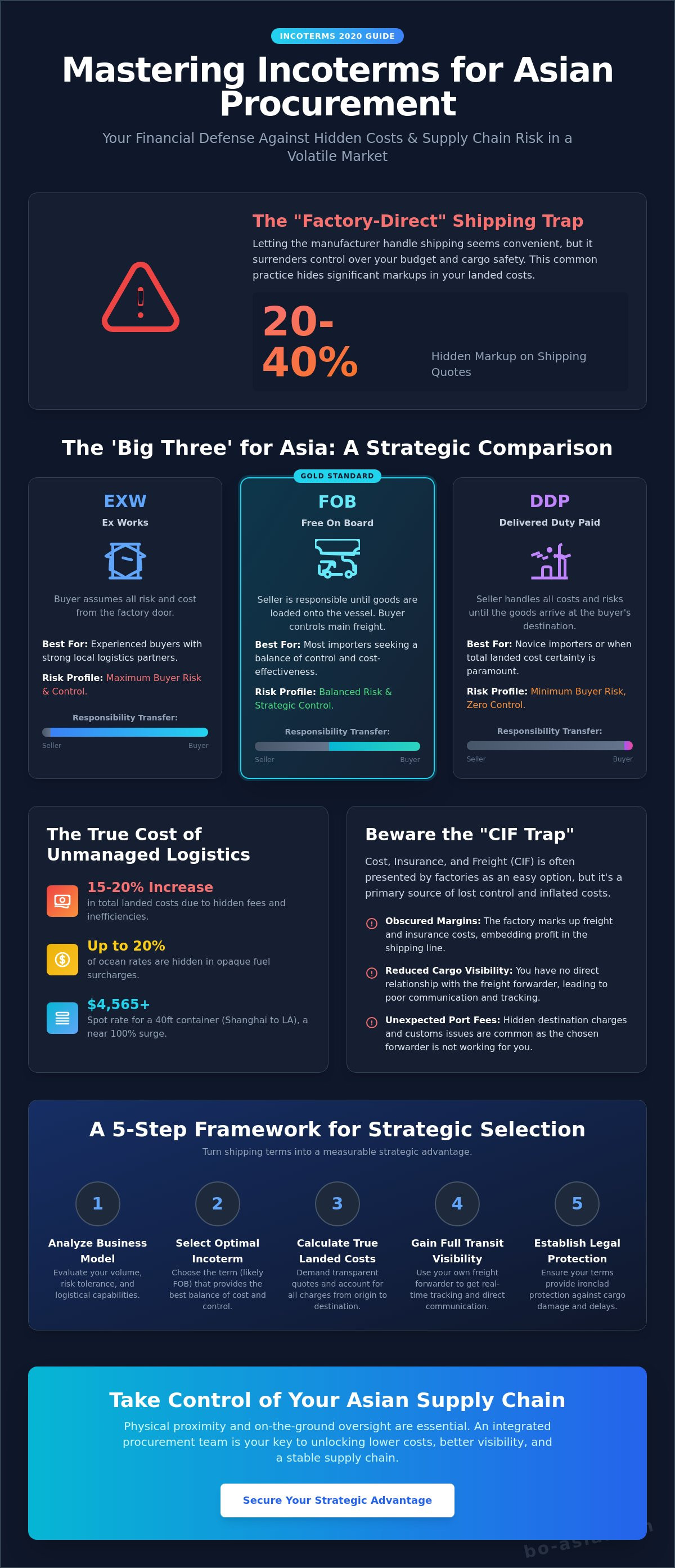
Moving from a theoretical understanding to a practical application requires a structured approach. Selecting the right shipping terms is a core component of your broader sourcing and procurement strategy. It isn't a decision to be made in isolation; it must reflect your operational capacity and your appetite for risk. Use this five-step framework to ensure your logistics choices protect your margins and your supply chain integrity.
Do you have the staff to manage a freight forwarder, or do you need a partner to act as your regional extension?
Don't settle for the unit price. Factor in the 20% to 40% hidden markups factories often apply to shipping and insurance.
A factory might offer a great price but lack the legal permits to export goods from their specific province.
Align your QC schedule so that inspections occur before you legally take ownership of the cargo.
Choose a term that provides the level of transparency and control your business requires to scale.
By following this method, understanding incoterms for shipping from Asia becomes a competitive advantage. You transition from a passive recipient of factory quotes to an active manager of your own financial health.
Your choice of Incoterm should mirror your supply chain maturity. If you're currently managing high-volume orders, you're likely ready to move away from DDP and toward FOB. This shift requires you to manage your own freight forwarder, a task made significantly easier with a dedicated Asia procurement team. For manufacturing hubs located deep inland, such as Chengdu or parts of Northern Vietnam, you might consider DAP (Delivered at Place). This allows the factory to handle the complex inland transit while you maintain control over the international leg of the journey.
Incoterms must be a primary part of your initial Request for Quote (RFQ). Don't wait until the production is finished to decide who pays for the shipping. By demanding a breakdown of costs at the start, you can strip out logistics markups and negotiate factory-direct pricing. Ensure the final agreed terms are clearly stated on the Proforma Invoice and the Bill of Lading. This documentation is your primary defense in customs audits and insurance disputes. If you want to see exactly where your current logistics strategy is leaking profit, request a comprehensive logistics audit from our regional experts.
Incoterms are only as effective as the physical oversight backing them. While the legal definitions provide a framework for responsibility, they don't account for the daily operational realities of Asian ports. In a market where spot rates from Ningbo to Baltimore can reach $5,200 and fuel surcharges fluctuate by 10% to 20%, a hands-off approach to logistics is a recipe for margin erosion. Buying Office Asia manages the entire logistics and shipping coordination process, ensuring that your theoretical "transfer of risk" is a physical reality verified by experts on the ground. We move your operations from transactional shipping to strategic supply chain management, providing 100% transparency with factory-direct terms and no hidden middlemen.
True understanding incoterms for shipping from Asia requires more than a desk in Europe; it requires a physical presence at the point of origin. When a shipment is delayed at a terminal in Shanghai or Ho Chi Minh City, having a team that speaks the local language and understands regional port preferences is the difference between a minor setback and a total supply chain failure. We act as an integrated extension of your team, providing the elite level of oversight usually reserved for major enterprises while remaining focused on your specific growth objectives.
Conventional intermediary models thrive on obscured costs and inefficiency. By utilizing our local offices in Hong Kong and Vietnam, you gain eyes and ears at the port that traditional brokers simply cannot provide. We eliminate unmanaged intermediaries that often layer their own margins on top of already inflated factory shipping quotes. This direct approach ensures that every dollar spent on logistics is optimized for speed and security. To see the measurable impact of this strategy, you can review our Pricing and Savings Examples, which document how transparency in procurement leads to significant bottom-line improvements.
Bridging the gap between European leadership and the reality of Asian manufacturing is a core component of our service. This is particularly vital when managing the complex logistics of OEM/ODM contract manufacturing, where specialized tooling or custom components require precise handling and specific Incoterm applications. We ensure that your strategic intent is never lost in translation, providing a stable defense against the operational risks of unmanaged supply chains. If you are ready to move beyond the anxieties of international shipping and secure your financial viability in 2026, contact Buying Office Asia to optimize your supply chain today.
Logistics in 2026 demands more than just a passing familiarity with trade terms; it requires a rigorous strategy that prioritizes transparency and physical accountability. By moving away from factory-managed shipping and adopting terms that offer greater control, you eliminate the hidden markups that often erode your bottom line. Understanding incoterms for shipping from Asia is the first step toward reclaiming your profit margins and ensuring your cargo arrives exactly as expected. It's about turning a complex logistical hurdle into a measurable financial advantage for your business.
Buying Office Asia acts as your stabilized defense in this volatile market. As a European-managed firm with over 15 years of regional presence, we provide the steady confidence you need to scale your operations safely. We combine factory-direct price negotiations with rigorous on-site quality control to ensure 100% transparency across your entire procurement process. You don't have to navigate these operational risks alone. Take the decisive step to optimize your Asian supply chain with a dedicated procurement team today. Your long-term financial health depends on the strength and reliability of your partners on the ground.
FOB, EXW, and DDP are the primary terms utilized in China. FOB is the gold standard for experienced buyers because it balances local factory responsibility with your control over international freight costs. DDP is common for smaller air shipments but often masks significant markups. Understanding incoterms for shipping from Asia helps you choose the term that protects your specific margin requirements while ensuring the factory handles local export formalities correctly.
No, FOB does not include international shipping. The seller's responsibility ends once the goods are safely loaded onto the ship at the designated port of origin. You must manage and pay for the main carriage, insurance, and all customs duties at your home port. This separation of costs is exactly why professional procurement teams prefer FOB; it allows for direct negotiation with freight forwarders to avoid hidden factory commissions.
The seller handles all customs formalities under a DDP agreement. This includes export clearance in Asia and import clearance in your home country. They are also liable for all duties, taxes, and delivery to your final warehouse. While this simplifies the process for the buyer, it frequently results in a lack of transparency regarding the actual customs values declared and the taxes paid on your behalf, which can lead to regulatory risks.
You can change Incoterms mid-production, but it will necessitate a revised commercial invoice. Any shift in responsibility will change the factory's cost structure. For instance, moving from EXW to FOB means the factory must now account for local trucking and export documentation. It is always more efficient to lock these terms in during the RFQ stage to ensure your initial price negotiations are based on an accurate understanding of the total logistics burden.
EXW is risky because it requires the buyer to handle export clearance in a foreign jurisdiction. Many Asian factories don't have their own export licenses and rely on the buyer to manage these legal requirements. Without a dedicated local team to navigate these regulations, you may face severe delays or legal complications at the port of origin. It effectively leaves you responsible for a process where you have the least amount of control.
FCA is the correct term for air freight, whereas FOB is strictly reserved for sea transport. In an FCA agreement, the seller delivers the goods to a carrier or another person nominated by the buyer at a named place. This is more appropriate for modern logistics where goods are often delivered to a terminal or forwarder warehouse rather than being loaded directly onto a vessel by the factory, providing much-needed flexibility for urgent shipments.
Incoterms dictate who must pay for insurance and the level of coverage required. Under CIF terms, the seller is legally obligated to obtain insurance at their own cost, though this is often only for minimum coverage. When using FOB, the buyer chooses the insurance provider and the scope of the policy. This provides a higher level of protection, as you can ensure the policy covers the full value of your high-volume shipments against potential damage.
No, Incoterms don't govern the transfer of title or ownership. They only define the delivery point, the transfer of risk, and the allocation of costs between the buyer and seller. You must specify when the title transfers, such as upon full payment or upon receipt of the Bill of Lading, within your separate purchase contract. Understanding incoterms for shipping from Asia ensures you don't confuse logistical risk with the legal ownership of your assets. For those who need to manage their own maritime fleet, you can explore Ships sales and purchase with BTR Marine Services LLC.

A supplier listing can open a door, but it can’t show whether a factory is right for your order. Choosing a ningbo sourcing agent means looking beyond access to local suppliers: you need clear oversight of supplier vetting, production follow-up, and quality checks. Without defined responsibilities,...

What if the supplier with the strongest online profile isn’t the factory best suited to your shoes? In footwear manufacturing in China, a directory listing can start your search, but it can’t confirm who will make your product, whether the factory can handle its construction and materials, or how cl...
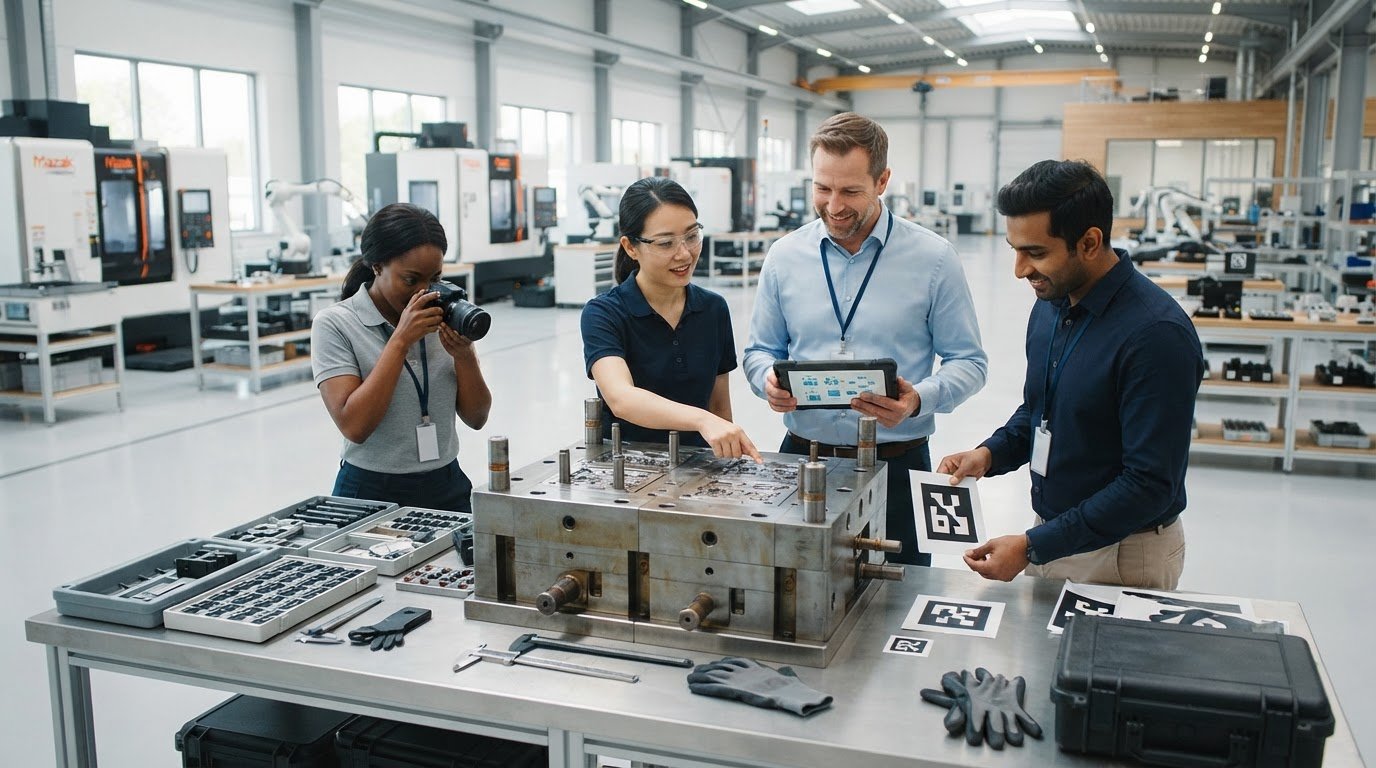
What if the mold you paid to develop couldn’t be released when you needed to change suppliers? Managing tooling and molds with a foreign factory means more than tracking where production equipment is stored. Payment alone may not establish clear ownership, access, or transfer rights. Without visibil...