


What can a showroom tell you about a supplier that a walk through the production floor cannot? Knowing how to prepare for a factory visit in Asia helps you look beyond polished presentations and assess whether the factory’s people, processes, and quality controls support the claims made during supplier discussions. With limited time on site, an unfocused visit can leave you with impressions but little evidence to guide a decision.
A factory visit can help clarify production capability, quality procedures, and how your product requirements will be handled. To get useful answers, arrive with a focused agenda and know what you need to observe, not just what you need to ask. This guide explains how to prepare your questions and product requirements, assess production and quality processes using visible evidence, and document findings while you’re on site. You’ll also learn how to assign owners and set clear follow-up actions, so the visit becomes a practical part of supplier evaluation rather than a one-off meeting.
• Set a clear decision objective for the visit so you can evaluate the operational claims that matter to your sourcing plan.
• Learn how to prepare for a factory visit in Asia with a focused product brief, agreed agenda, assigned roles, and practical travel planning.
• Follow the production flow and compare stated capacity with observable equipment, staffing, work-in-progress, and planned processes.
• Capture each finding alongside the supplier’s explanation, supporting evidence, and any question that remains open.
• Turn visit notes into clear next steps by classifying findings and assigning owners for follow-up or independent verification.
A factory visit should test operational claims against what you can observe, rather than become a general tour. Before you travel, decide which supplier decision the visit needs to support: Does the factory have the process and equipment your product requires? Can its current setup support the production plan? Are communication and quality responsibilities clear? A defined objective helps you use your time on evidence that matters to your sourcing decision.
A factory visit is most useful when each observation connects to a decision. Seeing a finishing station confirms that equipment is present, but it doesn’t establish its output, maintenance condition, or suitability for your specifications. Record what you observe, what it means for your project, and what evidence would resolve any uncertainty. This makes the visit one practical input to supply chain management, where supplier capability, production, quality, and coordination must work together.
On the factory floor, check whether the relevant production steps and equipment are present, and whether the workflow aligns with the process described in earlier discussions. Observe how materials move between stages, where checks occur, and whether work-in-progress fits the explanation you’ve been given. Ask to meet the people responsible for production, quality, and customer communication. Their answers can clarify who owns decisions, how issues are escalated, and how your requirements reach the people doing the work.
Compare what you see with the supplier’s submitted information and explanations. If a capability is described as in-house, for example, ask which production stage that means and look at the corresponding area. Record differences as questions to resolve, not as proof of misconduct or competence on their own.
A visit is a snapshot of conditions on a particular day, not proof of consistent performance over time. A running line shows current activity, but it doesn’t establish how reliably the factory meets quality requirements across production runs. Visual observations also can’t replace records, test results, or verification of relevant processes. Distinguish what you personally observed from what the supplier stated, and note which claims need documentary evidence, testing, an audit, or follow-up.
That distinction keeps your conclusions proportionate. Seeing inspection equipment doesn’t establish that checks are recorded or that results meet your acceptance criteria. A conversation about production readiness is useful context, but schedules or records may be needed to assess the claim. Supplier vetting and factory audits can provide additional evidence; a visit complements these checks rather than replacing them.
Knowing how to prepare for a factory visit in Asia starts with setting the right standard of proof: identify what the visit can confirm directly, what needs corroboration, and what remains open. Buying Office Asia’s regional presence supports communication and in-person coordination, with its Hong Kong headquarters and Helsinki leadership office providing regional and European context. Learn more about Buying Office Asia’s sourcing approach.
A productive visit starts before you travel. Use this preparation sequence to make the meeting specific to your product and the decision you need to make:
Choose the main questions the visit must answer, such as whether the factory’s process fits your product or whether production arrangements match your order assumptions.
Gather the latest product specification, sample references, quotation assumptions, and relevant supplier correspondence. Mark conflicting versions so you can resolve them.
Ask to see the production areas and process intended for your order, and set aside time to discuss production flow, quality responsibilities, capacity assumptions, and open questions.
Have one person lead the discussion and another record observations, explanations, evidence, and actions. Agree who will raise technical or commercial questions.
Align on meeting details, site access, required visitor information, and photography expectations before arrival.
Focus the agenda on the production line and process relevant to your product, rather than relying on a generic showroom tour. Send a concise product brief in advance with specifications, expected processes, quality criteria, and assumptions such as the order configuration under discussion. Ask the supplier to identify which production areas you’ll visit, who will attend, and which records can support the discussion. This helps the factory bring the right people and information while leaving time to follow up on unexpected observations.
Prepare questions that connect the factory’s explanation to a decision. If your product requires a particular finishing process, ask where that step occurs, who checks it, and what records show the check is performed. Group questions by topic so the meeting stays focused without becoming a scripted interrogation.
Use one shared set of current documents so everyone refers to the same requirements. Agree in advance whether photography is permitted and how sensitive production information should be handled. Travel planning also needs to reflect the destination: entry requirements, safety guidance, documentation, and site-access procedures can vary between countries and change over time. Verify current requirements through official government or embassy guidance before booking and departure.
Complete relevant supplier checks before you travel so you have context for the visit and can focus on points that need in-person observation. For deeper risk assessment, corporate investigation specialists like iigpi.com can provide thorough background vetting and business due diligence. Supplier vetting helps frame what to examine, while the visit gives you an opportunity to compare prior information with the factory’s explanations and visible operations. Keep unresolved questions on the agenda rather than assuming a walkthrough will settle them.
Buying Office Asia can coordinate factory discussions and follow-up as part of its sourcing and procurement services. Talk with the Buying Office Asia team about your visit and sourcing requirements.
Use your decision objective to guide the walkthrough. Follow the production flow in order, from incoming materials through processing, in-line checks, finishing, and packing. At each stage, compare the supplier’s explanation with what you can see and ask how the process applies to your order. A focused route helps you spot gaps without turning the visit into a long, unfocused checklist.
Ask how materials for your product are received, identified, and stored.
Observe the relevant equipment and workflow, then clarify which steps are performed on site.
Ask who checks the work, at what stage, and how results are recorded.
Compare the final steps with your product requirements and the process described in the quotation.
Ask to see the line or work area relevant to your product category, not only the showroom or a general-purpose area. Compare visible equipment and workflow with the process described in the quotation. If capacity is part of your evaluation, consider equipment, staffing, work-in-progress, and the planned process together. Observing how goods move between assembly stages—and whether the facility utilizes reliable material handling equipment such as lift tables from specialists like Springwell Industries Pte Ltd—can also offer practical insight into worker safety and transfer efficiency. An idle line or a busy floor needs context, such as the production schedule; neither observation alone proves capability or a lack of it.
Ask which processes are handled at the factory and which are subcontracted. Record the outside process involved, who coordinates it, and who checks the work. This can clarify handoffs that aren’t visible during a walkthrough.
For each relevant quality check, ask who performs it, when it takes place, and how the result is documented. Where appropriate, request examples of records related to the process, while respecting commercial confidentiality. If work leaves the site, ask how it is tracked, who checks it when it returns, and how issues are handled. The aim is to understand accountability across the full process, not just the parts you can see.
Find out who owns production planning, quality escalation, and customer communication. Ask how changes to requirements, defects, or schedule risks are reported and documented. If an observation differs from an earlier explanation, keep the conversation neutral: “Could you help me understand how this area supports the process described in the quotation?” Then record the response and any supporting evidence.
Record what you observed separately from what the supplier told you. For example, note “two stations operating during the visit” as an observation, and record the supplier’s explanation of typical staffing separately. This distinction helps prevent assumptions from becoming conclusions. The value of knowing how to prepare for a factory visit in Asia lies in connecting factory-floor evidence to a supplier decision. Buying Office Asia provides on-site quality control and inspection support as part of its sourcing services. Speak with Buying Office Asia about factory discussions and quality checks.
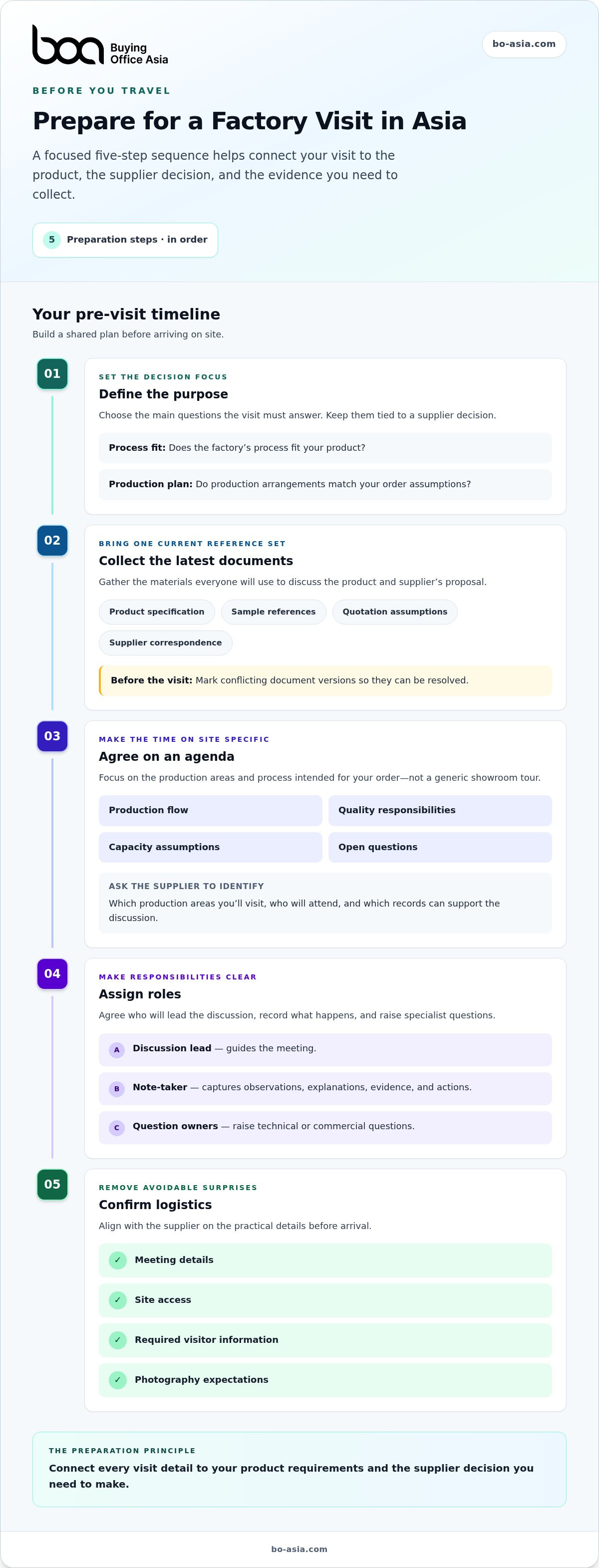
A factory visit creates useful evidence, but that evidence needs structure before it can support a supplier decision. Convert your notes into a report while details are fresh, then compare the findings with the product requirements and decision criteria you set before travel. Avoid relying on a general impression, whether positive or negative. A tidy showroom or a busy production floor is context, not a conclusion.
A visit finding becomes decision-ready when its evidence, owner, and follow-up action are recorded. Use an evidence log with separate fields for:
What you directly saw or heard during the visit.
The explanation given, attributed to the person who provided it.
A document, example, or other evidence that supports the explanation.
What remains unclear and what information could resolve it.
Start the report with the visit’s purpose, attendees, production areas observed, and records reviewed. Describe discrepancies neutrally. For example, write, “The supplier described this step as in-house; the team did not observe it during the walkthrough,” rather than drawing a conclusion about capability. Then specify what would clarify the point, such as a process explanation or relevant record. Keep direct observations distinct from conclusions that require additional evidence.
Classify each finding as confirmed, unresolved, or requiring independent verification. A confirmed point has evidence supporting the specific claim. An unresolved point needs clarification or documentation. Independent verification may be appropriate when a claim can’t be established through the visit materials alone. These categories keep uncertainty visible without forcing unsupported pass-or-fail judgments.
Turn every open item into an action with a named owner and a due date agreed by the relevant parties. Actions might include sending a requested record, clarifying a process, reviewing a sample, or checking how an outside process is controlled. Decide whether the evidence supports progression, further evaluation, or a pause until key information is available. For quality-related follow-up, connect the visit findings to the appropriate on-site quality control and inspection work.
Use the same product requirements and decision criteria to compare suppliers. A consistent comparison makes differences clearer: one factory may provide stronger evidence for a required process, while another may leave capacity assumptions or quality responsibilities unresolved. Don’t treat missing evidence as proof of failure, but don’t treat an unanswered question as confirmation either.
Coordinated communication can keep factory discussions, visit records, and follow-up requests connected, especially when several people own different actions. That visibility matters beyond the visit itself. Link findings to the wider sourcing and procurement process, so supplier evaluation informs later decisions without replacing ongoing oversight.
Knowing how to prepare for a factory visit in Asia includes planning how the evidence will be reviewed and acted on afterward. Buying Office Asia supports sourcing and procurement through supplier management, production oversight, and quality control. To discuss documented follow-up, talk with Buying Office Asia.
A factory visit is more valuable when it connects to the work before and after you arrive. Clear objectives shape the agenda; local coordination helps discussions stay focused; evidence capture turns observations into usable records; and assigned follow-up actions keep open questions from disappearing once you leave. Together, these steps give you a more controlled basis for supplier evaluation without treating one visit as a guarantee of future performance.
An on-the-ground procurement partner can coordinate with the supplier, prepare factory discussions around your requirements, accompany in-person observations, and organize documented follow-up. If the project progresses, supplier evaluation can connect to production oversight and quality control, so findings inform later checks rather than sitting in a standalone visit report. Buying Office Asia’s dedicated Asia procurement team works alongside your team to support that continuity.
This support should extend your decision-making, not replace it. You set the commercial priorities and decide how evidence affects the sourcing plan. A local team can help clarify what was observed, who owns unanswered questions, and which records or next steps are still needed. That gives you greater visibility while keeping approval and supplier decisions in your hands.
Physical presence in the region makes it possible to coordinate supplier conversations and observe factory operations in person. Buying Office Asia’s headquarters in Hong Kong and European leadership office in Helsinki provide regional and European communication context. That structure helps connect practical factory discussions with your wider team while keeping responsibilities and findings visible across locations. Buying Office Asia’s regional presence supports coordination, but it doesn’t by itself establish a supplier’s quality, compliance, or delivery performance.
Before deciding what comes next, bring together your product requirements, visit objective, key observations, and unresolved supplier questions. Identify which findings are supported by evidence, which need clarification, and who will own each follow-up. Depending on the project, the next step may be further supplier evaluation, a quality check, or production oversight. Choose the next step based on your requirements and the evidence gathered, not a general impression of the visit.
If you’re planning a visit or reviewing what you learned on site, connect your findings to your sourcing objectives. Share the product context and the questions still open, then discuss your sourcing and factory visit needs with Buying Office Asia.
The value of a visit doesn’t end when you leave the factory. Use the evidence you gathered to decide what must be clarified before the next commitment, who owns each action, and what information will support your decision. That creates a practical decision gate, rather than pressure to move forward based on a positive meeting or a polished tour.
Knowing how to prepare for a factory visit in Asia means treating it as part of an ongoing sourcing relationship, with clear expectations and a record of how supplier claims are being assessed. Buying Office Asia connects supplier evaluation with production oversight and quality control. To discuss regional support for your visit and follow-up, talk with Buying Office Asia.
Bring your product context, priorities, and outstanding questions to the conversation. Contact Buying Office Asia to discuss your factory visit and sourcing requirements, and agree on a clear next step.
Arrange the visit as soon as your sourcing timeline and supplier discussions make its purpose clear. The lead time depends on the destination, the supplier’s production schedule, travel arrangements, and what you need to assess. Part of how to prepare for a factory visit in Asia is agreeing on the agenda before you travel, so relevant staff and production areas can be included. Leave room to adjust if production plans change.
Advance coordination is usually more practical than arriving unannounced, though access arrangements vary by factory and destination. An agreed appointment gives the supplier a chance to arrange site access, make relevant production or quality staff available, and plan around the areas you want to see. It also helps avoid a visit when the relevant line isn’t operating. Confirm meeting details and visitor requirements with your host before setting out.
Choose practical clothing and closed, comfortable footwear suited to walking through active work areas. Avoid loose items that could interfere with movement or equipment, and dress for the site conditions and expected activities. Requirements can differ between facilities, so follow the factory’s instructions on clothing and protective equipment. If safety gear is required, clarify what you should bring and what the site will provide before your visit.
Only take photographs within the permissions and site rules agreed with your host. Factory areas, product designs, customer materials, and records may involve confidentiality concerns, so don’t assume a camera or phone is allowed everywhere. Before the walkthrough, agree which areas and items may be photographed and whether images can be shared internally. If photography isn’t permitted, take written notes using neutral descriptions and identify any evidence you’ll need through an approved channel.
An active production run can make it easier to understand how materials, people, and checks move through the process. But the most useful timing depends on the factory schedule and whether the running work is relevant to your product. Ask what will be operating during your visit and whether the planned run reflects the process under evaluation. If production won’t be active, you can still discuss equipment, workflow, and supporting records with the responsible team.
Yes, bring the current specification and relevant sample references so discussions stay anchored to the product you plan to make. A physical sample can help clarify details that are difficult to communicate verbally, while drawings or annotated specifications can point to particular requirements. Make sure everyone is using the latest version. If a sample or document contains sensitive design information, handle and share it according to your confidentiality arrangements.
No. A visit offers direct observations and conversations within the time and areas available; a structured audit examines defined criteria and supporting evidence within its agreed scope. The appropriate combination depends on project requirements and the level of risk you need to assess. A visit may help identify questions for further review, while an audit can examine specific systems or records more systematically. Treat each as a distinct input to supplier evaluation.
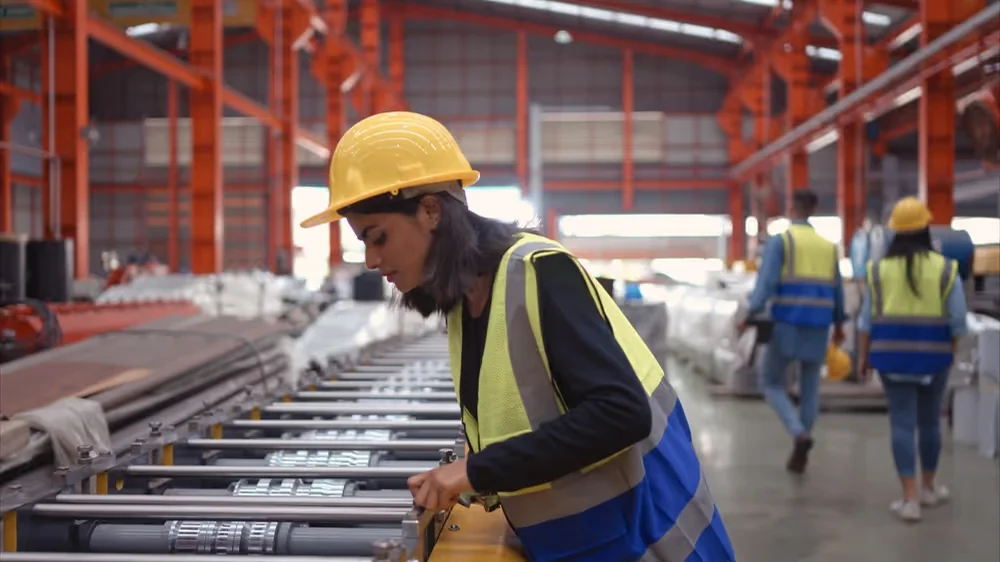
A supplier listing is a lead, not proof that a factory can deliver. If you’re wondering how to find suppliers not on Alibaba, the answer isn’t simply to switch platforms. You need a repeatable process to identify manufacturers, distinguish factories from trading companies, and check whether each sup...
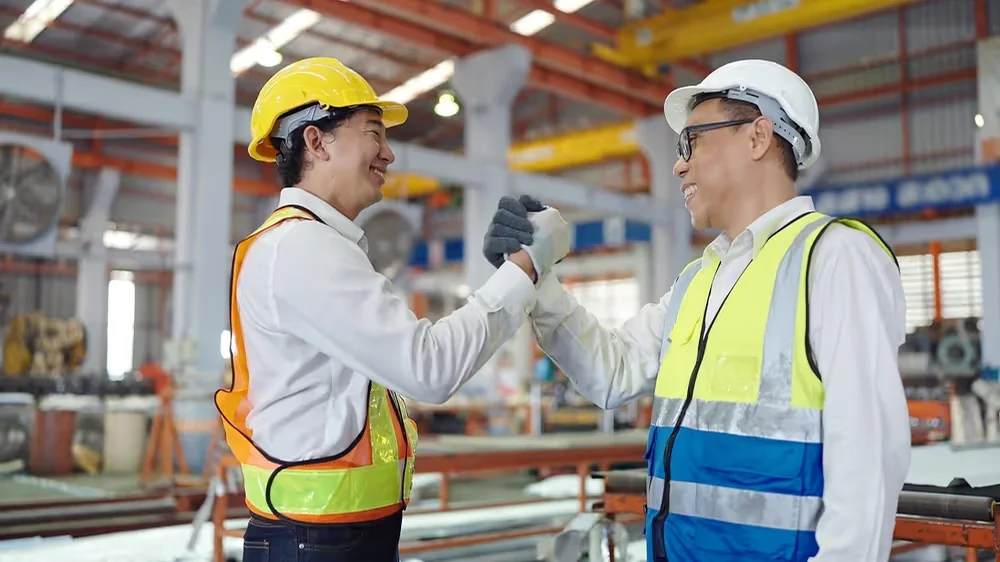
A supplier update that isn’t tied to an owner, a decision, and a next action can create more uncertainty than it removes. If you’re figuring out how to improve communication with your supplier, the answer isn’t simply to send more messages. It’s to make each exchange clear, accountable, and useful f...
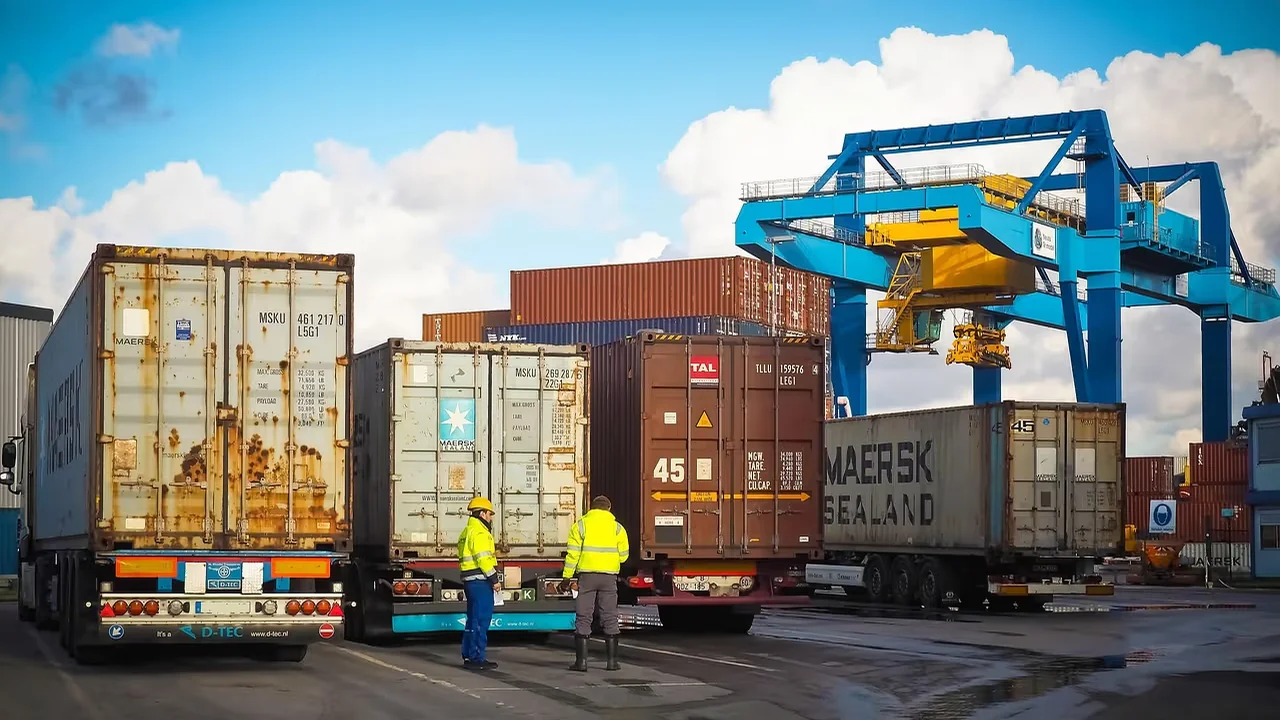
The final cost of an import is shaped long before it reaches customs. If you wait until shipment to calculate duties and taxes, a budget based on the supplier’s price alone can quickly fall short. Managing import duties and taxes from Asia starts with decisions made during product planning, not at t...