

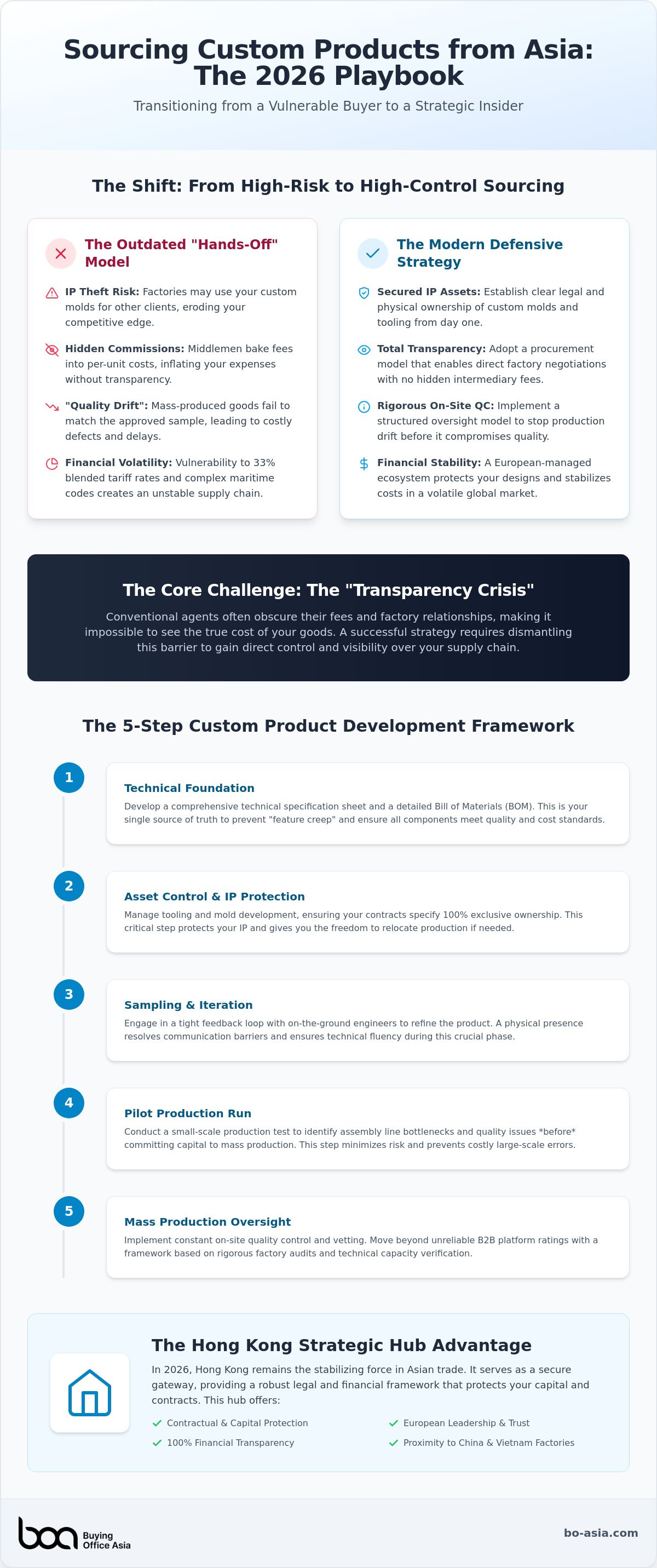
In 2026, the era of the hands-off sourcing agent is officially over. You likely recognize that sourcing custom products from Asia now requires more than just a contact list; it demands a defensive strategy against 33% blended tariff rates and complex new maritime codes. It's exhausting to manage the constant threat of intellectual property theft or the hidden commissions that middlemen bake into your per-unit costs. You want a supply chain that's a competitive asset, not a source of anxiety.
This guide provides the roadmap to transition from a vulnerable buyer to a seasoned insider with direct factory relationships. We'll show you how to master custom tooling and implement rigorous on-site quality control to stop mass production drift before it starts. By the end of this briefing, you'll have a clear framework for building a transparent, European-managed procurement ecosystem. This strategy protects your designs and stabilizes your financial health in an increasingly volatile global market.
• Secure your intellectual property by establishing clear legal and physical ownership of custom molds and tooling assets from the outset of development.
• Move beyond unreliable B2B platform ratings by implementing a vetting framework based on rigorous on-site audits and technical capacity verification.
• Learn the essential steps for sourcing custom products from Asia, from developing technical specification sheets to managing a proprietary bill of materials.
• Eliminate quality drift and production delays through a structured oversight model that ensures mass-produced goods consistently match your approved samples.
• Reduce per-unit costs by adopting a transparent procurement model that facilitates direct factory negotiations without hidden intermediary fees.
In 2026, the competitive edge is no longer found in generic catalogs. It's found in your ability to develop and protect unique assets. Sourcing custom products from Asia now involves managing proprietary designs, specialized tooling, and a precise Bill of Materials (BOM). This is a fundamental departure from the "off-the-shelf" era of previous decades. Today, the market is defined by a "Proprietary Shift" where custom products dominate because they offer defensible brand value and higher margins. While The Landscape of Sourcing Custom Products from Asia has evolved from low-cost assembly to advanced engineering, the primary challenge for Western brands remains the "Transparency Crisis." Conventional agents often obscure their fees and factory relationships, making it impossible to see the true cost of your goods or the reality of your supply chain.
You can't treat a custom mold the same way you treat a bulk order of generic items. Custom manufacturing involves significant upfront capital for tooling. Without a dedicated team on the ground, you're essentially handing over your intellectual property and hoping the factory doesn't use your molds for other clients. Technical alignment is non-negotiable. You need experts who can verify that the raw materials in the BOM match your engineering specifications exactly. Moving from a prototype to mass production is the point where most businesses fail. Without constant oversight, "quality drift" occurs, and you end up with a container of products that don't match your approved sample. A successful strategy requires physical proximity to the factory floor to ensure that the final unit is as perfect as the first.
Hong Kong remains the stabilizing force in 2026 Asian trade. It provides a legal and financial framework that offers a layer of protection for your capital and your contracts. Buying Office Asia utilizes its Hong Kong headquarters to act as a secure gateway for global trade. This regional presence is vital for navigating the complex 2026 regulatory landscape and ensuring 100% financial transparency. By centering operations here, we provide the European leadership you trust with the physical proximity required to manage factories across China and Vietnam. It's a strategy that prioritizes your financial viability and operational security over simple transactional convenience. This integrated approach allows you to scale your unique product line with total confidence in your supply chain's integrity.
Transitioning from a technical concept to a tangible SKU is the most critical phase of sourcing custom products from Asia. It requires a methodical approach that prioritizes your ownership of physical assets and technical clarity. The process begins with a comprehensive technical specification sheet and a detailed Bill of Materials (BOM). This document acts as your single source of truth. It prevents "feature creep" and ensures that every component, from the raw alloy to the packaging, meets your exact standards for quality and financial viability.
Once the specifications are locked, you move into tooling and mold development. This is where most unmanaged supply chains fail. You must ensure absolute ownership of these physical assets. If a factory pays for or even "shares" the cost of a mold, they often claim legal ownership, effectively holding your production hostage. We ensure that your contracts specify the tooling is your exclusive property, allowing for its relocation if the factory fails to meet performance benchmarks. This level of control is Why a Dedicated Asia Procurement Team is the Logical Choice for brands that value long-term resilience and asset security.
The sampling iteration phase is your opportunity to refine the product with Asian engineers. It's a feedback loop that requires technical fluency and a physical presence on the factory floor to resolve communication barriers. Following an approved sample, a pilot run is essential. This small-scale production test identifies bottlenecks on the assembly line before you commit your full capital to mass production. If you have questions about the technical feasibility of your design, our team can provide a preliminary assessment of your project's viability.
Effective IP protection in Asia goes beyond standard Western NDAs. You need NNN (Non-use, Non-disclosure, Non-circumvention) agreements tailored to local jurisdictions to be enforceable. A sophisticated strategy also involves fragmenting production. By sourcing different components from separate factories and handling final assembly elsewhere, you prevent any single supplier from having the complete blueprint to clone your product. Always maintain a documented plan for moving your "Master Tooling" to a secondary site to mitigate regional or factory-specific risks.
Understanding the difference between OEM and ODM manufacturing is vital for your long-term scalability. While ODM (Original Design Manufacturing) might seem faster, it often leaves the factory in control of the design and the tooling. For proprietary products, OEM (Original Equipment Manufacturing) is the superior choice. It ensures you own the intellectual property and the physical molds. This prevents the common trap where a factory sells your design to your competitors or raises prices because they know you cannot easily move production elsewhere.
Relying on digital storefronts and five-star ratings is a gamble your brand cannot afford. When sourcing custom products from Asia, an online profile tells you nothing about a factory's technical capacity to execute complex tooling or their actual financial stability. Most B2B platforms are saturated with trading companies masquerading as manufacturers. These intermediaries create a "Middleman Trap," inflating your costs by 10% to 20% through hidden commissions while distancing you from the engineers actually building your product. To secure your supply chain, you must move beyond the screen and into the factory itself.
A professional vetting framework requires rigorous on-site audits. We verify machinery maintenance schedules, labor standards, and the factory's ability to handle high-volume procurement without compromising your proprietary designs. This isn't just about checking a business license; it's about confirming that the production floor matches the technical claims made in the boardroom. Buying Office Asia applies European management standards directly on Asian soil, ensuring that every supplier in your network is vetted for operational efficiency and professional rigor. This proximity allows us to identify red flags, such as subcontracting to unverified third parties, which is a common cause of quality drift.
Custom goods require a multi-stage inspection strategy to prevent catastrophic failures in the final batch. During Production Inspection (DPI) is essential; it allows us to catch errors when only 10% to 20% of the run is complete. If you wait for a Pre-Shipment Inspection (PSI) to find a tooling defect, your entire investment is already at risk. We establish strict Acceptable Quality Level (AQL) standards that are hard-coded into the manufacturing contract. Remote inspections fail because they cannot capture the tactile or functional nuances of a technical product. Physical presence is the only way to ensure that Managing Mass Production and Logistics remains a predictable process rather than a series of expensive corrections at the port of entry.
In 2026, your supply chain's ethical footprint is a significant brand risk. China's "Regulations on Industrial and Supply Chain Security," effective March 31, 2026, have tightened the requirements for information gathering and operational transparency. You must ensure your partners meet modern sustainability requirements to avoid regulatory penalties and protect your reputation. This involves verifying that manufacturing labor costs, which average approximately ¥86,853 per year in China, align with fair wage standards and local laws. Building a resilient network means choosing suppliers who view transparency and ethical adherence as a competitive advantage rather than a burden.
Mass production is where the theoretical designs of the development phase meet the harsh realities of the factory floor. When sourcing custom products from Asia, you cannot assume that the ten-thousandth unit will match the approved sample without continuous oversight. Quality drift is a silent profit killer; factories often feel pressured to substitute raw materials or reduce cycle times as a production run progresses. We counter this through rigorous mass production oversight, conducting random sampling and on-site inspections at the midpoint and conclusion of every run. This protective layer ensures that your brand's reputation remains intact across every batch.
Managing production schedules in 2026 requires a proactive approach to global volatility. With spot rates for 40ft containers to the U.S. West Coast hovering between $6,200 and $6,482 in July 2026, logistics coordination is as much about financial optimization as it is about timing. We focus on consolidation and precise documentation for custom exports to prevent costly delays at the port. By negotiating directly with factories and eliminating the hidden commissions typical of traditional agents, we provide a transparent cost structure that stabilizes your margins against fluctuating freight prices. This direct relationship is the only way to maintain control over your supply chain's financial health.
Your custom molds are high-value physical assets that require dedicated management. This includes insuring and maintaining tooling between production runs to prevent degradation or unauthorized use by the factory for other clients. If you decide to shift production to a different facility, you must navigate the complexities of "Temporary Import" documentation to avoid unnecessary duties on your own equipment. We optimize shipping routes for high-volume orders, ensuring that your tooling and finished goods move through the supply chain with maximum efficiency and minimal regulatory friction.
Successful procurement requires moving beyond the simple "unit price" to understand the Total Cost of Ownership (TCO). Total Cost of Ownership is the sum of all expenses incurred from the initial product design through manufacturing, quality control, logistics, and final delivery to your warehouse. Focusing solely on the lowest quote often leads to unforeseen expenses from quality failures or shipping delays. Our 100% transparency model allows you to see the actual factory price, enabling better long-term financial planning. You can review our savings examples to see how this model impacts the bottom line. To secure your 2026 production schedule and optimize your TCO, contact our team today for a comprehensive logistics and procurement strategy.
Selecting the right partner is the final, most critical step in your manufacturing strategy. Many businesses mistakenly rely on transactional sourcing agents who operate as brokers rather than strategic partners. These intermediaries often collect hidden commissions ranging from 10% to 20%, which are baked into your per-unit costs and obscured from your view. When sourcing custom products from Asia, this lack of transparency creates a fundamental conflict of interest. A dedicated Asia procurement team functions differently; it acts as an integrated extension of your own organization. This model ensures your financial interests and proprietary designs remain the primary focus throughout the production lifecycle.
Brokers are transactional. They focus on the deal, not the long-term viability of your supply chain. In contrast, an integrated team provides the steady oversight required to manage complex technical specifications and high-volume procurement. This structural difference is what allows a brand to move from being a vulnerable buyer to a seasoned industry insider. By eliminating the middleman, you reclaim control over your margins and your factory relationships.
Our model bridges the gap between Western business standards and Asian manufacturing reality. We combine European leadership from our Helsinki office with direct, on-the-ground execution from our Hong Kong headquarters. This dual presence provides the calm assurance of a local partner with the regional expertise required to navigate factory floors in real time. By moving to a 100% transparency model, you gain access to factory-direct pricing without the obscured markups of traditional brokers. Our history shows that managing custom tooling through a dedicated team can reduce total costs by up to 30% for European brands. We achieve this by eliminating waste, preventing quality failures, and ensuring that your physical assets are properly maintained between production runs. We don't just find suppliers; we build a defensible and accountable supply chain.
Scaling your unique product line requires a methodical transition from design to delivery. The process begins with a technical consultation where we assess the manufacturing feasibility of your custom designs and identify potential production bottlenecks. We then move from the initial Request for Quotation (RFQ) to rigorous factory-direct negotiations. This ensures that your tooling ownership, IP protections, and production schedules are legally and operationally secure. This structured approach methodically dismantles the common industry objections regarding risk and lack of control. To secure your supply chain and optimize your 2026 production, contact Buying Office Asia for a comprehensive procurement assessment.
Mastering the complexities of sourcing custom products from Asia in 2026 requires a fundamental shift from transactional buying to strategic oversight. You've seen how essential it's to secure your physical assets through mold ownership and to bypass the "middleman trap" with a 100% transparency model. By prioritizing technical alignment and on-site mass production oversight, you protect your brand from quality drift and unforeseen expenses.
Success in today's market depends on having a knowledgeable ally who bridges the gap between European management standards and local execution. Our Helsinki-led team and Hong Kong headquarters provide the physical proximity and regional expertise necessary to defend your interests on the factory floor. You don't have to navigate these risks alone; you can choose a partner that operates as an integrated extension of your own team rather than a third-party entity.
Secure your custom production with a Dedicated Asia Procurement Team to transform your supply chain into a transparent, high-performance asset. Your unique product line deserves the security and financial viability that only factory-direct procurement can offer. We look forward to helping you scale with confidence.
A sourcing agent typically acts as a broker and collects hidden commissions from the factory; whereas a procurement partner functions as an integrated extension of your team with a transparent fee structure. This structural difference ensures that your financial interests remain the priority. While agents often obscure factory relationships to protect their own margins, a procurement partner provides direct access to the manufacturer, facilitating total transparency in sourcing custom products from Asia.
You must ensure that your manufacturing contracts explicitly state that all molds and tooling are your exclusive physical and intellectual property. This includes paying for the tooling in full and maintaining the legal right to relocate it to another facility at any time. We recommend documenting the "Master Tooling" with unique identifiers and conducting regular on-site audits to verify that your assets are being maintained and not used for unauthorized production runs.
Sourcing from China remains viable in 2026, but it requires a sophisticated approach to compliance and risk management. You must navigate the "Regulations on Industrial and Supply Chain Security" implemented in March 2026 and manage blended U.S. tariff rates that currently average 31-33%. While China offers world-class infrastructure, many brands now utilize a "China Plus One" strategy, diversifying production into Vietnam or India to increase supply chain resilience.
Hidden costs often manifest as obscured commissions, quality drift, and unforeseen logistics expenses. Traditional agents may bake a 10% to 20% markup into your unit price without your knowledge. Additionally, failing to account for the Total Cost of Ownership (TCO) can lead to financial setbacks from production delays or customs penalties. Using a transparent model ensures you see the actual factory price, allowing for accurate financial planning and higher long-term profitability.
Protecting your intellectual property requires a multi-layered strategy that goes beyond standard Western NDAs. You should implement NNN (Non-use, Non-disclosure, Non-circumvention) agreements tailored to local jurisdictions to ensure they're enforceable. Another effective method is fragmenting production, where you source different components from separate factories so no single supplier has the complete blueprint. This approach, combined with owning your master tooling, creates a strong defense against unauthorized product cloning.
On-site quality control is superior because it identifies defects during the manufacturing process rather than after the goods are already finished. Third-party lab testing often only checks a small sample for safety compliance after production is complete. In contrast, on-site inspections like During Production Inspection (DPI) allow for immediate corrections on the factory floor. This proactive oversight is critical for sourcing custom products from Asia, as it prevents the entire batch from being compromised.
We utilize an "open-book" negotiation strategy that gives you direct access to the factory's raw pricing data. By eliminating the middleman, we negotiate on your behalf to secure the best possible terms without adding hidden markups or commissions. This process involves a detailed analysis of the Bill of Materials (BOM) and labor costs to ensure the price is both fair and sustainable. Our European leadership manages these negotiations to provide the professional rigor your business requires.
Lead times for custom products are generally longer than off-the-shelf items due to the necessary tooling and sampling phases. You should typically allow 4 to 8 weeks for initial sampling and another 6 to 12 weeks for mold development and technical testing. Once the pilot run is approved, mass production usually takes an additional 30 to 45 days. These timelines can fluctuate based on the technical complexity of the product and current regional manufacturing demand.
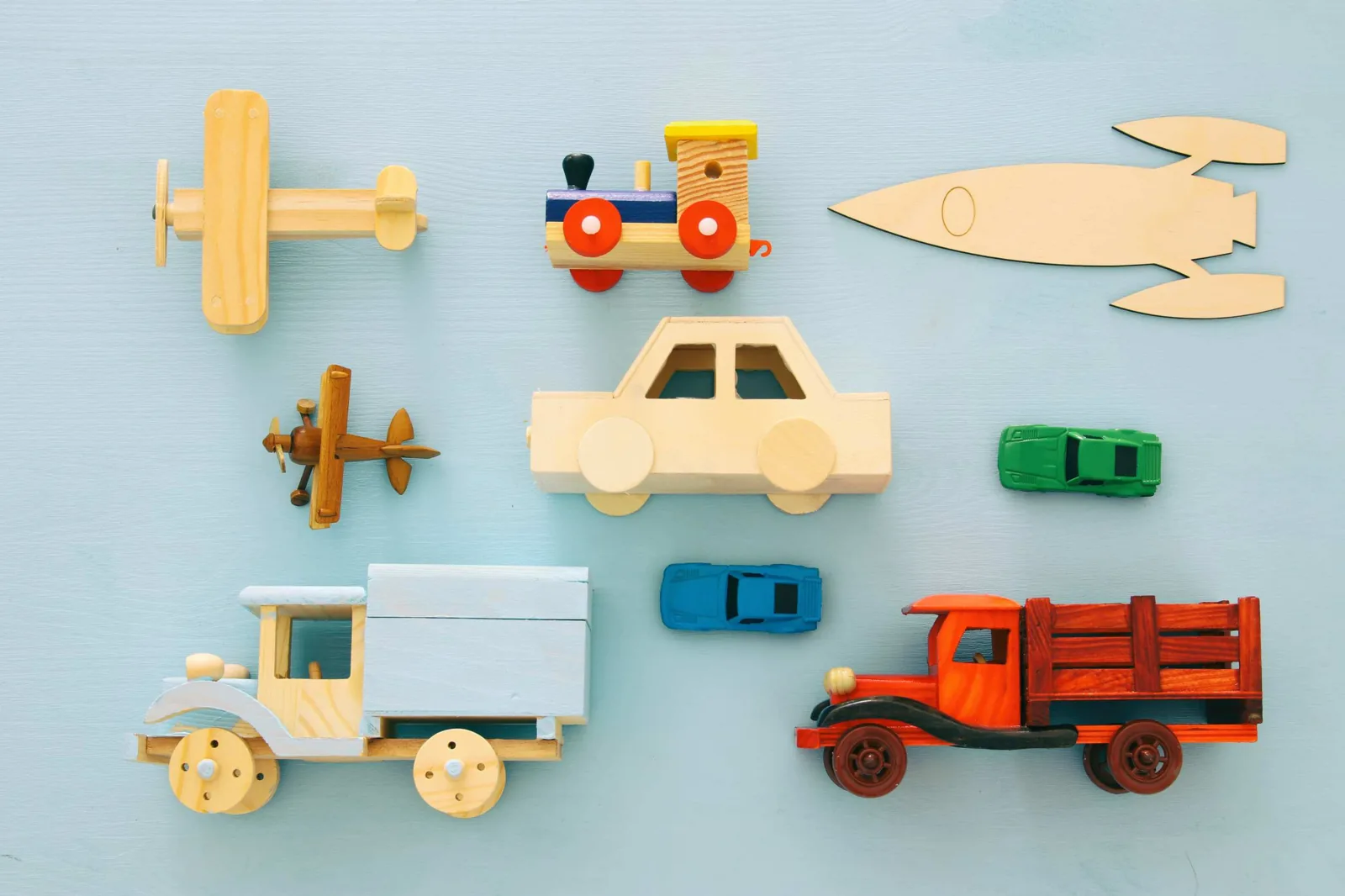
A factory audit can look reassuring while leaving a critical question unanswered: will the same materials, processes and controls be used for your production run? Responsible toy manufacturing in China requires more than reviewing a certificate. You need to understand factory conditions, subcontract...
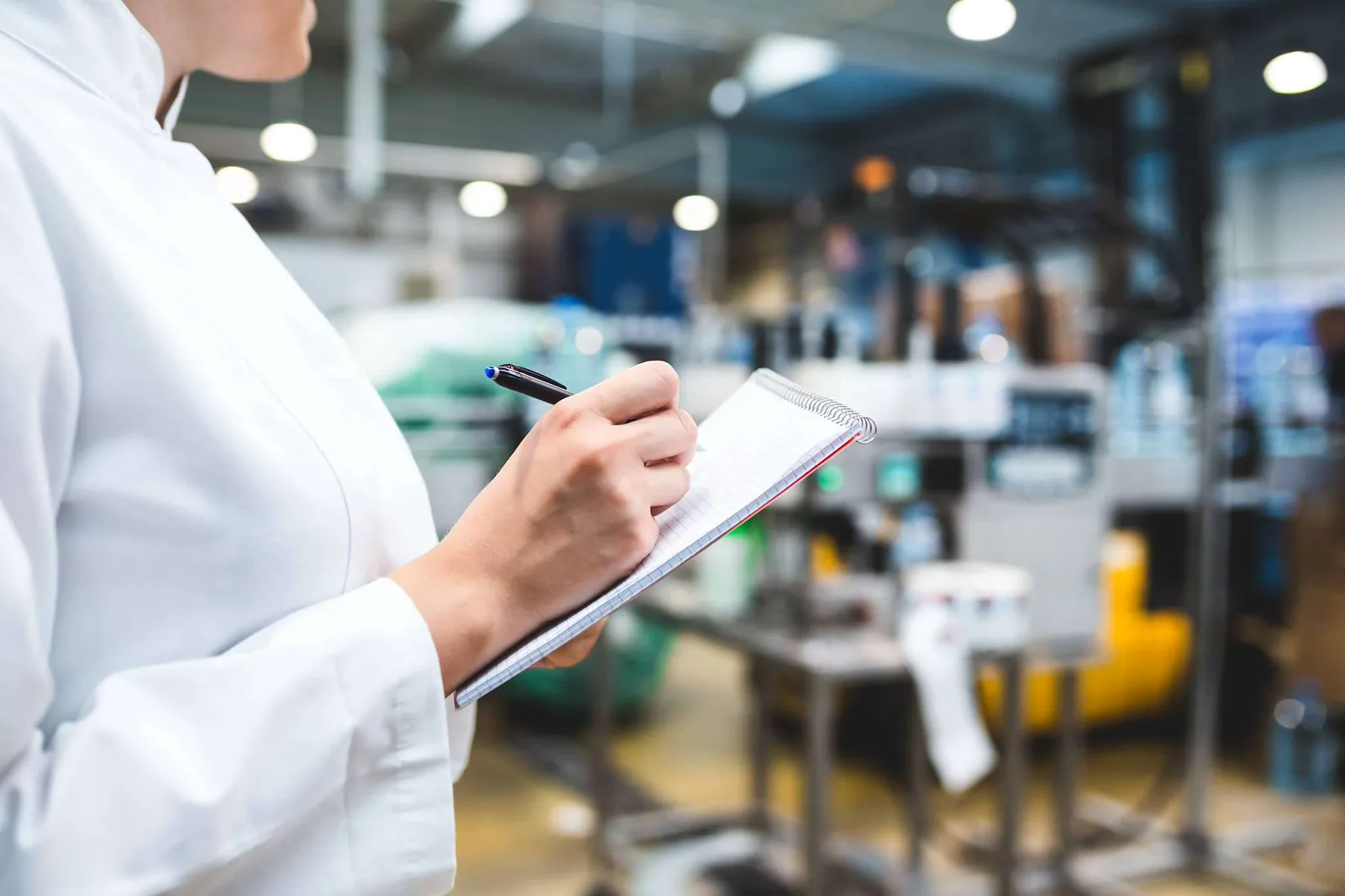
A final inspection can show you what came off the production line, but it can’t change the decisions that shaped it. That’s the key distinction in standalone quality inspections vs procurement services: one checks product output at a defined point, while the other can coordinate work across supplier...
A factory quote is not a shipment plan. Sourcing products from China to USA involves more than finding a manufacturer and agreeing on a unit price. Unclear specifications, samples that differ from production, or overlooked packaging and freight details can put quality and commercial viability at ris...