


What if your biggest supply chain risk isn’t the supplier you chose, but what you can’t see after the order is placed? Asia procurement services can connect supplier selection with factory follow-through, giving you clearer visibility into production, product quality, and responsibilities along the way.
Managing suppliers across distance, time zones, and business cultures takes more than a reliable contact. You need clear communication and local oversight where decisions are made and production happens. Without them, small issues can go unnoticed until they affect quality, timing, or cost.
This guide explains what Asia procurement services can cover, from supplier vetting and factory-direct negotiations to sampling, production oversight, on-site inspections, and logistics coordination. You’ll see how an on-the-ground team can work as an extension of your operations, linking supplier decisions to execution. We’ll also outline where local oversight can make the greatest difference and how to assess transparency, supplier accountability, and service scope against your business needs.
• Asia procurement services can coordinate supplier selection, purchasing, product development, production oversight, and logistics planning as connected parts of one workflow.
• Map each stage from sourcing brief to shipment coordination so requirements, supplier fit, samples, commercial terms, and production milestones stay aligned.
• Compare in-house teams, remote coordination, trade-data platforms, and local support by the visibility and follow-through each provides, as well as the workload left with your team.
• Use sourcing volume, product complexity, supplier count, and internal capacity to identify where procurement support could close gaps in visibility or accountability.
• An integrated buying office can connect supplier vetting and factory-direct negotiations with on-site inspections and production oversight.
Asia procurement services are hands-on support that connects supplier selection and purchasing decisions with product development, factory execution, quality checks, and logistics coordination. They extend beyond finding a potential manufacturer: the work is about carrying your requirements through the stages where supplier fit, product specifications, production progress, and delivery coordination need attention.
That distinction matters in global sourcing, where supplier discovery is only one part of building a workable supply chain. A directory or data subscription can help you identify companies or review available information. Procurement execution adds communication, assessment, follow-up, and clear responsibility for moving work forward.
A regional partner can help identify suppliers against your requirements, vet factories, and negotiate commercial terms directly with manufacturers. For products that need development, support can also include coordinating samples, refining requirements with suppliers, and managing custom product or tooling development.
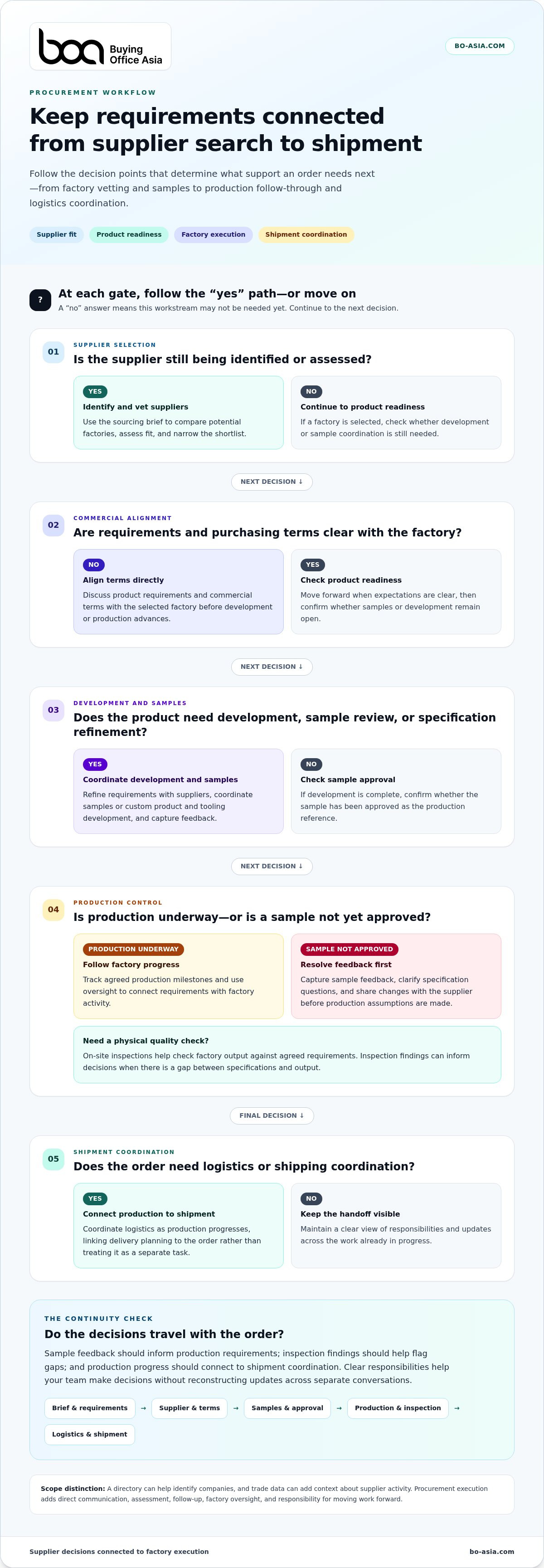
Once production begins, the work shifts from selection to follow-through. Production oversight and on-site quality inspections help connect agreed requirements with what is happening at the factory. Logistics and shipping coordination then link production progress to the next stage of the order, rather than treating delivery planning as an unrelated task.
These workstreams are most useful when they share information. Sample feedback can inform production requirements, while inspection findings can flag a gap between specifications and factory output. With a clear view of responsibilities, your internal team can make decisions without reconstructing updates across separate conversations.
A directory helps you search. It doesn’t typically manage the ongoing exchange needed to verify factory capabilities, resolve questions, or track whether production is following the agreed requirements. Trade data can add useful context about supplier activity, but data alone can’t replace direct factory communication or physical oversight.
Local presence can help surface production concerns earlier by giving a procurement team a closer view of supplier communication and factory activity. That doesn’t remove the need for your own specifications or approvals; it helps keep those requirements connected to execution. For an overview of coordinated supplier and production support, see the Asia sourcing and procurement service overview.
The practical test is whether support ends with a supplier introduction or continues through negotiation, sampling, production checks, and logistics coordination. In an integrated model, a regional team can act as an extension of your operation, providing a clearer line between what was agreed and what is being delivered.
A controlled procurement workflow carries decisions forward instead of treating sourcing, sampling, production, and delivery as separate tasks. Supplier selection creates production control only when the agreed requirements follow the order all the way to shipment. That continuity is especially useful when you’re assessing suppliers across changing regional supply chains, a topic explored in Oxford Economics’ Shifting Asian supply chains.
Start with a brief that sets out the product requirements, expected volumes, quality expectations, and production constraints. A procurement team can use it to identify potential suppliers, assess factory fit, and narrow the shortlist through supplier vetting. Factory-direct negotiations then align commercial terms with the actual requirements, rather than relying on an introduction or initial quote alone.
Record the product specifications, volume expectations, quality criteria, and relevant production constraints.
Compare potential factories against the brief and assess their suitability before moving forward.
Discuss requirements and purchasing terms directly with the selected factory so expectations are clear before development or production advances.
Review samples against the brief, capture feedback, and resolve specification questions before treating the product as production-ready.
Follow agreed production milestones, use inspection findings to inform decisions, and coordinate logistics as the order moves toward shipment.
Sample approval creates a reference point for manufacturing. Feedback should be translated into clear specifications so the production team understands what was accepted and what needs adjustment. If requirements change, the update needs to reach the supplier before it becomes a production assumption.
Production oversight and on-site inspection serve different purposes. Oversight follows progress against milestones and keeps communication moving; an inspection checks product or production conditions at a particular point. Findings can help you decide whether to clarify requirements, address an issue, or proceed to the next stage. Regular progress updates make those decisions more timely and traceable.
The final stage includes logistics coordination, such as organizing shipment arrangements, relevant documentation, and transport planning as part of the procurement workflow. Responsibilities and updates should remain clear from factory discussions through handoff, so your team knows what has been completed and what decisions remain.
Asia procurement services are most useful when each stage informs the next, reducing the gaps between what was requested, what the factory produces, and what is prepared for shipment. To discuss how this workflow can fit your sourcing operation, connect with the procurement team.
Each procurement model offers a different kind of control. An in-house team brings direct ownership, remote coordination keeps communication centralized, and trade-data platforms help uncover supplier and shipment information. Local procurement support adds regional supplier interaction and factory follow-up. The right mix depends on your sourcing volume, product complexity, supplier base, and how much oversight your internal team can provide.
| Model | Visibility | Supplier interaction | Production follow-up | Internal workload |
|---|---|---|---|---|
| In-house team | Direct, based on the team’s reporting and access | Managed by your employees | Depends on local presence and available capacity | Higher, as coordination stays internal |
| Remote coordination | Relies on supplier updates and shared records | Handled remotely | Can track progress, but physical checks require local execution | Ongoing communication and issue management |
| Trade-data platform | Offers recorded supplier or shipment information | Doesn’t manage direct supplier communication | Doesn’t inspect current production | Your team interprets data and acts on findings |
| Local procurement support | Combines communication with on-the-ground follow-up | Supports direct regional engagement | Can coordinate production oversight and inspections | Shares operational coordination with your team |
Trade records and digital tools can help identify potential suppliers, show historical shipment context, and organize information across a supplier base. They’re useful inputs, not a live assessment of a factory’s current capability or the quality of a specific product. A past shipment doesn’t confirm that a supplier can meet your present specifications or production requirements. Operational decisions still need relevant validation, direct communication, and follow-through. Procurement may also involve broader considerations, including the themes discussed in the World Economic Forum’s article on social procurement in Asia.
Regional presence is valuable when supplier communication needs active coordination, production requires follow-up, or an issue needs an inspection or escalation. It connects reported progress with factory-level observation, while keeping your team informed for decisions that require its input.
Buying Office Asia’s Hong Kong headquarters supports regional operations and on-the-ground supplier engagement; European leadership in Helsinki supports communication with international clients. This structure links local follow-through with international coordination. Explore the dedicated Asia procurement team to see how this team model works. Asia procurement services can complement your internal capability without assuming every company needs the same level of local oversight.
Start by mapping the work your team manages today and where ownership becomes unclear. Asia procurement services may be a good fit if supplier coordination, factory follow-up, or quality checks are taking time away from other priorities, but the right scope depends on your operation. Consider four factors: sourcing volume, product complexity, the number and location of suppliers, and the capacity of your internal team.
A straightforward product with an established supplier and strong internal oversight may need targeted support. A more complex product, changing specifications, or several active supplier relationships may require closer coordination across development, production, and quality control. The goal isn’t to outsource every decision. It’s to assign responsibilities clearly, so your team retains the approvals and business decisions it needs to own while local support coordinates agreed procurement work.
Prepare a brief that gives the procurement work a clear starting point. Include product requirements, target volumes, quality expectations, known production constraints, and who has authority to approve specifications, samples, and commercial terms. Document current suppliers, recurring production challenges, and the communication your team needs to make decisions with confidence.
Separate must-haves from preferences. For example, distinguish required product features and quality criteria from options that could be adjusted during development. A clear brief helps define which tasks need local coordination and which approvals remain with your team. For additional context on supplier information, review Buying Office Asia’s Asia supplier network.
Look for patterns, not just isolated problems. Repeated gaps in supplier communication, unclear production status, delayed escalation of issues, or inconsistent quality checks can indicate that the current process lacks ownership or visibility. Ask whether your staff have enough capacity to manage supplier relationships and follow production milestones alongside their other responsibilities.
Can your team get clear updates on production progress and open issues?
Is it clear who follows up with the supplier and who approves changes?
Are requirements and quality checks applied reliably across suppliers and orders?
Does your team have time for ongoing communication, supplier management, and factory follow-up?
These signals don’t automatically mean you need to transfer procurement ownership. They help you identify where added coordination or on-site oversight could reduce uncertainty and support better-informed decisions. If you’re assessing supplier fit, a structured review of factory capabilities and requirements can help clarify the gap between the supplier you need and the one you’re currently managing.
To discuss a procurement support scope aligned with your supplier base and internal capacity, talk with the Buying Office Asia team.
Buying Office Asia works as an integrated extension of your procurement operation, connecting supplier decisions with factory follow-through. Instead of leaving your team to coordinate separate handoffs, a dedicated procurement team can support supplier vetting, factory-direct negotiations, product development and sampling, production oversight, on-site quality inspections, and logistics coordination. The support is structured around your requirements, with responsibilities and updates kept clear as work progresses.
This connected approach can help you see how supplier selection relates to production milestones and quality checks. Inspection findings and progress communication give your team information to assess issues and make decisions, while supplier engagement and follow-up continue on the ground. Transparency comes from clear oversight and procurement responsibilities, not from promises of a particular saving or outcome.
A dedicated team can carry supplier relationships forward from evaluation and negotiation into sampling, production follow-up, and inspection. For example, sample feedback can inform production requirements, while inspection reports can flag where a product or process needs review. Your team remains involved in the decisions it owns, with the procurement partner coordinating agreed operational work and communication with suppliers.
Buying Office Asia’s Hong Kong headquarters supports regional operations and on-the-ground supplier engagement. European leadership in Helsinki supports communication with international clients, linking regional coordination with your business context. Explore the procurement services overview for the broader scope of support.
Bring a clear picture of what you need sourced or produced, your expected volumes, your current supplier relationships, and the challenges slowing your process down. Product requirements, quality expectations, development needs, and internal approval responsibilities help define where local oversight could be useful and which decisions should remain with your team.
Asia procurement services should fit the project rather than force every operation into the same process. The scope can be tailored to your product requirements, supplier base, and internal capacity, from focused supplier support to coordinated oversight across multiple procurement stages.
Share your sourcing priorities and current operational gaps to start a practical discussion. Discuss your Asia procurement requirements.
Stronger procurement control comes from connecting supplier decisions with what happens on the factory floor. The right support can link supplier vetting and factory-direct negotiations with production oversight and inspections, while keeping responsibilities and progress visible to your team. It should also fit your sourcing volume, product requirements, supplier base, and internal capacity.
For international companies manufacturing in Asia, asia procurement services can provide coordinated execution without removing your team from key decisions. Buying Office Asia combines regional supplier engagement from its Hong Kong headquarters with European leadership based in Helsinki, supporting communication across both sides of the operation. Its transparency-focused approach is designed to give you a clearer view of procurement activity and supplier follow-through, without relying on promises of guaranteed savings or outcomes.
If you’re ready to clarify where added oversight could strengthen your operation, discuss your Asia procurement requirements. A more controlled supply chain starts with clear priorities and the right responsibilities in place.
Asia procurement services can cover supplier identification and vetting, factory-direct negotiations, product development and sample coordination, production oversight, on-site quality inspections, supplier management, and logistics coordination. The exact scope depends on your product, supplier base, and internal capacity. For example, you might need support only with factory assessment and sampling, or coordinated help connecting supplier selection with manufacturing follow-through and shipment planning.
Asia procurement services typically begin with your product requirements, expected volumes, quality expectations, and purchasing priorities. A procurement team identifies and assesses suitable suppliers, discusses commercial terms, and coordinates samples or product development as needed. Once production begins, oversight and inspections help track progress and flag issues for review. Logistics coordination supports the next steps toward shipment, while your team retains key approvals and business decisions.
Not necessarily. “Sourcing agent” can describe different arrangements, from a supplier introduction to ongoing procurement support. The important distinction is the work covered: an integrated procurement partner can connect supplier vetting and factory-direct negotiations with sampling, production oversight, inspections, and logistics coordination. Buying Office Asia works as an on-the-ground partner for international companies manufacturing in Asia, with supplier engagement supported by its Hong Kong headquarters and European leadership based in Helsinki.
Yes. A procurement team can coordinate on-site quality inspections and production oversight as part of broader supplier management. Inspections assess product or production conditions at a particular point, while production oversight follows progress and supplier communication over time. Findings and updates give your team information to evaluate against its requirements and decide whether follow-up is needed. Clear specifications and approval responsibilities remain important to make those checks useful.
No. Trade data can help identify potential suppliers and provide historical shipment context, but it doesn’t establish a factory’s current capability or confirm that a specific product meets your quality requirements. Use data as one input, then validate supplier fit through relevant assessment and direct communication. Production follow-up and inspection provide additional operational context that shipment records alone can’t supply.
Costs depend on the scope of support required, such as supplier sourcing and vetting, on-site inspections, ongoing production and supplier management, or logistics coordination. The work involved and responsibilities assigned affect the overall arrangement, so a supplier assessment project may differ from ongoing procurement support. Define your requirements and expected volumes first, then align the scope and fee structure with the specific work to be managed.
Consider an Asia procurement partner when your team has limited visibility into supplier activity, repeated communication gaps, unclear production status, or insufficient capacity for factory follow-up. Support can also be useful when product development or quality requirements call for closer coordination. The right scope depends on your supplier base, sourcing volume, product complexity, and internal resources. Your team can retain approvals while delegating agreed operational coordination.

A supplier listing can open a door, but it can’t show whether a factory is right for your order. Choosing a ningbo sourcing agent means looking beyond access to local suppliers: you need clear oversight of supplier vetting, production follow-up, and quality checks. Without defined responsibilities,...

What if the supplier with the strongest online profile isn’t the factory best suited to your shoes? In footwear manufacturing in China, a directory listing can start your search, but it can’t confirm who will make your product, whether the factory can handle its construction and materials, or how cl...
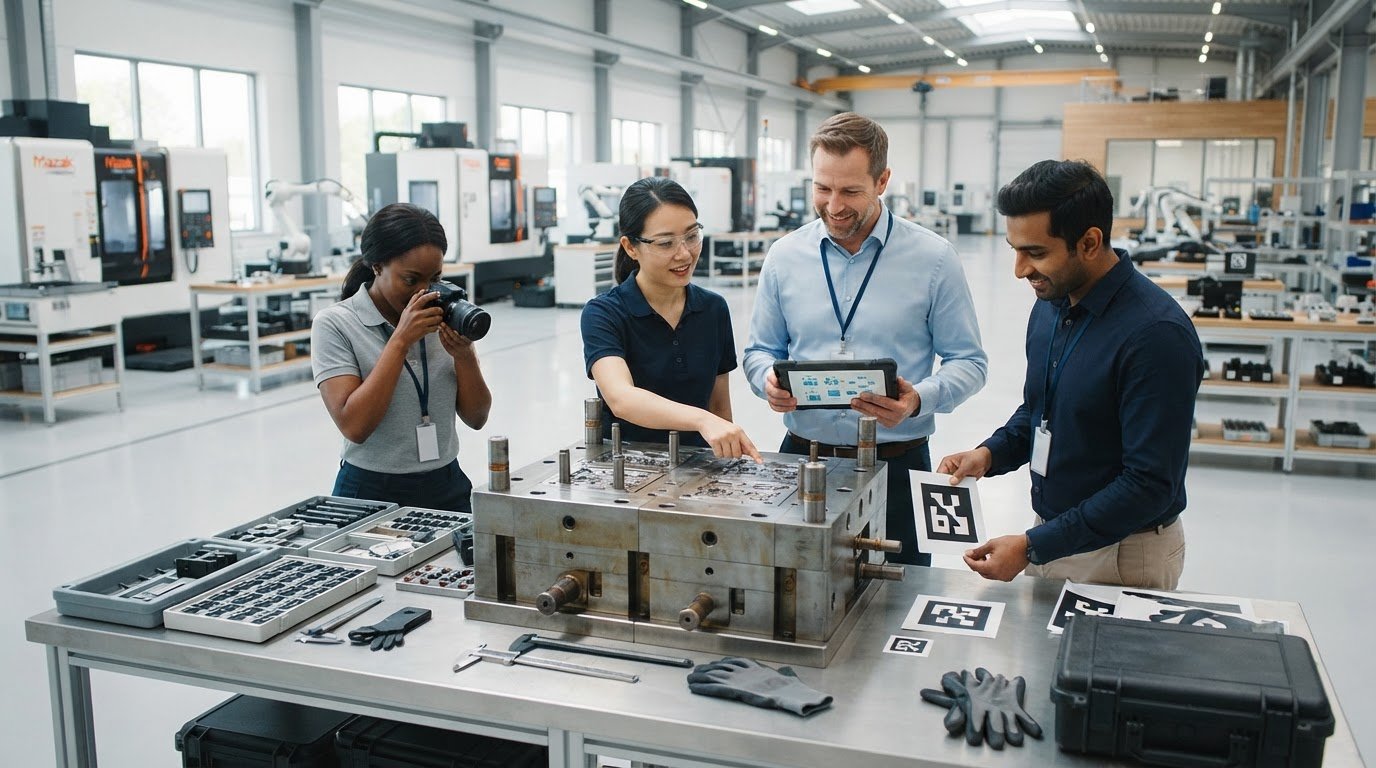
What if the mold you paid to develop couldn’t be released when you needed to change suppliers? Managing tooling and molds with a foreign factory means more than tracking where production equipment is stored. Payment alone may not establish clear ownership, access, or transfer rights. Without visibil...