


A supplier that looks right on screen can still fall short on the factory floor. Finding an “asia sourcing partner europe” businesses can rely on means looking beyond supplier lists to the people who can verify a factory’s capabilities, follow production, and communicate clearly across distance and time zones.
European buyers need a partner who understands their priorities and can act on the ground in Asia. If responsibilities for sourcing, production, quality checks, and logistics are unclear, gaps can lead to delays, avoidable costs, or uncertainty about what is happening. The right partner makes accountability visible rather than adding another layer of handoffs.
This guide offers a practical framework for assessing an Asia sourcing partner. It covers local presence, transparency, and responsibilities from supplier assessment through production oversight and inspections. You’ll also find questions to ask, ways to assess whether outside support fits your procurement needs, and points to clarify before work begins.
• Distinguish an operational sourcing partner from a supplier directory or trading intermediary by checking who manages supplier and production follow-up.
• Assess an asia sourcing partner europe businesses are considering by checking local presence, named responsibilities, reporting, inspection evidence, and fee clarity.
• Ask what documentation supports claims about factory capability, production readiness, and inspection findings before relying on supplier assurances.
• Set the product brief, target specifications, sampling steps, decision rights, and reporting expectations before sourcing begins.
• Check that the partner’s scope matches your needs for procurement, quality checks, and production oversight, rather than product sales, inventory financing, or dropshipping.
An Asia sourcing partner provides operational support between a European buyer and suppliers in Asia. The partner can help identify and assess factories, coordinate commercial discussions, follow production, and arrange quality inspections. This goes beyond making an introduction. The value comes from carrying agreed requirements through the stages where supplier claims need checking and decisions need documenting.
Global sourcing is the broader practice of obtaining goods or services across national borders, with potential advantages and risks. A sourcing partner supports the work behind that decision. Unlike a directory, it can help assess supplier fit. Unlike a trading intermediary, it can make responsibilities and reporting visible. And unlike a retailer, it does not sell the finished goods.
Support can start with supplier identification, vetting, factory audits, and factory-direct price negotiations. If a product needs development, sampling or custom tooling support can help turn the buyer’s brief into a sample for review. After supplier selection, support can continue with production follow-up, on-site quality control, and inspection reporting. Connecting these stages helps avoid a handoff that leaves production progress or quality concerns unclear.
The buyer still owns key decisions. You approve product requirements, commercial terms, and final acceptance criteria, and retain your own product, importer, and regulatory responsibilities. Define these boundaries in the agreement so operational support is not confused with a transfer of accountability.
Europe-facing coordination can translate business priorities into clear supplier instructions, agreed milestones, and useful updates. Asia-side follow-up can focus on supplier communication, factory visits, inspections, and production status. These functions are distinct but connected: client-facing coordination keeps decisions aligned, while local execution checks what is happening at the source. Agree in advance what will be reported, who will raise issues, and who will approve changes.
An Asia sourcing partner for European buyers connects local procurement priorities with accountable supplier and production follow-up on the ground in Asia. When assessing an “asia sourcing partner europe,” look for named responsibilities and documented findings that demonstrate this connection, rather than relying on assurances alone. Buying Office Asia describes its approach and role as a sourcing partner in its Buying Office Asia overview.
A European contact can help keep sourcing decisions aligned with your commercial priorities, while Asia-side staff handle supplier communication and factory follow-up that require local presence. The model works when responsibilities connect. It is less effective when two offices act as separate points of contact with unclear ownership.
Buying Office Asia has its headquarters in Hong Kong and a European leadership office in Helsinki. This structure can bring buyer-facing coordination and Asia-side execution into one sourcing relationship. Review the company’s regional operating model, then confirm who will manage each task for your project.
Your European contact should help clarify the brief, align expectations, share project updates, and route issues to the right decision-maker. Before work begins, ask who confirms specifications, who communicates changes to suppliers, and who escalates production concerns. Agree on a regular reporting rhythm, but also establish what each update will cover and what action you may need to take.
This role supports communication and decision-making. It does not replace direct supplier engagement or factory checks in Asia. Confirm how information moves between the European contact, the Asia team, your procurement staff, and the supplier so questions do not stall between handoffs.
Ask what supplier verification involves, who communicates with the factory, and what evidence you will receive. Depending on the product and project scope, on-site inspections or production checks may help confirm whether work is progressing against agreed specifications. Inspection findings should be documented in a format that makes issues, next steps, and decision ownership clear.
For example, if a production update flags a quality concern, the operating model should show who checks it at the factory, who reports the finding, and who approves the response. That chain turns local presence into useful oversight. Review the scope of Asia sourcing and procurement services as a reference, then confirm which activities are included in your engagement.
A capable asia sourcing partner europe buyers assess should connect clear European communication with verifiable Asia-side follow-up. To determine whether that structure fits your procurement needs, you can discuss your sourcing requirements with the team.
A polished presentation does not confirm factory capability or clarify who is accountable once production starts. Compare prospective partners by looking for evidence and defined processes. For each capability, ask what work is performed, who owns it, what you will receive, and how exceptions are handled. An asia sourcing partner europe businesses can assess objectively should be able to explain these points before engagement, not only after a problem arises.
| Criterion | What to verify |
|---|---|
| Local presence | Who is based near suppliers, and which activities require a site visit? |
| Named responsibilities | Who owns supplier vetting, negotiation, production follow-up, inspections, and escalation? |
| Reporting | What updates will you receive, from whom, and at which project milestones? |
| Inspections | What checks are in scope, and can you review a sample report? |
| Fee clarity | How are sourcing, inspection, supplier management, and logistics coordination charges presented? |
Ask who visits suppliers, what triggers a visit, and how findings are recorded. A useful inspection report should identify the item or production stage checked, summarize findings, include supporting evidence where available, and note any corrective action or decision required. Request a sample report with confidential details removed. Clarify how the partner will respond if a sample misses agreed requirements, production timing changes, or an inspection identifies a quality issue.
Request a written breakdown of the proposed scope and how fees for sourcing, inspections, supplier management, and logistics coordination are disclosed. Confirm whether negotiations are factory-direct, who contracts with the supplier, and whether any intermediary role or commercial interest is explained. A claim of transparency is not proof on its own. Check whether the arrangement makes costs, communication routes, and decision rights clear.
Compare answers consistently across candidates. Useful evidence can include a defined inspection process, a sample report, and clear escalation steps, rather than unsupported assurances about access or results. For additional due-diligence questions, consult a supplier vetting guide.
A partner adds value only when responsibilities and visibility are explicit. If no one can explain who verifies a supplier, reports production status, or raises an issue, local presence alone will not close the accountability gap.
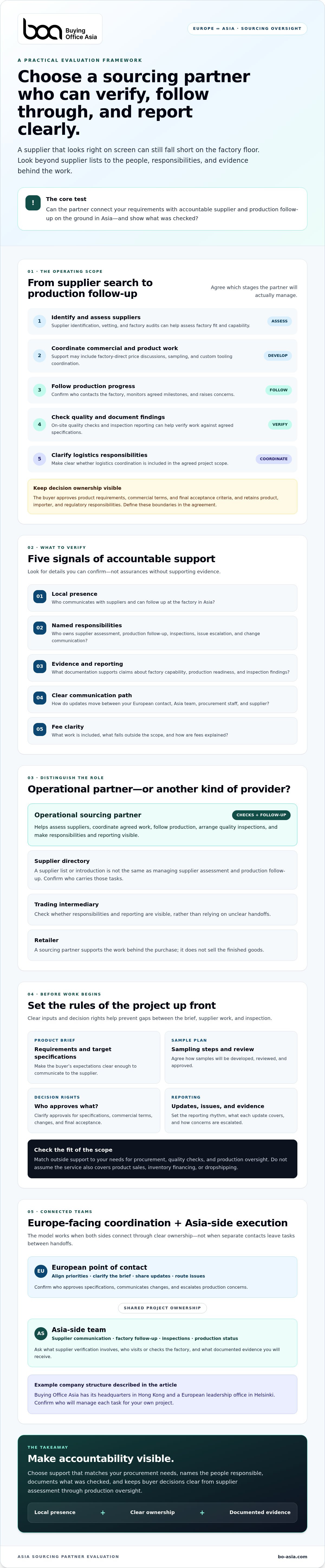
A clear kickoff turns a product idea into instructions a supplier can act on and a buyer can verify. Before work begins, document the product brief, target specifications, approval process, and partner’s scope. This gives everyone a shared reference when samples, production updates, or inspection findings require a decision.
Gather the details needed to assess suppliers and evaluate samples. Include product specifications, target volumes, quality requirements, intended markets, and any known material or packaging needs. List testing and compliance questions for review by the appropriate qualified parties. Assign internal owners for budget approval, sample sign-off, supplier selection, and specification changes. Clear ownership prevents a sourcing partner from being expected to make decisions that belong to your business.
Agree on a staged process, with an owner and approval point at each step. For example:
Align on specifications, target volumes, quality expectations, and what is still undecided.
Define supplier-selection criteria, the vetting or factory review in scope, and who approves the shortlist.
Set sample requirements and record who can accept a sample or request changes.
Confirm the approved sample, product acceptance criteria, and how proposed specification changes will be reviewed.
Identify relevant inspection stages, reporting expectations, and who decides how to respond to findings.
This sequence connects supplier selection to ongoing production and quality oversight. It also makes decision gates explicit. Production should not proceed based on assumptions about which sample or specification was approved.
Put the reporting rhythm in writing. Set schedule milestones, the channel for routine updates, and a clear route for raising concerns. Define who approves samples, inspection outcomes, and specification changes, and what information the partner should provide for each decision. If logistics coordination is included, clarify its boundaries and handoffs separately from sourcing and production oversight.
For broader process context, buyers can review an end-to-end sourcing and procurement guide and use it to identify questions for their own project. The written scope should specify included activities, deliverables, decision rights, and exclusions instead of relying on a broad “end-to-end” label. This helps an asia sourcing partner europe buyer begin with clear expectations while retaining control of commercial and product decisions. To discuss how sourcing and production oversight could fit your requirements, contact the team about your sourcing project.
Buying Office Asia may suit companies that need operational support with supplier selection, procurement, quality checks, and production oversight in Asia. Its scope is relevant when your team needs more than supplier introductions, such as help assessing factories, negotiating directly with them, reviewing samples, monitoring mass production, or coordinating logistics. The right fit depends on the work your project requires and the responsibilities you agree in advance.
The company’s operating structure includes a Hong Kong headquarters and a European leadership office in Helsinki. That context may support communication between European business priorities and Asia-side supplier follow-up, but an office location alone does not guarantee a particular level of involvement. Confirm who will manage your project, where key activities will take place, and what reporting you will receive.
Buying Office Asia provides sourcing and procurement services. It does not sell products, finance inventory, or operate as a dropshipping provider. It coordinates logistics as part of its service scope rather than selling shipping as a standalone service. These boundaries help you determine whether the offer matches your procurement needs.
The services may suit businesses sourcing at volume that need supplier identification, vetting, factory-direct price negotiations, and follow-up through production. A more specialized brief may also call for product development and sampling support, custom product or tooling development, supplier management, or on-site quality control and inspections. These activities can be considered as a connected scope, but confirm which are relevant and included in your project.
If your need is ongoing rather than tied to a single sourcing task, review the details of dedicated Asia procurement team support. Use that discussion to clarify the team’s responsibilities, your internal decision-makers, and how oversight will fit your existing procurement function.
Prepare a concise outline of your product requirements, expected volume, potential sourcing countries, and current supplier or production risks. Be ready to discuss who approves suppliers and samples, your project timeline, required inspection points, and the updates your team needs. These details help both sides define a workable scope and identify open questions before making commitments.
If you’re assessing an asia sourcing partner europe companies can work with, treat the first conversation as a fit check, not a promise of results. Share your requirements and ask how the proposed scope would cover supplier sourcing, procurement, quality checks, production oversight, and any logistics coordination you need. Discuss your Asia sourcing requirement to assess responsibilities, scope, and practical next steps together.
The right sourcing relationship involves more than supplier access. Before you commit, confirm who owns each stage, what evidence supports supplier and quality assessments, and how updates and decisions will be handled. A written scope connects supplier selection with production oversight while keeping product and commercial decisions in your hands.
For businesses assessing an asia sourcing partner europe companies can work with, Buying Office Asia’s Hong Kong headquarters and European leadership office in Helsinki provide relevant regional context. Its service scope includes supplier vetting, on-site inspections, and mass-production oversight. As with any partner, clarify which activities fit your requirements and how they will be reported.
Bring your product brief, expected volume, current sourcing challenges, and oversight needs into the first discussion. Discuss your Asia sourcing requirements with the team to explore fit, scope, and practical next steps. With clear expectations and defined responsibilities, you can move forward with greater confidence and a sourcing process built around your business priorities.
An Asia sourcing partner can help identify and assess suppliers, negotiate commercial terms, coordinate samples, monitor production, and arrange inspections or logistics coordination. The exact scope depends on the provider and your agreement, so list responsibilities and deliverables in writing. Your team should retain ownership of product requirements and key commercial decisions, and clarify which market-compliance obligations remain with your business as the importer.
It may be worthwhile if your team needs supplier follow-up in Asia, clearer production visibility, or coordination across several sourcing stages. Assess the proposed scope against your internal capacity and the risks you need to manage. Ask what reporting, inspections, and supplier oversight are included, then compare the documented deliverables and fees with the accountability they provide. The value depends on fit and execution, not simply on having an intermediary.
For buyers searching “asia sourcing partner europe,” reliability is best assessed through verifiable processes, not broad promises. Ask how suppliers are vetted, who visits factories, what inspection records you receive, and how production issues are escalated. Confirm who owns decisions and how fees are disclosed. A European point of contact can support communication, but also establish how supplier discussions, site visits, and factory-side follow-up are handled in Asia.
Some partners offer on-site inspections at agreed production stages, but confirm the scope and method before work begins. Specify when checks occur, which product criteria inspectors use, and what the report includes. Agree who reviews findings and what happens if a check identifies a problem. An inspection or sample review does not establish that every unit will meet requirements, so set acceptance standards and responsibilities in advance.
Fees may cover supplier identification and vetting, negotiations, inspections, ongoing production oversight, or logistics coordination. Providers structure charges differently, so request a written breakdown linked to defined activities and deliverables. Clarify which work is one-time or ongoing, whether additional expenses are separate, and how the provider’s commercial relationship with suppliers is disclosed. Compare the proposed scope and terms rather than relying on an unexplained total.
A sourcing partner may coordinate logistics information or support agreed process tasks, but that does not automatically transfer the importer’s responsibilities. Relevant requirements depend on the product, destination market, and each party’s role. Confirm in writing who supplies and reviews documents, and who checks product and import requirements. Where specialist interpretation is needed, consult a qualified compliance professional rather than treating sourcing support as a substitute.
Some providers work across multiple Asian markets, while others focus on specific locations or product categories. For example, vetting a high-volume wholesale A4 copy paper supplier involves different factory audits and material verifications than sourcing consumer electronics. Do not assume broad coverage from a general service description. Ask which countries are within the proposed scope, who handles supplier communication in each, and how vetting, site visits, and inspections are carried out. Check that the provider’s experience and operating model match your product, supplier locations, and project requirements.

The lowest freight quote can carry the highest operational risk if supplier readiness, documentation, and exception handling are left outside the plan. If you’re asking how to choose a freight forwarder for Asia, look beyond the headline rate. A smooth shipment depends on who coordinates each handof...
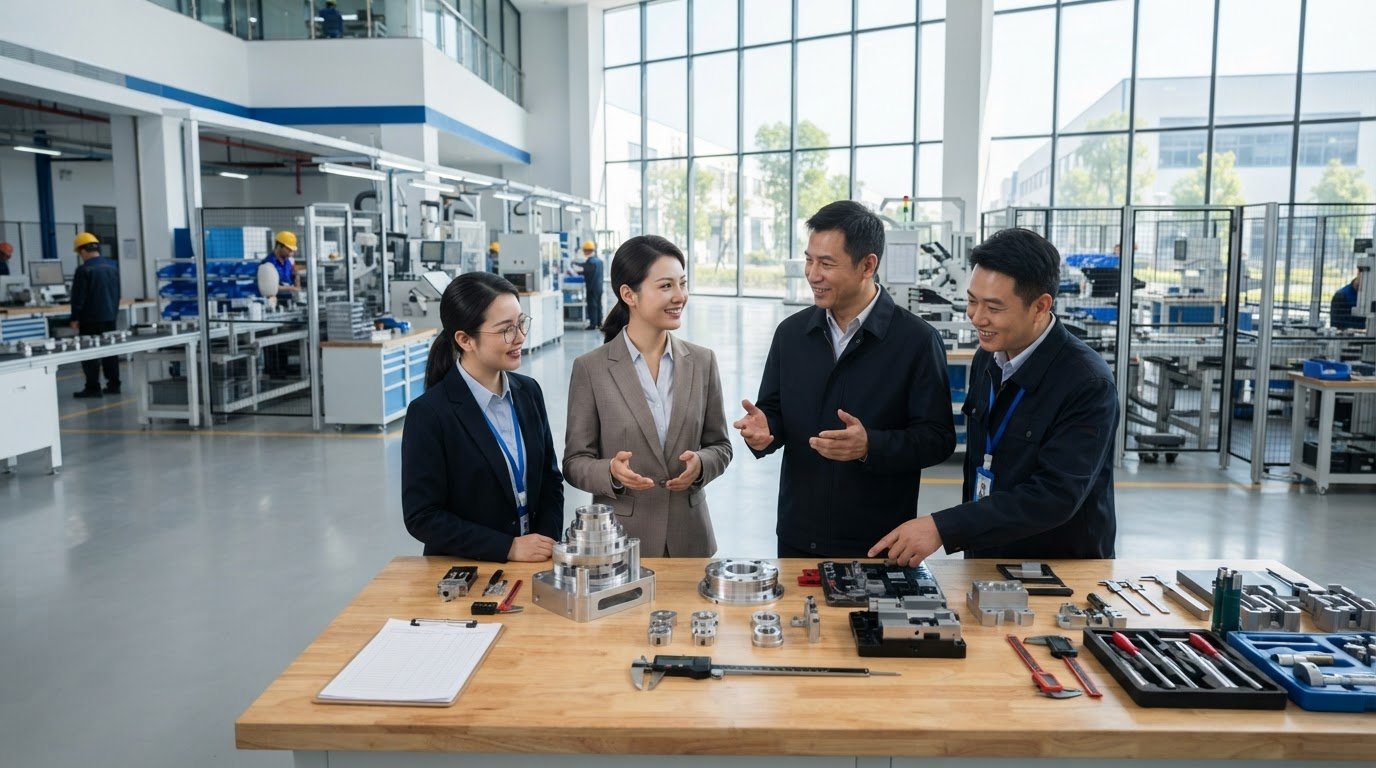
What if your signed OEM agreement protects the product on paper but leaves the factory unclear about what to make, when to deliver it, or how quality will be judged? That gap is where an oem manufacturing agreement china project can lose control: responsibilities blur between buyer, sourcing interme...

What if the safest payment deal isn’t the one that delays the most cash, but the one that releases it only when progress is verifiable? Payment terms negotiation with Asian suppliers is about balancing your working capital with the supplier’s need for confidence, not simply pushing for a smaller dep...