


A shipment can be ready to move and still be held at the border. The customs clearance process for imports determines whether goods can enter their destination market, which documents are reviewed, and what duties or fees may be due. The exact requirements depend on the goods and the country they’re entering.
It’s understandable to focus on freight and delivery dates, but customs costs and checks also affect landed costs and planning. Duties generally depend on how goods are classified and valued, while inspections or missing information can delay release. Knowing what customs officials may review helps you build a more reliable import plan.
This article explains how customs clearance works, how duties and other charges are calculated, and which documents are commonly reviewed. It also covers what may happen during an examination, why goods can be held, and how coordinated preparation across sourcing, production, and logistics can reduce avoidable uncertainty.
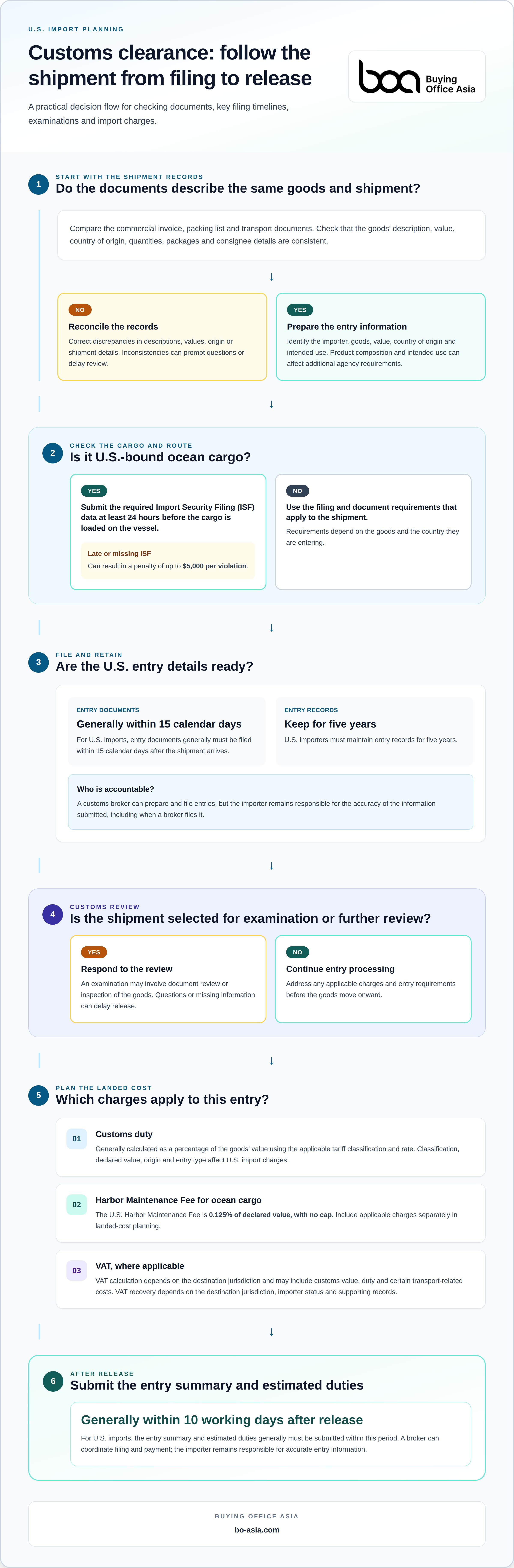
• Customs clearance relies on accurate entry information and timely filing; for U.S. imports, entry documents generally must be filed within 15 calendar days after the shipment arrives.
• Duty depends on how goods are classified and valued, while separate processing and ocean-cargo fees can also affect landed cost.
• For U.S.-bound ocean cargo, most Import Security Filing data must be submitted at least 24 hours before the cargo is loaded on the vessel.
• Examinations may involve document review or inspection of the goods, so incomplete details or questions about a shipment can delay release.
• When product design or tooling affects manufacturing readiness, Buying Office Asia’s custom product and tooling development can help connect those decisions with sourcing and procurement.
Customs clearance is the review and release of shipments entering a country. In the United States, importers submit entry information, provide supporting documents, and address applicable duties or agency requirements before goods can move onward.
Preparation means identifying the importer, goods, value, country of origin and intended use before arrival. These details help establish the entry information and any commodity-specific requirements. In the United States, entry documents generally must be filed within 15 calendar days after the shipment arrives, according to U.S. Customs and Border Protection. The importer remains responsible for accurate entry information, including when a broker files it.
The process moves from preparing shipment data to filing the entry, responding to reviews, paying charges, and receiving release. U.S. Customs and Border Protection requires importers to maintain entry records for five years. Common mistakes include inaccurate descriptions, values, or origin details, as well as missed filings. These can lead to corrections, examinations, or penalties.
Import and export documents describe the transaction, cargo, and route in a form customs officials can assess. Commercial invoices, packing lists, and transport documents connect declared goods with the shipment. The invoice identifies the merchandise and transaction, while packing details help reconcile quantities and packages. Inconsistencies between records can prompt questions or delay review.
Documents prepared in the origin country support export clearance, while destination-country records support import entry. The goods’ country of origin, description, value, and consignee details should be consistent across documents. Partner Government Agencies may set additional requirements for particular goods, so a product’s composition and intended use can affect which records are needed.
A customs broker prepares and files customs entries and coordinates duty payment for an importer. U.S. Customs and Border Protection licenses customs brokers. Hiring one is not mandatory for every import, but a broker’s expertise can help organize classification, valuation, and entry data. The importer remains responsible for the accuracy of the information submitted.
For U.S. imports, the broker must file the entry summary within ten working days of release, according to the Electronic Code of Federal Regulations. The importer provides shipment and product details for the filing. Clear, consistent records help the broker address questions and avoid unnecessary corrections.
The former U.S. de minimis exemption for qualifying low-value imports has ended, according to current U.S. Customs and Border Protection guidance. Importers should not assume a low-value shipment is exempt from duties, taxes, or entry requirements. The applicable treatment depends on current U.S. rules and the shipment’s details.
For U.S. ocean imports, a late or missing Import Security Filing can result in a penalty of up to $5,000 per violation. Accurate product descriptions, values and origin information help reduce filing discrepancies and support a more orderly entry review.
U.S. import charges depend on the goods’ classification, declared value, origin, and entry type. Duties are one part of landed cost. Ocean cargo can also incur a harbor maintenance fee.
Customs duty is generally calculated as a percentage of the goods’ value, using the applicable tariff classification and rate. The Harmonized System provides the basis for product classification, so a clear product description helps distinguish goods that might otherwise appear similar.
The U.S. harbor maintenance fee on ocean cargo is 0.125% of declared value, with no cap, according to U.S. Customs and Border Protection. Include each applicable charge separately in landed-cost planning.
Duty and tax payment settles the charges due on an import entry. Planning for these amounts alongside freight and other shipment costs helps your team estimate the full cash requirement before the cargo arrives.
For U.S. imports, the entry summary and estimated duties generally must be submitted within 10 working days after release. Payment can be coordinated through a customs broker, while the importer remains responsible for the entry information. Record the duty amount separately from brokerage and transport charges to keep the shipment’s cost breakdown clear.
Different agencies may apply requirements or charges to particular goods. For mixed shipments, assess each product line individually rather than assuming the same rate or treatment applies to every item.
Customs duties and value-added tax are distinct import charges. Where VAT applies, its calculation base is set by the destination jurisdiction and may include the customs value, duty and certain transport-related costs.
Eligibility to recover import VAT depends on the destination jurisdiction, importer status and supporting records. Keep VAT and duty assumptions separate in cost models, and confirm any recovery treatment with the relevant customs or tax authority.
Anti-dumping duties may apply to specified products and origins following a trade-remedy investigation. Their scope and rate are set by the importing jurisdiction, so check the current measure for the exact product and country of origin.
U.S. import clearance charges can include duties, government processing fees, harbor fees, bond costs, and broker charges. Which charges apply depends on the entry, shipment mode, and goods.
For a formal U.S. import entry, the merchandise processing fee is 0.3464% of value, subject to annual minimums and maximums, according to U.S. Customs and Border Protection. Other charges may arise before release at the border.
A customs broker prepares and submits entry information, coordinates customs communications, and arranges duty payment. Accurate documents and timely filings support release and help the importer understand the charges due.
The broker typically needs the commercial invoice, packing list, transport document, and details about the goods, value, and origin. Supporting records may include product descriptions or documents relevant to a trade agreement. The importer remains responsible for accurate entry information, even when a broker files it.
A freight forwarder coordinates cargo movement and transport documentation; a customs broker handles customs entry work. One company may provide both services, but the responsibilities differ. Confirming who handles each task helps prevent gaps between cargo arrival, customs filing, and payment.
Broker charges cover services such as preparing entries and handling related customs work. They are separate from duties and government fees and can vary with the services and shipment arrangements involved. Ask for an itemized breakdown in the quote or invoice so each charge has a clear purpose.
Possible government charges include the merchandise processing fee and, for ocean cargo, the harbor maintenance fee discussed earlier. A broker or carrier may also bill for shipment-handling services. These commercial charges are not customs duties, so recording them separately gives you a clearer landed-cost picture.
Other charges can arise if documents need correction or customs requests additional information. For example, an invoice description that does not clearly identify the goods may require broker follow-up. Prepare a consistent set of documents before filing to reduce avoidable rework.
Import duties depend on the product’s classification, value, and applicable tariff treatment. Trade agreements may affect the rate when goods meet the relevant origin requirements. A processing fee is a separate government charge, while a customs bond supports an importer’s obligations on covered entries.
For U.S. imports, formal entries generally require a customs bond, and ocean shipments may have separate bond requirements connected with the Import Security Filing. Importers who ship infrequently may use a single-entry bond; businesses importing frequently may choose an annual bond. The appropriate arrangement depends on entry patterns and applicable requirements.
To estimate total charges, separate duties, government fees, bond costs, and broker services in your shipment budget. Then match each estimate to the entry type and transport mode. This makes changes in costs easier to trace before cargo is released.
U.S. import documents connect the merchandise, transaction, and entry filing. Customs and relevant agencies use these records to assess classification and admissibility and determine whether goods can be released.
An import entry filing gives U.S. Customs and Border Protection shipment details for processing at the port. It identifies the importer and describes the goods, value, tariff classification, and shipment. The commercial invoice and packing list support those details by showing the transaction and package contents.
For U.S.-bound ocean cargo, eight Import Security Filing data elements generally must be submitted at least 24 hours before the cargo is loaded on the vessel, according to U.S. Customs and Border Protection. Known as “10+2,” it includes ten data elements filed by the importer and two separate carrier reporting requirements.
CBP Form 3461 is commonly used for immediate delivery and consumption entries. The filing sequence depends on the entry and shipment, so shipment information must be organized before cargo reaches the port.
Import documents substantiate what a shipment contains and how it was sold or transported. The invoice should clearly describe the merchandise, while the packing list identifies package contents. Transport records connect those details to the shipment arriving in the United States.
Some goods are also subject to Partner Government Agency requirements tied to the commodity. U.S. food, beverage, and supplement imports require FDA prior notice before arrival, separate from the customs entry. Filing the entry alone therefore does not satisfy this separate agency requirement.
Permit and supporting-document needs can depend on product composition and intended use. For example, a product description that says only “parts” may not give an agency enough information to assess the goods. Specific details about materials and function make the product record more useful.
Document verification compares the entry with the invoice, packing list, and transport records. Product descriptions, quantities, values, and origin details should be consistent. A mismatch, such as different quantities across records, can prompt questions or closer examination.
Accurate classification also depends on sufficient product detail. A broad invoice description may omit the material or function needed to distinguish the goods. Keep supporting specifications and product records with the filed entry so they are available if customs requests clarification.
CBP may issue a CF-28 when analyzing entry information. A CF-29 is a Notice of Action that gives an importer an opportunity to state its position on an issue. Responding with records that address the specific entry question helps keep the explanation tied to the shipment and its documentation.
A customs examination is a government check of imported merchandise before release. U.S. Customs and Border Protection may review entry details or inspect goods to assess compliance with applicable regulations. This differs from a commercial quality inspection: customs focuses on import requirements, while product inspection checks agreed specifications and condition.
A document review can assess whether the declared description, value, classification, and origin match the shipment. If records leave questions unanswered, customs may request clarification or supporting documents. Missing paperwork or unresolved questions can extend clearance beyond the normal release process.
A physical examination may involve opening packages or checking cargo against entry information. Its scope depends on the goods and the issue under review. For example, officials may need to compare the declared merchandise with what is presented at the border. Goods cannot cross the border while customs officials carry out necessary checks.
Timing is therefore a planning consideration, not just a transport detail. When goods are held for inspection, the release timeline can become uncertain and depends on the examination and any information requested. A delay can affect delivery schedules, receiving plans, and downstream supply commitments, particularly when a shipment supports a launch or production run.
While a shipment is under examination, the importer or broker may need to provide records or answer questions. Keep the commercial invoice, packing list, and entry information accessible, with consistent product descriptions and quantities. If customs asks about a particular item, a precise response tied to the shipment documents is more useful than a broad product label.
Government examination also differs from pre-shipment quality control. Customs checks whether an import meets applicable border requirements; quality inspection assesses whether production matches the approved sample, specifications, or purchase terms. Customs release does not establish that every unit meets the buyer’s quality requirements.
For manufactured goods, quality checkpoints before dispatch can identify issues such as incorrect components, assembly problems, or packaging discrepancies before cargo leaves the factory. A factory inspection captures the goods and process at the time of inspection. Ongoing production oversight adds follow-up and coordination when corrective action is needed.
Buying Office Asia provides on-site quality control and inspections for businesses that need production checks in Asia. A standalone inspection can suit a shipment-specific review, while broader oversight can address supplier and production risks earlier. Contact Buying Office Asia about inspection support to discuss the product, factory access, location, sampling or tests, and timing.
Buying Office Asia supports custom product and tooling development when product specifications, materials, or production methods are still being finalized. These decisions shape how a product is described and documented for import, so aligning them before production can support clearer records for customs classification and entry preparation.
For example, a custom collectible may combine several materials, components, and decoration processes. Documenting the approved design, materials, and product description helps keep supplier specifications and commercial paperwork aligned. Buying Office Asia connects development and sampling decisions with end-to-end sourcing and procurement, helping you manage the handoff from product definition to manufacturing.
If you’re developing a custom product or tooling for production in Asia, contact Buying Office Asia to discuss your project.
Use your customs plan as part of the wider sourcing decision, not as a task to leave until cargo is ready to move. Aligning product information, supplier records, and import planning early gives your team a clearer basis for budgeting and operational decisions. The customs clearance process for imports is easier to manage when responsibilities and shipment information are coordinated across the supply chain.
Buying Office Asia supports businesses through End-to-End Sourcing & Procurement, high-volume sourcing and procurement, and a Dedicated Asia Procurement Team. This support connects supplier coordination and production planning with your import requirements, while keeping decisions focused on your commercial priorities.
Contact Buying Office Asia to discuss your sourcing and import requirements. A clear plan is a practical next step toward more predictable cross-border operations.
A customs broker is a professional licensed by U.S. Customs and Border Protection to handle customs entry work for importers. For example, a broker can prepare shipment data for filing and coordinate questions about an entry. The broker’s involvement doesn’t make them the importer of record. The importer remains accountable for the accuracy of submitted information, so clear product and transaction details matter.
To estimate a duty, multiply the customs value used for the entry by the applicable duty rate. For example, a product’s classification determines which tariff rate applies, so two goods with the same declared value may owe different duties. The final estimate also depends on how the goods are classified and valued. Keep duty separate from broker charges and other import fees in your landed-cost calculation.
Duty rates are determined mainly by tariff classification, declared value, and the goods’ origin. The World Customs Organization’s Harmonized System provides the basis for product classification, while the applicable national tariff schedule sets import rates. Additional trade measures may affect particular products or origins. Taxes have their own rules and calculation bases, so don’t assume the duty rate alone represents the full tax burden on a shipment.
Give your broker the commercial invoice, packing list, and transport details, along with a precise product description. Include the goods’ materials, function, country of origin, quantity, and declared value so the broker can assess the entry details. If an agency requirement applies, provide the relevant supporting documents too. For shipments with several product lines, organize descriptions and values by line rather than combining distinct goods under one vague label.
U.S. entry procedures include formal entries and entries for immediate delivery and consumption; the appropriate type depends on the shipment and applicable requirements. CBP Form 3461 is commonly used for immediate delivery and consumption entries. Some low-value shipments may qualify for a different entry type. Entry type affects the filing and supporting information, so the shipment’s purpose and details need to be clear.
Common records include a commercial invoice, packing list, and transport document, but the required set depends on the goods and entry. A shipment subject to a Partner Government Agency’s rules may need additional permits or supporting records. For example, U.S. food, beverage, and supplement imports require FDA prior notice before arrival, separate from the customs entry. Product composition and intended use can affect which agency documentation applies.
Importers file entry information themselves or arrange for a customs broker to submit it. The information identifies the goods and supports the declared classification, value and origin. CBP Form 3461 is commonly used for immediate delivery and consumption entries. After release, the broker must file the entry summary within ten working days, according to the Electronic Code of Federal Regulations. Keep the supporting records available if CBP asks questions.
A customs broker prepares or submits customs entry information and can coordinate communications and duty payment. In the United States, hiring a broker isn’t generally mandatory; an importer may file directly. A broker can be useful when product details, agency requirements, or multiple shipment lines make entry preparation complex. Even with broker support, the importer of record remains responsible for accurate information submitted for the import.

Supplier coordination works best when everyone knows when decisions will be made, what can happen asynchronously, and which local time zone applies to each deadline. Managing different time zones with suppliers means setting a practical window for live discussions, documenting updates for people who...

Distance can turn a small production issue into a coordination problem. The benefits of having a team on the ground in Asia include closer alignment between regional operations and your wider business. Local presence can connect strategy with supplier activity, product decisions, and day-to-day coll...
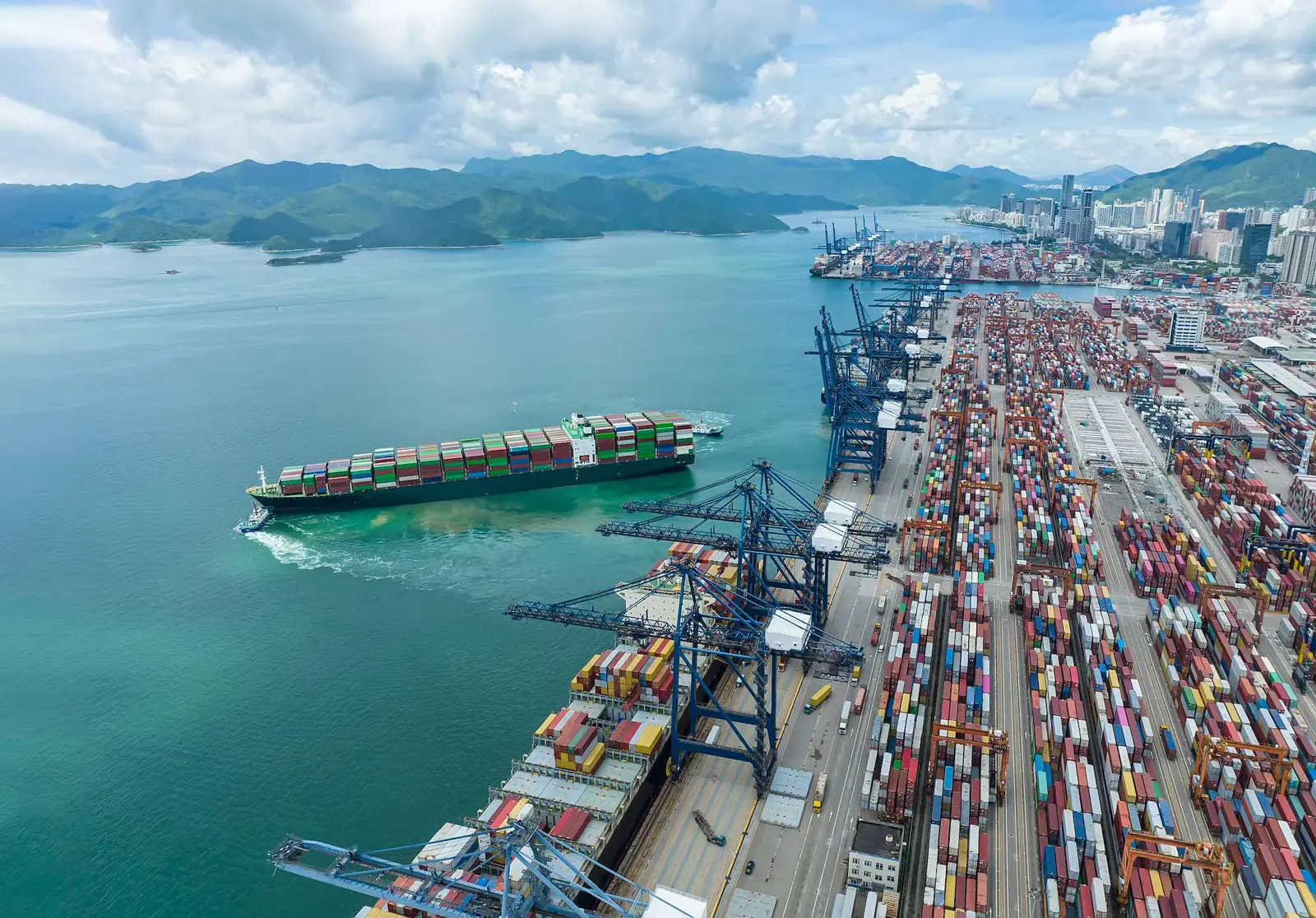
A container can be ready to move and still incur port charges. The practical question is what demurrage is and how to avoid it: demurrage is a charge for cargo left at a port or terminal beyond its agreed free time. The amount depends on the applicable rate and how long the cargo remains there.That...