

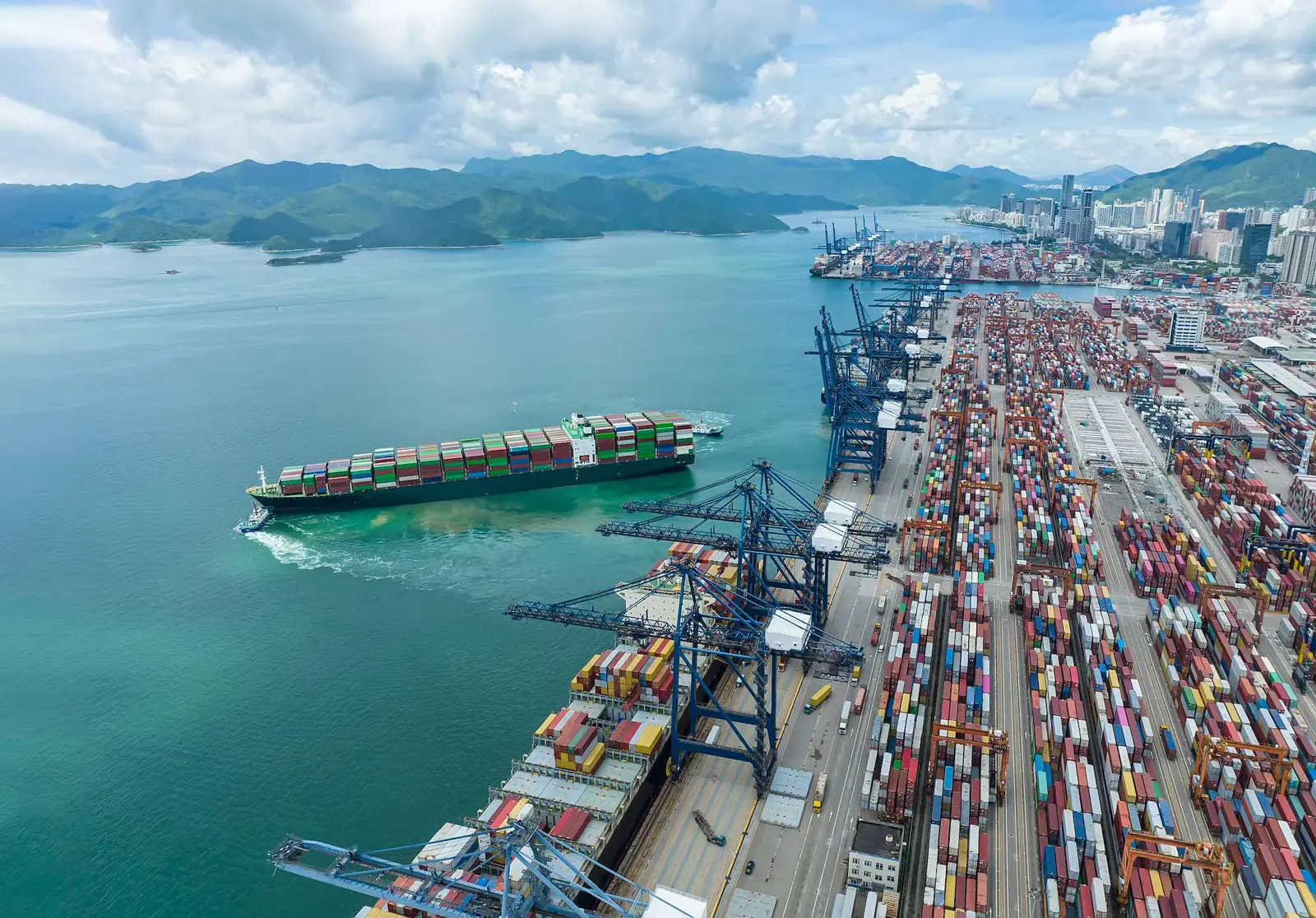
A container can be ready to move and still incur port charges. The practical question is what demurrage is and how to avoid it: demurrage is a charge for cargo left at a port or terminal beyond its agreed free time. The amount depends on the applicable rate and how long the cargo remains there.
That free-time deadline can be missed when customs documents are delayed, cargo isn’t cleared promptly, or transport and unloading aren’t ready. Demurrage is separate from detention, which generally applies when a container stays with the customer outside the terminal beyond its allowed time.
Understanding the charge is only the start. This article explains how demurrage differs from detention, how charges are calculated, which delays commonly trigger them, and practical steps to reduce the risk. You’ll also learn how to review a bill and prepare shipment documents, customs clearance, transport, and receiving arrangements so your team can manage deadlines and costs more effectively.
• Separate demurrage for cargo held at the terminal from detention for a container kept outside it, so you can identify what a charge covers.
• Use the carrier’s free-time terms and the shipment’s discharge details to establish the last free day and plan pickup.
• Coordinate customs documents, cargo release, transport and unloading appointments early to reduce avoidable delays.
• Estimate charges by applying the relevant rate schedule to the chargeable days and containers, then review the invoice against the shipment timeline.
• Understand how paperwork holds, transport gaps and other disruptions can affect both port costs and the wider delivery plan.
Demurrage and detention apply at different stages of a container’s movement. Demurrage generally applies while a loaded container remains at the port or terminal beyond its agreed free time. Detention applies after the container leaves the terminal but remains under the customer’s care beyond the allowed period. The applicable carrier, terminal, and shipment terms determine the exact charge and when the clock runs.
For example, an importer whose container has been discharged but not collected may face demurrage. After pickup, delays unloading the goods or returning the empty container may lead to detention, also called a per diem charge. The distinction matters because the responsible party, charge schedule, and time records may differ. A bill may use the combined term “demurrage and detention,” so identify where the container was held during each billed period.
Terminal storage is related, but it is not automatically the same charge. A port or terminal may bill storage for cargo occupying its space, while a shipping line may assess demurrage under its container terms. Check each invoice’s description and billing period, then compare the dates with discharge, pickup, and empty-return records. This helps distinguish overlapping charges from separate fees.
Despatch is different again. In shipping, it generally refers to money payable to a party when cargo operations finish before the agreed laytime expires. It is not a fee for keeping a container too long. When reviewing a statement, distinguish terminal time, customer-controlled container time, and vessel-loading or unloading time.
Documentation can affect when cargo is ready for release. For US imports, the Importer Security Filing is due 24 hours before loading, according to U.S. Customs and Border Protection. Missing or delayed paperwork can hold up clearance, even when transport arrangements are ready. Keep document responsibilities and shipment milestones visible to the parties handling the cargo.
For US trades, vessel-operating common carriers and marine terminal operators must issue a demurrage or detention invoice within 30 calendar days after the charge last accrued, according to the Federal Maritime Commission. Non-vessel-operating common carriers must issue the invoice within 30 calendar days after receiving the underlying invoice. The billed party has at least 30 calendar days to request mitigation, a refund, or a waiver.
To dispute an incorrect invoice, assemble the bill, carrier terms, terminal timestamps, release records, and proof of pickup or empty return. Identify the specific disputed dates or charges, then submit a written request for mitigation, a refund, or a waiver within the applicable response period.
Demurrage applies when cargo remains at a port or terminal beyond the free time allowed under the shipment terms. This allowance provides a window to complete clearance and arrange collection. The actual free-time period depends on the carrier’s terms and may vary by port, shipment, or container. Use the written contract and arrival notices as the controlling references for planning.
To establish the last free day, identify the event that starts the clock, such as discharge or another trigger stated in the terms. Then apply the contract’s counting method. Check whether days are counted as calendar or working days, and how weekends or holidays affect the deadline. Don’t assume the clock begins only when your team receives a notification. Record the stated trigger and deadline with the shipment documents.
Turn the deadline into an operational milestone. Enter the last free day in the shipment tracker, assign someone to monitor cargo release, and schedule transport and warehouse receiving around that date. If terminal access or cargo availability changes, update the pickup plan and notify the relevant parties. A deadline kept only in one person’s inbox is easy to miss during a handoff.
Demurrage rates follow the applicable schedule and can increase the longer cargo remains at the terminal. The relevant rate depends on the carrier, port, container, and time period in the contract. For accurate budgeting, record the rate tiers alongside each shipment’s free-time terms. Keep terminal storage and other port line items separate when reviewing charges, since these fees may follow different billing rules and records.
Before free time expires, assemble the shipment’s commercial invoice, packing list, bill of lading, and customs-clearance information. Coordinate with the customs broker on required entries and outstanding information, then track cargo release and arrange pickup. Share delivery instructions with the consignee, carrier, transport provider, and receiving warehouse so the handoffs don’t depend on a single late message.
Special permits or inspections may hold up cargo release. If a shipment requires additional authorization, raise the issue with the shipper or shipping line in advance and ask whether extra free days can be arranged. Explain the reason and expected timing, and keep the response with the shipment record. Don’t plan pickup around an extension until the responsible party has agreed to it.
For recurring shipments, negotiate free-time terms before booking and compare them with your clearance, transport, and warehouse processes. A shared deadline, named owner, and documented release status make delays easier to escalate. For help coordinating shipment planning with procurement, discuss your shipment planning.
A shipment can incur demurrage when the consignee cannot clear or collect cargo before free time ends. Late customs documents, incorrect entries, or missing information can delay release. For example, if the commercial invoice and packing list reach the broker after the vessel arrives, clearance may not be ready when the container becomes available. The carrier’s clock may still run during that delay.
Disputes between a shipper and consignee can also leave cargo waiting. Disagreement over payment, delivery responsibility, or who must provide a document can stall release instructions. Prevent this handoff gap by assigning each shipment task to a named party before departure. Record who sends documents, approves charges, and gives the carrier or broker release instructions.
Some delays stem from events importers cannot control. The 2021 Suez Canal blockage disrupted container movement, while the 2020 global lockdown caused hinterland transportation breakdowns and left containers at ports beyond agreed free time. Customs examinations or port congestion can also disrupt a pickup plan. Status updates and contingency transport plans can help limit further delays.
Other causes are more preventable. Incomplete paperwork, late customs-clearance bookings, slow responses to carrier notices, and unconfirmed unloading arrangements can all delay collection. A transport provider may arrive before cargo is released, or a warehouse may lack an unloading appointment. Align release status, driver dispatch, delivery instructions, and receiving schedules before the container leaves the port.
Preventing demurrage starts with avoiding unnecessary handoff delays. Exporters can trigger charges by delivering a container too early. If it arrives at the terminal before the vessel’s cut-off date, it may occupy terminal space while waiting for the planned sailing. Coordinate delivery with the carrier’s instructions, and promptly update the plan if the sailing changes or the cut-off is missed.
Apply the same prevention mindset to each shipment. Make responsibilities and timing explicit before dispatch:
• Confirm the shipper, consignee, broker, and carrier share the same delivery instructions.
• Send accurate clearance documents early and respond promptly to correction requests.
• Match pickup timing to cargo release, transport availability, and unloading capacity.
• For exports, align terminal delivery with the carrier’s cut-off and booking details.
This process cannot prevent a canal closure or every customs hold. It can reveal avoidable delays before they consume free time, especially when shipment status changes after departure.
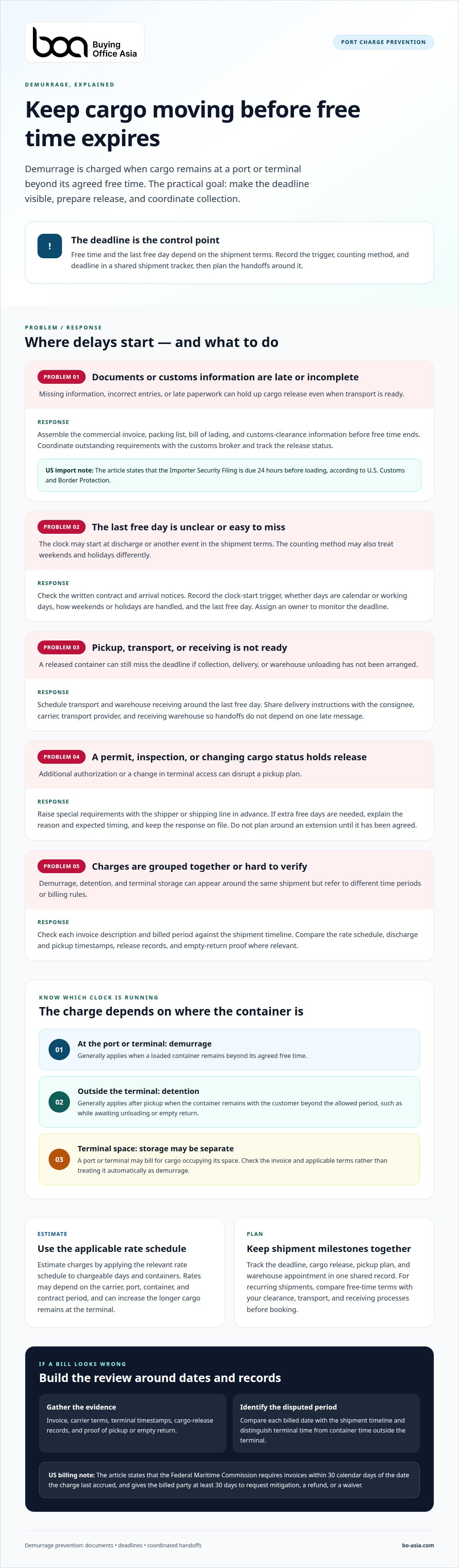
Demurrage is commonly calculated by multiplying the chargeable days by the applicable rate per container. The free-time allowance determines when the charge begins, while the carrier’s schedule determines the rate for each billed period. For a shipment with multiple containers, calculate each box separately, then add the amounts.
These figures demonstrate the arithmetic only; actual schedules vary by carrier, terminal, country, and contract. The billing document and shipment terms set the applicable free time and rates.
If one container remains at the terminal for five charge-counted days under that schedule, the first three days are free.
If a container remains into a later rate tier, separate the days by tier rather than applying one rate to the entire delay. Add each tier’s amount, then repeat the calculation for every container, whether their timelines match or differ.
Use this sequence to check an invoice:
• Identify the free-time start date and last free day in the carrier’s terms.
• Compare terminal records with the container’s actual availability and pickup timestamps.
• Count chargeable days using the billing schedule’s stated day-counting rules.
• Apply each rate tier to its matching days and container count.
• Compare the result with the demurrage line items and supporting records.
Keep customs holds, freight costs, and logistics expenses separate from demurrage. A terminal storage charge or other handling fee may appear on a separate invoice, so don’t combine it with a shipping line’s container charge without checking its description. Delays can also shift the pickup date, making accurate timestamps important when reviewing waiting periods and billed days.
For a disputed calculation, preserve the carrier’s rate schedule, terminal activity record, release notice, and collection proof. A mismatch between the last free day and the invoice’s first billed day may change the total. Check each container individually, since boxes in the same shipment may have different release or pickup dates.
Demurrage and detention charges affect more than a shipment’s freight budget. They can create unplanned costs, complicate payment approvals, and reduce an order’s margin. For finance teams, recording these charges against the correct shipment and purchase order helps show where landed costs changed. It also distinguishes port-related expenses from production, transport, or warehouse costs.
Operational effects can spread across the supply chain. If imported materials arrive after a production slot, the manufacturer may need to revise its schedule. If finished export goods miss a planned loading window, delivery commitments may need adjustment. Procurement and logistics teams can reduce planning blind spots by sharing shipment status changes with production, finance, and receiving teams, then recording the reason for each delay.
For U.S. ocean trades, the Ocean Shipping Reform Act of 2022 and Federal Maritime Commission rules govern aspects of carrier demurrage and detention billing. These rules provide a framework for invoices and billing disputes. The United States Congress states that a charged party is not obligated to pay a demurrage or detention charge if the invoice omits information required by subsection (d). Keep the invoice and supporting shipment records together when assessing a charge.
If a charge appears inconsistent with the contract or shipment events, identify the disputed item and preserve relevant records. These may include the agreed shipping terms, carrier correspondence, terminal activity records, cargo-release information, and proof of delivery or empty return. Clear records help the responsible team explain whether the charge belongs to the shipper or consignee under their agreement, and whether the billed period matches the container’s movement.
If demurrage charges remain unpaid, they remain an outstanding billing matter and may be handled under the applicable contract and carrier process. Don’t treat silence as cancellation. Keep the invoice status visible, document any disagreement, and assign responsibility for follow-up so an unresolved amount doesn’t disappear between finance and operations.
Use a consistent internal review to connect the operational event to its financial treatment:
• Code each charge to its shipment and purchase order.
• Record how the delay affected production, delivery, or export loading.
• Separate disputed items from charges accepted for payment.
• Use recurring delay causes to improve contract terms and planning procedures.
This review turns individual charges into useful planning information, without assuming every delay can be prevented. For support coordinating supply-chain operations and quality checkpoints, contact the team about your shipment.
Buying Office Asia helps businesses manufacturing in Asia coordinate sourcing and procurement across suppliers and production stages. When shipment delays expose gaps between purchasing, factory timelines, and cargo readiness, a dedicated Asia procurement team can help align information and responsibilities earlier in the process. This is particularly relevant for high-volume sourcing, where disconnected handoffs can make shipment planning harder to manage.
End-to-end sourcing and procurement connects supplier coordination with the wider production plan, while factory-direct price negotiations support clearer commercial discussions. This work can improve operational visibility, but port charges still depend on shipment terms, carrier schedules, and terminal events.
Contact Buying Office Asia to discuss how coordinated sourcing and procurement can support your supply chain.
Knowing what demurrage is and how to avoid it is most useful when the next shipment has clear ownership and an agreed escalation path. Create a brief operating plan before booking: name the person responsible for coordinating the shipment, set internal deadlines ahead of carrier cut-offs, and decide how schedule changes reach procurement, logistics, and the receiving team. Keep the plan with the shipment record so responsibilities remain visible when staff or timelines change.
After each arrival, review where coordination worked and where decisions stalled. Use those observations to adjust future handoffs, escalation triggers, and internal deadlines. This makes demurrage management part of routine supply-chain planning, rather than an issue handled only after an invoice arrives.
Buying Office Asia can support your sourcing and procurement planning for manufacturing in Asia. Contact Buying Office Asia to discuss your requirements and next steps. A clear plan gives your team a practical starting point for the next shipment.
Demurrage is a charge associated with cargo or a container staying at a port or terminal beyond the time allowed under the applicable terms. For example, a container awaiting customs release may remain at the terminal after its free period ends. Review the carrier’s invoice alongside terminal records, since terminal storage may appear as a separate charge rather than part of the demurrage line.
Calculate demurrage by applying the relevant rate schedule to the chargeable days for each container. First identify the free-time trigger and last free day, then count billed days and apply any rate tiers that change over time. Check the invoice against the carrier’s terms and terminal timestamps. If containers have different release or collection dates, calculate each separately before totaling the shipment.
There isn’t one typical fee that applies across ports and carriers. The charge depends on the shipment’s contract, container type, location, free-time allowance, and how long the container remains at the terminal. Some schedules increase rates after an initial billed period. For a useful estimate, use the carrier’s current schedule for the specific shipment instead of relying on a broad market average.
The total depends on the number of containers, chargeable days, and applicable rate tiers. Build an estimate from the shipment’s terms, then keep terminal storage and other invoice items separate. For planning, compare the expected clearance and collection date with a delayed scenario. This shows how an additional hold could affect the shipment budget without assuming a universal daily rate.
Demurrage generally concerns time a container remains at the port or terminal, while detention generally concerns time it remains outside the terminal under the customer’s care. For instance, a container awaiting pickup and an empty container awaiting return involve different stages. Match each charge to its location and relevant timestamps, rather than treating every container-related fee as the same item.
The sale contract and agreed shipping terms determine how the shipper and consignee allocate the cost between them. The party named on a carrier’s invoice may also have an immediate payment obligation under the transport arrangement, which is separate from the parties’ agreement. Review both sets of terms, then document who handles clearance, pickup, and any resulting charges before dispatch.
In container shipping, demurrage is a charge associated with a container remaining at a terminal beyond the agreed free time. The applicable shipment terms determine the start date and counting method, so the arrival date alone may not establish the deadline. Keep the carrier’s notice and terminal availability records with the shipment file to support accurate deadline tracking.
Demurrage can raise landed costs and disrupt delivery planning when cargo is delayed at a terminal. A late release may also push back warehouse receiving, production inputs, or customer commitments. For example, a manufacturer waiting for imported components may need to adjust its production sequence. Record the cause of each delay and its operational effect to improve planning for future shipments.

Knowing how to manage overseas manufacturing projects starts with comparing total landed cost, not just the factory quote. Include tooling, freight, tariffs and duties, insurance, management time, and the cost of correcting problems. Weigh those expenses against product quality, delivery risks, and...

The biggest risk in contract manufacturing in India is not simply finding a factory. It is starting production before product specifications, responsibilities and intellectual property terms are clearly documented.Finding and contacting suitable manufacturers is an important first step, but the righ...

A manufacturer’s quotation can look right while the factory behind it lacks the capacity or quality controls your product needs. Knowing how to vet manufacturing suppliers in Asia means assessing production fit, business credentials, quality practices, and sample results before committing to an orde...