


A load can look secure at the factory and still be vulnerable to movement, impact or weather in transit. A flat rack cargo inspection in China checks the cargo’s condition, packaging and loading arrangement before dispatch, helping identify visible risks while there is still an opportunity to address them.
It is understandable to focus on the cargo itself, but how it is supported and secured matters too. An inspection can document what was visible at the time, including packaging condition, damage, cargo position, securing materials and loading work. It is a practical snapshot, not a guarantee against damage in transit.
This article explains what inspectors assess, how to prepare and schedule a visit, and what to expect from the findings. It also covers which shipment details shape the inspection scope, and how coordinated production oversight can help address issues before loading.
• Define the inspection by its location, timing and scope so the report reflects the cargo and loading stage that matter to your shipment.
• Assess cargo dimensions and weight against the selected flat rack and transport plan rather than relying on a generic capacity figure.
• Include packaging, visible cargo condition, rack condition, carton counts and securing arrangements in the inspection scope.
• Before booking, align factory or port access, loading status, inspection timing and report delivery with your shipment schedule.
• Use a standalone inspection for a focused check, or coordinate inspection with production oversight when issues need follow-up and corrective action.
A flat rack cargo inspection is a documented check of a shipment at a defined place and stage. In China, it may take place at a factory before loading or at a port during loading. The report records what the inspector could observe at that time. Its value depends on a clear scope, access to the cargo, and evidence identifying the inspection location and date.
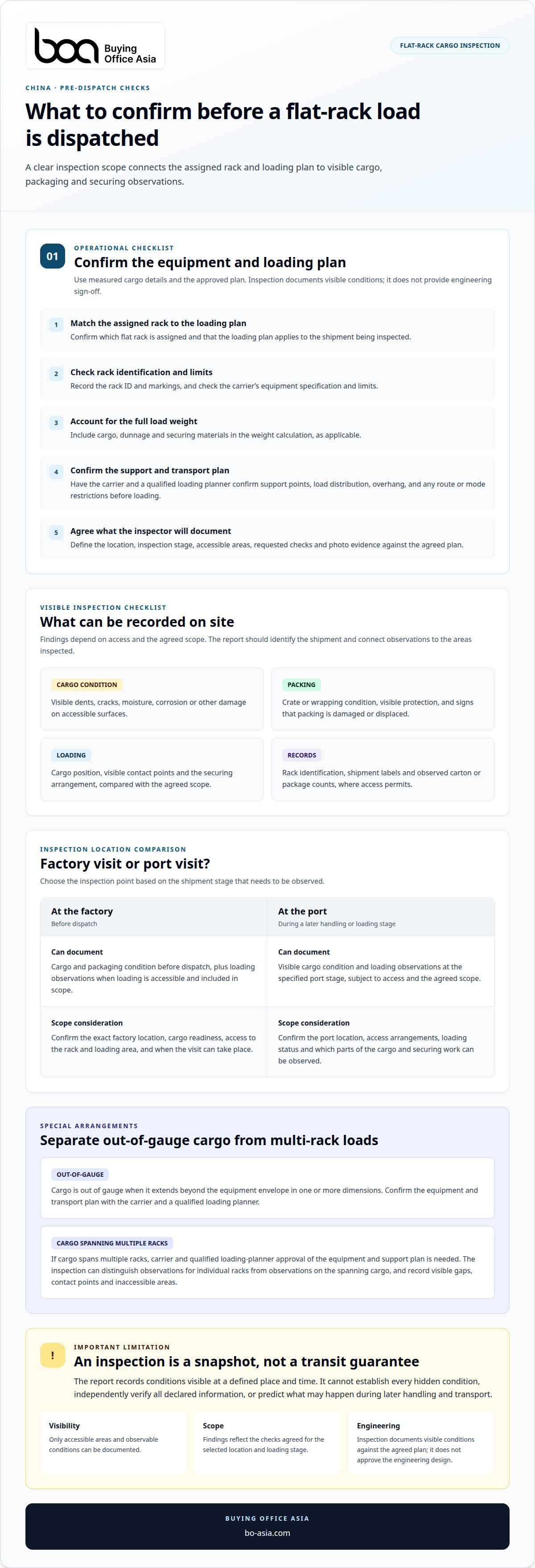
An inspection can cover the rack’s visible condition, the cargo, packaging materials and loading work. The agreed checklist should link each observation to the shipment, such as a crate’s condition, visible product damage or cargo position on the rack. Photographs can show inspected areas and any concerns. The inspector can also record issues that need attention before dispatch.
visible dents, cracks, moisture, corrosion, or other damage to accessible surfaces.
crate or wrapping condition, visible protection, and whether packing appears damaged or displaced.
cargo position, visible contact points, and whether the securing arrangement matches the agreed scope.
observed carton or package counts, labels, and shipment identifiers, where access permits.
The International Maritime Organization identifies inadequate securing, overloading and incorrect declaration of contents as common cargo-transport-unit packing problems. An inspection can document visible signs relevant to these risks. It cannot establish every hidden condition, independently verify all declared information or predict how cargo will behave throughout its journey. These limits matter when interpreting a report: observations describe the inspected cargo, not every unit or subsequent handling event.
For example, an inspection at a Chinese factory before loading can record packaging condition and loading observations, but it cannot show whether damage occurs after the rack leaves the site. A port inspection may capture a later stage, while earlier packing details remain outside its direct view. Define the location, timing, items to examine and requested evidence before the visit. A clear scope makes findings easier to interpret and distinguishes an observed defect from a condition the inspection could not assess.
An out-of-gauge load extends beyond the equipment envelope in one or more dimensions. For unusual multi-rack arrangements, have the carrier and a qualified loading planner confirm the equipment and support plan. The inspection scope can identify the racks included and document the visible parts of the cargo and securing arrangement against that plan.
For an approved multi-rack shipment, the report can distinguish observations on individual racks from observations on the cargo spanning them. Record visible gaps, contact points and inaccessible areas, and label evidence so readers can identify which rack and support point each observation concerns.
Use measured cargo dimensions, weight and the approved loading plan to select equipment. A focused inspection documents the assigned rack and visible loading arrangement against that plan; it does not approve the engineering design.
The pre-shipment process links shipment identification, rack selection and loading observations in sequence. First, match cargo identifiers and carton counts against the packing list, then record the rack’s identification and visible condition. During loading, document cargo placement and support. This creates a traceable record for the shipment team.
When comparing inspection services in China, assess the stated scope, flat-rack experience, sample reports, photo evidence and reporting schedule. Confirm that the inspection can take place at the specified factory or port, with access to the cargo and loading area.
Read the assigned rack’s markings and the carrier’s equipment specification. Check the permitted payload, including the cargo, dunnage and securing materials as applicable, and confirm support points, load distribution, overhang and any lower route or mode limits with the carrier and a qualified loading planner before loading.
During loading, record cargo position, support points and any overhang that affects the planned arrangement. Observe whether lashing is attached to suitable points and whether restraints appear tensioned and positioned as planned. The inspection documents visible conditions; it does not replace an engineered securing plan for unusual cargo.
The IMO/ILO/UNECE CTU Code is non-mandatory guidance on packing and securing cargo in transport units. The International Convention for Safe Containers (CSC) sets testing, approval and maintenance requirements for containers within its scope. A visual cargo inspection does not establish statutory approval.
Inspection pricing depends on location, access, timing, cargo readiness, and requested checks, and is provided after a quote request. Share the shipment details and requested scope to define the visit. Discuss a flat-rack inspection for your shipment.
Inspection coverage in China depends on where the cargo is located and which loading stage needs oversight. A factory visit can capture cargo before dispatch; a port visit can observe a later handling or loading stage. These locations differ in access, timing and visibility, so define the inspection point before confirming the booking.
For a factory inspection, identify the exact site where the flat rack will be loaded, not just the supplier’s registered address. Arrange entry with the factory contact, including access to the cargo, loading area and relevant machinery. If cargo is stored at one site and loaded at another, specify both locations and the stage the inspection should cover.
Port access requires separate coordination. Confirm the terminal or facility where the flat rack will be presented, who is arranging entry, and whether the inspection can take place before, during or after loading. A port visit may not show how cargo was packed at the factory. Likewise, a factory inspection may not capture later port handling.
provide the factory, warehouse, or port facility name and address.
specify whether the check covers packed cargo, loading, or a later handling point.
identify the site contact and arrangements for inspector entry.
set expectations for photographs, observed counts, and written findings.
Set the scope according to the shipment’s risks. For machinery, the review may focus on visible condition, support points and how the equipment is positioned for loading. For crated cargo, it may emphasize crate condition, package identification and visible movement during loading. Specify which cargo or packages need attention, especially when one visit covers multiple items.
An export plan may involve different factories, warehouses and port facilities. Keep the inspection instructions tied to the actual cargo location and loading schedule, since a site change can affect access and what the inspector can observe. For a split shipment, identify each location and its cargo separately. This makes the report specific to the place and stage inspected, rather than suggesting one visit covered the entire export process.
A focused standalone flat-rack inspection can start from one inspector-day with same-day reporting. Once the site, route and likely loading slot are known, confirm cargo readiness, access and the inspection appointment with the factory or terminal and the inspection provider.
Before booking, define the inspection stage: cargo awaiting loading, active loading or a loaded rack. Include the planned inspection date, location, site contact and loading schedule. A change from factory to port can affect access and what the inspector can observe, so share updates promptly.
Provide shipment records and specifications that help the inspector identify the cargo and understand the requested checks:
cargo description, shipment reference, package or carton count, and packing list.
cargo measurements, gross weight, and any available flat-rack details.
factory or port address, site contact, planned loading status, and inspection date.
requested condition checks, count verification, loading observations, and report evidence.
These details help distinguish an oversized item from a standard crate and identify which measurements matter. If cargo dimensions or weight change after booking, update the inspection information before the visit. For a loaded rack, clarify whether the scope includes visible securing and accessible cargo, since covered surfaces cannot be assessed directly.
Agree on the report deadline, recipients and format before booking. Confirm timing separately for multi-stage assignments and loading supervision so findings reach the dispatch and corrective action teams in time to act.
Use the report to make decisions while the shipment is still at the relevant site. If it records a count discrepancy, visible damage or a loading concern, identify the affected package or area and document the response. The report captures conditions observed during the inspection; it does not record changes after the inspector leaves. Clear timing, cargo data and scope make this snapshot useful for shipment decisions.
Ask the forwarder or customs broker to confirm current routing, clearance steps and any examination or hold for this shipment. Coordinate the inspection appointment separately with the inspector and site contact, and allow contingency before dispatch.
A port inspection can identify visible handling and securing concerns before a flat-rack shipment leaves China. Its value depends on inspecting the relevant cargo at the right loading stage.
Common issues include damaged crates, exposed cargo surfaces, inadequate blocking, loose lashing and cargo that exceeds the rack’s planned capacity. These conditions can leave machinery vulnerable to movement, impact or weather during transport.
A count or packing-list mismatch can also complicate shipment handover. For example, a crate shifted during handling may show damage before dispatch, while a loose restraint may allow further movement at sea. Identifying and documenting these conditions gives the loading team a chance to address visible concerns before the shipment moves on.
A port inspection records visible cargo and packaging condition, checks accessible securing arrangements and documents the loading stage. A concern found before release can then be discussed with the people responsible for loading and dispatch.
Useful evidence includes clear photographs of the rack, cargo, restraints and any affected package, alongside concise notes describing the observation. If a lashing point is obscured, the report should distinguish what was visible from what could not be assessed.
Coordinate the inspection with the port’s loading sequence. The inspector needs to see relevant areas before cargo becomes inaccessible, so plan the visit around the rack’s arrival and the timing of loading or final securing. If the shipment includes several crates, identify which items need closer attention and how their positions relate to the loading plan.
Before dispatch, route each recorded concern to someone who can act on it. A damaged crate may need attention to its handling or packaging; a visible securing concern may need review by the responsible loading team. Keep the observation, response and any follow-up evidence with the shipment records. This creates a clear trail for teams coordinating export and arrival at the destination port.
Where applicable, include accessible raw-wood crates, pallets and dunnage in the visual check for ISPM 15 marks. Processed wood such as plywood can fall outside the standard. Confirm destination requirements before booking and record which marks were visible and which areas could not be checked.
An inspection is a time- and location-specific snapshot. It documents observed conditions, but cannot guarantee that cargo will remain undamaged through later handling or transit. Arrange a port inspection for your flat-rack shipment around its loading plan.
Buying Office Asia provides on-site quality control and inspections for companies shipping flat-rack cargo from China. For a focused check before dispatch, its standalone inspection service can start with one inspector-day, with same-day reporting. The inspection scope is tailored to the cargo, location, access arrangements and timing.
A standalone visit suits a defined need, such as documenting visible cargo condition or observing loading and securing. To make the findings useful, specify which cargo is being inspected, what the inspector needs to observe and what evidence the report should include. Site access, loading status, requested sampling or tests, and report timing are also part of the booking arrangements.
Some shipments need more than a final checkpoint. End-to-end sourcing and procurement can connect supplier management and production follow-up with inspection findings. This helps bring production issues to the supplier’s attention, follow them through and coordinate corrective action before they affect later stages. An inspection records conditions at a particular point; ongoing oversight adds continuity across supplier and production activity.
Choose the support model according to where risk sits in your process:
for a specific shipment or loading-stage check when production management is handled separately.
when recurring production checkpoints or follow-up on corrective actions matter.
when communication, issue escalation, and production updates need ongoing management.
For example, a business with cargo ready for loading may need an inspection report to inform its dispatch decision. A buyer managing repeated production with the same supplier may benefit from linking quality checks with supplier communication and follow-up. The distinction is practical: a standalone inspection provides a focused view, while coordinated oversight can link findings to earlier and later production decisions.
When arranging an inspection, provide the cargo description, location, planned inspection stage and requested checks. Include relevant shipment records and identify the factory or port contact responsible for access. This aligns the visit with the actual cargo and loading plan, rather than leaving important details unclear in a broad request.
Contact Buying Office Asia to discuss a standalone inspection or coordinated sourcing and production support for your shipment.
Make the inspection part of your shipment decision process, not an isolated sign-off. Before work begins, decide who will assess the findings, who can authorize a response and how updates will reach the people managing dispatch. This gives your team a clear path from an observation to an operational decision, especially when procurement, production and logistics involve different colleagues.
For a flat-rack cargo inspection in China, Buying Office Asia can provide a focused inspection or support broader sourcing and procurement needs. The right fit depends on whether you need a defined checkpoint or ongoing coordination across suppliers and production. Share your shipment context and priorities to start a practical discussion, without treating an inspection as a guarantee of transit outcomes.
If you’re preparing a shipment, set out the decision you need the inspection to inform and the people who need its findings. Contact Buying Office Asia to discuss your inspection or sourcing requirements. A clear scope and decision path can help your team move forward with greater control.
There is no single authoritative directory covering every Chinese port and logistics hub where inspections can be arranged. For planning, use the port or terminal named in the shipment booking rather than assuming coverage based on a city name. Export gateways vary with the cargo’s origin and transport plan, so inspection arrangements need to match the facility handling the shipment.
Inspection fees are quoted for the specific assignment rather than set at a universal flat rate. For a meaningful comparison, use the same written checklist and ask each quote to distinguish inspection work from any applicable travel, site-access, sampling or testing costs. A basic condition review and active loading supervision are different scopes, so comparing unlike assignments can give a misleading budget picture.

Supplier coordination works best when everyone knows when decisions will be made, what can happen asynchronously, and which local time zone applies to each deadline. Managing different time zones with suppliers means setting a practical window for live discussions, documenting updates for people who...

A shipment can be ready to move and still be held at the border. The customs clearance process for imports determines whether goods can enter their destination market, which documents are reviewed, and what duties or fees may be due. The exact requirements depend on the goods and the country they’re...

Distance can turn a small production issue into a coordination problem. The benefits of having a team on the ground in Asia include closer alignment between regional operations and your wider business. Local presence can connect strategy with supplier activity, product decisions, and day-to-day coll...