


What if the lowest supplier quote becomes the most expensive choice once quality issues, delays, or unclear charges surface? Successful supplier price negotiation isn’t about securing the smallest unit price at any cost. It’s about understanding what the quote includes and agreeing on terms the supplier can reliably meet.
When supplier cost breakdowns are unclear, comparing quotes can feel like guesswork. Under pressure to reduce costs, it’s easy to accept a lower price without checking whether it involves changes to materials, production standards, or lead time. Distance can make supplier claims harder to verify, so preparation and clear documentation matter.
This practical guide shows you how to set a defensible target price using comparable requirements, negotiate commercial terms that balance price with quality and reliability, and record the agreement so it can guide production. You’ll learn how to assess supplier quotes, identify priorities beyond unit price, and confirm expectations before they become costly misunderstandings.
• Make supplier price negotiation evidence-based by defining requirements and comparing quotes only when specifications, quantities, and delivery assumptions match.
• Set a target price after examining quote components and cost drivers, then prepare focused questions to clarify what each supplier is offering.
• Compare commercial terms across unit price, quantity, tooling, quality controls, payment, and delivery to assess overall value.
• Use clear evidence and realistic priorities to negotiate firmly while checking for unexplained quote changes or claims you can’t verify.
• Record agreed terms in approved documents and production instructions, then follow up on specifications, samples, milestones, and inspections.
Supplier price negotiation is the process of agreeing on documented commercial terms against clear product and service requirements. The goal isn’t simply to push down the unit price. It’s to secure terms the factory can meet without unexpected changes to quality, production timing, or payment expectations.
This requires looking beyond the price itself. Negotiation theory distinguishes between claiming value and finding ways to create it. In manufacturing, that means testing whether a proposal works for both sides while protecting your product requirements and production plans.
Look beyond the quoted unit price. Confirm the minimum order quantity, payment schedule, tooling charges, packaging, and delivery terms. Ask what each price includes and what assumptions it depends on. A quotation is comparable to another only when these details and the product requirements are clear.
Keep commercial negotiation separate from scope changes. Asking for a better price on the agreed product is different from changing its materials, packaging, order quantity, or inspection requirements. If the scope changes, request an updated quotation and record the revised terms so the supplier and buyer are working from the same agreement.
A low offer isn’t proof of poor quality, but it does warrant verification. The quote may assume a different material, narrower inspection scope, or production timing that doesn’t meet your needs. Ask the supplier to confirm these details in writing, then compare only offers based on equivalent specifications and quantities.
For example, two factories may quote the same product but make different assumptions about packaging or quality checks. Without confirming those assumptions, the apparent price gap may not represent a like-for-like saving. A factory-direct discussion, supported by local supplier information and, where appropriate, on-site quality inspections, can help clarify what the offer covers.
Also distinguish a one-time discount from a repeatable cost improvement. A discount on an initial order may not carry over to future production. Better value comes from clear terms that can be repeated and a supplier capable of meeting them consistently. Before accepting a proposed change, check whether it affects materials, process, or delivery, then document any approved adjustment for future orders. If your organization wants to review broader vendor costs and discover structured savings opportunities, learn more about Expense To Profit.
Evaluate price, specifications, and supplier capability together. A lower quote creates value only when the factory can deliver the agreed product and terms.
A defensible target starts with a defined scope, not a guess about what a factory should charge. Prepare in sequence: confirm requirements, normalize quotations, investigate cost differences, rank your priorities, then prepare questions. This gives you a clear basis for supplier price negotiation and keeps the discussion focused on practical changes rather than unsupported claims about market prices.
Put the requirements in one brief so every supplier is pricing the same request. Include product specifications, quality criteria, order quantity, packaging, delivery location, and required dates. Mark each item as essential or adjustable, and list assumptions for the supplier to confirm or correct. For example, distinguish required packaging from an optional change, and state whether the requested delivery date is fixed. Similarly, when procuring branded merchandise through specialists like Corporate Gift Printing, defining print techniques, materials, and packaging early on ensures quotations reflect genuine like-for-like value.
A structured process helps prevent gaps. The U.S. government’s formal negotiation process is designed for federal contracting, but its emphasis on clear requirements and organized evaluation offers a useful process reference. Private buyers should apply their own commercial terms and keep the brief aligned with the project.
Normalize quotations line by line before setting a target. Check whether each offer covers the same product, quantity, tooling, samples, inspection scope, packaging, and freight assumptions. If an item is missing or unclear, ask for confirmation rather than treating it as included. Offers based on different specifications, volumes, or delivery expectations aren’t reliable benchmarks.
Then investigate the differences that could affect cost. Ask suppliers how material choices, production processes, order volume, or tooling assumptions affect their quotations. Request explanations and supporting details rather than a generic “best price.” If you have verified offers for equivalent requirements, use them as project-specific evidence. Don’t substitute an unverified online price benchmark.
Before the discussion, decide what you need, where you have flexibility, and which trade-offs are unacceptable. You might prioritize consistent quality and a required delivery date over a small unit-price reduction, while remaining open to adjusting optional packaging. Prepare direct questions, such as whether the quoted price assumes a particular order quantity or inspection arrangement. This keeps the conversation constructive and gives the supplier a chance to clarify its assumptions.
A useful target is evidence-based, specific, and tied to an agreed scope. If you want negotiation support as part of broader procurement oversight, explore sourcing and procurement support.
A supplier quote is a bundle of commercial assumptions. To compare offers fairly, assess unit price alongside quantity, tooling, quality controls, payment, and delivery. This gives you a buyer-side view of total landed cost, meaning a framework for comparing the purchase and associated costs, not a guaranteed final cost. The federal guidelines on price negotiation also emphasize evaluating price reasonableness, though federal procurement rules aren’t a substitute for your own commercial requirements.
Use a consistent checklist for each quote. Confirm whether samples, packaging, tooling, inspections, and export preparation are included, priced separately, or excluded. Then check the delivery point and who is responsible for each delivery-related cost and obligation. Incoterms® 2020 can help define responsibilities when incorporated into an agreement, but confirm the specific rule, named place, and applicable version with your contract or trade adviser.
Unit price: Price per item and any assumptions that affect it.
Order quantity: Minimum quantity, quoted volume, and whether pricing changes at different quantities.
Tooling: Whether tooling is included, separate, or subject to additional terms.
Quality controls: Inspection scope, samples, and any quality-related inclusions.
Payment: Schedule, milestones, and the documentation or checks tied to each payment.
Delivery: Packaging, delivery point, timing, and the parties’ responsibilities under the agreed terms.
For each offer, estimate the full buyer-side comparison by adding applicable quoted charges and your own delivery-related cost assumptions to the product price. Keep estimates distinct from confirmed charges. A lower factory price may be offset by separate tooling or packaging costs. A different delivery arrangement may also shift costs and responsibilities. This comparison helps reveal those differences without presenting an estimate as a guaranteed landed cost.
Ask how a different order quantity affects price, production capacity, and timing. A larger order may change the quote, but it also changes your purchasing commitment. Give payment milestones the same scrutiny: align them with documented production stages, required records, and agreed quality checks. Don’t accept a faster schedule or revised payment terms without confirming what the supplier can support and how the change affects your exposure.
Keep supplier charges separate from procurement service fees. For context on Buying Office Asia’s service pricing, review its pricing information. This describes the company’s services, not factory product prices or the full landed cost of an order.
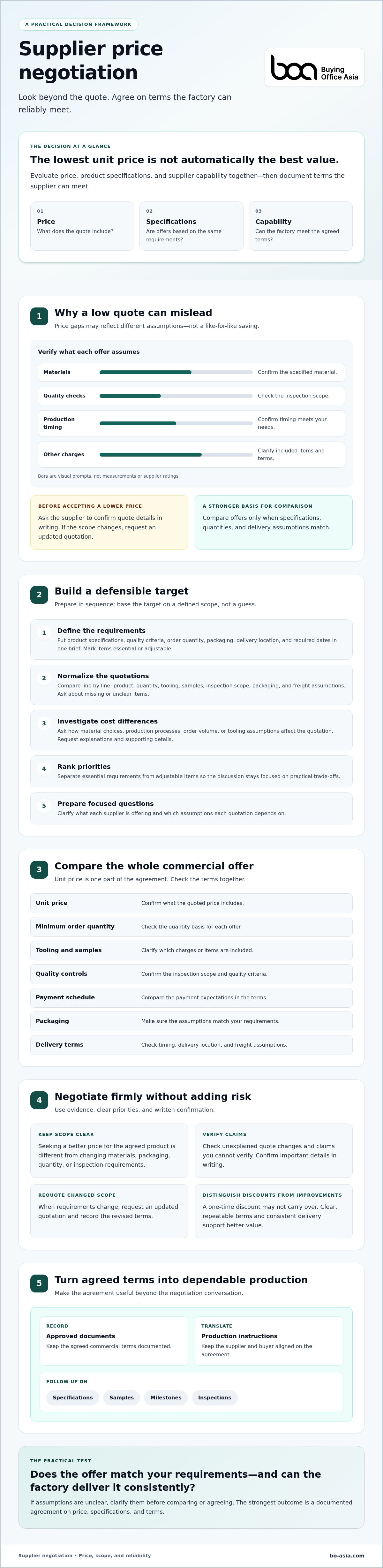
Firm negotiation doesn’t have to damage a supplier relationship. Risk increases when you apply pressure without evidence, such as demanding a lower price without explaining the basis or expecting changes the factory can’t support. Keep the discussion grounded in the agreed specification, ask clear questions, and look for commercially workable terms. This helps protect trust while keeping your requirements visible.
Separate clarification from bargaining. First establish what the supplier’s offer assumes, then discuss whether a change is feasible. Ask why a quote changed, which production or material factors affect it, and whether there’s an alternative that preserves the approved requirements. Don’t base a price reduction on an unapproved material or process substitution. If a proposed adjustment changes the product, assess it as a scope change before accepting a revised price.
Watch for signals that need follow-up, not immediate accusations. These include unexplained quote revisions, specifications that differ across documents, or capacity claims without supporting detail. Request clarification and consistent records. Because distance can make supplier statements harder to verify, use independent checks where appropriate. Buying Office Asia’s supplier information can provide context, while factory capability should be assessed against the specific product and production requirements.
A verbal agreement isn’t a production control. Before work proceeds, confirm revisions in writing and align the approved documents with production instructions. Record the specifications, approved samples, inspection criteria, order quantities, and delivery milestones. Make sure the factory team working from those instructions has the same version you approved.
Where appropriate, connect production and payment decisions to agreed verification points, such as sample approval or a scheduled quality check. On-site inspections can help verify production against agreed criteria, but they should complement clear documentation, not replace it. If a term changes, confirm the impact on quality, timing, and responsibility before authorizing the next step.
Effective supplier price negotiation is both commercial and operational: the agreed price matters only if the supplier can meet the documented terms. For overseas production, local presence can also help clarify supplier information and follow up on commitments. To discuss factory-direct negotiation alongside procurement support, contact Buying Office Asia.
A negotiation isn’t complete when both sides agree on a price. The final terms need to appear consistently in the documents and instructions the supplier will use to make and deliver your order. Otherwise, an outdated quotation or unclear email can undermine the value you negotiated.
Before authorizing production, reconcile the accepted quotation with the purchase order, product specifications, approved samples, and delivery terms. Check that quantity, price, packaging, quality criteria, and agreed milestones match across the documents. If they don’t, resolve the discrepancy in writing before work proceeds.
Be explicit about which document controls if an email, quotation, and purchase order conflict. Don’t assume everyone is working from the latest version. Circulate the approved documents to the relevant supplier contacts and identify who is responsible for each decision. A simple responsibility and date list can help prevent missed approvals:
• Who approves specifications and samples, and by what date?
• Who provides production updates, and at which agreed milestones?
• Who reviews inspection findings and decides whether production can proceed?
Follow through as production advances. Compare samples and inspection results against the approved criteria, and record any deviation, decision, or revised instruction. This creates a clear trail from the commercial agreement to the finished order. It also helps you address issues while there’s still time to confirm an appropriate response with the factory.
Distance can make factory updates harder to verify, especially when a buyer can’t independently confirm production conditions or clarify a discrepancy in person. Supplier coordination and on-site quality inspections can help connect negotiated requirements with what’s happening at the factory. They’re useful parts of procurement oversight, not substitutes for clear specifications or documented approvals.
For ongoing support with supplier coordination and procurement in Asia, learn about the dedicated Asia procurement team. Buying Office Asia has a Hong Kong headquarters and a European leadership office in Helsinki, supporting regional presence and international communication.
Strong supplier price negotiation protects value through clear terms, accountable follow-up, and production checks. If you’re assessing a project or need support with factory negotiations, discuss your supplier negotiation requirements.
Strong supplier price negotiation is measured by more than the unit price. Set a target from comparable quotes, assess payment, quality, and delivery terms together, then document every commitment before production begins. These steps help protect the value of an agreement from quote review through factory follow-up.
Buying Office Asia includes factory-direct price negotiations as part of its procurement services, with on-site quality control and inspections to support production oversight. Its Hong Kong operations and European leadership office in Helsinki provide regional presence and international communication for buyers working with suppliers in Asia.
If you’re preparing for a supplier discussion or need to align negotiated terms with production requirements, discuss your supplier negotiation requirements. Clear priorities and documented agreements give you a stronger foundation for reliable manufacturing.
Base your request on clear requirements and verifiable quote details, not on an unsupported demand for a discount. Ask which cost factors could be adjusted while keeping the agreed materials, specifications, inspection criteria, and delivery expectations intact. If the supplier proposes a change, review it as a scope revision and approve it only after assessing the quality and production impact. Record the final price and requirements in writing before production begins.
Prepare a negotiation brief that defines product specifications, quality criteria, order quantity, packaging, delivery location, and required dates. Mark which requirements are essential and where you could consider alternatives. Gather supplier quotations and note differences or unanswered assumptions, such as whether tooling or inspections are included. Set priorities and prepare questions about price changes, production capacity, and payment milestones. This gives both sides a specific, consistent basis for discussion.
Compare offers only after checking that they cover the same specifications, quantities, quality controls, packaging, and delivery assumptions. Review each line item, including samples, tooling, inspection, and freight assumptions, and ask suppliers to clarify exclusions or ambiguities. A lower unit price may reflect a different scope rather than a more efficient offer. Keep confirmed charges separate from your own estimates when using total landed cost as a buyer-side comparison framework.
Consider price and payment terms together, since either can affect the deal’s overall value and your cash-flow exposure. First clarify what the quoted price includes and confirm the production scope. Then assess proposed payment milestones against production stages, documentation, and agreed quality checks. If cash flow or payment risk is a priority, raise it early rather than treating it as an afterthought. Confirm any revised terms in writing before approving production.
It depends on the agreement and the documents that govern the order. Check the accepted quotation, purchase order, specifications, and any terms covering revisions or changed assumptions. If the supplier requests a price change, ask for the reason and supporting details, then assess whether scope, quantity, materials, or delivery requirements have changed. Don’t rely on a verbal explanation. Document any agreed revision before production or payment proceeds, and seek qualified advice if a dispute arises.
There’s no defensible reduction percentage that fits every order. Set a target using comparable quotations for the same specifications and quantity, plus project-specific evidence about tooling, packaging, quality controls, and delivery assumptions. Ask the supplier to explain differences and identify feasible adjustments without compromising essential requirements. Avoid anchoring your request to an unverified market benchmark. A specific, evidence-based proposal is more useful than an arbitrary demand for a discount.
Ask whether the supplier can explain the quote and whether alternative terms are feasible, such as a different order quantity or an adjustable nonessential requirement. Evaluate any change for its effect on quality, delivery, and total cost. If the offer still doesn’t meet your needs, compare it with equivalent offers from other suppliers or reconsider the sourcing decision. Keep the discussion professional, and don’t accept a price reduction that depends on unapproved substitutions.

The lowest freight quote can carry the highest operational risk if supplier readiness, documentation, and exception handling are left outside the plan. If you’re asking how to choose a freight forwarder for Asia, look beyond the headline rate. A smooth shipment depends on who coordinates each handof...

What if your signed OEM agreement protects the product on paper but leaves the factory unclear about what to make, when to deliver it, or how quality will be judged? That gap is where an oem manufacturing agreement china project can lose control: responsibilities blur between buyer, sourcing interme...

What if the safest payment deal isn’t the one that delays the most cash, but the one that releases it only when progress is verifiable? Payment terms negotiation with Asian suppliers is about balancing your working capital with the supplier’s need for confidence, not simply pushing for a smaller dep...