

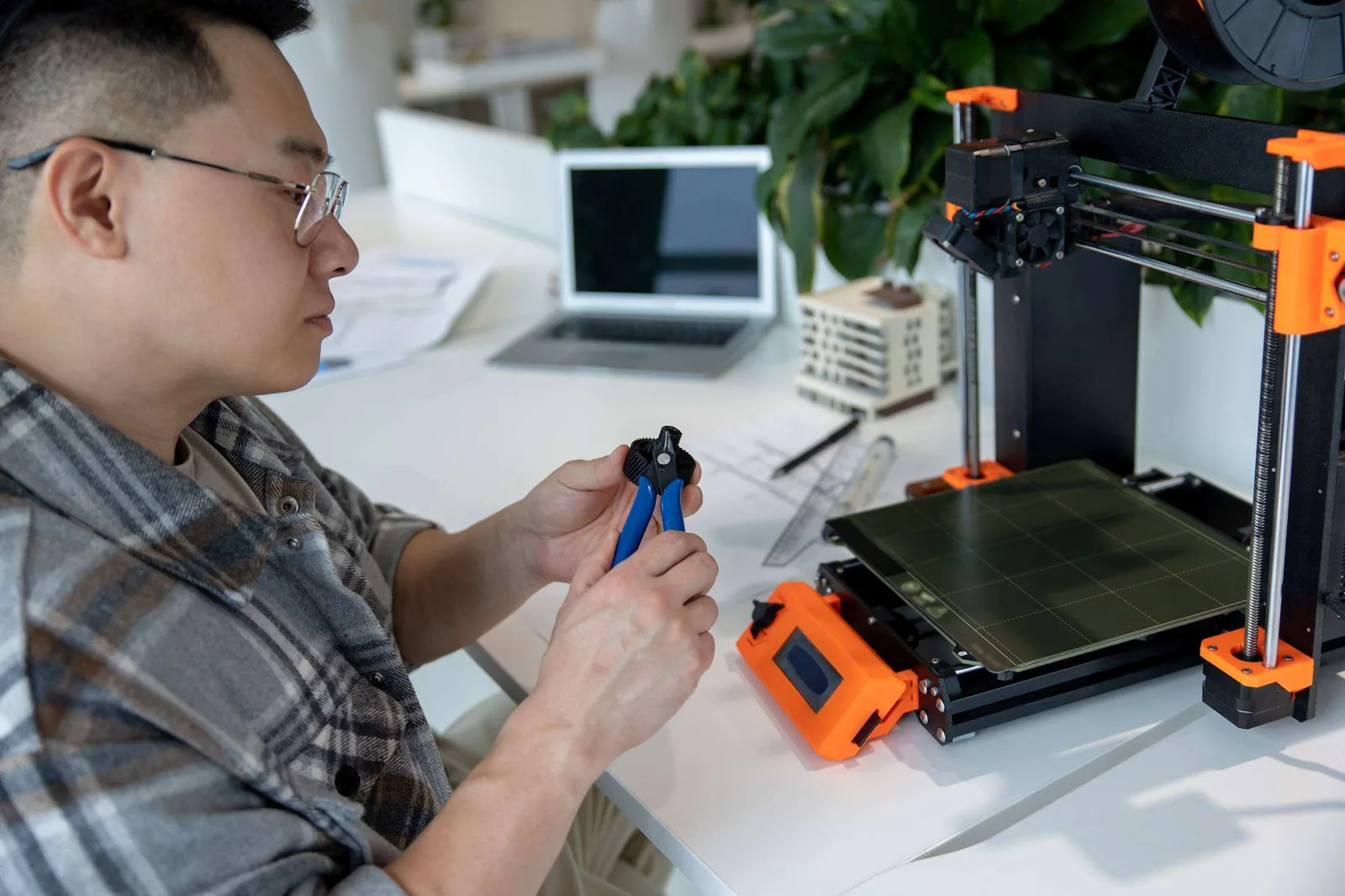
A full-color 3D print can show an action figure’s shape and surface detail before production tooling begins. Effective collectible figurine prototyping moves from a digital design to a physical sample, then uses review and revisions to resolve form, materials, paint and fit before approving a production sample. The right prototype method depends on the figure’s complexity, finish and intended production.
You may expect a prototype to look just like the finished collectible, but early samples often serve a narrower purpose: testing proportion, detail or assembly. This article explains how 3D printing supports those decisions, what it can and can’t show about final materials and decoration, and how to assess sample readiness without mistaking a presentation model for production approval.
We’ll guide you through collectible figurine prototyping, from concept and digital sculpting to printed models, painted samples, and approval. You’ll learn what to document, how to compare prototype methods, and what to review before a sample becomes the manufacturing reference.
• Start with clear character views and design goals so the digital model communicates the figure’s proportions, details, and intended finish.
• Use 3D prints to review form and surface detail before committing to production tooling, while distinguishing visual checks from tests of final materials or function.
• Choose the prototype material and process around the figure’s complexity, production volume, and finish requirements.
• Record revisions and approval criteria for dimensions, paint, part fit, and packaging so the approved sample can guide production checks.
• Coordinate supplier selection, sampling, and production oversight to keep design decisions connected to manufacturing requirements.
Build an action figure prototype by translating a defined character concept into a digital model, then a physical sample for review. The right method depends on the design, materials, intended finish, and production plan.
Digital prototyping uses 3D design tools and additive manufacturing to turn a character model into a physical form for review. Designers use tools such as ZBrush and 3D Max to shape figures before investing in production molds. A printed model helps teams assess proportions and surface details early, while design changes remain digital. For custom resin figures, provide at least three character views so the modeling team can understand the form from different angles.
Start with a concept board that defines the character’s pose, proportions, key details, and overall look. Include reference views, notes on distinctive features, and clear patterns for repeated elements such as armor panels or costume markings. These details give the sculptor a concrete basis for digital sculpting and give reviewers criteria for comparing the model with the approved concept. Record requested revisions against specific views or features, not general impressions.
Choose prototype materials and manufacturing methods to suit the figure’s detail, finish, and intended production. Resin suits highly detailed display figures and small production runs; PVC is commonly used for detailed character figures and consistent mass production; vinyl is popular for designer toys with distinctive shapes and artistic finishes. A printed prototype can test the form, but may not represent the final material or surface. Before selecting a material, specify which qualities the sample needs to demonstrate.
What materials are commonly used for collectible figurine prototypes? Resin, PVC, and vinyl are common options. The right choice depends on detail, finish, production volume, and manufacturing method. For licensed characters, intellectual property rights depend on ownership and licensing agreements. Obtain permission for prototype reproduction, and keep approved artwork and files controlled throughout development.
A separate sculpt-and-cast route can suit resin figures. In one process, a sculptor adds or removes wax to create a master sculpt, then forms a silicone mold for resin hardcopies. That method is associated mainly with action-figure development from the 1980s through the 2000s, while newer figures are often designed digitally. A 20 cm resin figure does not necessarily need one mold matching its full height. Mold design depends on the figure’s shape and casting approach, and silicone mold life depends on the casting material, geometry, mold material and operating conditions. Ask the supplier for a validated mold-life estimate for the actual figure. Compare the sample’s detail and construction with the production plan before approving the pattern.
Use iterations to settle visible and functional decisions before committing to production tooling. Each sample should answer specific questions, and every revision should be recorded against an approved reference.
Prototype samples make design changes tangible before production begins, helping teams assess form, finish and manufacturing readiness. Ask the supplier to quote digital work, physical sample production, decoration, approval rounds and international delivery separately. The timetable depends on complexity, materials, finish, revision cycles and the chosen transport service, so record actual milestones instead of relying on a generic lead time.
Keep each revision focused. An AI-assisted 3D model followed by printing, hand polishing, and painting can support an economical early review, but the result may be rough and less precise. Use it to assess broad proportions or pose, not as a final reference for fine surface detail. If the model reveals a problem, revise the digital file before ordering another physical sample.
For a small run, agree on the sample’s purpose before production: visual presentation, material review, assembly assessment, or an approved production reference. A painted sample can show decoration and finish, while a rough print may only represent the shape. Distinguish these roles in revision notes so a presentation piece is not mistaken for a sample that represents finished production pieces.
Production sample quality control means comparing the physical figure with its approved design and acceptance criteria. Review dimensions, paint application, part fit, surface defects, and packaging protection. Photograph each issue, identify its location, and record the required correction. A sample is useful as a reference only when its approved version and revisions are clearly documented.
Production economics depend on figure size, material, complexity, component count, decoration, tooling, packaging, and order volume. A multi-part character with detailed paint applications requires different manufacturing decisions from a single-piece display figure. A production quote follows a quote request and reflects those project factors. Reducing detail or parts can simplify production, but may change the character’s appearance or assembly requirements.
• Compare the sample against approved artwork and dimensions.
• Check paint coverage, part fit, surface finish, and packaging.
• Record defects with photos and specific correction notes.
• Keep the approved sample and revision record as the production reference.
Early corrections can prevent the same defect from carrying into 100 finished figurines. Lock the approved reference before production starts.
A physical prototype lets you assess a collectible figure’s size, proportions, details, and appearance before committing to more expensive production tooling. Allow time for iterative review and corrections before tooling, with milestones agreed for the specific project.
Select a printing method by the decision the model needs to support. Material jetting applies color layer by layer, while full-color 3D printing can combine color and surface information in one output. For review focused on color placement, include those details in the digital file. For close inspection of a small feature, prioritize the printer’s ability to reproduce that feature over color capability alone.
Choose a resolution that suits the smallest design element that must remain legible, such as a raised emblem, facial marking, or narrow costume edge. No single resolution suits every figure. Define the critical features in the artwork, then compare them with the printer’s stated capability and a physical output. This ties the decision to the design rather than an arbitrary resolution target.
File preparation matters. An OBJ file can carry color, texture, and fine surface information, but the model and its visual assets must correspond. Check that the texture aligns with the intended surfaces and that separate accessories appear in the right positions. If the head, body, and accessories are separate files, label them consistently so the print setup does not confuse components or revisions.
Review the print orientation before production. Orientation can affect support placement and which surfaces receive the cleanest finish. For example, a face or emblem placed against a support may need extra cleanup, so orient the part to protect its most visible features. If the figure is divided into printable pieces, define the intended assembly positions in the files and identify surfaces that must remain unobstructed.
Full-color printing can eliminate separate painting and other finishing steps for some toy samples. This makes it useful for a presentation model, but does not automatically provide production decoration instructions. Decide whether the output is for visual communication or for evaluating a specific finishing process. Keep those purposes distinct in the file name and review record.
• Identify the smallest feature that must print clearly.
• Check that color and texture assets align with the 3D model.
• Choose an orientation that protects visible surfaces from support marks.
• Label separate components and revisions consistently.
• State whether the print is a presentation model or a finishing reference.
These checks make the digital file a more reliable production input. They also give the printing team clear instructions on the features, surfaces, and visual assets that matter most for the requested output.
A presentation-ready figure should communicate the approved character vision, not just display a recognizable silhouette. Compare the physical sample with the concept art and approved design notes. Check the facial expression, costume shapes, pose, surface details, and placement of distinctive markings. A mismatch in any visible feature can change how distributors, licensors, or retail buyers interpret the design.
How are collectible figurine prototypes painted and finished? A hardcopy can be painted to preview a production figure’s appearance. For plastic toys, a painted or colored prototype is called a paint master, which provides decoration guidelines for production.
Use the paint master as a visual control document. Record each color area, boundary, and repeated marking against the approved artwork, and identify the corresponding area on the figure. For example, if a character has contrasting sleeve panels, specify their positions and edges in the sample review. Clear references help production teams reproduce the intended pattern across the figure.
A detailed sample also supports discussions before mass production. Character designers can use physical prototypes to preview licensed figures, while presentation-ready models can help explain concepts to distributors, licensors, and retail buyers. Decide the sample’s purpose before review: a pitch model prioritizes visual accuracy, while a production reference must also communicate decoration and construction decisions.
Review the figure under consistent conditions and compare the same areas each time. Assess whether the expression reads as intended, whether paint boundaries follow sculpted features, and whether small details remain visible after decoration. Record each issue with a marked image or specific location, such as “left shoulder panel,” rather than a general note like “paint looks off.”
Keep approval controlled. Mark the reviewed sample’s status, record agreed revisions, and retain the approved artwork and paint master as references. If a revised sample changes the face, a costume marking, or the finish, review that change against the relevant design note. This creates a traceable link between the creative vision and production instructions.
• Compare the sample with approved character artwork and design notes.
• Check expression, pose, sculpted features, paint boundaries, and repeated markings.
• Record each revision against a specific figure area.
• Retain the approved paint master as a decoration reference for production.
Before approval, confirm that the sample communicates the intended appearance and that its paint guidance is clear enough to follow. A strong aesthetic reference reduces interpretation gaps between the design concept and finished figure.
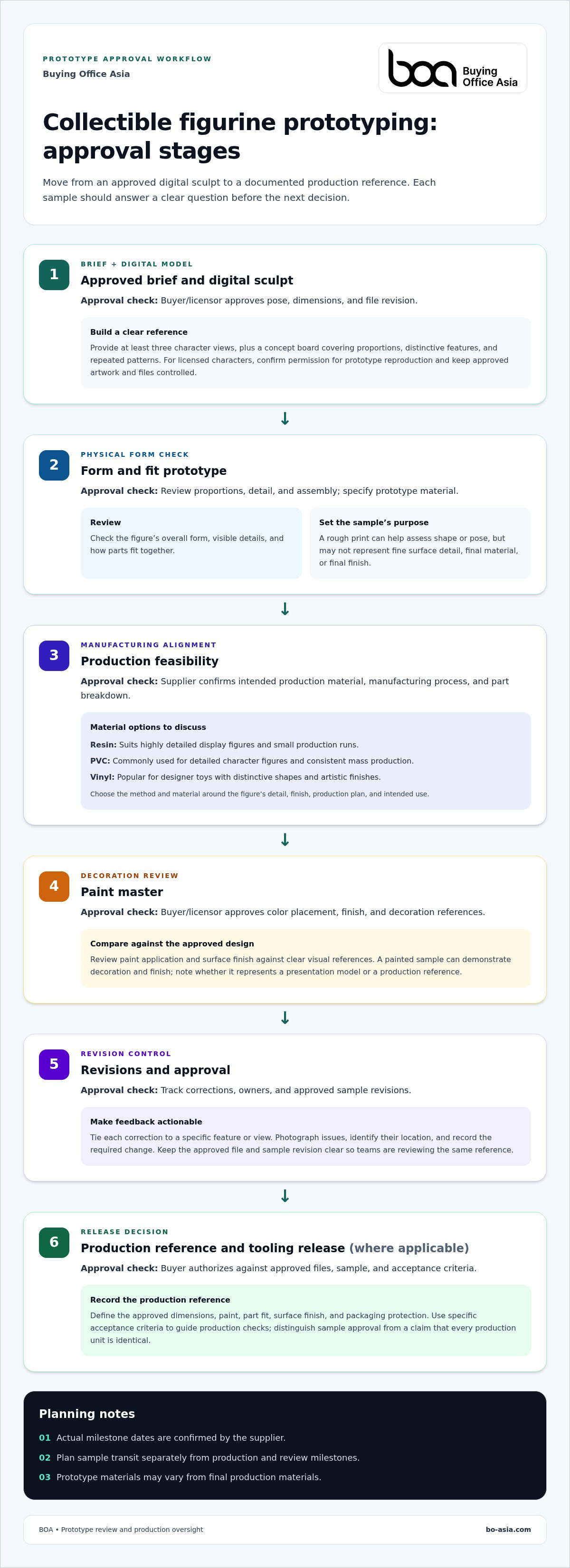
Manage development through a sequence of decision gates, with a defined owner and record at each handoff. This keeps creative approval, tooling authorization, and production release from being treated as one broad sign-off.
Before the design moves into manufacturing planning, identify the approved file set, revision date, component list, and decision owner. If a licensed character has approved artwork, record which version governs. This prevents teams from working from different references when production questions arise.
Ask the manufacturing team to identify design features that affect tooling, part construction, or assembly. For example, a deep recess or an accessory connection may need a specific production approach. Record each proposed change and obtain design approval before updating the production files.
Document which components the tooling covers and which approved files it follows. Confirm that the tooling plan reflects the agreed figure configuration, including separate accessories. This gate matters because a late design revision can affect tooling work already underway.
Before reviewing the first shots, list the outcomes required to proceed, revise, or pause. Separate issues that block assembly or function from appearance adjustments that can be addressed through later finishing. Assign each finding to an owner and retain the disposition with the relevant component record.
Give each revision a clear identifier and state which earlier files or instructions it replaces. If a change affects one accessory but not the figure body, make that scope explicit. This reduces the chance that a supplier applies a partial revision to the wrong component or continues using an outdated instruction.
Before authorizing a production run, assemble the approved file references, component list, revision decisions, acceptance criteria, and open-item status. Make clear who can approve deviations and how those decisions are recorded. A controlled handoff gives production and quality teams the same basis for execution.
Traceability is the central control: connect each decision to a requirement, an approved change, a responsible owner, and a production instruction. If a concern arises later, the team can identify which decision applies instead of reopening the entire design review. Keep the records with the production order, and update them when an approved change affects a component or instruction. This discipline supports accountability as the project moves from development into manufacturing.
Buying Office Asia coordinates end-to-end sourcing and procurement when your figurine project needs a clear link between sample approval, supplier selection, and production planning. This keeps design decisions connected to manufacturing requirements instead of treating each handoff as a separate task.
For high-volume production, a dedicated Asia procurement team can coordinate suppliers and negotiate factory-direct prices. This is useful when multiple components, tooling decisions, or production stages need aligned oversight. Use the approved figure and its requirements as the reference for supplier discussions and manufacturing decisions.
Contact Buying Office Asia to discuss sourcing and procurement support for your figurine project.
Turn the final design decision into a production handoff with a named approval owner, a controlled file set, and a clear record of authorized changes. This gives each team a practical reference as the project moves forward.
For collectible figurine prototyping, connect the approved creative direction to the manufacturing decisions that follow. Keep open decisions visible, assign responsibility for resolving them, and document the version that governs production.
Use the contact page as a starting point for coordinating the next step in your manufacturing plan. With clear ownership and controlled approvals, your team can move ahead with confidence.
Move from an approved character brief to a model, physical sample, review, and documented sign-off. Before modeling begins, define the pose, intended audience, display purpose, and required accessories. Then assign a decision-maker for artwork and sample approvals. For example, if the figure has a removable shield, decide whether reviewers need to assess only its appearance or its fit as well. That distinction determines what the prototype needs to demonstrate.
Digital sculpting creates an editable 3D character model; 3D printing turns that model into a physical object. Sculpting is suited to revising facial expression, silhouette, or costume geometry without rebuilding a sample. Printing helps reveal issues that are harder to judge on screen, such as whether a separate accessory looks balanced beside the figure. Neither alone proves final production material, decoration, or assembly performance.
The cost depends on the design and the work needed to produce and finish the sample. Key factors include sculpting complexity, the number of separate pieces, material, printing or casting method, paint detail, revisions, and whether a mold is required. A simple single-piece display model has different requirements from a figure with several detailed accessories. For a project budget, define the sample’s purpose and required finish before requesting a quote.
Prototype timing depends on the type, complexity, materials, finish, supplier workload and feedback speed. The schedule also depends on how quickly artwork decisions are approved and whether revisions require a new physical sample. To keep reviews moving, assign one approver, consolidate comments, and separate essential design changes from optional refinements. International sample delivery adds transit time, which should be planned separately from development.
Prepare the approved model by documenting its component breakdown, material intent, finish, and assembly requirements. Discuss mold split locations and any undercuts with the tooling team, as these affect how a figure can be released from a mold. Identify which parts need separate tooling and how accessories attach. Before tooling begins, align the approved artwork, model files, revision record, and physical reference sample.
Common issues include dimensions that differ from the approved design, poor part fit, surface marks, uneven paint, and packaging that fails to protect the figure. Define acceptance points before sample review to reduce avoidable rework. Check joints and accessories separately, compare decoration with approved artwork, and inspect the packed sample after handling. Record each issue with its location and a clear correction request, then review the revised sample against that note.
Knowing how to manage overseas manufacturing projects starts with comparing total landed cost, not just the factory quote. Include tooling, freight, tariffs and duties, insurance, management time, and the cost of correcting problems. Weigh those expenses against product quality, delivery risks, and...

The biggest risk in contract manufacturing in India is not simply finding a factory. It is starting production before product specifications, responsibilities and intellectual property terms are clearly documented.Finding and contacting suitable manufacturers is an important first step, but the righ...

A manufacturer’s quotation can look right while the factory behind it lacks the capacity or quality controls your product needs. Knowing how to vet manufacturing suppliers in Asia means assessing production fit, business credentials, quality practices, and sample results before committing to an orde...