


Custom card game manufacturing connects artwork, printing, finishing, cutting, collation and packing. The order and equipment vary by supplier and product. Confirm the proposed process flow before approving production, including where texture, coating and corner finishing occur and how the complete deck is checked.
Choosing a manufacturer involves more than comparing quoted unit costs. You also need to know what’s included, how the deck will be assembled, and whether the minimum order quantity suits your launch or replenishment plan. This guide covers the production steps, common card formats and finishes, packaging options, and factors that shape minimum orders.
You’ll also learn how manufacturers’ processes and capabilities differ, and what to clarify in your specification before production begins. That gives you a practical basis for comparing proposals and avoiding preventable surprises between the approved sample and finished game.
• Map the production sequence from printed sheets to finished decks so you can plan specifications and quality checks at the right stages.
• Compare card dimensions, corner shapes, and finishes by how they support the game’s handling, appearance, and intended use.
• Choose a tuck box or setup box based on the deck and presentation requirements, then define collation and packing clearly.
• Assess minimum order quantities against setup needs, materials, packaging, and your inventory plan rather than comparing the headline figure alone.
• Use a consistent comparison checklist to evaluate manufacturers’ capabilities, sample approval processes, quality controls, and production oversight.
Production turns approved game files and component specifications into a packed product. The workflow typically includes design preparation, sampling, printing, component production, assembly, quality checks, and delivery planning.
For a card game, production starts with print-ready files and a defined card sequence. The printer checks that the artwork, text, and card backs match the supplied specifications before the print run begins. Puzzle production has a different requirement: the image must align with the intended cut layout, and the finished pieces must be packed as a complete set. Educational products may combine cards, printed boards, and instructions, so list each component and its role.
Board-game boards also need their own specifications. A flat board, a folding board, and a board paired with a separate insert involve different design and assembly decisions. Include the board dimensions, printed panels, fold locations, and how it fits inside the retail box. Coordinated OEM/ODM contract manufacturing can bring custom product development and production planning together for games with several component types.
There is no single production or shipping turnaround for every game. The schedule depends on artwork readiness, sample revisions, component complexity, factory scheduling, packaging, transport method, and destination. Build a timeline with separate milestones for file approval, sample review, production, packing, and transit. This helps pinpoint whether a delay stems from an approval decision, a manufacturing stage, or delivery planning.
To estimate shipping and fulfillment, use the finished cartons’ dimensions and weight, plus the destination and transport method. Include any handling needed after arrival, such as receiving, storage, or splitting cartons for distribution. Import charges depend on the destination and product classification, so include them separately in the landed-cost estimate.
How much does custom card game manufacturing cost? The quote depends on product specifications, print method, materials, order quantity, component count, packaging, and finishing. Request comparable quotes based on the same brief, and separate manufacturing from transport, fulfillment, and import costs. This makes the cost drivers clear without treating different product configurations as equivalent.
For a game with a board and several card groups, compare the cost of the complete packed game, not just the cards. Setup work, component assembly, and packaging all affect the finished order. Understand any satisfaction guarantee through its written terms, including which product condition it covers and how concerns are handled.
Before full production, request a prototype to assess the complete product, including artwork, board fit, assembly, and packaging. Approve a reference sample and define checks for print appearance, component presence, and pack-out. These checks help identify departures from the approved specification at relevant stages. Sampling is an inspection method, not a promise about every individual unit.
Key risks include print or assembly defects, unclear specifications, tariff changes, and unauthorized use of licensed artwork. Reduce avoidable confusion with controlled artwork files, written approval records, a component list, and an agreed process for recording defects and corrective actions. Import tariffs depend on destination and classification. Confirm licensed artwork rights before production, and clearly state responsibility for approvals in the project documentation.
Set dimensions, stock, corner shape, finish, and packaging in one product specification. These choices affect artwork preparation, the deck’s feel, and the presentation of the finished game.
Standard poker-size playing cards measure 2.5 by 3.5 inches. If your game uses another format, state the finished width and height clearly, then prepare the artwork to those dimensions. Include the number of cards and distinguish unique designs from repeated cards, so the production file and approved deck contents match.
Assess stock using a physical sample. Compare how the card bends, handles, and feels with the intended finish rather than judging it from a digital upload. Record the approved stock and dimensions together. Specify whether the corners should be rounded or square, too: the shape affects the finished deck’s appearance and should match the artwork and product brief.
One manufacturing route applies a linen texture to printed sheets with a patterned roller before cutting. Confirm the proposed finish and production sequence with your supplier. Review a printed sample to see how the texture interacts with fine lines, small text, and solid-color areas. This gives you a more useful reference than viewing the artwork alone.
For customization, define which card faces differ and how the back design should appear across the deck. Confirm the card count and design sequence in the production files, then compare the printed sample with the approved artwork. Check color balance, text legibility, and edge appearance under normal viewing conditions. Record approved revisions in the final specification to keep the production reference consistent.
Packaging affects both presentation and protection. Shrink wrap is one packaging option, not a universal retail requirement. Confirm each retailer’s written requirements for wrapping, seals, labels and hang tags, and include the agreed format in the product specification.
Review the packed sample as a complete retail unit. Check that the wrap sits securely, the box artwork remains visible, and any required hang tag is positioned as intended. The specification should identify the box style, wrap, and tag requirements, alongside card dimensions, stock, finish, corners, and deck contents. This gives production one documented reference for the finished product.
Collation determines which cards and other components go into each retail unit, and in what order. An assembly plan should identify the deck sequence, separate card groups, box format, and every additional item. Treat pack-out as a defined product configuration, not an informal instruction added after printing. This matters especially when the game includes multiple decks or similar-looking pieces.
In one production route, sheet layout supports collation during trimming. Other suppliers may collate in a separate operation. Ask the factory to confirm its sequence and checks for missing, duplicated or incorrectly ordered cards. Prepare a card map naming each design and its position in the deck. Check it against the rules or play sequence so an incorrect order is caught before packing.
A tuck box may be die-cut from a printed sheet, folded, glued and filled before closure. The construction and assembly sequence depend on the box design and equipment; confirm them with the supplier. Check the box blank’s artwork orientation and folds against a sample. A mismatch can leave a panel upside down or make the finished box difficult to close.
Many card games use a two-piece setup box instead of a tuck box. Choose the format based on the product’s presentation and the space its contents need. For a setup box, review how the top and bottom meet and how the contents sit inside. For a tuck box, check that the deck stays in place when the box is opened and handled. These checks assess function as well as appearance.
Games may include score pads, rules, boards, or separate card packs. List each component by name and state where it belongs in the retail unit. For example, if the game has a main deck and a reference-card group, describe them as separate packs and show how to identify each. This helps assembly staff distinguish the groups and gives inspectors a clear basis for checking completeness.
For a Kickstarter edition with different reward configurations, create a separate pack-out list for each version. Mark which components change, which stay the same, and how to identify each finished unit. Don’t rely on one generic packing instruction when backer tiers have different contents.
• Compare a packed sample against the card map and component list.
• Check deck order, group separation, and the presence of every listed item.
• Open and close the box, then review its folds, glue points, and fit.
• Record assembly revisions before the production pack-out is approved.
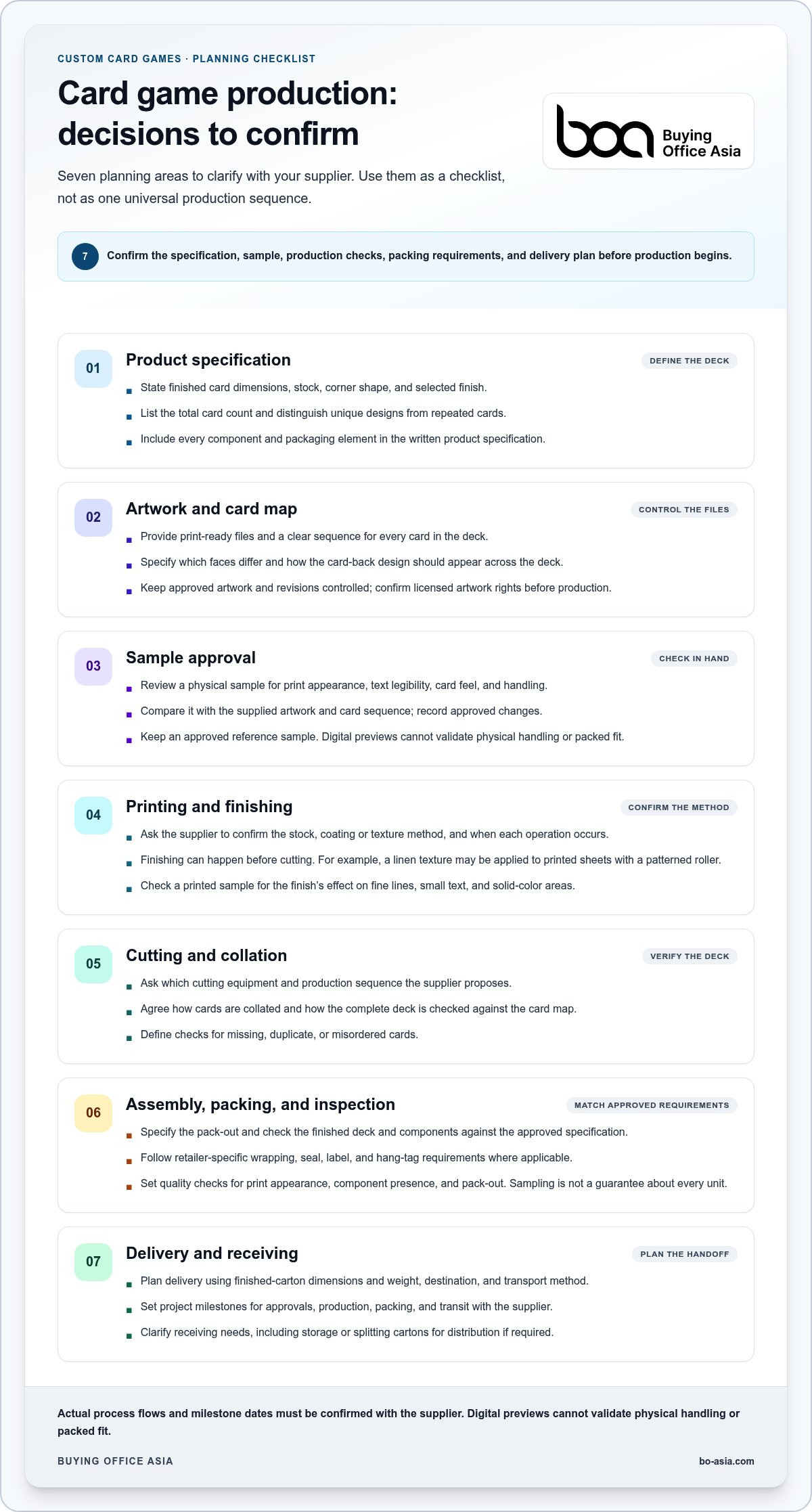
There isn’t one standard minimum order for every custom card deck. The required print run depends on the card and box specifications, printing setup, materials, finishing, and packaging. A simple deck and a game with several card groups or a custom box have different production requirements, so compare minimums only for matching product specifications.
Setup work matters because artwork preparation, print setup, cutting, and packaging all require planning before finished decks are ready. These costs and steps are spread across the print run, affecting the quoted unit price as quantity changes. Request quotes for quantities that reflect your launch plan, and compare the complete specification at each quantity instead of choosing by the lowest unit price alone.
For retail, set the order quantity against realistic demand, storage capacity, and replenishment timing. A larger print run can lower the unit cost while tying up more budget in stock. A smaller run may limit initial inventory, but setup requirements can make its unit cost less favorable. Factor in finished packaging and delivery planning, too, since carton quantities and storage needs affect how much stock you can manage.
A “no minimum order” offer describes an ordering model, not a universal feature of card manufacturing. It may suit concept testing or individual orders, while a production run with custom printing and packaging has its own setup requirements. Decide whether you need a sample, a small test batch, or retail-ready stock, then compare the resulting product and fulfillment model.
Online card design and ordering tools can streamline artwork uploads and option selection where available. Before ordering, prepare the card dimensions, front and back artwork, card sequence, number of cards, finish, box style, and packaging requirements. Keep the digital preview aligned with the approved production files. A preview helps assess layout, but it cannot show how printed cards handle or how a packed deck fits its box.
How do I prepare print-ready artwork and card files? Set the artwork to the approved card size, provide separate files or clearly labeled pages for each card face, and identify the intended sequence. Include box artwork and a written specification for stock, finish, card count, and packaging so the production files match the finished product.
• Compare minimums using the same card count, stock, finish, and packaging.
• Request quantity options that match your launch and replenishment plans.
• Separate sample, test-batch, and retail-stock requirements in your forecast.
• Include packing and delivery needs when estimating the inventory you can receive and store.
Compare manufacturers against the same finished-product brief, not a headline unit price. A useful comparison covers material, print method, card size, finish, deck quantity, packaging, sample process, quality checkpoints, and delivery terms. If one quote excludes a tuck box while another includes it, they describe different products and won’t support a reliable decision.
Start by assessing production fit. Ask how the proposed stock and printing method suit your artwork, card count, and intended use. For example, a deck designed for frequent play needs a sample review focused on shuffling, feel, and edge finish. Smooth and linen-textured surfaces handle differently, so compare physical samples made with the same artwork.
Material choices need a clear purpose, too. Plastic and paper-based cards can differ in feel, appearance, and production requirements. Don’t treat “environmentally friendly” as a complete material specification: identify the material being claimed and request supporting documentation. Compare that evidence with durability needs, packaging, and the destination market’s requirements.
Use a consistent scorecard for each proposal:
Record stock, dimensions, finish, card quantity, and box style.
Compare prototype scope, revision handling, and the approved reference sample.
Map checks for print appearance, cutting, collation, and pack-out.
Separate setup, unit pricing, packaging, freight, and delivery assumptions.
Record the minimum order quantity and what “no minimum” covers.
Then examine experience claims carefully. If a proposal cites “40 years,” clarify what that describes, such as the factory’s production history or another part of the supplier relationship. The number alone doesn’t show whether the facility has experience with your card format, finish, collation sequence, or packaging requirements. Match relevant experience to the actual product brief.
Finally, compare how each manufacturer manages changes and problems. Review who approves artwork, how sample comments are recorded, what happens if production differs from the approved reference, and how corrective actions are documented. These process details matter when an order includes several decks or components, because one specification gap can affect the complete pack.
For a like-for-like evaluation, send every proposal the same specification sheet and request clear answers against each scorecard item. Discuss your card game production requirements and compare the manufacturing options against your approved product brief.
Buying Office Asia coordinates end-to-end sourcing and procurement when your card game project needs supplier management alongside production planning. This approach connects specifications, factory communication, order terms, and production follow-up, reducing the risk of decisions becoming disconnected between stages.
For a larger print run or a game with multiple components, Buying Office Asia’s Dedicated Procurement Team can coordinate suppliers and negotiate factory-direct prices. Its sourcing and procurement service can also align production requirements with your planned quantity and packaging needs. If you already have a supplier and need a focused procurement partner, consider where coordination gaps are affecting the project.
Share your product specifications, target quantity, packaging requirements, and intended delivery destination to start a practical discussion. Contact Buying Office Asia or visit bo-asia.com to discuss your manufacturing requirements.
Your next decision is not simply which factory to choose. It’s how to turn the game concept into a brief that aligns artwork, component requirements, approval responsibilities, and commercial terms from sampling through production. That brief gives your team a shared reference when specifications change or production decisions need review.
For custom card game manufacturing, the practical advantage comes from making key decisions before they become costly changes: define who approves artwork, how sample revisions are recorded, and which documents govern the production run. Keep licensed artwork ownership and approval records clear, and ensure everyone responsible for delivery understands the same requirements.
Buying Office Asia can support businesses that want procurement coordination for manufacturing in Asia. If you’re preparing a project brief or assessing the next step for production, contact Buying Office Asia to discuss your requirements. A clear starting brief helps turn a creative concept into a controlled, workable manufacturing plan.
Custom card games are made by turning approved artwork and specifications into printed, cut, collated, and packed components. The production plan should link each card face to its deck position and final pack. Before production begins, document the approved artwork version, component list, and sample reference. This helps teams distinguish production changes from approved design revisions and gives the factory a consistent basis for assembling each game.
The process moves from product definition to artwork preparation, sampling, production, assembly, inspection, and delivery. Start by deciding what the retail game contains and how players use it. Assign an approval owner for artwork and samples, then record revisions in one controlled file set. During production, compare finished goods with the approved reference and component list, and document any corrective action before release.
Minimums are set by production setup and game specifications, not by one universal industry figure. A deck with one printed card group can have different setup needs from a game with multiple decks and a custom box. Ask for the minimum based on your exact design, then compare it with a higher quantity using the same specification. Include expected reorders and inventory capacity in your decision.
Options can include different card stocks, smooth or linen-textured surfaces, rounded or square corners, tuck boxes, setup boxes, and shrink-wrapped packaging. Choose based on intended handling and presentation, then test the combination as a complete product. For example, check whether the selected cards fit comfortably in the box and whether the wrap suits its shape. Record each selected option in the specification and sample approval.
There is no single timeline for every game. The schedule depends on artwork readiness, sample revisions, print and finishing requirements, assembly complexity, production planning, transport method, and destination. Build a project calendar with separate approval, production, and transit milestones. Allow time to review samples and resolve comments before full production, and align planned dispatch with your required delivery window.
U.S. publishers can work with domestic manufacturers or overseas production partners. The right fit depends on the game’s specifications, production quantity, communication needs, and delivery plan. Buying Office Asia supports international companies manufacturing in Asia through sourcing and procurement coordination. If you’re considering that route for a U.S. business, compare the full proposal and oversight model with domestic options using identical product requirements.
Location alone doesn’t determine price or quality. Compare quotes using the same card, packaging, quantity, sample, inspection, and delivery requirements, then assess the complete landed cost. To evaluate quality, review a production sample and the manufacturer’s documented checks for printing, cutting, assembly, and packing. Overseas production may require additional coordination and transit planning, while domestic production also has schedules and commercial terms to assess.
A memorable influencer kit depends on more than what goes inside the box. Successful influencer kit manufacturing coordinates merchandise, packaging, decoration, assembly and delivery around the campaign’s audience, product category and deadline. When these decisions are planned together, teams can...

A shipment can pass an AQL check even when the sample contains defects. In the normal single-sampling worked example, code letter L at AQL 2.5 calls for a 200-unit sample. The example's sampling table calls for inspecting 200 units: the lot passes if 10 or fewer units fail and is rejected if 11 or m...

A collector’s edition succeeds when its packaging supports the product experience and the practical demands of production. Collector’s edition box manufacturing brings design, materials, components, and assembly planning together in one coordinated brief. The aim is a presentation that feels conside...