


What if the supplier with the strongest online profile isn’t the factory best suited to your shoes? In footwear manufacturing in China, a directory listing can start your search, but it can’t confirm who will make your product, whether the factory can handle its construction and materials, or how closely bulk production will follow the approved sample.
It’s reasonable to be cautious. Before committing to samples or production, get clear answers about the factory’s identity, experience with your footwear category, minimum order requirements, communication, and quality checks. A polished profile won’t resolve those questions. Neither will a vague product brief, which can leave important details open to interpretation.
This guide shows you how to build a shortlist, contact manufacturers with useful questions, and verify supplier identity, capabilities, and quality processes before placing an order. You’ll also learn how to set expectations for development, sample approval, production inspections, and shipment accountability. With structured supplier vetting and on-the-ground support, you can make decisions with better visibility at each stage. Buying Office Asia supports buyers with factory audits, product development and sampling, on-site inspections, and production oversight. It acts as a sourcing partner, not a footwear manufacturer.
• Treat directories, referrals, and trade events as starting points, not proof that a supplier is a suitable factory.
• In footwear manufacturing in China, shortlist factories against your product requirements, then verify identity, capability, and quality processes before requesting samples.
• Compare suppliers using evidence of product fit, process control, communication, sampling, capacity, and transparency, weighted to your order needs.
• Make outreach specific: share your product brief, target market, estimated volume, milestones, and open questions to support clear, comparable responses.
• Decide whether your team can manage factory follow-up directly or would benefit from local sourcing support through sampling, production oversight, and inspections.
Footwear manufacturing in China is a supplier-led process, not simply a search for a factory contact. A lead may point you toward a potential supplier, but turning a product brief into a finished order takes clear specifications, capability checks, sample development, approvals, production controls, inspection, and shipment planning. The broader history and perception of the Made in China label offer context, but they don’t tell you whether a particular factory fits your product.
The process runs from defining the brief and building a shortlist to verifying suppliers, developing samples, approving a reference sample and specifications, monitoring production, inspecting goods, and coordinating shipment. Each stage produces information the next one depends on. If material choices or construction details are still unsettled during sampling, for example, it becomes harder to judge whether a production unit matches the approved design.
Factory fit depends on the footwear category, materials, construction method, order requirements, and processes a supplier can manage. A factory suited to one type of shoe may not be right for another. A verified supplier lead is a business worth assessing; a production-ready manufacturing partner has demonstrated relevant capability and agreed to documented requirements and controls.
Name the product category and intended customer, then describe the construction and preferred materials as clearly as possible. For example, identify the key components, such as the upper and sole, and note any construction details that are essential to the design. Separate firm requirements from ideas that still need technical input. Ask which steps the supplier performs in-house and which it subcontracts, and request evidence related to the processes your product needs. This gives you a more useful comparison than a general claim to produce footwear.
Prepare reference images or drawings, material preferences, the size range, and performance requirements. Include estimated order volume and timing as planning inputs, not promises of factory acceptance. Identify the destination market, too, so you can check which product-safety and compliance questions apply with qualified sources before production.
A focused brief helps suppliers respond to the same requirements and makes gaps easier to spot. For product development and sampling support, factory vetting, or production oversight, OEM and ODM contract manufacturing support can form part of a sourcing process. Buying Office Asia is a sourcing and procurement partner, not a footwear factory; its role is to help buyers assess and manage manufacturers. Put responsibilities, approvals, inspection scope, and shipment arrangements in writing before an order moves forward.
Search results, trade events, referrals, and sourcing partners can all help you discover potential suppliers. None is an endorsement. For footwear manufacturing in China, use the same screening steps for each candidate so a polished profile or persuasive sales conversation doesn’t substitute for evidence. The global footwear production data published by World Footwear can help frame the wider industry, but your decision depends on the individual supplier’s fit.
Supplier discovery generates leads; due diligence tests suitability. Apply this five-step screen before investing in samples:
Specify footwear category, construction, materials, destination market, estimated volume, and must-have processes.
Gather candidates through directories, trade events, referrals, or sourcing partners, and record where each lead came from.
Match the contact’s company name and business identity to its stated factory address and role in production.
Ask for evidence of comparable products, relevant processes, quality procedures, and capacity assumptions.
Use the same questions and criteria for each supplier, then follow up on gaps or inconsistent answers.
Keep your evidence in one comparison record. Mark what you’ve independently checked separately from what a supplier has claimed. This makes it easier to decide which leads merit a factory audit or sample request.
Putian may appear in footwear supplier searches, but a location alone doesn’t establish product fit or factory status. Confirm the contact’s company name, business identity, factory address, and connection to production. Ask directly whether they represent a factory, trading company, or another intermediary. Request examples relevant to your construction and materials, then clarify who would make the product and manage production.
Ask about comparable production experience, available processes, capacity for your estimated order, lead-time assumptions, and any subcontracted work. Ask the supplier to explain the quality checks and sample-development steps it would use for your product. Compare answers in writing across suppliers. If a claim affects your decision, ask what evidence supports it; a catalogue or sales presentation alone may not show how the work is controlled.
If you need local support to verify suppliers or follow up on factory evidence, Buying Office Asia provides supplier vetting and factory audits as a sourcing partner, not as a footwear manufacturer. Discuss your sourcing requirements with the team.
A useful comparison goes beyond response speed, polished presentations, or a factory’s claimed scale. In footwear manufacturing in China, the right supplier depends on how well its documented capabilities match your product, order, and oversight needs. Weight each factor for your project: construction expertise may matter more than a broad product range, while clear subcontracting arrangements may be essential if several processes affect quality.
Use a consistent scorecard and record evidence, not just impressions. For each factory, note what was confirmed, what remains unverified, and how important each factor is to your order.
| Criterion | What to compare |
|---|---|
| Product fit | Evidence of experience with your category, construction, and materials. |
| Process control | Which production steps are managed in-house, subcontracted, and checked. |
| Communication | How accurately the supplier interprets requirements and explains constraints. |
| Sampling | How feedback, revisions, and sample approval are documented. |
| Capacity evidence | Whether stated capacity and timing assumptions fit your specific order plan. |
| Transparency | How clearly the supplier shares records, responsibilities, and unresolved issues. |
Don’t treat one attribute as decisive. A large operation isn’t automatically the best fit for a specialized design, and a fast sample response doesn’t prove that the specifications are understood. Look at the quality of the response: does the supplier identify ambiguities, ask relevant questions, and explain trade-offs? For background on production models, see this OEM and ODM contract manufacturing guide.
Review each sample against the same written specification. Record deviations, unanswered questions, and requested revisions, then confirm how each change will be incorporated. A useful supplier explains material, construction, tooling, or production constraints clearly rather than simply agreeing to every request. Set explicit approval criteria in writing. A prototype is not production-ready until you’ve reviewed it against those criteria and confirmed the specifications production must follow.
Ask for relevant quality-control records, audit evidence, and an explanation of the checks used for your product. Verify that documents apply to the facility, processes, and materials under consideration. Compare capacity claims with the proposed production plan and supporting evidence for your specific order. If you have ethical or sustainability requirements, define them in advance and request documentation that supports them. Confirm destination-market requirements with qualified sources; don’t assume a general factory claim establishes compliance.
Choose the supplier whose evidence best fits your priorities, and keep outstanding questions visible. This record gives you a clearer basis for sample approval and production oversight.
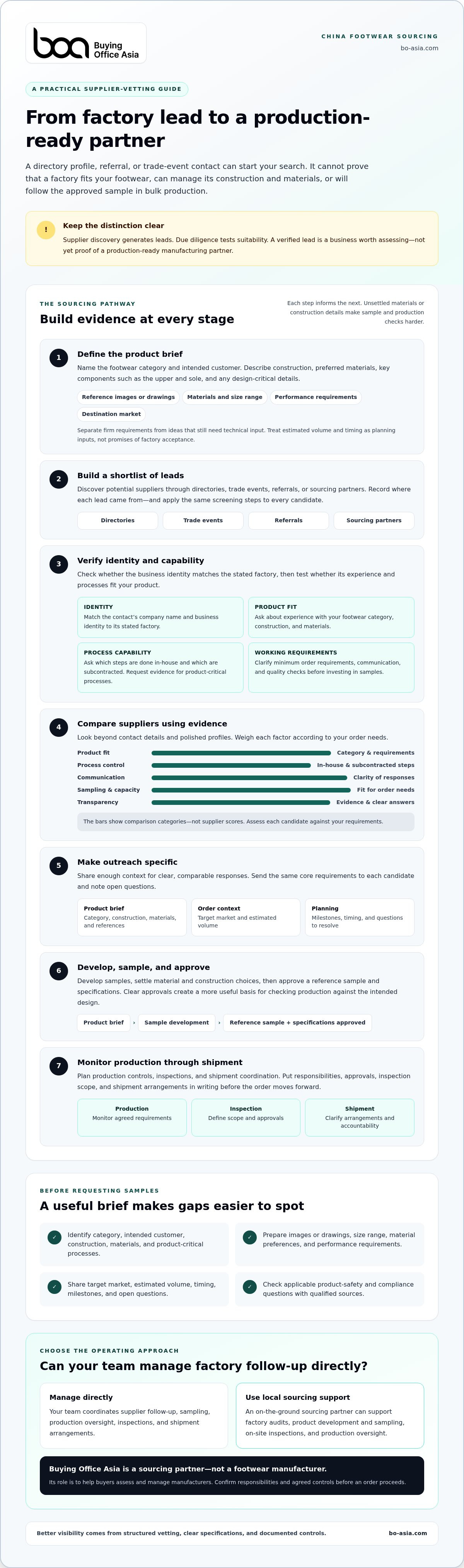
A clear first message sets the standard for the work that follows. In footwear manufacturing in China, vague requests can lead to mismatched quotes, samples based on assumptions, and confusion over what was approved. Keep outreach concise, ask comparable questions of each contact, and document decisions in writing.
Use this sequence to move from initial contact to a controlled order:
Include product category, key specifications, target market, estimated volume, and expected sourcing timeline. Attach drawings or reference images where available.
Ask whether they represent the factory, a trading company, or another intermediary, and which production capabilities are relevant to your product.
Check product examples, process information, and responses against your requirements. List unresolved technical questions rather than treating them as agreed details.
Confirm what the sample should demonstrate, which specifications it will follow, and how revisions and feedback will be handled.
Record decisions, owners, and milestones to create a clear reference as development moves toward production.
Use supplier information and sourcing guidance to support due diligence, but maintain your own verification record. For each open item, identify who is responsible for the next step and when it needs to be resolved.
State the footwear category, essential specifications, destination market, estimated volume, and expected timeline. Ask the recipient to confirm their business role and experience with the relevant production processes. Close with a clear request, such as confirming whether the brief is suitable for assessment and identifying the next step. Request written answers to open technical questions; silence or an assumption should never count as approval.
Use decision gates, not informal assurances. Record each sample revision against a version-controlled specification, and document approval before authorizing production. Agree on inspection scope, timing, and reporting before the relevant production checkpoint. If a deviation appears, pause to assess it, assign corrective actions, and record their closure before authorizing shipment.
Buying Office Asia supports buyers with product development and sampling, on-site quality inspections, and mass-production oversight. If your team needs help coordinating these controls with suppliers, discuss your sourcing and production requirements.
Managing a factory directly can work well if your team has footwear production experience, clear language coverage, time for supplier follow-up, and resources to oversee quality at relevant production stages. Local support may help when those capabilities are limited, or when a complex product, multiple suppliers, or frequent production updates make consistent oversight difficult. In footwear manufacturing in China, finding a factory is only one step; maintaining visibility and accountability through development and production takes ongoing coordination.
Buying Office Asia is an Asia-based sourcing and procurement partner, not a footwear manufacturer or factory. Its support can include supplier vetting, sampling coordination, factory-direct price negotiations, on-site inspections, and mass-production oversight. Buyers can review the scope of end-to-end sourcing and procurement services to understand how sourcing activities may be coordinated. The partner supports supplier management; it doesn’t replace your approval authority or guarantee a particular result.
Agree on responsibilities before work begins. Define who communicates with suppliers, who approves samples and specification changes, what inspections cover, how findings are reported, and how urgent issues are escalated. Ask how supplier relationships, findings, and commercial terms will be disclosed. Confirm the service scope and fees directly, and clarify which decisions remain yours. A written scope helps prevent gaps between factory responsibilities, partner responsibilities, and your team’s approvals.
Assess your team’s footwear expertise, language coverage, travel capacity, and available quality resources. Then weigh the order’s complexity, production cadence, control requirements, and supplier-management workload. A straightforward order may be manageable internally; a development-heavy project or a production schedule requiring regular follow-up may call for dedicated local coordination. Explore the dedicated Asia procurement team overview if ongoing oversight is relevant to your needs.
Local presence can support supplier follow-up and production visibility, but it doesn’t remove the need for clear specifications, documented approvals, or buyer-led decisions. Set expectations for reporting and escalation early, and confirm what evidence you’ll receive from inspections or supplier reviews.
If you’re evaluating support for a footwear sourcing project, discuss your project with Buying Office Asia. A clear conversation about product requirements, oversight needs, and scope can help establish whether the sourcing partnership fits your team.
Successful footwear manufacturing in China starts with more than a promising factory contact. Define your product and order requirements, verify each supplier’s identity and capabilities, then compare evidence against the needs of your specific project. Clear specifications, documented sample approvals, and agreed inspection checkpoints help keep development and production aligned.
If your team needs additional supplier follow-up or quality oversight, an on-the-ground sourcing partner can help fill those gaps. Buying Office Asia operates in Asia and supports buyers with supplier vetting, factory audits, and on-site inspection support. It is a sourcing and procurement partner, not a footwear manufacturer, and your team remains responsible for defining requirements and approving decisions.
Bring your project requirements and oversight needs into the conversation. Discuss your footwear sourcing requirements with our team and take the next step toward a clearer, more accountable sourcing process.
Start with a clear product brief, then build a shortlist using directories, trade events, referrals, or sourcing partners. Treat each source as a lead, not an endorsement. Check the company’s identity and factory address, clarify its role in production, and assess evidence of experience with your footwear category, construction, and materials. Compare responses against the same criteria before investing in samples. This structured approach makes footwear manufacturing in China easier to assess.
Confirm the supplier’s company name, business identity, stated factory address, and relationship to production. Ask whether the contact represents the factory, a trading company, or another intermediary, and identify who would manage production. Request product examples and evidence relevant to your specific construction and materials. Verify important claims independently where possible, and check whether records apply to the facility and processes involved in your order.
Send a concise brief with the product category, reference images or drawings, key specifications, material preferences, size range, performance requirements, and target market. Include estimated order volume and timing as planning information, not guaranteed acceptance. Ask the contact to confirm their business role, relevant production capabilities, and which processes they subcontract. List open technical questions and request written answers, so assumptions don’t become mistaken approvals.
Yes, if you can identify the factory, confirm its capabilities, and manage communication, specifications, approvals, quality checks, and production follow-up. Clarify commercial terms and responsibilities directly, and document agreed requirements before sampling or production. Direct management may suit experienced teams with the time and resources to oversee suppliers. If local follow-up or inspection capacity is limited, consider whether additional sourcing and procurement support would help close that gap.
Use a consistent scorecard covering product fit, process control, communication, sampling, capacity evidence, and transparency. Weight each criterion according to your product and order rather than assuming one factory attribute is always decisive. Compare how well each supplier understands your specifications, identifies constraints, and answers questions. Check the evidence behind important claims, and record what remains unverified. Request samples from candidates whose documented capabilities appear aligned with your requirements.
Record the difference against the approved, version-controlled specification and notify the supplier in writing. Clarify whether the deviation is a sample issue, an agreed design change, or a production risk. Don’t approve production until the issue is resolved, the corrective action is documented, and any revised sample or specification has been reviewed. Agree on approval authority and inspection checkpoints in advance, so unresolved differences can be addressed before shipment authorization.
Consider local sourcing support if your team lacks supplier-verification capacity, language coverage, travel resources, or time for production follow-up and inspections. Buying Office Asia is an Asia-based sourcing and procurement partner, not a footwear manufacturer. Its services include supplier vetting, factory audits, sampling support, on-site quality inspections, and mass-production oversight. Define responsibilities, reporting, inspection scope, approval authority, and fees directly before engagement; a partner supports the process but doesn’t guarantee outcomes. Discuss your footwear sourcing needs with Buying Office Asia.

A supplier listing can open a door, but it can’t show whether a factory is right for your order. Choosing a ningbo sourcing agent means looking beyond access to local suppliers: you need clear oversight of supplier vetting, production follow-up, and quality checks. Without defined responsibilities,...
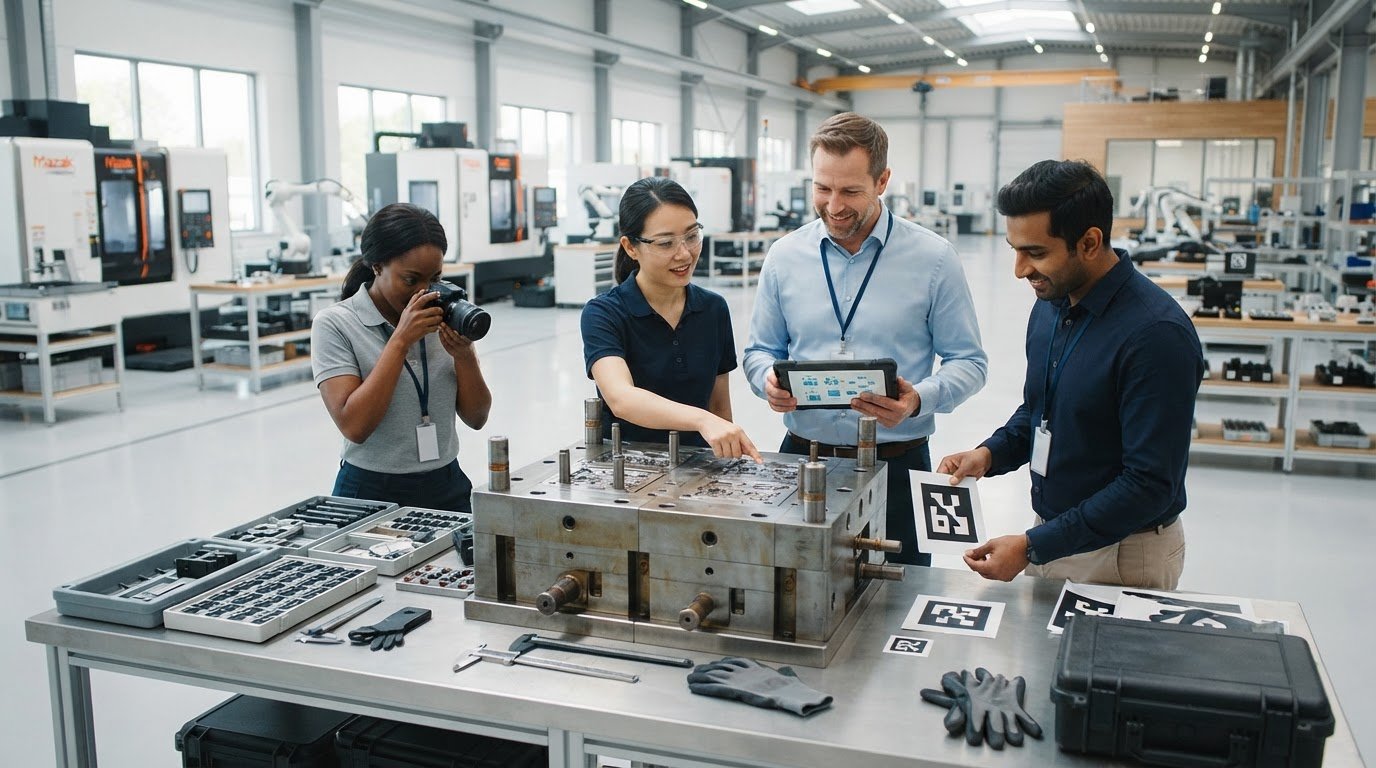
What if the mold you paid to develop couldn’t be released when you needed to change suppliers? Managing tooling and molds with a foreign factory means more than tracking where production equipment is stored. Payment alone may not establish clear ownership, access, or transfer rights. Without visibil...

A polished factory sample can still be the wrong one to approve if it doesn’t reflect the materials, dimensions, and process planned for mass production. If you’re figuring out how to get product samples from Asian factories, the challenge isn’t simply getting a package delivered. It’s making sure t...