

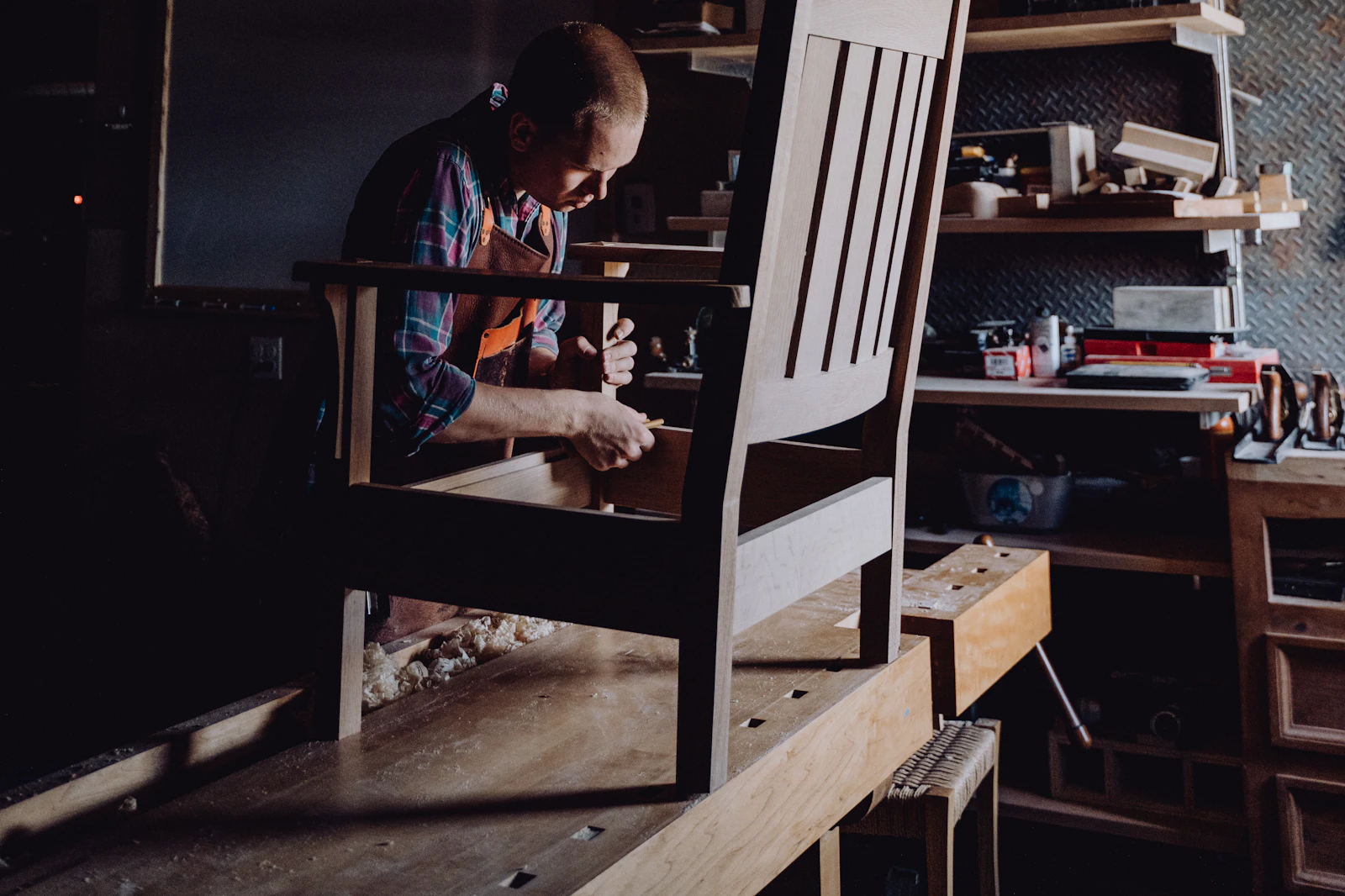
Furniture manufacturing in Indonesia can support custom and private-label orders using materials such as teak, mahogany, mindi, suar, acacia, rattan, and natural stone. Cirebon is one of the country’s furniture-making regions, alongside Jepara, Bali, and Yogyakarta. The right production plan matches materials, construction, and finish to the product’s intended use and export requirements.
Choosing a factory is only one part of the decision. Clear specifications, approved samples, and quality checks during production help keep finished pieces aligned with your design and reduce avoidable surprises.
This guide explains how custom and private-label orders are developed, what to assess in wood and other materials, and how to structure supplier checks and quality control. It also covers export production and Cirebon’s role, outlining practical steps to consider before committing to a furniture order.
• Define whether your order is OEM, ODM, private-label or fully custom, then document design ownership, specifications and sample approval.
• Match wood, metal, rope and wicker choices to the furniture’s use, finish requirements and production process.
• Plan export packaging, paperwork and production checkpoints early to keep quality and shipment requirements aligned.
• Assess how Cirebon’s furniture-making capabilities fit your design, order requirements and quality-control plan.
• For coordinated supplier and production oversight, Buying Office Asia can support sourcing and procurement, including factory-direct price negotiations.
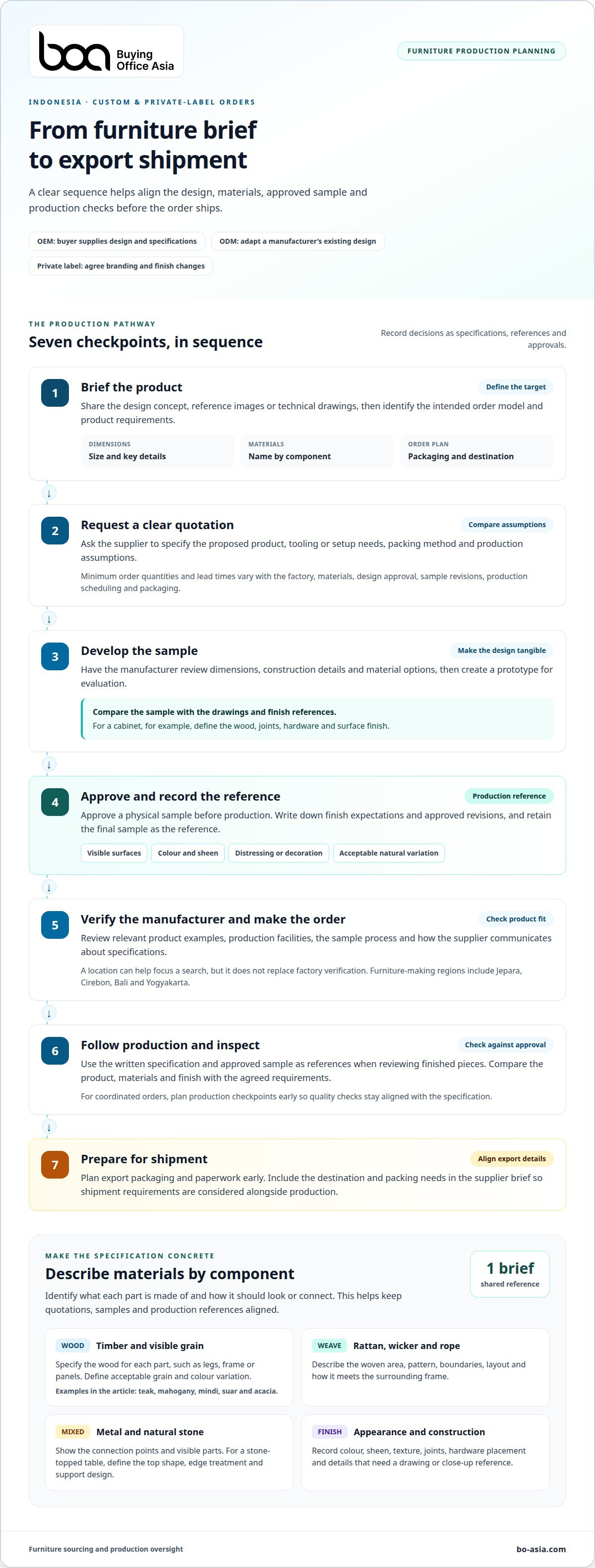
Indonesian manufacturers may offer OEM, ODM, private-label, and custom production. Choose the model by deciding who controls the design, specifications, and product identity.
With OEM production, the buyer supplies the design and manufacturing specifications. ODM production starts with a manufacturer’s existing design, which the buyer can adapt for its brand or collection. Private-label orders often use an existing design with agreed branding and finish changes.
Compare Indonesia with Vietnam, China, and other sourcing countries based on product fit, material capability, manufacturing process, and order requirements. No country is universally best; the right choice depends on the design and the controls your project needs. For hospitality furniture, clarify who owns the drawings and whether the design can be reproduced consistently.
Custom work can start with an interior design concept, reference images, or technical drawings. The manufacturer can review dimensions, construction details, and material options, then create a prototype for approval. For a mahogany cabinet, specify the wood, joints, hardware, surface finish, and acceptable appearance before sampling.
Record every finish in a written specification and approve a physical sample before production. Define visible surfaces, colour, sheen, and any distressing or decorative details. This gives the supplier a practical production reference and helps retailers maintain a consistent look across collections.
Send the supplier a complete brief with drawings, dimensions, material preferences, finish references, packaging needs, destination, and estimated order plan. Ask for a quotation that separates the product specification, tooling or setup needs, packing method, and production assumptions. For project-based hospitality furniture, include the room schedule and identify which pieces need to match.
Lead time depends on design approval, sample revisions, material availability, production scheduling, and packaging. Minimum order quantities vary with the factory, materials, and production method. A practical sequence is brief, quotation, sample, approval, production, inspection, and shipment. Discuss those variables while arranging OEM and ODM contract manufacturing.
Find manufacturers through trade directories, furniture exhibitions, and regional industry networks, then shortlist suppliers by product fit. Indonesia’s furniture-making traditions include Jepara, Cirebon, Bali, and Yogyakarta. A location can help focus your search, but it does not replace factory verification.
Review the supplier’s relevant product examples, production facilities, sample process, and communication about specifications. Compare the proposed sample with your drawings and finish references before authorizing production. For a custom collection, document approved revisions and retain the final sample as the production reference.
Material choices shape a product’s appearance, assembly, and finish requirements. In furniture manufacturing in Indonesia, identifying materials by component makes the specification more precise than naming only a general style or product category.
Teak, mahogany, mindi, suar, acacia, and rattan each have distinct grain, colour, and surface characteristics. For a dining chair, specify which species applies to the legs, frame, or visible panels. If the design combines solid wood and rattan, identify the woven area separately from the structural parts. This component-level description helps keep the quotation aligned with the intended design.
Define acceptable variation in visible grain and colour. A furniture set can look inconsistent if expectations are left implicit. Reference boards or approved material samples can show the preferred appearance. For rattan panels, document the weave pattern and boundaries, then show how the material meets the surrounding frame. These details make sample comparisons more objective.
For a teak piece made in Jepara, make the design details measurable. A cabinet specification can identify panel dimensions, door gaps, edge profiles, hardware placement, and finishes on visible and concealed surfaces. Add drawings or close-up references for carved areas, since a broad description such as “traditional detailing” leaves room for different interpretations.
Distinguish colour from surface treatment when defining the finish. Describe the intended sheen, texture, and visible marks, then record the approved reference for each product component. For a collection with a table and seating, define which details must visually match and which can vary naturally. This gives the production team practical criteria for reviewing the finished pieces.
Metal, rope, wicker, natural stone, and timber can be combined, but each connection needs a clear specification. For an outdoor bench with a metal base and rope seat, show the frame profile, connection points, rope layout, and colour reference. State which parts remain visible after assembly. These details help confirm whether the proposed construction follows the design.
For indoor furniture, describe how materials should look together in the intended room setting. A stone-topped side table, for example, needs a defined top shape, edge treatment, support design, and relationship to its timber base. For outdoor pieces, describe the intended use and care expectations in the product brief. Consistent material names across drawings, samples, and purchase documents help prevent substitutions and misunderstandings.
Teak’s natural oils, strength, and resistance to moisture make it a preferred material for luxury hospitality, outdoor furniture, and high-end residential projects. These properties do not remove the need to define intended use and finish. Record the surface treatment and expected appearance across exposed components so the material suits its setting. For an outdoor sofa, review the approved sample for joint construction, drainage, finish coverage and the stability of the assembled frame.
Indonesian furniture factories often treat and kiln-dry materials to reduce cracking, warping, and insect infestation. Include the agreed material preparation in the production specification and review samples for consistent condition before assembly. For mixed-material pieces, distinguish teak components from metal, rope, or wicker, and describe their joints and visible transitions. This makes it easier to assess materials alongside construction and intended use.
Indonesian furniture reaches international buyers through custom, private-label, and export production. Your product specification, timber sourcing, destination, and shipping plan shape the work from development to dispatch.
Indonesia’s timber legality assurance system is known as SVLK. For wood furniture, identify timber and sourcing requirements in the product brief, then align supplier records with the order. Consider responsible sourcing and export paperwork before production, rather than waiting until the goods are ready to leave the factory.
Export paperwork handled by Indonesian factories can include packing lists, invoices, certificates of origin, and phytosanitary certifications. The documents required depend on the product and destination. Align the commercial invoice and packing list with final product descriptions, quantities, and package details. Buyers should also agree who prepares each document and when drafts will be reviewed.
Private-label export orders add brand-specific tasks to the production plan. Confirm labels, packaging, approved artwork, and product descriptions alongside the furniture specification. A supplier making an interior collection for overseas retailers needs these details early, since late changes can affect packing and dispatch schedules.
Ask each factory for recent examples of comparable furniture shipped to your destination, with confidential details removed. Compare the construction, order scale, packing and documentation with what your order requires.
Industry development is reflected in investment in advanced machinery, digital production planning, sustainable sourcing practices, and international quality management systems. For buyers, these capabilities matter when a design requires repeatable dimensions, coordinated components, or a defined production sequence. Assess the process proposed for your product rather than treating investment in technology as a substitute for product-specific controls.
Skilled furniture makers may support export buyers with specification reviews, material alternatives, prototypes, and production problem-solving. For a hospitality project, a prototype can test how a table’s dimensions and finish work with the interior scheme before the wider order proceeds. Record approved changes so production follows the final design.
Jepara’s custom and mass-production base can serve different order types, while export requirements depend on the buyer’s destination and product. Set out the intended order structure, packaging needs, and document responsibilities before production begins. This gives the factory a clear path from approved design to export-ready goods.
Indonesia’s furniture trade combines regional craft traditions with increasingly structured factory operations. Certifications, workforce practices, production planning, and shipment coordination all affect how a supplier manages a project.
Certification claims can provide context about a supplier’s practices, but their relevance depends on what they cover. Their relevance depends on the certification’s scope and the facility or process it covers. A certificate alone does not show how a factory controls a specific furniture order, so connect documented systems to the project’s actual production plan.
Common sourcing risks include inconsistent workmanship, unclear labour practices, production delays, and shipping damage. Reduce exposure by defining acceptance criteria, agreeing how production updates and corrective actions will be handled, and planning packaging and shipment handover before the goods are complete.
Some Indonesian manufacturers are investing in advanced machinery, digital production planning, sustainable sourcing, and international quality management systems. These tools can support repeatable workflows, but their value depends on how they apply to the ordered product. For a dining set, review how the factory tracks dimensions, component versions, and finish approvals across production batches.
Ask the factory to show how it records a deviation, assigns corrective action, and releases revised work. This process matters when a production drawing changes after sampling. Clear version control helps prevent an earlier specification from reaching the workshop after you have approved an updated design.
Indonesia’s furniture-making traditions are associated with Jepara, Cirebon, Bali, and Yogyakarta. Each region is a useful starting point for understanding the country’s craft landscape, but a regional label cannot establish an individual factory’s capacity or process.
Assess the production team against the techniques your design requires. A carved teak order, for example, may call for different workshop skills and process controls than a dining table built around standardized components. Review relevant work and ask how the factory organizes hand-finished details alongside repeatable production steps.
Ask how many trained operators and workstations the factory can assign to your order, and which operations would compete with its existing commitments. A factory’s available capacity also depends on its current commitments, production mix, and the resources assigned to the order.
Assess project experience by process and product complexity, not just by photos of finished furniture. Ask how the factory sequences design approval, material purchasing, assembly, finishing, and packing for your order. For a coordinated collection, confirm how it schedules different pieces and manages changes that affect shared components.
Craftsmanship relies on skilled workers who can interpret drawings while maintaining the intended proportions and details. For a carved cabinet, clarify how the carving reference reaches the workshop and who checks the first completed piece against it. This links traditional workmanship with accountable production roles.
Capacity also depends on task allocation and communication between workshop staff and supervisors. Agree who records production issues, who approves changes, and how decisions reach the people making each component. A defined reporting path helps preserve accountability from the first operation through final assembly.
Cirebon is one of Indonesia’s recognized furniture-making regions. Its location can help narrow your supplier search, but regional reputation alone does not show whether a particular factory suits your order.
Treat Cirebon as a starting point for supplier research, then evaluate the facility assigned to your project. Establish who will manage production, where key operations take place, and how the factory communicates progress. These details help distinguish a direct production relationship from a trading arrangement and clarify responsibility when plans change.
Use a consistent shortlist process for each Cirebon supplier. Review relevant production examples, the factory’s stated capabilities, and its approach to buyer approvals. Ask for a clear explanation of which work takes place in-house and which relies on other workshops. This helps you understand how production coordination may affect schedules, quality records, and accountability.
Start with the project’s defining requirements, then assess how each factory would meet them. A useful review covers design complexity, production sequence, finish expectations, order structure, packaging, and the buyer’s approval process. Ask the supplier to identify foreseeable production constraints and explain how it would manage changes after approval.
For a multi-piece order, clarify how the factory will coordinate shared design decisions across the range. Keep the commercial quotation aligned with the technical specification so proposed alternatives are visible before they affect the order. A structured review makes it easier to compare suppliers on project fit, not just presentation or initial responsiveness.
Assess sustainability through practices connected to the order rather than broad claims. Ask how the factory records material purchases, manages offcuts, and handles production waste. Discuss what documentation can accompany the order and how records relate to the specific goods being made. This gives procurement teams a clearer basis for evaluating the supplier’s stated approach.
Also assess operational controls: who approves purchasing changes, how production records are maintained, and how issues are escalated. Clear ownership matters when a project involves several production stages or partner workshops. Record agreed responsibilities in the order documents, then use them during production follow-up.
Before placing an order, align the supplier’s production plan with your approval stages, quality checkpoints, packaging expectations, and delivery handover. Agree how progress updates will be shared and how proposed deviations will be reviewed. These arrangements turn a regional lead into a workable commercial relationship with defined responsibilities.
If Cirebon is on your shortlist, discuss the sourcing and procurement requirements for coordinating suppliers and production through to delivery.
Buying Office Asia supports furniture projects when international buyers need product development and tooling coordinated with sourcing and production. For a custom Cirebon furniture order, this can bring design requirements, supplier selection, sample review, and production planning together in one procurement process.
This coordination matters when a design needs custom components or repeatable construction. A Dedicated Asia Procurement Team can manage supplier communication, while factory-direct price negotiations support clear commercial discussions. For higher-volume orders, end-to-end sourcing and procurement can align the manufacturing plan with your specifications and approval process.
Share your drawings, material requirements, intended order structure, and destination plans to discuss your project’s needs. Contact Buying Office Asia to talk through your furniture manufacturing requirements.
Your next decision is how much coordination the project needs. A defined design and supplier relationship may call for focused production planning; a custom collection or high-volume order can require coordination across sourcing, factory communication, approvals, and production follow-up. The right support model depends on the work you need managed.
Buying Office Asia offers End-to-End Sourcing & Procurement, High-volume sourcing & procurement, and a Dedicated Asia Procurement Team. Share your product brief, intended order structure, and key production priorities to establish a practical starting point for furniture manufacturing in Indonesia.
Contact Buying Office Asia to discuss your manufacturing plans. A clear first conversation can help you move from sourcing decisions to a structured production plan with confidence.
Indonesian manufacturers produce furniture for residential, hospitality, wholesale, and project-based orders. A buyer’s specification can cover coordinated pieces for a dining area, bedroom, or outdoor space, with construction and finishes defined for the intended setting. Jepara, Cirebon, Bali, and Yogyakarta are recognized furniture-making regions. For a multi-piece project, align drawings and finish references across the full order, not just one sample.
Common materials include teak, mahogany, mindi, suar, acacia, rattan, and natural stone. Teak and rattan can appear together in a piece, while metal can form a frame or support. Whether engineered wood is suitable depends on the design and the factory’s production process. Specify materials by component, including visible surfaces, edges, and finish, so the quotation and approved sample reflect the intended construction.
There is no single wholesale price for Indonesian-made furniture. A quotation depends on material species and grade, dimensions, construction complexity, finish, order volume, tooling or setup, packaging, and delivery requirements. A solid-wood dining table and a mixed-material hospitality chair have different specifications and production needs. Compare quotations using the same drawings, materials, finish references, packaging plan, and order quantities to understand what each price includes.
Check export experience for your product and destination directly with the factory.
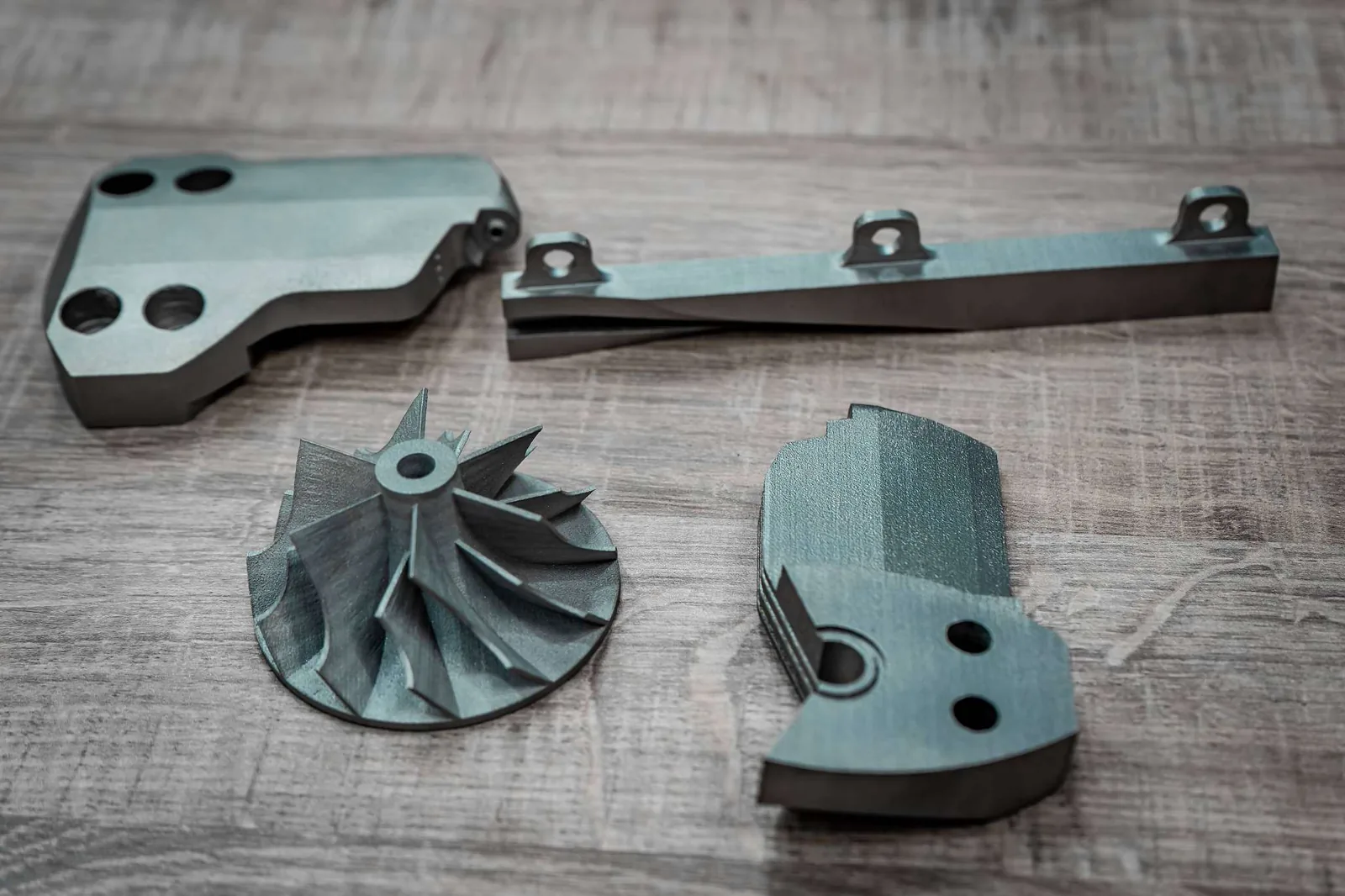
A perfect sample doesn’t prove a production run is under control. A golden sample in manufacturing is the approved physical reference for the product’s expected materials, dimensions, finish, function and packaging. It gives the buyer, factory and inspectors a shared standard, but cannot by itself s...
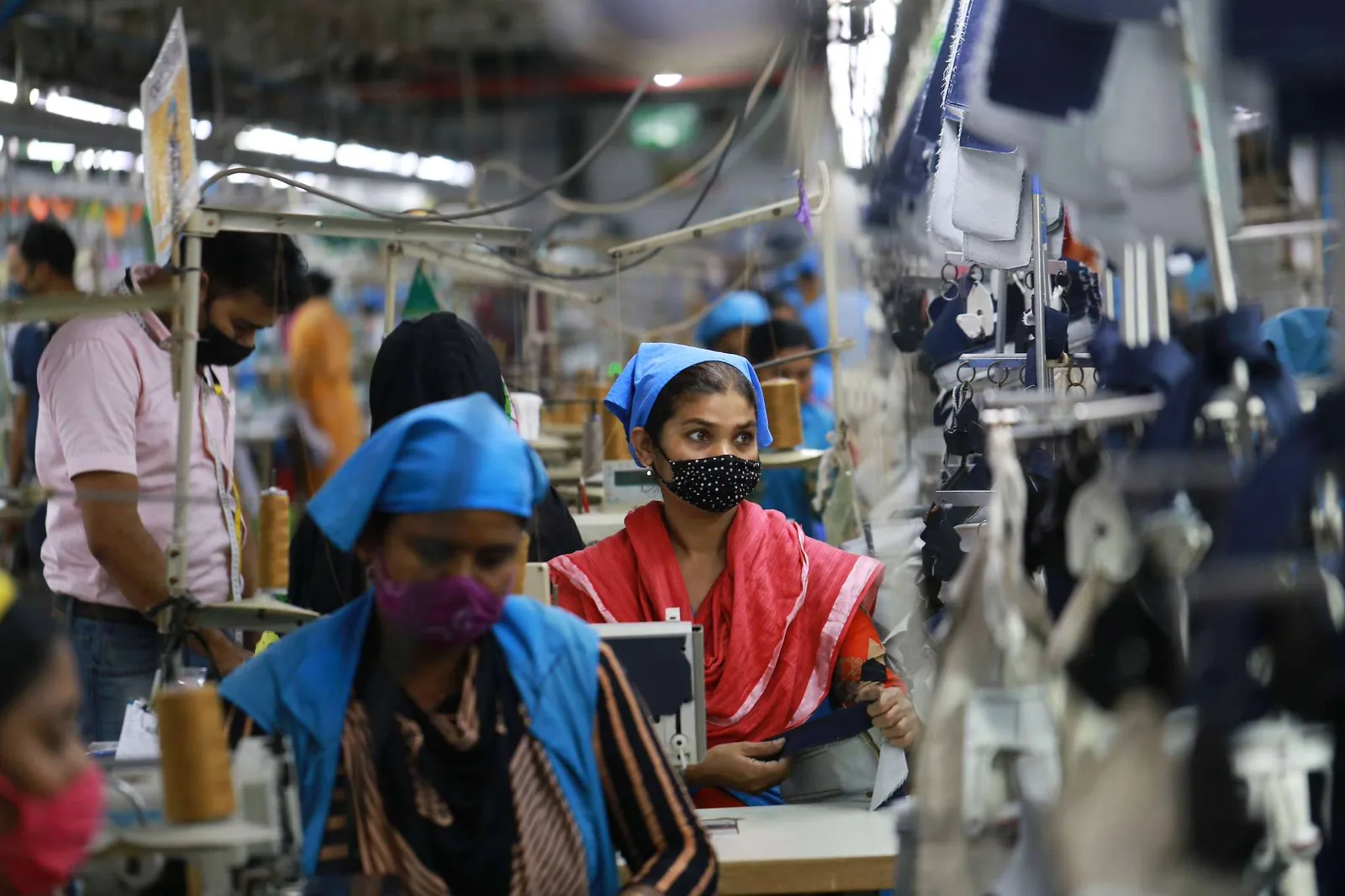
India’s textile advantage lies in the breadth of its materials and manufacturing capabilities, rather than in one fabric or production model. For brands considering textile sourcing from India, the country offers cotton, silk, synthetic fabrics and handloom production, with regional clusters such as...

Choose the production base by matching the product’s requirements to the work each supplier actually performs. The best fit for electronics manufacturing in Asia depends on what you’re making: China offers a broad electronics supply chain, Taiwan is strongly associated with semiconductor production,...