

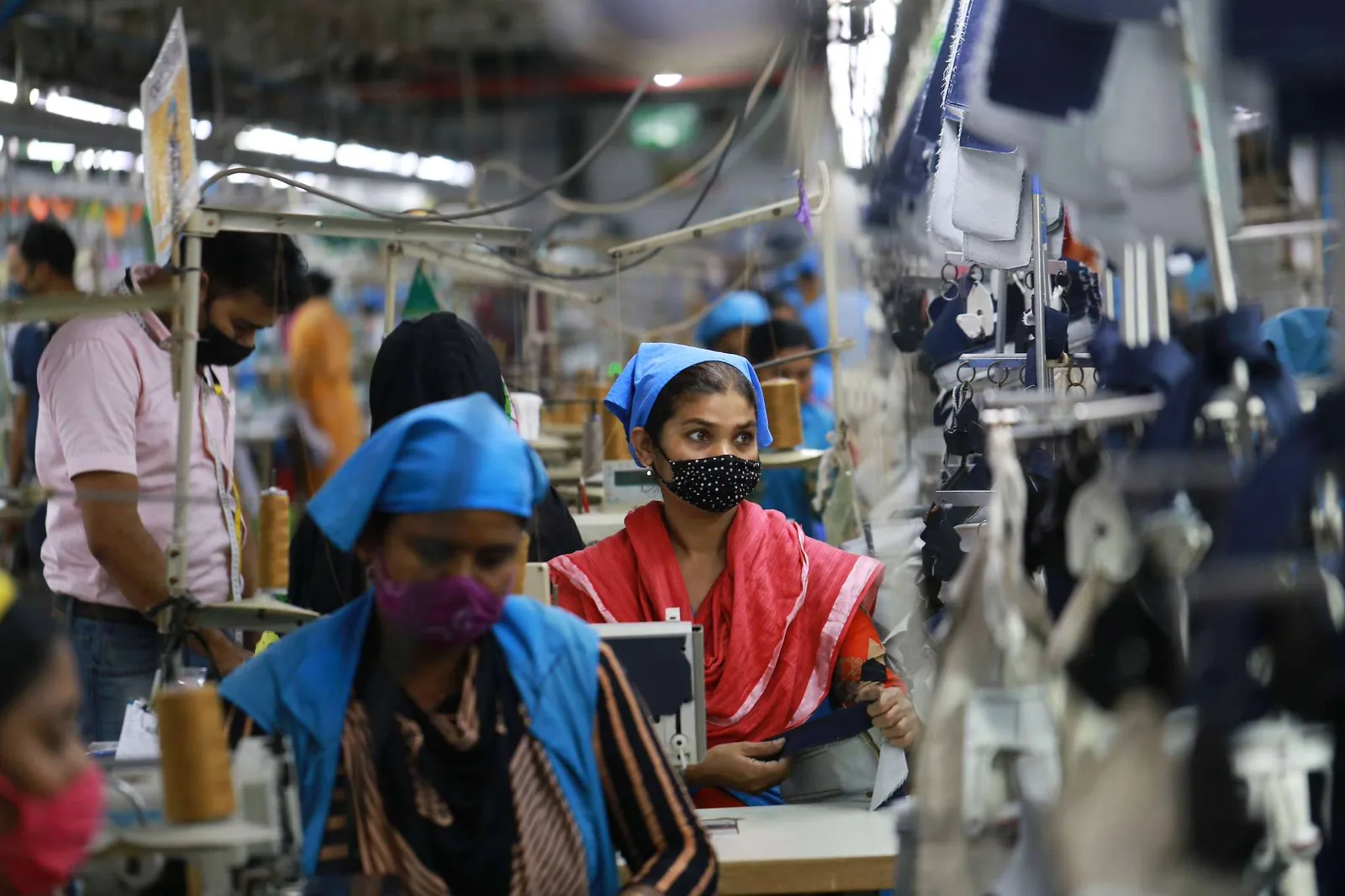
India’s textile advantage lies in the breadth of its materials and manufacturing capabilities, rather than in one fabric or production model. For brands considering textile sourcing from India, the country offers cotton, silk, synthetic fabrics and handloom production, with regional clusters such as Tiruppur for knitwear and Surat for synthetic and polyester-blend fabrics. The right fit depends on your product, material requirements and production controls.
That breadth creates opportunities, but it also makes careful supplier selection and precise specifications essential. A fabric name alone does not define the finished product: construction, weight, colour, finishing and approved samples all influence what a factory delivers.
This article explains why brands source textiles from India and how product ranges, manufacturing clusters and certifications differ. You’ll also learn how to prepare a usable specification, evaluate samples and assess suppliers, so your decision reflects product needs, quality expectations and the realities of production.
• India offers a broad mix of natural and synthetic fibres, apparel production, and home-textile manufacturing. Match the sourcing opportunity to your material and product requirements.
• Regional clusters have distinct strengths, from Tiruppur knitwear to Surat synthetic fabrics. The right location depends on the product and manufacturing process you need.
• Textile specifications should define construction, finish, colour and other acceptance criteria clearly so samples and production can be assessed against the same standard.
• Certifications and eco-labels address different concerns. Assess each credential against your product, sourcing requirements and destination market.
• Evaluate suppliers through sample approval and clear production expectations, not capability claims alone. The full article explains how these choices fit together.
India offers brands a broad textile base, including cotton, silk, viscose and polyester. India’s Press Information Bureau reported provisional cotton output of 4.95 million tonnes for 2025–26 on 20 July 2026. This is crop-production context, not evidence that a particular mill has your specified fibre, yarn or fabric in stock. Ask the supplier to identify approved input sources and confirm availability for the order. This range makes textile sourcing from India relevant when material choice and production capability must align.
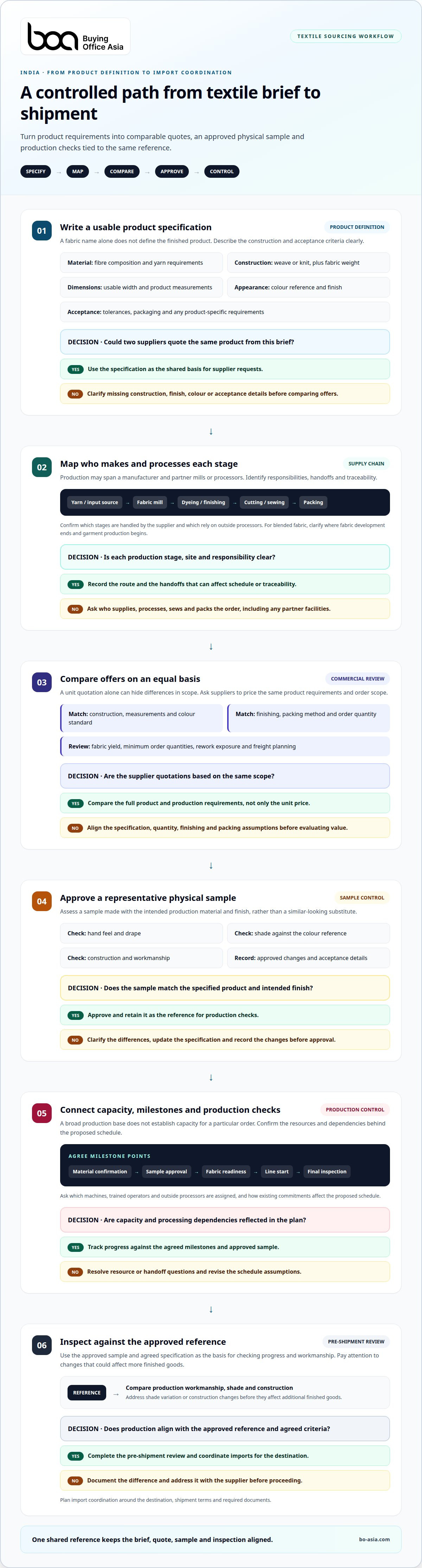
The process moves from product definition to supplier selection, sampling, commercial negotiation, inspection and import coordination. Start by documenting fibre, construction, finish, colour, order volume and destination. Then shortlist manufacturers, request development samples, approve a reference sample, agree on production terms, monitor progress and arrange a pre-shipment inspection. Plan imports according to the destination, shipment terms and required documents.
Clear development inputs help a manufacturer interpret a design accurately. A tech pack can specify fabric composition, weight, weave or knit, measurements, tolerances, colour references, finishing and packaging. For a cotton shirt, for example, define the intended fabric construction and wash appearance rather than relying on a broad description such as “soft cotton.” Review the first sample for hand feel, drape, shade and workmanship, and record approved changes before bulk production.
India’s production base covers fibre, yarn, fabric and finished apparel, although the degree of integration varies by supplier. A manufacturer may handle several stages or rely on partner mills and processors. This affects handoffs, scheduling and traceability. Map who supplies the yarn, dyes or finishes the fabric, cuts and sews the garment, and packs the order. For a blended polyester garment, confirm where fabric development ends and garment production begins.
A large national production base does not establish the capacity available for one order. Ask each supplier which machines, trained operators and outside processors would be assigned to your product, and how existing commitments affect the proposed schedule. Brands can encounter different operating scales, equipment and order practices. Compare total product requirements, not a unit quotation alone. Fabric yield, finishing, minimum order quantities, rework exposure and freight planning all affect commercial viability.
Production schedules need to connect material availability with every processing stage. A fabric delay can affect cutting, sewing, finishing and packing, so identify dependencies and approval points. Set milestone dates for material confirmation, sample approval, fabric readiness, line start and final inspection. During production, compare progress and workmanship with the approved sample. Address shade variation or construction changes before they affect more finished goods.
India can suit brands looking for material variety, access to domestic raw materials or multiple production stages within one country. The best fit depends on the specification, volume, quality requirements and supplier’s process controls. A disciplined brief, approved sample and milestone plan help turn these advantages into a production decision grounded in your product needs.
India’s export mix spans cotton apparel, accessories and household fabrics. Product construction and destination requirements shape supplier selection, specifications and landed-cost decisions.
For cotton-led ranges, start with the fabric construction, yarn requirements, finish and intended use. Supplier capabilities can also extend to blends and other product categories, but confirm them through relevant samples and production records. For dated crop context, see the Government of India’s July 2026 cotton backgrounder; crop output does not establish an individual factory’s export capability.
For home textiles, define the end use before requesting a quote. Towels, table linen and bedding differ in construction, finishing, dimensions and packaging needs. Accessories also require precise material and workmanship descriptions, whether the product is a textile bag, scarf or trim component. Samples should represent the intended production material and finish, not just a similar-looking substitute.
Apparel pricing and value positioning reflect how a product’s specification, manufacturing requirements and commercial offer fit its intended market. Comparing unit prices without also comparing fabric, finishing and order scope can hide important differences.
For example, a cotton garment with a specialized wash may require different processing from a basic garment made from similar fabric. Compare offers using the same construction, measurements, colour standard, packing method and order quantity. Include material yield and finishing requirements in cost discussions. India’s broad supply chain can support different product positions, but the value depends on the product brief and production route.
India is one source in the global apparel supply chain serving US buyers. For each candidate supplier, ask for relevant product experience, the exact production site, documented quality checks and export-document responsibilities.
That context helps brands assess India as part of a sourcing portfolio, rather than assume it suits every style or volume. Ask for a dated schedule built around the actual fabric and order, distinguishing development, material procurement, production, inspection and transport. Material readiness, sample approvals and processing steps influence the schedule, so align production milestones before committing to a delivery window.
For US shipments, air freight generally prioritizes speed, while ocean freight suits shipments with a workable longer transit time. Transit time and freight cost vary with shipment size, routing, service level and booking conditions. Compare total landed cost with the required delivery date.
US import duties and tariffs depend on the product’s customs classification and applicable trade measures. Textile content, garment type and shipment details affect the assessment, so determine the classification before calculating landed cost.
India’s textile hubs are not interchangeable. Jaipur’s printing traditions, Karur’s home-textile production and Ahmedabad’s weaving base provide different starting points for supplier research. Choosing a region based on product and process can narrow the search, but each factory still needs to be evaluated.
Jaipur is associated with block-printed textiles and Bandhani dyeing. These techniques may suit fashion ranges seeking patterned or tie-dyed fabric. A useful brief identifies the design, base cloth, colour references and acceptable variation. For a print, approve a sample that clearly shows placement and repeat. For Bandhani, agree on the intended pattern and finish before production.
Ahmedabad is a weaving cluster, while Panipat is associated with home textiles such as rugs. Karur is a home-textile hub; verify whether a particular supplier offers handloom, powerloom or other production appropriate for the specification. These hubs offer different starting points: synthetic furnishing fabric has different construction needs from handloom table linen or a finished rug. Specify the product’s use, dimensions and fabric characteristics before comparing suppliers.
Other clusters have distinct skills. Ludhiana is a sourcing location for woollen textiles and winter wear. Varanasi and Kanchipuram are known for silk and handloom textiles. Kannur supplies handloom fabrics for furnishing, napkins and bedding. These locations can help you find relevant expertise, but a cluster’s name alone does not establish capacity, quality consistency or production control.
block printing and Bandhani dyeing for patterned textile concepts.
weaving suppliers; verify the exact fibre and fabric construction.
home-textile supplier leads; confirm construction, production method and finishing at the actual facility.
home textiles, including towels and rugs.
woollen fabrics and winter wear.
silk and handloom textiles.
Use these locations to guide supplier discovery, then map the production route. Ask which facility weaves or knits the fabric, which handles dyeing or printing, and where cutting, stitching and finishing take place. A transparent account of subcontracting and process ownership helps you understand handoffs. For a Jaipur print order, for example, confirm whether printing and final stitching happen at one facility or at separate sites.
Cluster specialization can be a practical advantage when a product depends on a particular technique. It does not remove the need to assess the manufacturer’s equipment, sample quality, schedule and ability to meet the brief. Compare the approved sample against bulk-production checkpoints for shade, pattern placement, dimensions and finishing. Record acceptable variation clearly, especially for handloom textiles, where visible characteristics may differ between pieces.
Regional sourcing also affects communication and supply-chain coordination. A supplier may work with specialist processors outside its own facility, so production milestones should identify who owns each stage and approval. Keep the design file, material description, sample comments and approved reference together. This gives fashion teams a consistent basis for decisions, whether they are developing cotton handloom bedding or printed fabric.
For textile imports, credentials can help assess materials, product claims and factory practices. Their value depends on what each certificate covers and on your retail or supply-chain requirements.
Sedex membership and a SMETA social audit are not certifications. amfori BSCI is a social-audit framework; review the actual site report and follow-up actions rather than treating a logo as proof of performance. GOTS certification concerns organic textile processing and its associated environmental and social criteria; check the named entity, covered facilities, products and processes. OEKO-TEX STANDARD 100 concerns textiles tested for harmful substances and does not establish organic fibre content. Verify the specific certificate or audit, its validity and its scope. The appropriate credential depends on the material, product and buyer requirements, particularly for exports to Europe and North America.
A certificate is useful only when its scope matches the order. Check the named factory, covered processes, product categories and validity period against the proposed supply chain. A mill’s certification may not cover a separate dyehouse or sewing facility. Map each subcontractor and production stage, then align the supporting evidence with your purchase requirements before bulk production.
Sustainable sourcing involves more than an organic label. Define the claim you intend to make, such as an organic-material claim, and connect it to the relevant fabric and production records. Keep approved composition details, supplier declarations and transaction documents together. If a product combines certified and conventional materials, make sure traceability distinguishes those inputs clearly.
For textiles entering the United States, labeling, fibre-content disclosure, flammability and product-safety obligations depend on product type, intended use and applicable requirements. Confirm the requirements for the finished item and its destination before approving labels or shipping.
An import file commonly includes a commercial invoice, packing list, transport document, product description and material details. The exact documents depend on the shipment and product classification, so keep descriptions and fibre information consistent across records.
Common sourcing risks include differences in fabric shade or construction, production delays, payment fraud and compliance gaps. Late material approval can delay cutting and sewing, while an unverified change in payment instructions can put funds at risk. Factory records, clearly assigned milestones and controlled payment approvals help address these risks before shipment.
Build a practical evidence file for each supplier and order. Record the factory identity, approved sample, specification, certification documents, production locations and inspection findings. Compare the shipment with the approved reference for composition, colour, dimensions and workmanship. Production and pre-shipment inspections provide checkpoints, but findings must be tied to agreed acceptance criteria and corrective actions.
For retail products, align label content and sustainability claims with the materials actually used. Keep version-controlled records of artwork, packaging and specification changes. This helps prevent outdated labels, unsupported claims or supplier substitutions from reaching the import stage.
India’s export range includes finished clothing, fabric and made-up household textiles. For buyers, the useful distinction is the product form: fabric purchased by the roll needs different controls from a sewn garment or finished home-textile item. Define the category first, then set requirements according to how the product will be sold and used.
Finished apparel can include garments made from woven or knitted fabric, each with a different specification focus. For a woven shirt, document fabric construction, garment measurements, seam details and finishing. For a knitted top, define fabric structure, stretch expectations, fit and recovery after wear. The sample should represent the material and finishing route planned for bulk production.
Fabric exports serve brands that manufacture elsewhere or develop products requiring a particular textile input. Specify fibre composition, construction, weight, width, colour and finish. If the fabric will be cut into multiple product panels, include usable width and any directional print requirements. These details make quotations easier to compare and reduce uncertainty when the fabric reaches the next production stage.
Home-textile exports include products such as bedding, towels, rugs and table linen. Their requirements depend on dimensions, intended use, construction, edge treatment and presentation. A bedding set, for example, needs coordinated component sizes and clear packing contents. A rug specification should define its construction, backing and finished dimensions. For towels, record the required size, fabric characteristics and finishing expectations.
Accessories are another category, including textile bags, scarves and fabric components used in other products. A bag specification should cover dimensions, seams, handles, closures and load-bearing construction. For scarves, colour, drape, edge finishing and packaging can define the finished appearance. Product-specific details make a sample a useful production reference rather than a broad visual approximation.
To compare export offers, keep the quotation request consistent across suppliers:
fabric, finished apparel, home textile or accessory.
fibre content, construction, colour and finish.
dimensions, seams, components and workmanship expectations.
folding, labels, packaging and set contents.
the sample and specification used for production comparison.
Regional expertise can help narrow the search, but export suitability still depends on the product brief and supplier’s processes. Identify which stages the supplier controls and where outside processors are involved. Keep the final sample, specification and approved packaging requirements aligned. This gives you a practical basis for reviewing production and helps keep the delivered export consistent with the intended product.
Buying Office Asia turns textile requirements into a managed sourcing and procurement process. When supplier selection, production coordination and commercial discussions span different regions, a dedicated team can align factory capabilities with your product specifications and order needs.
Support includes supplier vetting, factory-direct price negotiations and high-volume sourcing. End-to-end procurement is particularly useful when a project involves multiple manufacturing stages, sample approvals and production milestones that require coordinated follow-up. This connects decisions across supplier selection and production instead of treating each step in isolation.
If you’re planning a textile project in India, contact Buying Office Asia to discuss your sourcing requirements.
Before opening supplier discussions, consolidate the decisions that will shape the order: intended product, target material, approved reference and destination-market needs. Note which details are fixed and where alternatives are acceptable. This gives your team a practical basis for evaluating proposals and making timely decisions as development progresses.
For textile sourcing from India, a useful next step is to turn your brief into a clear project scope. Buying Office Asia can help assess your requirements and plan the work around your product and production objectives.
Start the conversation with your textile brief and priorities. Contact Buying Office Asia to discuss the project and move forward with confidence.
US buyers can vet suppliers by matching factory capabilities to a written product brief, then assessing the production site and commercial arrangements. For textile sourcing from India, Buying Office Asia supports supplier vetting, factory audits, sample review and factory-direct price negotiations. Establish who owns each production process, whether subcontractors are involved, and which entity receives payment. A clear supplier map and approved sample make capability claims easier to assess before placing an order.
Minimum order quantities and schedules vary with fabric availability, dyeing or printing batches, construction and the supplier’s production plan. A custom colour may require a different commitment from an available stock fabric, while added finishing can affect the schedule. Separate the fabric minimum from the finished-goods minimum in the quotation. Include sample approval, material readiness and production milestones in the timeline so the delivery plan reflects the actual process.
Use order-specific evidence, not a general factory profile, to check whether claims match delivered goods. For a cotton bedding order, reconcile the purchase order’s material description with receiving records, production batch records and finished-shipment documents. During a site visit, compare work practices with documented procedures and record any gaps, responsible owners and corrective actions. This creates a traceable record tied to the actual order, giving quality, labour and sustainability reviews concrete evidence to assess.
Air freight generally prioritizes speed, while ocean freight suits shipments with a workable longer transit time. Transit times and freight costs vary with shipment size, routing, service level and booking conditions.
U.S. import duties and tariffs depend on the product’s customs classification and applicable trade measures. Textile content, garment type and shipment details affect the assessment, so determine the classification before calculating landed cost.

A perfect sample doesn’t prove a production run is under control. A golden sample in manufacturing is the approved physical reference for the product’s expected materials, dimensions, finish, function and packaging. It gives the buyer, factory and inspectors a shared standard, but cannot by itself s...

Furniture manufacturing in Indonesia can support custom and private-label orders using materials such as teak, mahogany, mindi, suar, acacia, rattan, and natural stone. Cirebon is one of the country’s furniture-making regions, alongside Jepara, Bali, and Yogyakarta. The right production plan matches...

Choose the production base by matching the product’s requirements to the work each supplier actually performs. The best fit for electronics manufacturing in Asia depends on what you’re making: China offers a broad electronics supply chain, Taiwan is strongly associated with semiconductor production,...