

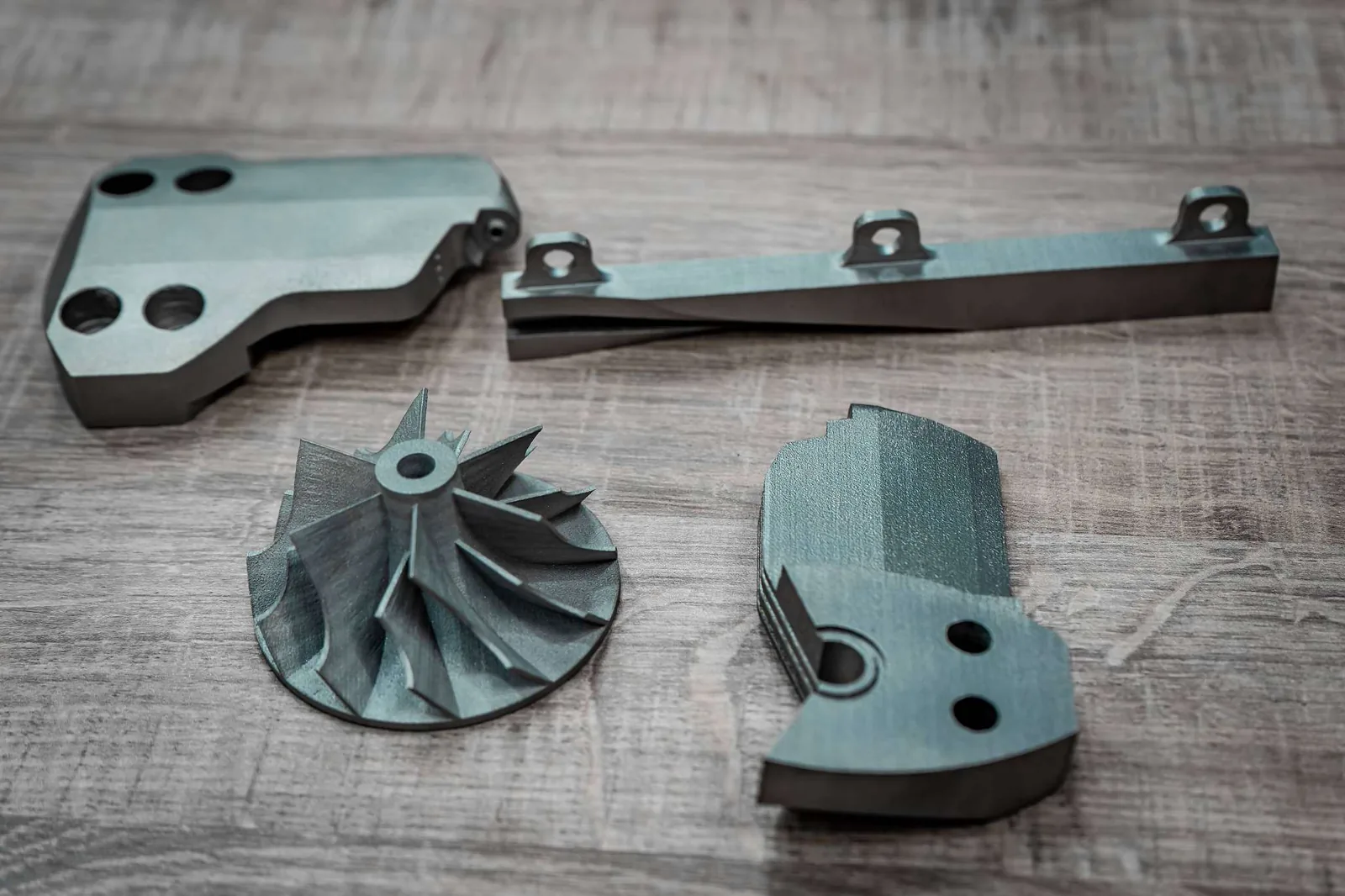
A perfect sample doesn’t prove a production run is under control. A golden sample in manufacturing is the approved physical reference for the product’s expected materials, dimensions, finish, function and packaging. It gives the buyer, factory and inspectors a shared standard, but cannot by itself show whether a supplier can reproduce that standard consistently at scale.
That distinction matters. Without clear specifications, written approval and production checks, teams can disagree about what it means to “match the sample.” This article explains how to develop and approve the reference, what to document alongside it, and how to use it during production and inspection. It also covers the sample’s limitations and the process controls needed to keep production aligned with the approved product.
• Distinguish the development sample from the approved production reference and any boundary samples that define acceptable variation.
• Document approval with signatures, dates, seals and matching product specifications so teams can identify the current standard.
• Use the approved sample as a comparison point during production, while checking critical product requirements separately.
• Keep matching reference copies with the buyer, factory and inspection team to reduce disagreements during quality checks.
• Pair the physical sample with process controls and change records to manage consistency when materials, components or suppliers change.
During mass production, teams compare units with an approved physical reference and written requirements. The sample guides decisions, but it doesn’t prove that the factory can maintain consistency at scale.
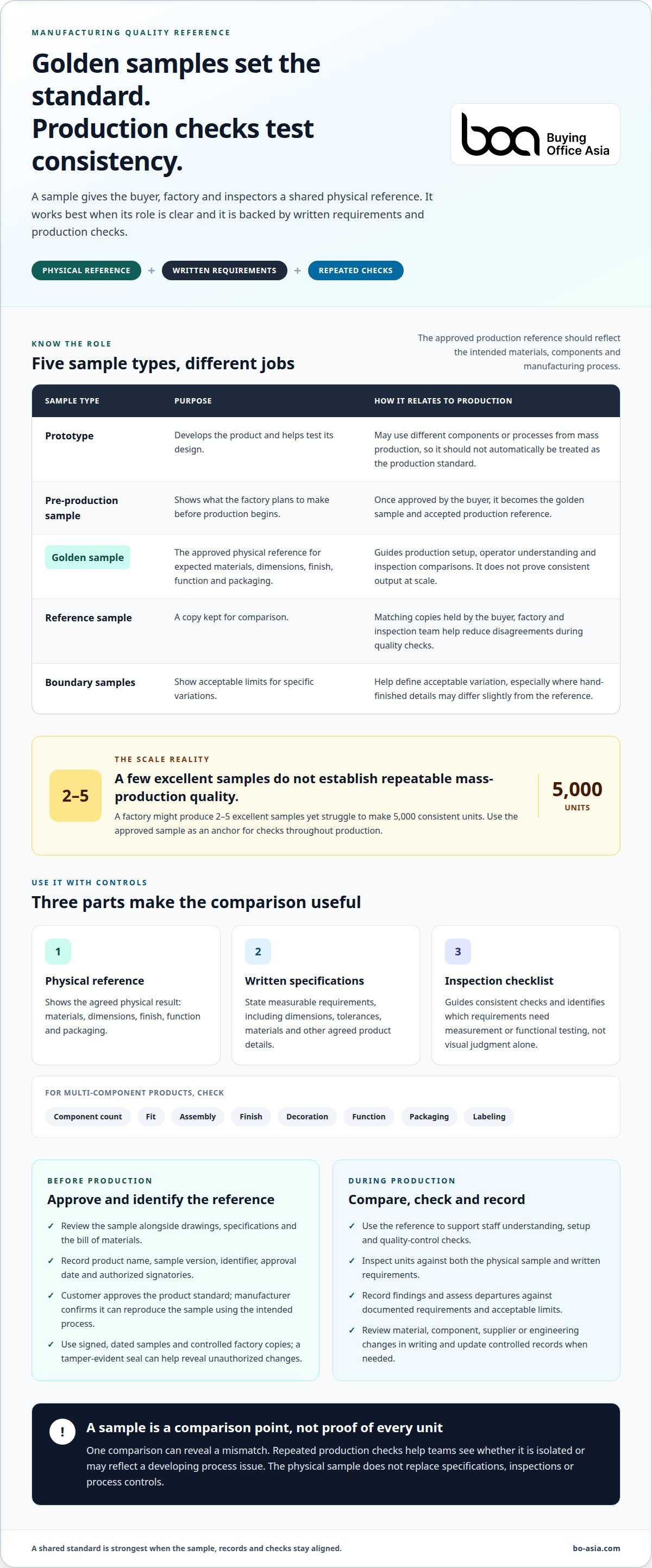
A prototype helps develop a product and test its design. A pre-production sample shows what the factory plans to make before production begins. Once the buyer approves it, the golden sample becomes the accepted production reference. A reference sample is a copy kept for comparison, while boundary samples show acceptable limits for specific variations.
These roles shouldn’t be confused. A carefully finished prototype may use different components or processes from mass production. The reference should reflect the intended production method and final requirements. In OEM and ODM contract manufacturing, aligning the sample with production materials and processes helps make the comparison meaningful.
A golden sample works alongside product specifications and inspection checklists, not in place of them. The sample shows the physical result, specifications state measurable requirements, and checklists guide consistent checks.
For a multi-component product, a checklist can cover component count, fit, assembly, finish, decoration, function, packaging and labeling. It should specify which requirements need measurement or a functional test rather than relying on visual judgment alone. This gives the factory and buyer a shared basis for resolving differences during inspection.
Before production, staff use the approved reference to understand the expected appearance, assembly and finish. The factory can keep signed samples for operator training and quality-control checks. Inspectors can compare units during production and final inspection, using specifications to assess dimensions, function and other requirements.
A factory might produce 2-5 excellent samples yet struggle to make 5,000 consistent units. That’s why the sample should anchor checks throughout production, not just the initial setup. A single comparison can reveal a mismatch, while repeated checks help teams spot whether it affects one unit or reflects a developing process issue.
The golden sample record should identify the product and sample version, approval date, materials, components, drawings, bill of materials, tolerances, finish, color, function, packaging and authorized deviations. Include approvers’ signatures and link the record to the inspection checklist. This documents the product standard, the sample’s identity and the approval trail.
Mass-produced units may differ slightly from a carefully prepared sample, especially in hand-finished details. Specify the acceptable range in the product requirements or boundary samples, and make sure any variation preserves appearance and function. If a unit departs from the agreed standard, record the finding and assess it against the documented requirements. Don’t assume the golden sample proves that every unit will match it.
Approval should identify one physical sample as the agreed reference and link it to controlled product records. Signatures, dates, seals and change records help prevent an outdated or altered sample from directing production.
The customer approves the sample against agreed requirements, while the manufacturer confirms it can reproduce the sample using the intended production process. Both parties should resolve differences before approval, rather than leaving factory teams to interpret “acceptable” later.
Approval records should identify the product, sample version, date and authorized signatories. The customer retains the decision record, and the manufacturer controls the factory copy used for production. Signed, dated samples help both parties identify the current reference. A tamper-evident seal can make unauthorized changes easier to detect.
Are golden samples required by ISO 9001 or other manufacturing standards? A physical golden sample shouldn’t be assumed to satisfy every applicable standard or be a universal requirement. ISO 9001:2015 sets requirements for quality management systems. An approved product sample does not replace calibration or verification of measuring equipment where measurement traceability is required. Define the product sample’s role in the purchase agreement and applicable quality procedures.
Who is responsible for approving and maintaining a golden sample? The customer approves the product standard, and the manufacturer maintains its controlled production reference. The agreement should also name who can authorize changes, update records and distribute replacement samples.
A checklist makes approval a review of defined requirements, not a quick visual sign-off. The customer and manufacturer should review the physical sample alongside drawings, specifications and the bill of materials.
Record product name, version, sample identifier, approval date and signatories.
Compare dimensions and tolerances, materials, components and assembly with the approved documentation.
Assess color, surface finish, decoration, logo placement and workmanship against agreed criteria.
Check function, included accessories, component count and packaging.
Mark approved, rejected or conditionally approved, and document each required correction.
A material, component, supplier or engineering change should trigger a written review. If the change affects the agreed standard, issue a revised sample and approval record before adopting it as the new reference. Never replace an approved sample informally. Retain the earlier version so production and inspection records remain traceable.
For support coordinating sample approval and production references, discuss your manufacturing requirements.
A golden sample is the approved physical version of a product that defines the buyer’s accepted standard. It may also be called an approval sample or approved reference sample. Its purpose is practical: production teams compare finished goods with a specific accepted result instead of relying on broad phrases such as “good quality.”
It is established through product development, sample reviews and validation, not simply because one unit looks polished. A manufacturer may submit several versions as the buyer refines dimensions, function, finish, color, assembly and packaging. The buyer records requested changes for each version, so the next sample addresses open issues rather than repeating them.
Not every early sample uses final production tooling. Soft tooling, 3D printing or CNC machining can create a review sample before production tools are ready. The approval record should identify any differences from intended materials, components or processes. If those differences could affect the finished product, the buyer should approve a production-intent sample before mass production.
Validation connects the physical unit to documents and defined checks. Review the sample against the bill of materials, 2D drawings, tolerances, functional requirements and relevant test reports. A figurine, for example, may need separate checks for dimensions, paint placement, fit between components and packaging protection. A signed sample without those supporting requirements leaves room for different interpretations.
Record the product name, sample identifier and revision.
Check dimensions, materials, components, assembly, finish and function.
Note any temporary tooling, substitute material or unfinished detail.
Reject the sample or list corrections for the next review.
Link written approval to the final sample and supporting documents.
Ownership should be explicit in the approval record. The buyer owns the product acceptance decision, and the manufacturer keeps a controlled factory reference for production. The buyer, manufacturer and inspection team may each keep a matching sample, identified by the same version and approval record. That shared identity matters: an inspector comparing goods with an older revision could report differences the buyer has already approved.
Approval should also define how the reference stays valid. A change to materials, components or suppliers can alter appearance or performance, so the responsible parties document the change and decide whether another sample needs review. This creates a traceable link between development decisions, the accepted product and the standard used for quality inspection.
In quality control, a golden sample gives the factory, buyer and inspector a physical reference for comparing production units. Keep matching copies available to each team so inspection decisions use the same accepted standard.
Distributing signed, dated samples gives the factory, buyer and inspection company a shared reference. Keep a sample at each location, with matching identification and approval records. This prevents an inspector from comparing goods against a different version from the one used by the factory.
Before a production run, the supplier should have the correct sample available for setup and operator guidance. The buyer keeps a copy to resolve questions about acceptance, while the inspection team uses its copy during checks. If a sample travels internationally, protect it from damage and keep its identity linked to the product documentation.
Tooling or component changes can make an old sample misleading. If the reference no longer represents the current approved product, document the change and distribute an updated version. Keep the superseded sample separate and mark it obsolete, so it can’t be mistaken for the active standard.
During inline and final inspections, inspectors compare selected units with the approved sample and product requirements. The sample helps assess appearance and workmanship; drawings and specifications define measurable dimensions and tolerances. Using both makes inspection more consistent than relying on visual judgment alone.
Checks can cover color, finish, fit, assembly alignment, logo and decoration placement, packaging, accessories and obvious functional differences. For a multi-part product, an inspector can compare assembly and component count, then refer to specifications for dimensions or functional criteria. Record each finding against the relevant requirement and sample version.
Under an agreed AQL-indexed plan, inspect a sample selected as the plan specifies. A passing sample does not establish that every unit is defect-free. The reference helps inspectors assess sampled goods consistently, while the inspection plan sets the checks and acceptance criteria. Very high-value or sensitive products may call for individual inspection of every unit.
Inspection effort depends on what the buyer defines as acceptable. Requiring every unit to match a finely finished sample perfectly can increase inspection labor and create avoidable rejects when minor variation is acceptable. Boundary samples can clarify permitted variation, such as a defined range of finish or appearance. The supplier and buyer should agree on those limits before inspection, then record actual defects separately from acceptable differences. Clear references and criteria help direct corrective action toward genuine nonconformities, not disagreements over subjective preferences.
A physical sample shows an approved result, but it doesn’t define every requirement or demonstrate a repeatable production process. Without linked specifications, testing records and quality-control checks, different teams may interpret the same reference differently.
What risks arise from outdated, damaged or unapproved golden samples? A factory may follow an obsolete finish, material or component, while inspectors assess production against another version. Damage can obscure the reference, and an unapproved sample can turn a proposal into an assumed production standard.
Version control is essential. Each production sample should match an approval record identifying its drawings, bill of materials, materials, components, dimensions, tolerances, finish and functional requirements. If a supplier changes a component or production method, the record should show whether the approved standard still applies. Otherwise, the sample and factory process can drift apart without a clear decision trail.
Testing needs its own criteria. A sample may look correct but still fail a functional check or perform differently in use. Record the required test, acceptance criteria and result alongside the relevant product version. For example, a fitted assembly may look aligned in the sample, while a production unit binds because a component dimension varies. A physical comparison alone may not reveal the cause.
Production controls connect the approved reference to repeatable work. Set checkpoints for incoming components, setup, assembly, decoration and finished goods. When an inspection finds a mismatch, record the affected requirement, identify the cause and document corrective action. Rechecking after a process adjustment helps establish whether the correction addressed the issue, rather than just changing the inspected unit.
A factory or inspector uses a superseded sample or drawing.
Teams disagree whether a slight finish difference is acceptable.
A substitute component changes fit, appearance or function.
A compliant sample is mistaken for proof of consistent output.
Storage matters too. Direct light can shift a sample’s color and make visual comparisons unreliable. Keep the reference protected, identified and linked to its approval record. Replace it when changes to materials, components or suppliers make it unrepresentative, and preserve the superseded version as obsolete so it doesn’t return to production.
A golden sample becomes effective only when documentation, version control and production checks support it. For help aligning sample approval with production quality controls, discuss your manufacturing requirements.
Buying Office Asia connects sample approval with the wider sourcing and procurement decisions that shape production. When a product involves multiple suppliers, components or production stages, a Dedicated Asia Procurement Team can coordinate communication and keep decisions aligned across the supply chain.
End-to-End Sourcing & Procurement can support the process from supplier selection through factory-direct price negotiations and production planning. For high-volume orders, clear specifications and a controlled reference connect product expectations with supplier discussions and production requirements. The right level of support depends on your product, supply chain and sourcing goals.
Contact Buying Office Asia to discuss your manufacturing and sourcing requirements.
Use each production cycle to capture what your sample review taught the team. Record recurring questions from factory staff, inspection findings and buyer decisions in a brief product handover. This feedback can help clarify future designs before sampling, especially when appearance or assembly depends on interpretation.
A golden sample in manufacturing is more than a launch checkpoint. Treat it as a reference for learning across product versions: note which requirements were clear, which prompted repeated discussion, and where the next development cycle could be more precise. Over time, these observations can make specifications easier for every team to apply.
Buying Office Asia can discuss how your product requirements and manufacturing priorities fit together. Share the questions you’re working through, from sample development to production planning, and consider the next decision in the context of your project.
Contact Buying Office Asia to discuss your manufacturing project. A clear next step can help your team move forward with confidence.
Keep matching copies with the buyer, factory and inspection team. Assign a custodian at each location and record when the sample was received, checked and replaced. This simple custody log helps identify missing copies and supports an orderly handover when responsibilities change. If a copy is damaged or lost, don’t use an undocumented substitute as the production reference; reconcile it against the approved record first.
Review it when a change could make the physical reference misleading, or when wear affects the features being assessed. For color-critical products, agree on a review interval and check the reference for fading, wear or damage under the agreed viewing conditions. Replace it when it no longer represents the approved finish. Separate a routine replacement from a product change: a fresh copy should represent the same approved specification, while a changed product needs its own review and approval trail.
Keep loose accessories and detachable parts with the sample in a labeled compartment, so an inspector doesn’t mistake missing contents for a production defect. Handle fragile decorations by stable areas rather than delicate surfaces. Where practical, compare items under the same lighting and from the same viewing angle, then return the sample to its assigned custodian.
No. It can help assess visible or tactile differences, but it can’t replace tests, measurements or production-process monitoring. For example, the sample may show the intended fit, while checks on production units reveal whether dimensions vary. Review inspection findings alongside process records and corrective actions, so recurring issues can be addressed at their source rather than judged one unit at a time.
Limit samples illustrate the acceptable extremes for a particular feature, helping teams make consistent judgments where variation is permitted. Keep each example tied to one characteristic, such as a defined surface appearance, rather than combining unrelated issues in one sample. The inspection record should specify which feature the limit applies to, so it isn’t treated as a general standard for the whole product.
It’s a buyer-approved physical example used as a comparison point for production goods. Its status matters: a prototype helps develop or evaluate a design, while the approved reference represents the accepted product standard. Teams still need drawings and product requirements for details that cannot be reliably judged by looking at or handling a sample.
Manufacturers develop sample versions against the product requirements, then submit one for buyer review. A useful review records unresolved differences as specific actions, such as correcting a component fit or adjusting decoration placement, rather than broad requests like “improve the finish.” After approval, link the decision to the identified physical sample and use that record to distinguish it from earlier development versions.
Put the identifier and revision on a tag or protective case, rather than sticking adhesive directly to a delicate finish. Keep the sample secured between checks, with small pieces in labeled compartments. At each handover, record visible damage or missing parts. Otherwise, teams may confuse storage damage with a manufacturing defect or compare goods against an incomplete reference.

India’s textile advantage lies in the breadth of its materials and manufacturing capabilities, rather than in one fabric or production model. For brands considering textile sourcing from India, the country offers cotton, silk, synthetic fabrics and handloom production, with regional clusters such as...

Furniture manufacturing in Indonesia can support custom and private-label orders using materials such as teak, mahogany, mindi, suar, acacia, rattan, and natural stone. Cirebon is one of the country’s furniture-making regions, alongside Jepara, Bali, and Yogyakarta. The right production plan matches...

Choose the production base by matching the product’s requirements to the work each supplier actually performs. The best fit for electronics manufacturing in Asia depends on what you’re making: China offers a broad electronics supply chain, Taiwan is strongly associated with semiconductor production,...