


A Gold Supplier badge on a digital storefront is not a guarantee of a quality product landing in your warehouse. You likely understand that while digital platforms offer convenience, the question of whether is alibaba safe to buy from remains a primary concern for 92% of procurement officers entering the 2026 trade cycle. You've felt that familiar anxiety before hitting send on a large payment, wondering if the factory behind the screen actually possesses the capability to meet your specifications or if you're dealing with an opaque middleman.
We'll bridge the gap between platform security and the professional procurement reality you need for scale. You'll discover a strategic framework to move beyond basic badges and secure your mass production through on-site verification and local oversight. This guide details how to eliminate sub-standard goods and stop leaving money on the table, ensuring your sourcing strategy stays simple, safe and profitable. We're moving away from the frantic energy of remote guesswork and toward the steady confidence of a managed supply chain.
• Understand why the question "is alibaba safe to buy from" requires looking past technical platform security to evaluate actual commercial reliability.
• Learn to look beyond paid memberships like "Gold Supplier" and "Verified" badges to identify true manufacturing capabilities.
• Discover how to avoid the "Golden Sample" trap and eliminate opaque middlemen who inflate margins without adding value to your production.
• Master a professional 5-step vetting framework that prioritizes on-site verification over unreliable online reviews.
• See how transitioning to a dedicated on-the-ground procurement team secures your supply chain and ensures your sourcing remains simple, safe, and profitable.
For procurement professionals heading into 2026, the question "is alibaba safe to buy from" requires a perspective that goes beyond digital encryption and payment escrow. The Alibaba Group operates a sophisticated digital ecosystem that has revolutionized global trade. However, it's vital to recognize that the platform is a B2B directory, not a direct retailer. It facilitates connections. It doesn't manufacture goods or manage your supply chain logistics.
True safety in 2026 sourcing isn't about whether your credit card data is secure. It's about whether the product arriving at your warehouse matches the specifications you approved six months prior. We utilize a "Simple, Safe and Profitable" framework to evaluate manufacturers. This approach moves beyond the basic digital trust of a platform and focuses on the commercial reality of Asian manufacturing. If a transaction is safe but the production is delayed by 45 days, your business still loses money. We help you stop leaving money on the table by treating Alibaba as a starting point, not a final solution.
Alibaba functions primarily as a lead generator for factories and trading companies. While the platform has introduced verification tiers, it still struggles with a "transparency gap." Digital-only communication often masks the true capabilities of a supplier. In 2024, data indicated that over 30% of listed "factories" were actually small-scale trading entities with no direct control over the production floor. This creates a disconnect. You think you're talking to the source, but you're actually dealing with a middleman who has no eyes on the assembly line. This lack of physical oversight is where most procurement risks live.
A supplier can be 100% legal and still be 100% unreliable. Is alibaba safe to buy from if the supplier has a valid business license but fails every quality standard? A registered entity in Ningbo or Shenzhen might pass a basic platform audit, yet lack the high-performance manufacturing standards required for Western markets. You need more than a digital badge. You need a dedicated sourcing team that performs on-site inspections.
Verified business licenses and tax registrations.
Consistent lead times and adherence to ISO standards.
Protection against "unprofitable" production delays and material substitutions.
By 2026, the "transparency gap" will only widen as AI-generated factory profiles become more common. Digital trust is no longer sufficient. Real safety comes from local, boots-on-the-ground presence that verifies the factory's actual capacity before you send a single dollar of your deposit.
Most importers assume the "Verified" badge on a profile answers the question: is alibaba safe to buy from? In reality, these digital icons are often misunderstood as certifications of quality. They are not. A Gold Supplier status is a paid membership that costs a vendor approximately $2,999 to $5,999 per year. It represents a financial commitment to the platform, not a track record of manufacturing excellence. While the platform remains a powerful discovery tool, relying solely on its internal badges leaves your supply chain vulnerable to avoidable risks.
Professional buyers treat these badges as a baseline for existence, not an endorsement of capability. In a B2B manufacturing environment, 5-star reviews are often misleading. Unlike consumer products, factory reviews can be manipulated through "brushing" or incentivized by small discounts on sample orders. A factory might have a high rating based on 50 small sample shipments but fail completely when asked to scale to a 20,000-unit production run. True safety comes from looking past the screen and establishing a physical presence at the source.
The verification process typically involves a third-party audit from companies like SGS or Intertek. However, these are often one-day "snapshot" audits. They confirm the business license is valid and the office exists; they don't guarantee the factory can meet your specific technical tolerances. You must also watch for trading companies that masquerade as manufacturers. By renting a small workshop space for the day of the audit, an opaque middleman can secure a "Verified" badge while outsourcing your production to an unvetted third party, adding 15% to 25% in hidden costs to your bottom line.
Trade Assurance is designed to protect your payment, but it doesn't protect your brand reputation. If you receive 5,000 units with a 30% defect rate, winning a dispute is notoriously difficult. Alibaba's resolution center often requires "objective" proof, which is hard to provide if your initial contract didn't include a detailed Quality Control Checklist. Buyers frequently encounter persistent regulatory uncertainty when attempting to enforce international quality standards through a platform's internal dispute system.
Seasoned insiders don't wait for a dispute to happen. They prioritize rigorous supplier vetting that happens on-site, long before the first deposit is sent. This local oversight ensures that your production stays on schedule and meets your exact specifications. By moving from remote sourcing to a managed supply chain, you make your procurement process simple, safe and profitable. If you want to stop leaving money on the table and secure your production, you can speak with our local team today about performing a professional factory audit.
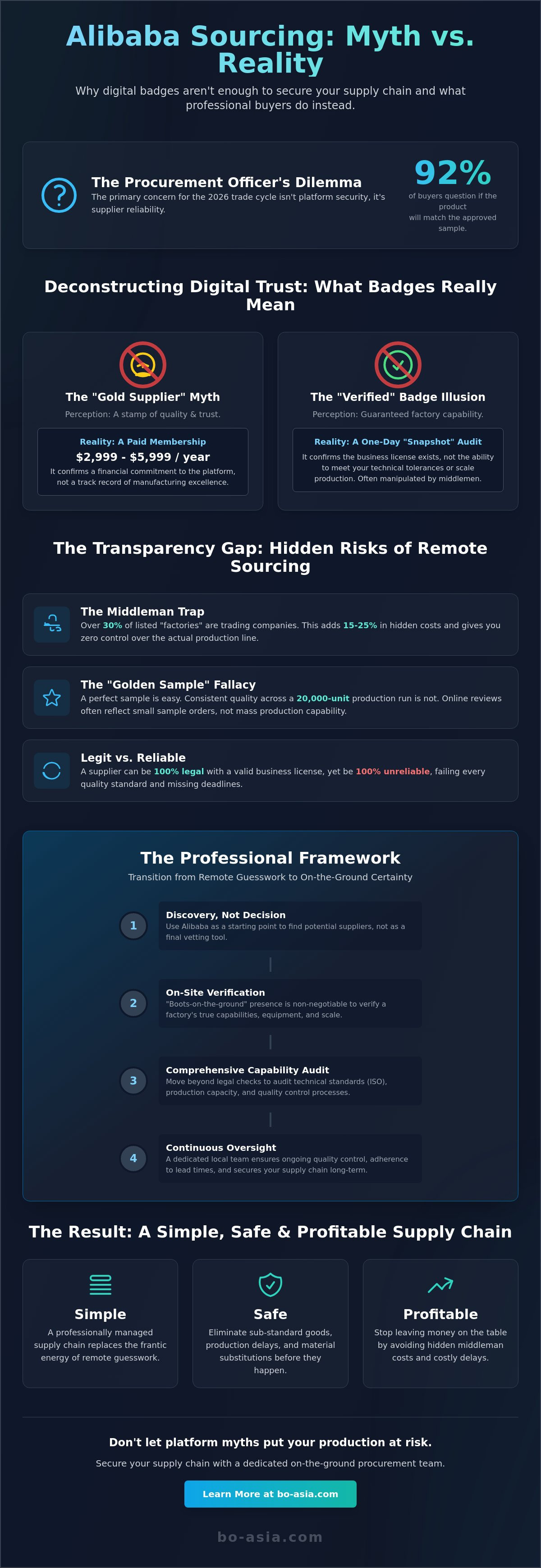
The digital interface of a B2B platform often masks the logistical friction of the factory floor. While the question of whether is alibaba safe to buy from remains a top concern for procurement officers, the risks have evolved beyond simple payment security. In 2026, the primary threat isn't a lost wire transfer; it's the "Golden Sample" trap. You receive a flawless prototype, approve the order, and then receive 10,000 units with 15% lower material density or substituted components. This happens because remote buyers lack eyes on the production line. Without a physical presence, you're essentially gambling on the integrity of a supplier you've never met.
You must also identify opaque middlemen who masquerade as manufacturers. These entities often inflate your costs by 20% to 30% without adding a single layer of value. They frequently outsource your order to third-tier workshops to maximize their own margins, leaving you with zero visibility into who is actually making your product. This lack of control extends to your intellectual property. If your tooling is unmanaged, your proprietary designs can easily leak into the local market. While Alibaba's IP protection systems have improved significantly since 2018, they can't stop a factory from using your private molds for an unauthorized "night shift" production run. Determining if is alibaba safe to buy from requires looking past the screen and into the actual factory conditions.
Quality fade describes the gradual, deliberate reduction in material standards over several production cycles. A supplier might switch a high-grade polymer for a cheaper alternative to offset rising energy costs. To stop this, on-site quality control is mandatory. You can't manage what you can't see. We provide a "boots-on-the-ground" presence that monitors every production stage, ensuring the final batch matches the initial specifications exactly. It's the only way to ensure your procurement is simple, safe and profitable.
By 2026, global supply chain laws have made you legally responsible for the labor and environmental standards of your suppliers. Blind sourcing is no longer just a financial risk; it's a threat to your brand's existence. You must verify social standards directly at the source rather than relying on digital certificates that may be outdated or falsified. Buying Office Asia integrates rigorous ESG vetting into every procurement project. We move you away from the "hope-based" model of traditional agents and toward a transparent, audited supply chain that protects your reputation from the ground up.
Digital badges and verified profiles provide a baseline for trust, but they don't guarantee production consistency. When businesses ask is alibaba safe to buy from, they're often looking for a binary answer. The reality in 2026 is that safety is a product of your own vetting rigor. Relying on a 4.8 star rating is a gamble that professional procurement teams don't take. You must look past the polished photography and verify the legal and operational infrastructure of the supplier.
A critical step involves matching the business license to the bank account details. If a supplier asks for payment to an offshore account or a personal name that doesn't align with their registered corporate identity, it's a red flag. This mismatch often indicates a trading company posing as a manufacturer, which adds 15% to 30% in hidden margins. Professional vetting ensures your capital reaches the entity actually responsible for your goods.
We examine the original business license to ensure the supplier is legally authorized to manufacture your specific product category.
A local inspector verifies that the machinery on the floor matches the production volume promised in your contract.
We don't just check for an ISO 9001 certificate; we watch the QC staff perform real-time checks on the assembly line.
A professional audit is the only way to ensure "made in china" quality matches expectations.
Securing the best margins requires you to bypass the "opaque middlemen" who inflate costs without adding value. These agents often claim to be the factory while outsourcing production to third parties, which dilutes quality control. By engaging in factory direct price negotiations, you gain transparency into the bill of materials and labor costs. This level of insight is only possible with a local, physical presence that understands the current market rates for raw materials like aluminum or specialized plastics.
To get the best results, you must transition from a "buyer" to a "partner." Manufacturers prioritize clients who demonstrate long-term value and professional oversight. When a factory knows you have boots on the ground, they're less likely to deprioritize your order for a larger client. This local accountability is what makes the difference between a late, sub-par shipment and a profitable production run. It's the most effective way to answer the question of is alibaba safe to buy from with a definitive yes.
Stop leaving money on the table and secure your supply chain today. Contact our on-site team for a factory verification report.
Determining if is alibaba safe to buy from in 2026 depends entirely on your level of control. Digital platforms offer access, but they don't offer accountability. Buying Office Asia acts as your physical presence in the factory, turning a risky transaction into a managed corporate asset. We provide the same oversight that 500-million-dollar corporations use, scaled for growing brands and wholesalers. By placing our team between you and the supplier, we transform a faceless digital listing into a verified, high-performing production line.
The traditional agent model is broken because it relies on hidden margins and opaque kickbacks. We operate differently. Our teams in Hong Kong and Helsinki function as your own internal procurement department. We manage the entire lifecycle from sourcing to the final container loading. In a 2024 case study, we helped a Nordic hardware brand identify a 12% material substitution error during a mid-production inspection. Without our on-site presence, those defective units would've reached their warehouse, causing a total loss of the shipment and months of backorder delays.
Moving from high-risk OEM manufacturing to managed production is how you protect your brand's integrity. We ensure every batch matches the "Golden Sample" through rigorous on-site quality control. This level of professional oversight reduces defect rates from an industry average of 5-8% to less than 0.4%. We also handle the complexities of logistics and customs coordination to prevent the 15-day average delays often seen with unmanaged shipping. This ensures your stock arrives exactly when your customers expect it.
The ROI of professional oversight includes:
through 100% transparent pricing and open-book accounting.
with factory owners rather than unverified "sales agents" on a platform.
with ESG and international labor standards, protecting you from legal and ethical risks.
by managing production schedules locally and solving bottlenecks in real-time.
Stop wondering if is alibaba safe to buy from and start controlling the outcome with a partner who has skin in the game. Stop leaving money on the table and secure your supply chain today.
Navigating global trade in 2026 requires more than a digital interface. While asking is alibaba safe to buy from is a necessary starting point, the answer depends on your level of on-the-ground oversight. Digital badges often fail to account for the reality of factory sub-contracting and production drift. Relying solely on online reviews leaves your brand vulnerable to unnecessary risks. You need a strategy that moves beyond the screen to ensure long-term stability.
Buying Office Asia provides the physical presence required to mitigate these risks. Our European-managed leadership operates directly from our Hong Kong headquarters, offering 100% transparency with zero hidden margins. We move your procurement from a gamble to a governed process through rigorous mass production oversight and on-site factory audits. You don't have to navigate the complexities of Asian manufacturing alone. It's time to professionalize your operations by choosing a partner that acts as your shield against opaque middlemen.
Build a Safe and Profitable Supply Chain with Buying Office Asia. Your journey toward a more resilient and profitable supply chain starts with a single strategic decision today.
Alibaba is safe for large B2B orders if you implement a multi-layered verification strategy and move beyond basic digital profiles. While the platform provides the infrastructure, success depends on local oversight and physical factory audits to ensure compliance with 2026 global trade standards. You must treat the platform as a lead generation tool rather than a complete procurement solution to maintain your profit margins.
Trade Assurance covers quality issues only if you define precise technical specifications in your Purchase Contract before sending payment. If your goods don't meet these pre-defined standards, you can file a dispute within 30 days of delivery to seek a refund. Without a detailed Quality Specification Sheet attached to the official order, Alibaba's dispute team lacks the objective data needed to rule in your favor.
You can identify a supplier's true nature by reviewing their Business License via the "Verified" profile tab on their storefront. Look for the "Business Scope" section; factories will list "Manufacturing" or "Production" as their primary activity. Industry data shows that approximately 30% of listed suppliers are pure trading companies that often mask their identity to secure higher margins from international buyers.
Gold Supplier status is a paid subscription costing approximately $3,000 USD per year, so it doesn't guarantee a supplier's integrity or ethical behavior. While it filters out low-level scammers, sophisticated bad actors still exist within this category. Determining is alibaba safe to buy from requires you to look past paid badges and evaluate their 3-year transaction history and recent on-site audit reports.
The safest payment method is through the Alibaba Trade Assurance portal using a Credit Card or a T/T wire transfer to the specific Citibank account provided on the platform. Never send funds to a private bank account or via Western Union, as these transactions fall outside of Alibaba's protection. This centralized payment system ensures your capital is held in escrow until the supplier uploads the required shipping documents.
You should use a dedicated sourcing team if you want to stop leaving money on the table through opaque middlemen and hidden margins. Traditional agents often prioritize their own commissions, whereas a professional buying office provides transparent, on-site quality control and local expertise. This physical presence acts as your shield against production delays and ensures your supply chain remains simple, safe, and profitable.
Orders stuck in customs are typically the result of incorrect HS Code classification or missing compliance documentation. If your shipment is flagged, you generally have 15 days to provide corrected paperwork before the carrier begins charging daily storage fees. You must ensure your supplier provides a packing list that matches the physical contents exactly to avoid the 100% inspection rates triggered by inconsistent data.
You can verify a Chinese business license by searching the 18-digit Unified Social Credit Code on the official National Enterprise Credit Information Publicity System (NECIPS) website. This government database confirms the company's legal status, registered capital, and any history of administrative penalties. Cross-referencing this data against their Alibaba profile ensures you aren't dealing with a shell company or a business with expired operating permits.

If your current sourcing agent claims their services are free, you're likely paying a hidden tax of 10% to 30% through inflated unit prices and factory kickbacks. This lack of transparency doesn't just erode your margins; it creates a dangerous barrier between you and the factory floor. Finding a re...
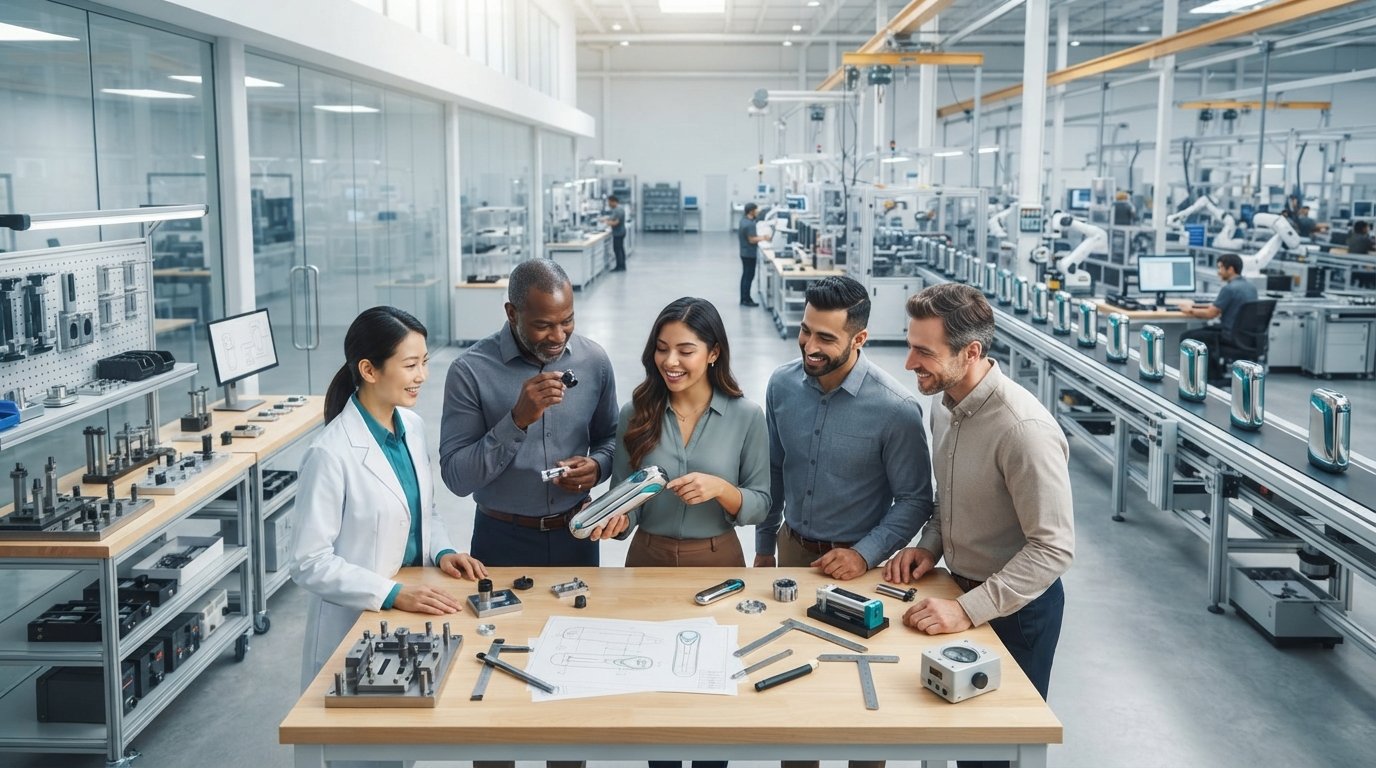
A perfect golden sample is often the most dangerous document in your supply chain. If a prototype is handcrafted by a master technician rather than built using scalable factory processes, your sample development phase isn't a success; it's a liability. This gap between a one-off masterpiece and a hi...

Scaling production to millions of units isn't a purchasing task; it's a high-stakes risk management discipline where a single percent of quality fade can liquidate your annual margin. You likely understand that the leap from mid-scale orders to massive procurement runs often exposes cracks in even t...