


Sourcing CNC machining from China can result in a 42% cost saving compared to Western quotes, yet many brands lose those gains to design theft or communication breakdowns before the first unit even ships. You're likely aware that while the financial advantage is undeniable, the risk of receiving a prototype that's impossible to mass-produce remains a significant barrier for growing businesses. Successful product prototyping in China requires more than just a digital file and an email address; it demands a defensive strategy that treats sampling as the foundation of your entire supply chain.
This guide provides a professional roadmap to navigate the 2026 manufacturing landscape, ensuring you secure a production-ready "golden sample" while maintaining absolute control over your intellectual property. We'll show you how to leverage China's 15th Five-Year Plan for IP protection and manage rising labor costs to keep your project financially viable. You'll learn how to eliminate the disconnect between factory engineers and your design team, transforming an uncertain sampling process into a predictable, secure path toward mass production.
• Discover why the "Shenzhen Speed" ecosystem remains the global benchmark for lead times in 2026, consistently outperforming Western alternatives.
• Learn how to select the optimal technology for product prototyping in China, balancing the precision of CNC machining with the rapid form-factor testing of 3D printing.
• Understand why on-the-ground presence is the only reliable defense against design leakage, moving beyond the inherent limitations of standard NNN agreements.
• Avoid the "prototyping trap" by implementing Design for Manufacturing (DFM) reviews to ensure your sample is technically and financially ready for mass production.
• Secure your supply chain with a 100% transparent model that combines European strategic management with local, on-site quality inspections.
China's role in 2026 has evolved from a low-cost manufacturing site into a sophisticated engineering ecosystem. For Western brands, product prototyping in China is no longer just about reducing expenses; it's about accessing a dense network of technical expertise that doesn't exist anywhere else. This process utilizes various rapid prototyping techniques to convert digital CAD files into physical samples in days rather than weeks. While other regions are developing, the Pearl River Delta remains the only location where a complete bill of materials (BOM) can be sourced within a 50-mile radius.
The "Shenzhen Speed" provides a measurable operational advantage that defines the current market. We define "Shenzhen Speed" as a consistent 3-to-1 time advantage over EU and US manufacturing hubs. A project that requires twenty-one days in Helsinki or Chicago often takes just seven days in Shenzhen. This isn't merely a result of labor hours; it's the physical proximity of specialized vendors. When your design requires a custom PCB, a specific grade of TPU, and a CNC-machined aluminum housing, you don't wait for cross-border shipping. Every component is available locally, allowing for overnight iterations that keep your project on schedule.
The real power of the Chinese ecosystem lies in the availability of secondary processes. Within a single industrial district, your prototype can move from 3D printing to anodizing, painting, and laser etching without leaving the area. China now produces 9 out of 10 consumer 3D printers globally, and domestic production of industrial 3D printing equipment saw a 54% year-over-year increase in the first quarter of 2026. This massive scale has transitioned the region from "cheap clones" to high-precision engineering capable of meeting stringent medical and aerospace standards.
Many businesses fall into the "prototyping trap" by focusing solely on the lowest quote. While sourcing CNC machining from China can provide a 42% cost saving compared to Western quotes, those savings vanish if the prototype isn't production-ready. A sample that looks perfect but cannot be manufactured at scale is a liability, not an asset. This is why professional sourcing and procurement requires an on-the-ground presence. Having a dedicated team in Hong Kong and Shenzhen ensures that early-stage costs are managed while keeping the final mass-production reality in focus. It's about securing strategic value rather than chasing a low-value transaction that might fail during the tooling phase.
Selecting the optimal method for product prototyping in China depends entirely on your final production intent. While speed is a priority, using the wrong technology at this stage can lead to misleading test results and expensive redesigns later. In 2026, the Chinese market offers a sophisticated range of options from high-speed CNC machining to advanced industrial 3D printing, each serving a specific strategic purpose in your development cycle.
CNC machining remains the standard for functional testing in both metal and plastic. For 3-axis milling, hourly rates in China typically range from $20 to $60, while complex 5-axis milling costs between $60 and $140 per hour. This method allows you to use production-grade materials, ensuring that the prototype's mechanical properties match your final unit. If you're focusing on form-factor testing or rapid iterations, 3D printing is more efficient. With PLA materials costing around $15 per kilogram and specialized TPU reaching $40 per kilogram, additive manufacturing provides a low-cost way to verify ergonomics before committing to more expensive processes.
A common mistake is failing to distinguish between "looks-like" and "works-like" samples. Aesthetic prototypes created via vacuum casting are excellent for marketing shoots and trade shows because they mimic the surface finish of injection-molded parts. However, these resin-based parts often fail functional stress tests. If your goal is to test durability or heat resistance, you must transition to custom product and tooling development early. Choosing materials that closely mimic final production polymers is critical; otherwise, you risk a successful prototype phase followed by a failed mass production run.
| Technology | Primary Use Case | Material Strength | Typical Lead Time |
|---|---|---|---|
| CNC Machining | Functional/Mechanical Testing | High (Production Grade) | 3–5 Days |
| 3D Printing (SLA/SLS) | Form and Fit Verification | Low to Moderate | 1–2 Days |
| Vacuum Casting | Aesthetic/Marketing Samples | Moderate | 7–10 Days |
| Rapid Tooling | Bridge to Mass Production | Very High | 15–20 Days |
The ultimate objective of this phase is the "Golden Sample." This unit serves as the definitive quality benchmark that the factory must match during mass production. As we move through 2026, we're seeing a significant shift toward industrial 3D metal printing for complex components that were previously impossible to machine. If you're unsure which method aligns with your budget and production goals, you can discuss your technical specifications with our engineering team to ensure your sampling strategy is production-ready.
Securing your intellectual property during product prototyping in China is a strategic requirement, not a legal formality. Many Western brands rely on a Non-use, Non-disclosure, Non-circumvention (NNN) agreement as their primary shield. While this document is a necessary baseline, it's rarely a sufficient defense on its own. Enforcing a contract against a small workshop in Dongguan from a courtroom in Helsinki or New York is often a logistical and financial impossibility. Real security doesn't come from the threat of litigation; it comes from the strategic selection of partners and physical oversight. IP security in 2026 is about relationship and presence over paper and ink.
The 15th Five-Year Plan for Intellectual Property signals China's commitment to strengthening enforcement, targeting a cumulative trade volume of 2 trillion RMB by 2030. However, this high-level policy doesn't automatically protect an unmanaged supply chain. Using unvetted shops found on public marketplaces carries a high risk of design leakage. These entities often function as "trading company" shells that outsource your CAD files to third-party workshops without your knowledge. To maintain control, you must distinguish between "prototype-only" shops and factories with the capacity for mass production.
Effective vetting requires looking beyond a professional-looking website. You need to verify the physical location and ownership of the facility to ensure you aren't dealing with an intermediary. A reliable partner should demonstrate a clear history of working with Western clients and maintain ISO certifications that prove their operational rigor. We recommend reviewing our supplier standards to understand the level of transparency required for a secure partnership. If a manufacturer refuses to provide a clear equipment list or won't allow a third-party audit, they're a liability to your project.
Data management is your first line of defense. Don't send your complete assembly files to a single vendor if the design is highly sensitive. By segmenting your CAD files and sourcing different components from separate shops, you prevent any single entity from possessing the full design. This technical "air-gapping" is a proven way to protect your competitive advantage. Once the build begins, on-site quality control becomes essential. Having a dedicated team physically present at the factory ensures that your designs stay within the facility and that early builds are monitored for both quality and security. This hands-on approach transforms the sampling phase from a point of vulnerability into a controlled, professional briefing for your future production run.
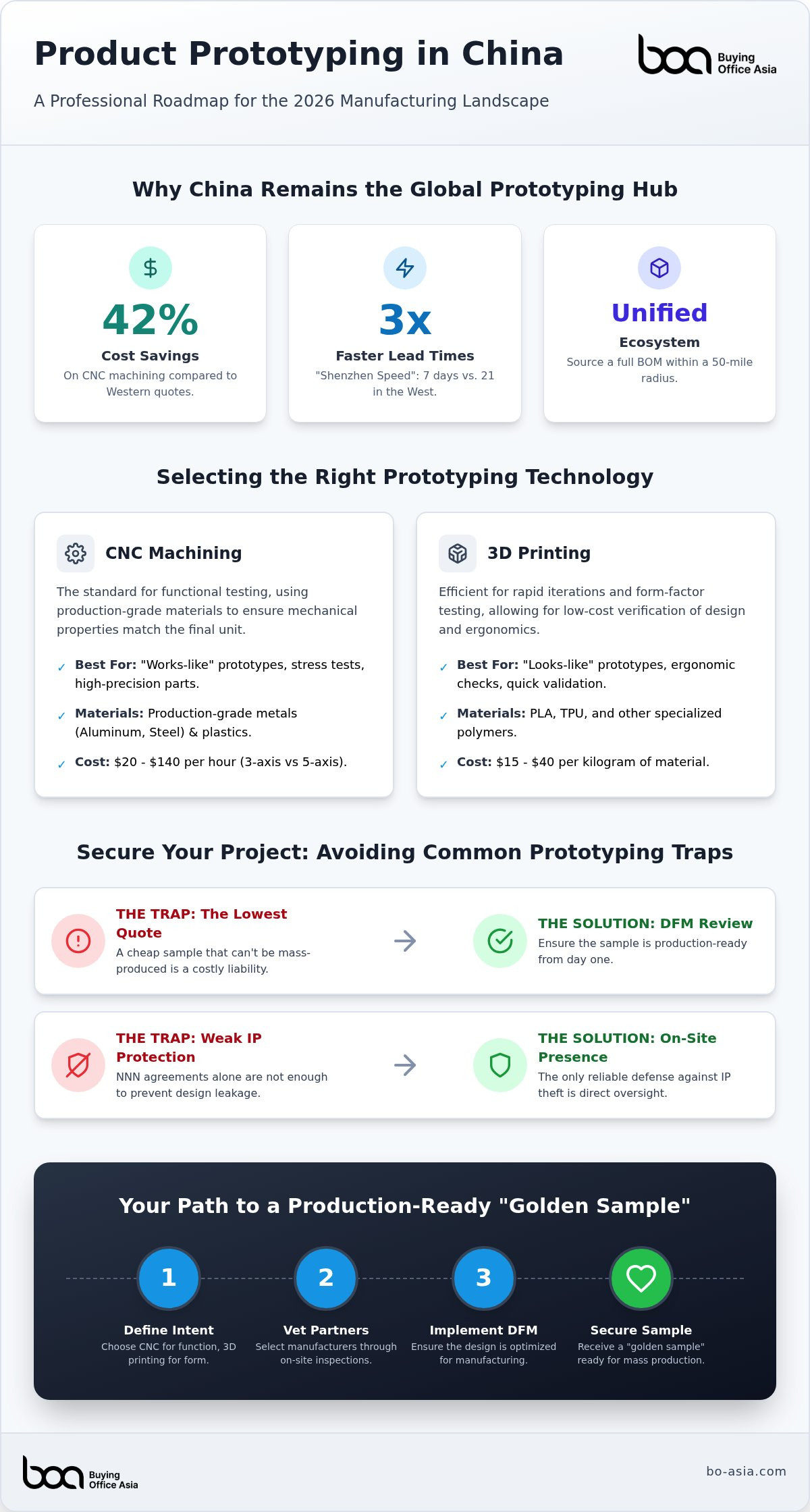
A successful product prototyping in China phase doesn't automatically translate to a successful production run. Many brands fall into the "Prototyping Trap," where a hand-finished, meticulously crafted sample performs perfectly, but the design proves impossible to replicate at scale. This disconnect usually stems from a lack of Design for Manufacturing (DFM) reviews. A DFM review acts as a technical filter, identifying assembly bottlenecks or material limitations before you commit to expensive tooling. It ensures that your design is optimized for high-volume efficiency without sacrificing the quality established in the sampling stage.
Managing this bridge requires more than just technical knowledge; it requires a strategic presence. The dedicated Asia procurement team model provides the oversight necessary to prevent "Quality Fade." This phenomenon occurs when a factory gradually substitutes cheaper materials or simplifies processes during the first 1,000 units to increase their margins. Without on-site management, these subtle changes can compromise your brand's reputation before your product even hits the shelves. Having a defensive partner on the ground ensures that the specifications of your golden sample are strictly maintained across every unit.
Transitioning to mass production involves the development of custom injection molds, which are significant financial investments. The process follows a strict hierarchy of samples: T1 (the first test from the mold), T2 (refined samples), and finally the "Golden Sample." This final unit is the benchmark for all future production. Utilizing professional sampling support ensures that these iterations are handled with precision, reducing the risk of costly mold modifications after the fact. We manage this timeline closely to ensure your tooling remains on schedule and within budget.
The first production run is the most vulnerable point in your supply chain. We implement rigorous on-site inspections during this phase to catch defects at the source. If issues arise, they must be addressed immediately through rework or process adjustments without compromising your launch timeline. Our model prioritizes 100% transparency; you maintain direct financial relationships with the factory while we manage the operational risks. This eliminates the obscured costs common in traditional intermediary models. If you're ready to move beyond the sampling stage, you can request a production readiness audit to secure your first run.
The "Helsinki-to-Hong Kong" model bridges the gap between Western strategic goals and Chinese industrial execution. By maintaining European leadership in Helsinki alongside a dedicated operations team in Hong Kong, we provide the regional expertise you lack without the communication delays of traditional models. This physical proximity is your primary defense during product prototyping in China. It ensures that every technical specification is understood and every quality standard is met before mass production begins. We don't just act as an intermediary; we function as a stabilizing force that protects your financial interests in a complex global market.
Our 100% transparency model rejects the conventional agent structure where hidden margins and obscured costs are the norm. You pay the factory direct, ensuring you benefit from our factory direct price negotiations without the markup of a middleman. We manage the operational risk, but you maintain the financial control. This approach creates a lean supply chain where every expense is visible and every strategic advantage is yours to keep. From the initial CAD review to final logistics management, we provide a defense against the operational setbacks that affect unmanaged supply chains.
Acting as your local procurement department means we take full ownership of the supplier relationship. We move beyond simple oversight to provide active management of the sampling and tooling phases. In previous engagements, our on-the-ground presence has reduced the transition time from prototyping to mass production by 30%. This efficiency is achieved through immediate, face-to-face resolution of engineering conflicts that would otherwise take weeks to solve via email. We ensure your "golden sample" is a true reflection of the final mass-produced unit, eliminating the inconsistency that plagues less rigorous alternatives.
The journey begins with a comprehensive CAD review and the identification of vetted suppliers who match your specific technical requirements. We prioritize financial optimization and regulatory adherence from day one, providing clear insights into pricing and fees before you commit to expensive tooling. This methodical approach dismantles common industry objections regarding lack of control and unforeseen expenses. Protect your IP and scale your production with Buying Office Asia to ensure your 2026 manufacturing strategy is built on a foundation of professional rigor and measurable success.
Successful product prototyping in China is no longer a simple technical task; it's a critical procurement phase that requires professional on-the-ground management. You've seen how selecting the right technology and implementing rigorous Design for Manufacturing (DFM) reviews can eliminate the gap between a perfect sample and a scalable product. By moving beyond standard legal agreements and utilizing physical oversight, you protect your intellectual property while ensuring your project's long-term financial viability.
Buying Office Asia provides the European-managed leadership and 100% transparency you need to navigate these complexities with calm assurance. Our specialists in custom tooling and DFM act as your defensive partner, securing your supply chain from the first iteration to the final production run. Get a Professional Consultation for Your China Prototyping Project to stabilize your manufacturing journey and accelerate your path to market. Your vision deserves a production-ready foundation; let's build it together.
Lead times for product prototyping in China are typically between three and seven days for standard CNC machining and 3D printing. This "Shenzhen Speed" provides a significant advantage over Western alternatives, which often require three weeks for similar iterations. For complex assemblies requiring secondary processes like anodizing or painting, you should account for an additional five to ten days. Having a local team manage these timelines ensures that sub-component delays don't derail your project schedule.
Sending CAD files is safe only if you implement a technical and physical security framework. You should avoid sending complete assembly files to a single unvetted vendor; instead, segment your design across multiple specialized shops. The most effective defense in 2026 is an on-the-ground partner who can monitor the factory's data management practices. This physical oversight prevents your intellectual property from leaving the facility or being shared with unauthorized third parties during the early stages of development.
3D printing is the most cost-effective method for initial form and fit verification. In 2026, common materials like PLA cost approximately $15 per kilogram, making it ideal for rapid iterations. If your project requires functional testing with production-grade polymers, CNC machining is the superior choice despite higher hourly rates. While 3D printing is cheaper for aesthetics, CNC ensures the mechanical properties match your final mass-produced unit, preventing expensive redesigns during the tooling phase.
An NNN agreement is a contract covering Non-use, Non-disclosure, and Non-circumvention, tailored specifically for the Chinese legal system. You absolutely need one before sharing sensitive designs for product prototyping in China. However, you should view it as a baseline legal requirement rather than a complete security solution. Real protection comes from vetting manufacturers for their previous Western client history and maintaining a consistent physical presence at the factory during build cycles.
Many prototyping shops focus exclusively on small-batch samples and lack the machinery or quality control systems for mass production. While some larger facilities offer end-to-end services, it's often safer to use a dedicated producer for high-volume runs. Transitioning from a sample shop to a production factory requires a rigorous Design for Manufacturing (DFM) review. This ensures that the hand-finished quality of your prototype can be replicated at scale using industrial injection molding or casting.
Custom tooling costs are determined by the complexity of the part, the number of mold cavities, and the type of steel used for the mold base. While China offers significant savings on mold fabrication, you must factor in the total landed cost, including shipping and tariffs. High-quality molds for mass production represent a major investment; therefore, you should only commit to tooling after your "Golden Sample" has passed all functional and aesthetic tests to avoid expensive modifications.
A "Golden Sample" is the final, approved version of your prototype that serves as the definitive quality benchmark for all future production. It's critical because it provides a physical reference point for on-site quality control inspectors to use during mass production runs. Without a signed-off golden sample, the factory has no clear standard to meet. This often leads to "quality fade," where the manufacturer might subtly substitute materials or simplify processes to increase their own margins at your expense.
Buying Office Asia protects your interests by functioning as a professional extension of your own team in the Pearl River Delta. We provide European-managed oversight from Helsinki and Hong Kong, ensuring 100% transparency in all factory-direct negotiations. Our team conducts on-site quality inspections at the prototyping stage and performs DFM reviews to identify production risks early. This hands-on approach alleviates the anxieties of international manufacturing by securing your IP and ensuring the financial viability of your supply chain.

If your current sourcing agent claims their services are free, you're likely paying a hidden tax of 10% to 30% through inflated unit prices and factory kickbacks. This lack of transparency doesn't just erode your margins; it creates a dangerous barrier between you and the factory floor. Finding a re...
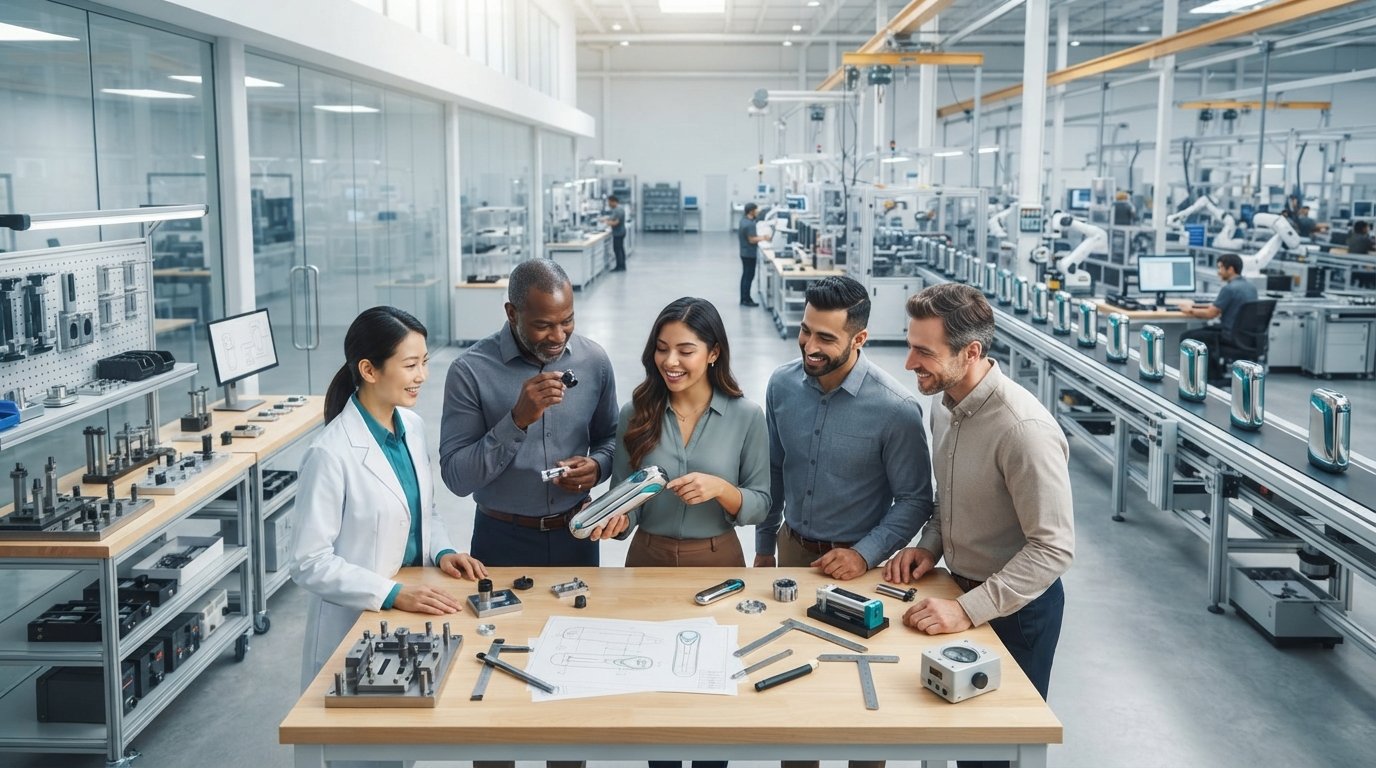
A perfect golden sample is often the most dangerous document in your supply chain. If a prototype is handcrafted by a master technician rather than built using scalable factory processes, your sample development phase isn't a success; it's a liability. This gap between a one-off masterpiece and a hi...

Scaling production to millions of units isn't a purchasing task; it's a high-stakes risk management discipline where a single percent of quality fade can liquidate your annual margin. You likely understand that the leap from mid-scale orders to massive procurement runs often exposes cracks in even t...