

Paying for a mould doesn’t, by itself, settle who owns it or controls its use. Protecting mould design in China means defining ownership, access, permitted use, storage and return in written agreements, then considering whether design patents, copyright or trade-secret protection also fit the product. A factory’s track record matters too: documented controls and clear records offer a more useful picture than assurances alone.
It’s reasonable to expect a manufacturing partner to protect your tooling and technical files. But responsibility can become unclear when design work, mould-making and production involve different parties, or when a supplier relationship ends. China’s role in global manufacturing makes a clear allocation of rights and access especially important for international businesses.
This article explains the protection options and their limits, what to include in mould and manufacturing agreements, and how to assess a factory’s controls for files, tooling access and production records. It also explains how China’s design protection framework fits into questions of ownership, helping you make a better-informed decision before sharing designs or starting production.
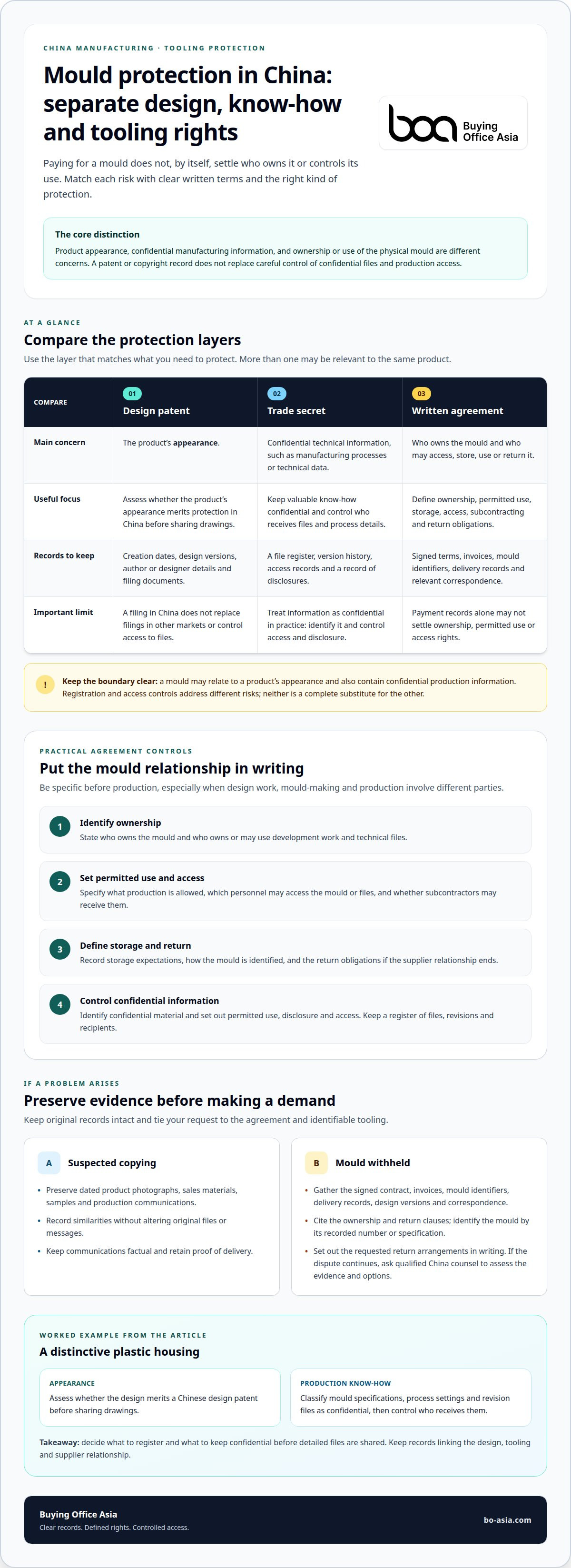
• Set out mould ownership, permitted use, storage, access and return obligations in clear written agreements.
• Assess a factory’s IP practices through its document controls, access records and handling of tooling, not assurances alone.
• Match protection to what you need to protect: product appearance, technical function, creative work or confidential manufacturing information.
• Clarify who owns development work and tooling before production, since paying for a mould does not settle every ownership or access question.
• Consider design protection early, before sharing files or making a public disclosure that could affect your options.
China’s Anti-Unfair Competition Law protects trade secrets, including manufacturing processes and technical data. For mould owners, this makes controlled access and reliable records important parts of protecting commercially valuable tooling information.
Under Article 10, trade-secret protection concerns technical or business information that is not known to the public, has commercial value and is subject to corresponding confidentiality measures. A confidential label alone does not establish protection. China’s Anti-Unfair Competition Law protects trade secrets, making this route relevant when the value lies in know-how that isn’t publicly available. Control design files, revisions and access records, and document which factory personnel or subcontractors receive them.
Article 7 addresses unauthorized use of certain names, packaging, decoration and other identifiers with a degree of influence where this creates confusion about the goods or a connection with another party. This addresses a different risk from confidential mould information: a product’s appearance or packaging may create confusion, while mould files may reveal production methods. A patent or copyright record does not replace careful control of confidential files and production access.
The 2025 revision of China’s Anti-Unfair Competition Law took effect on 15 October 2025. In a manufacturing relationship, written terms should identify confidential material, permitted use, access, disclosure and subcontracting. A file register and version history can help show what information was shared, when it was shared, and with whom.
When responding to suspected copying or a factory withholding a customer-owned mould, preserve evidence, invoke the written agreement and document the remedy you seek. Ownership, permitted use and return obligations can be difficult to establish from payment records alone. Gather the signed contract, invoices, mould identifiers, delivery records, design versions and relevant correspondence before sending a written demand.
For suspected copying, preserve dated product photographs, sales materials, samples and production communications. Record similarities between the disputed product and your design without altering original files or messages. If tooling is withheld, cite the agreement’s ownership and return clauses, identify the mould by its recorded number or specification, and set out the requested return arrangements in writing.
Keep communications factual and retain proof of delivery. If the factory disputes ownership or continues production, ask qualified China counsel to assess the contract, evidence and available legal options. Avoid relying on a general claim of intellectual property ownership when the agreement does not clearly define mould use, access and return. A clear record helps establish what was agreed and what happened.
China’s WTO accession provides context for international manufacturers, but it does not determine who owns a mould or authorize a factory to use it. Those questions still depend on the relevant intellectual property rights, filings, contracts and records for the transaction.
China’s Patent Law was amended for the second time on 25 Aug 2000. For a foreign business, that date is part of the legal framework’s development, not a substitute for protecting a specific product or tooling design. A filing must identify the design to be protected, while agreements should separately address who may access files and use the physical mould.
Filing timing can matter when seeking intellectual-property protection in China. Filing timing is therefore a practical consideration when a product’s appearance may support a design patent. Public disclosure, supplier discussions and production planning can all affect when design information becomes available. Before sharing detailed files, decide what to register and what to keep confidential.
How do China’s mould design protections compare with US patent and trade-secret protections? In both countries, patent rights and confidential know-how are distinct routes, and a patent filing in one country doesn’t create patent rights in the other. A foreign company should assess protection in China independently, rather than assume its US filings or agreements automatically cover Chinese manufacturing activity.
A design patent protects a product’s appearance, while trade-secret protection concerns confidential information. A mould may involve both: its form can relate to product appearance, while production parameters and technical files may contain confidential know-how. Identify each element separately. The right protection depends on what the business needs to prevent others from copying or disclosing.
For example, a company developing a distinctive plastic housing could assess whether its appearance merits a Chinese design patent before sharing drawings. It could also classify mould specifications, process settings and revision files as confidential, then control who receives them. Registration and access controls address different risks; neither is a complete substitute for the other.
China’s consumer market and manufacturing role can make local rights relevant even when a foreign brand sells products elsewhere. A filing in China concerns protection there; it doesn’t replace filings in other markets. Keep records of the author or designer, creation dates, design versions, filing documents and supplier disclosures. These records help connect the protected design to the tooling and production relationship.
WTO membership provides trade context, not an ownership record. For each mould project, map the product design, confidential technical information and physical tooling to the relevant filing or contract. This gives procurement and legal teams a clearer basis for managing access, registration and cross-border manufacturing risk.
China offers invention, utility model and design patents; the right route depends on the product and the feature you need to protect. Copyright, trademarks and written manufacturing agreements can address different risks, so map each asset before filing or production.
A Chinese design patent protects a product’s appearance, making it relevant when a mould produces a distinctive exterior form. The application generally requires novelty as of the filing or priority date, so timing matters before public disclosure or launch.
Article 23 of China’s Patent Law addresses prior designs, significant differences from prior designs or their combinations, and conflicts with others’ earlier lawful rights. An application receives preliminary examination, and the patent is granted if that examination finds no grounds for rejection. Keep dated drawings, views and design versions aligned with the specific appearance claimed.
Design protection and copyright can apply to the same design. Copyright concerns artistic aspects, while a design patent targets product appearance. A distinctive brand element on packaging may raise a separate trademark question. Address these rights separately from physical mould ownership in the manufacturing agreement.
Filing costs and timelines depend on the application type, documentation and examination path, so account for them when budgeting before tooling commitments.
Utility model patent costs and timelines depend on the technical subject matter and application process. A mould’s appearance and technical function may raise different filing questions, so don’t treat a design filing as covering every feature.
Preventing supplier copying combines registration with written limits on access and use. A patent can provide rights against companies that didn’t sign an agreement, while an NNN or manufacturing agreement restricts the factory that signs it.
Before manufacturing discussions, define permitted use, confidentiality, subcontracting, direct sales and what happens to tooling when production ends. Record mould identifiers, file versions, storage location and authorized access. These details connect legal ownership to day-to-day factory controls.
Choose protection by asset: use a design patent for qualifying product appearance, consider utility models or invention patents for technical features, and use copyright for artistic expression. A trademark may protect distinctive branding, not mould ownership. Chinese registration can support an ownership claim, but it doesn’t replace agreement terms on possession, maintenance, return or destruction.
For example, a product with a distinctive outer shell and a technical locking mechanism may involve separate design and technical considerations. Keep shell drawings, mechanism specifications and mould records organized by version. A supplier agreement should identify which files and tooling the supplier may use, for which products and under what production instructions.
Before filing, align the applicant, designer records, product images and contract ownership terms. If a factory develops part of the design, document the scope of its work and transfer or license rights in writing. This keeps the registration strategy and manufacturing controls grounded in the same ownership record.
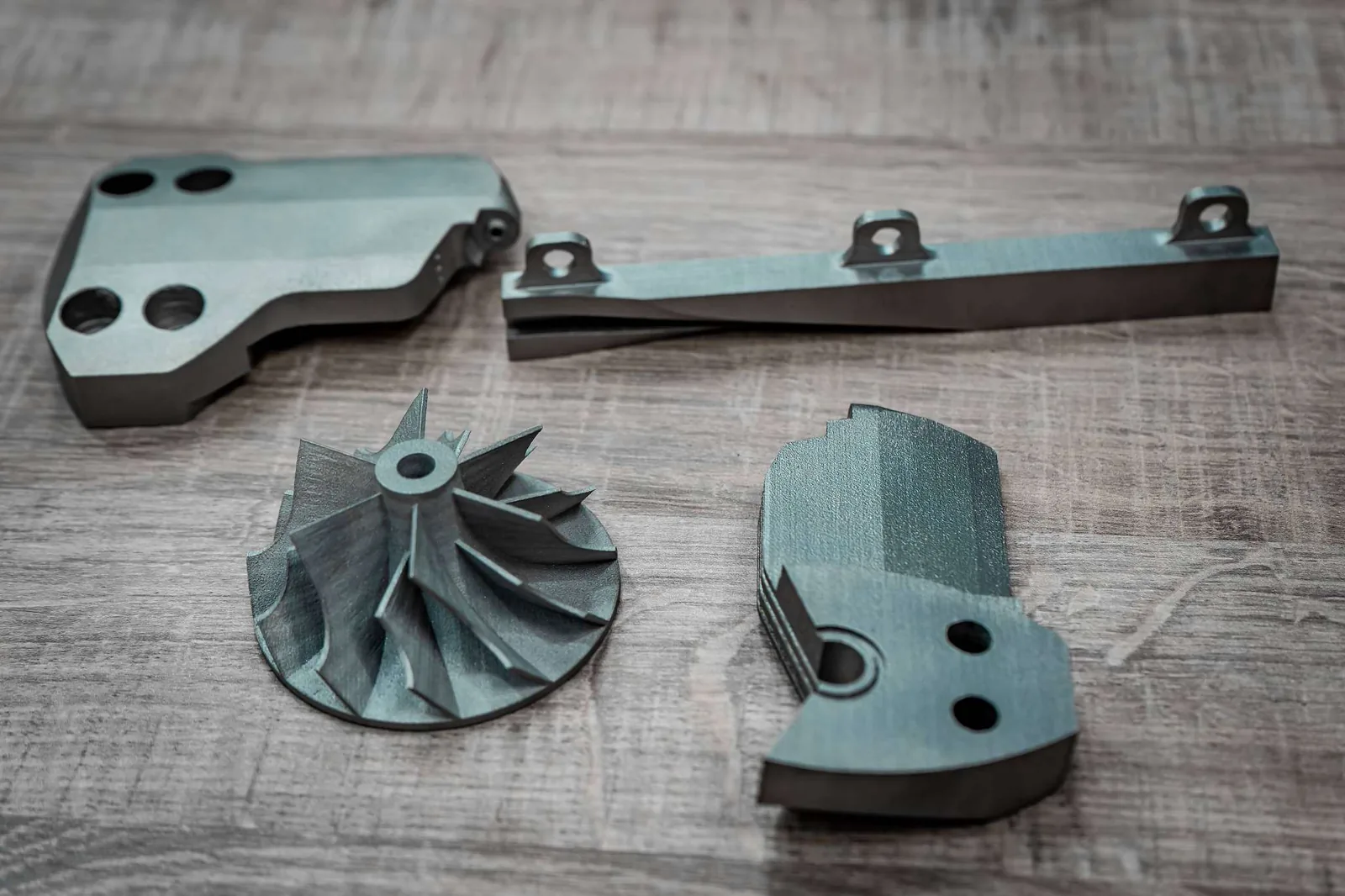
China’s manufacturing scale makes clear ownership records important before product development reaches production. National filing or grant totals do not establish a particular factory’s conduct or protection for your design. Assess the specific supplier, design files and production arrangement.
Paying for development or proposing an original product idea doesn’t automatically establish ownership of every result. Factory personnel may contribute drawings, revisions or technical solutions during development. Before work begins, record who supplies each element, who creates new material, and how rights to those deliverables will be assigned or licensed.
For a new mould project, keep a dated record linking the approved product design to development work and tooling. Include the design brief, drawings, revisions, prototype approvals, invoices and the agreement governing ownership. Consistent records help distinguish the original design from factory contributions and later manufacturing changes.
Assess a supplier’s actual document practices, not just its stated respect for intellectual property. Ask how design files are stored, who can access them, how access changes are recorded, and whether subcontractors receive drawings. Review sample file registers, revision histories and tooling logs. A factory audit can also assess whether staff follow documented access and retention procedures.
• Match each mould identifier to its owner, production purpose and storage record.
• Log file names, versions, approval dates and authorized recipients.
• Record changes to tooling, including who requested and approved each change.
• Separate customer designs from factory-owned process information in project records.
Enforcement depends on the right asserted and the evidence connecting it to the disputed product or conduct. Keep the response specific to the asset and alleged conduct; an unrelated court award cannot predict the outcome of a tooling dispute.
China’s Anti-Unfair Competition Law also addresses certain confusing uses of business identifiers; protection depends on the identifier and circumstances. Product shape, packaging and brand presentation can raise different questions. Keep product appearance records separate from trademark applications, mould ownership documents and evidence of factory access.
For example, if a supplier modifies a customer’s housing during sampling, preserve the original drawing, annotated revision and approval trail. Then identify the modification’s author and ownership treatment in the development agreement. This helps procurement teams distinguish authorized engineering changes from unapproved reuse and supports a more precise response if a dispute arises.
A Chinese design patent application protects a qualifying product’s appearance, not ownership of the physical mould. Separate the product design, technical function and tooling asset before filing. This distinction helps prevent an application from being mistaken for an agreement covering mould ownership and factory use.
Novelty is assessed as of the filing or priority date. File before public disclosure or launch to preserve the possibility of protection. Article 23 sets out design-specific requirements, distinct from the invention and utility-model criteria in Article 22. A design that has already been disclosed can therefore face a serious obstacle.
An international applicant may claim priority for a Chinese application filed within six months of the first foreign application for the same subject matter. The claim depends on applicable treaty, agreement or reciprocity conditions. Record the foreign filing date and subject matter, then align the Chinese application with that earlier filing.
Prepare the application around the appearance you intend to protect. Clear visual documentation helps show the design consistently from different views. Keep the product images, design description and filed version aligned. If the factory later changes a housing, surface or decorative element, record the revision separately rather than treating it as identical to the original filing.
The China National Intellectual Property Administration conducts preliminary examination. A patent is granted if the examination finds no grounds for rejection. Do not plan around a fixed filing-to-grant interval. Ask the appointed patent agency for a current, application-specific estimate and confirm how disclosure and production milestones affect the filing plan. Under Article 40, a design patent right takes effect on announcement, rather than merely on filing. The filing date matters before grant, so coordinate application timing with supplier discussions, sampling and planned disclosure.
• Identify the product whose appearance the application will cover.
• Record the designer, applicant, creation history and relevant foreign filing.
• Prepare consistent visual materials for the specific design version.
• Keep filing records with development and mould documentation.
Priority is not automatic. The foreign application must concern the same subject matter, and the priority claim must meet applicable conditions. For instance, a revised product with a substantially different visible form may not match the earlier application. Compare the designs before relying on a priority date.
A design patent is one part of protecting mould design in China. It can address product appearance, while contracts define tooling ownership, access, permitted production and return. Keep the records connected: identify the patented product, mould number, approved design version and factory authorized to manufacture it.
Before tooling begins, align the application images with the approved prototype and production drawings. This reduces confusion about which version the filing describes. Keep later artwork, packaging and technical changes in separate records, then assess whether they change the protected appearance or require a distinct application.
Buying Office Asia helps manage the supplier and production decisions that shape tooling ownership, access and manufacturing records. Its End-to-End Sourcing & Procurement support can coordinate supplier vetting, tooling development and production oversight, connecting commercial requirements with factory execution.
Turn to Buying Office Asia when you need a clearer view of supplier practices or when tooling and production decisions span multiple stages. A Dedicated Asia Procurement Team can support ongoing coordination, while Factory Direct Price Negotiations keep procurement discussions aligned with your product requirements.
Share your manufacturing goals and current supplier challenges with Buying Office Asia to discuss practical next steps.
Protecting mould design in China is an ongoing operational decision, not just a filing task. As a project moves from development to repeat production, keep design rights, tooling records and supplier responsibilities aligned. A new factory, product revision or subcontracting arrangement is a good time to review whether the existing controls still match how the work is done.
Set the next step around your project’s current exposure: identify the tooling and design files involved, clarify who can access them, and document any unresolved ownership or production questions. Buying Office Asia can coordinate sourcing and manufacturing oversight around those requirements, keeping decisions connected to supplier and production management.
Contact Buying Office Asia to discuss your manufacturing project and define a practical path forward.
Use a recent project file to test whether the factory’s stated controls work in practice. Select a design revision and trace its approval, file transfer, access permissions and production use. Compare dates across the change log, job record and tooling history; gaps or unexplained versions deserve follow-up. A walkthrough with the staff responsible for project files can show whether documented procedures match daily handling, rather than simply existing in a manual.
Chinese law provides different routes for different kinds of misuse, so the relevant route depends on what happened. A dispute over a product’s visible form differs from disclosure of confidential process information or use beyond an agreed production scope. Preserve evidence connecting the disputed conduct to your asset, such as the relevant design version, production records and dated product samples. The fit between the right and the evidence shapes a practical response.
Make the tooling schedule specific enough to identify each asset without relying on a general description. Include its internal reference, current storage site, custodian, associated inserts or removable components, and condition at handover. Attach photographs or a signed inventory where useful. For a project with multiple moulds, match every schedule entry to the relevant product and production order, keeping ownership and custody clear during transfers or supplier changes.
Put confidentiality obligations in place before revealing information that would let a factory reproduce the design or process independently. Decide how long confidentiality continues after discussions or production end, and how returned files, local copies and backups will be handled. For early quotation, a less detailed brief can limit disclosure; release sensitive engineering data only as the project scope and authorized recipients become clear.
Injection moulding projects combine product geometry with production-specific knowledge, making control important beyond the initial tool purchase. An undocumented design change can leave a new factory working from an outdated version, while an unclear production scope can complicate a supplier transition. Clear rights and controlled revisions help preserve design intent as the product moves from sampling to repeat manufacture, supporting continuity across procurement, engineering and production teams.
Potential rights include patents, copyright, trademarks and trade-secret protection, depending on the feature and how it is used. These rights can address different parts of a project rather than treating the mould as a single legal asset. Document the creator, applicant or rights holder for each relevant design element. This ownership trail helps distinguish the company’s product design from factory contributions and prevents internal records from contradicting an application.
Prepare a controlled release package for each factory discussion. Remove unrelated project layers, label each file with its revision and recipient, and record what was sent and when. Where practical, separate quotation geometry from sensitive details that aren’t needed to assess feasibility. These steps make later comparisons easier if a factory uses an outdated file or questions which version its team received.
Make the contract work alongside purchase orders, technical specifications and tooling schedules. State which document controls if requirements conflict, and require written approval for changes to the design, tooling or authorized production scope. Define how approvals are recorded and who can issue them. This reduces ambiguity as a project evolves, especially if commercial terms change after sampling or a production order introduces a revised specification.

A factory label is a starting point, not proof of who makes your product. Finding manufacturers in Ningbo means searching by product and production process, then checking whether each supplier’s capabilities and business details match your requirements.A direct factory relationship can give you grea...
A perfect sample doesn’t prove a production run is under control. A golden sample in manufacturing is the approved physical reference for the product’s expected materials, dimensions, finish, function and packaging. It gives the buyer, factory and inspectors a shared standard, but cannot by itself s...
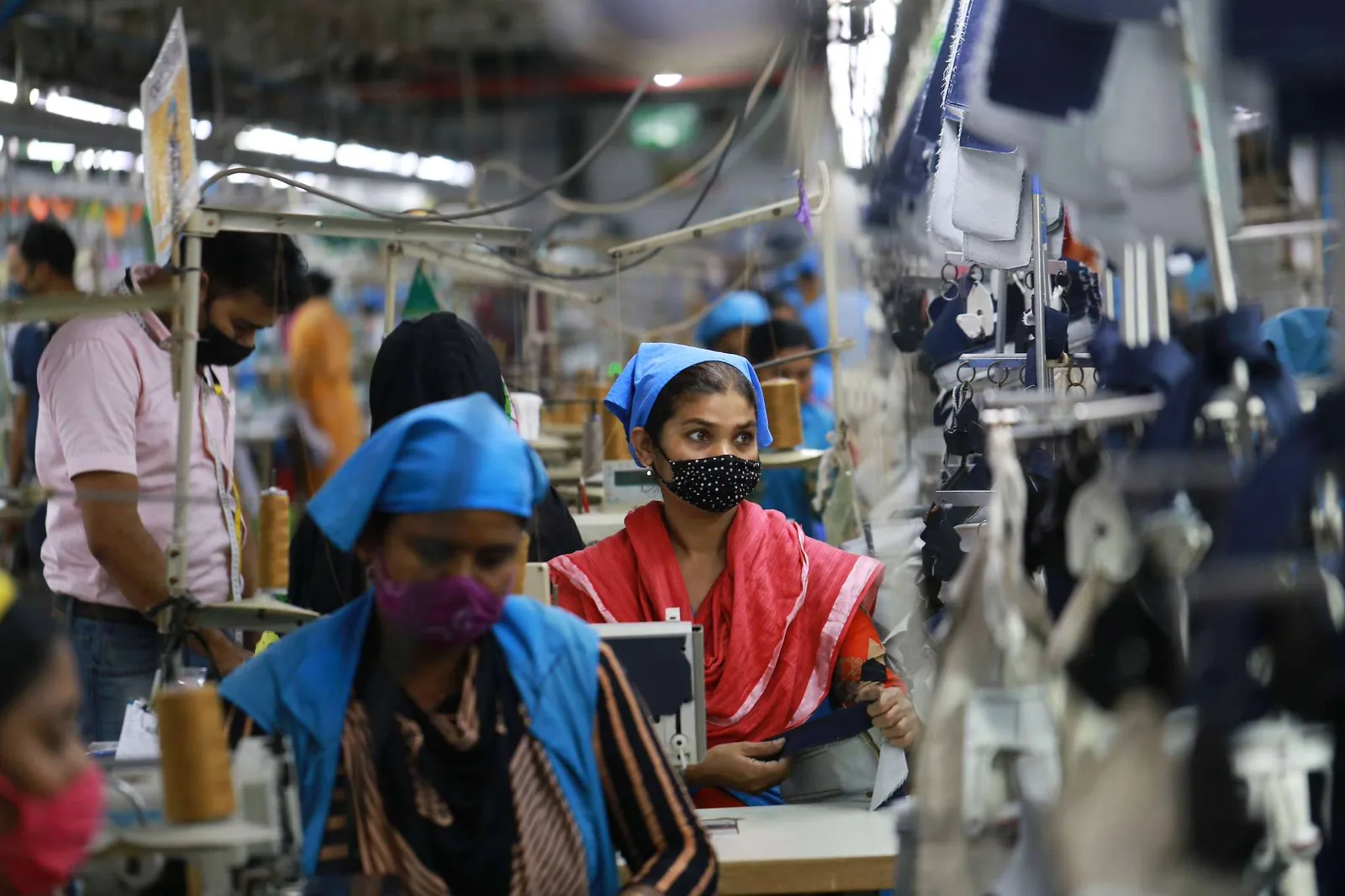
India’s textile advantage lies in the breadth of its materials and manufacturing capabilities, rather than in one fabric or production model. For brands considering textile sourcing from India, the country offers cotton, silk, synthetic fabrics and handloom production, with regional clusters such as...