

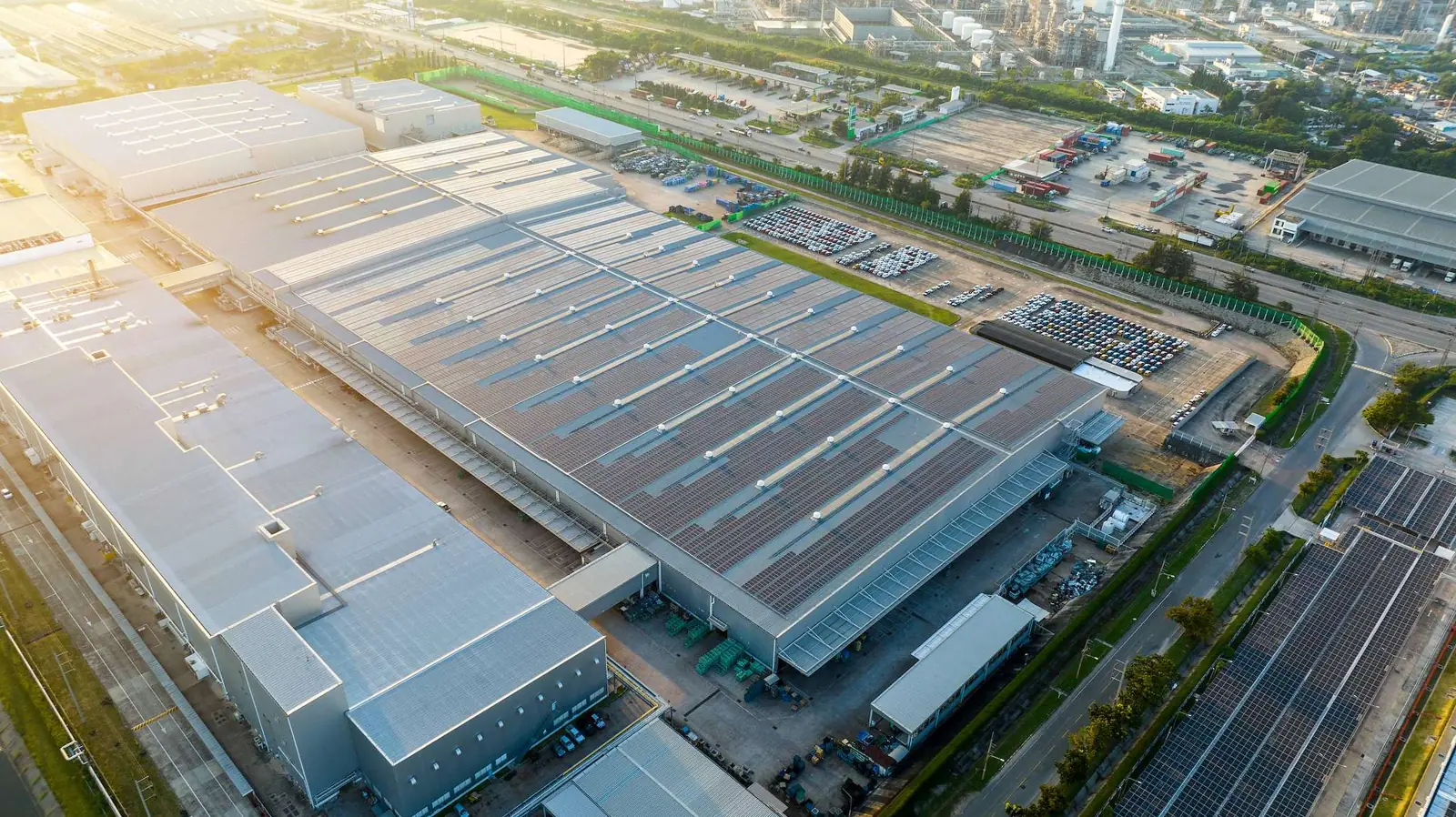
India can offer lower manufacturing labor costs, but it is not automatically the cheaper choice overall. In manufacturing in India vs China, the better-value option depends on the total cost of making and delivering your product, including materials, components, tooling, production efficiency and logistics.
It’s reasonable to focus on wages when comparing the two countries. But a lower factory quote can be offset by imported inputs, a less-developed supplier network for your product, or extra time and coordination in production. China’s established manufacturing clusters can support a broad range of suppliers and faster scaling, while India’s growing industrial base may suit products and production plans that align with its strengths.
This comparison helps you assess total cost, labor, communication, supplier depth and industry fit instead of choosing on unit price alone. It also gives you practical criteria for comparing quotes, checking production capacity and deciding whether India, China or a split sourcing strategy best fits your product.
• Compare the full landed cost, not just factory wages or unit quotes; materials, component sourcing, production flow and logistics can change which option offers better value.
• Assess labor alongside productivity, skills, production capacity and the level of supervision your product requires.
• Reduce communication gaps by documenting specifications, approvals, tolerances and production milestones clearly.
• Match the country to your product’s manufacturing ecosystem, especially when electronics, machinery, components or specialized suppliers are involved.
• Use a structured supplier comparison to decide whether one country or a diversified sourcing approach best fits your product and production goals.
A lower quoted labour cost does not automatically make a supplier cheaper overall. Compare the full product cost and delivery plan. Quality depends on factory controls and specifications, while technology adoption and productivity vary by supplier and process.
China’s special economic zones and industrial clusters bring factories together with suppliers and related services. Readily available raw materials and established supply chains can simplify sourcing for products with many inputs. Compare actual inland routes, port access, handling responsibilities and transport quotations for each proposed factory.
Request route-specific logistics proposals using the same origin, destination, transport mode and delivery terms. Separate production, inland transport, export handling and transit milestones. Ask which components are imported and what contingency applies if an input is delayed. National logistics rankings cannot establish your product’s reorder lead time.
China-plus-one means qualifying an additional production source while retaining a supplier in China. This can reduce reliance on one country, but the second source needs compatible materials, approved samples and reliable output. For example, if tooling stays in China while assembly moves to India, define ownership, transport responsibility and change approval for every production stage.
There is no single factory setup timeline for India or China. It depends on facility readiness, equipment commissioning, workforce preparation, supplier qualification and process validation. A practical sequence is to define the product and production requirements, secure the facility and equipment, qualify inputs, train the production team, then validate output against approved samples and specifications.
Compare the actual process rather than relying on country-level assumptions. Ask the factory to show how it controls critical steps such as component fit, assembly sequence and finish consistency. For products with several parts, request a process flow identifying inspection points and records for rejected or reworked units.
Start quality checks with clear acceptance criteria. Use an approved reference sample, written tolerances and agreed methods for assessing appearance and function. Mid-production checks can catch deviations while production continues. A pre-shipment inspection provides a final snapshot, but does not guarantee every unit is identical.
| Option | Cost comparison | Supply and logistics | Decision focus |
|---|---|---|---|
| India | Include imported inputs and production requirements. | Assess routes, supplier access and replenishment planning. | Product fit and verified factory capacity. |
| China | Compare materials, assembly and full delivery assumptions. | Consider clusters, input access and transport infrastructure. | Supplier depth and process suitability. |
| China plus one | Include the cost of coordinating two production bases. | Plan component compatibility and production handoffs. | Whether a qualified backup adds meaningful resilience. |
Choose by comparing supplier proposals against the same product specification, volume and delivery assumptions. When production planning involves custom processes, align factory capabilities with the requirements for OEM and contract manufacturing before committing to a production route.
A lower labour rate can improve a quote, but labour is only one part of unit cost. Compare wages, output per worker, materials and commercial assumptions using the same product specification and order volume.
Request the labour assumptions behind each quotation: hours per accepted finished unit, staffing, training, expected yield and rework. Compare a pilot run against the same specification and acceptance criteria. Country wage averages cannot establish a factory’s unit cost.
Ask each supplier to break the production process into operations, staffing and expected output. For hand-assembled products, compare labor hours per finished unit, training needs and rework. For machine-based processes, assess setup, operating and maintenance requirements. A lower hourly wage may not reduce unit cost if each unit requires more handling or correction.
Use the same sample and acceptance criteria to compare production capability. Record defects, rework and output against the agreed process, then identify the labor assumptions behind each quote. This provides a more useful comparison than wages alone, especially when labor requirements vary by product design.
Materials can narrow or outweigh a wage advantage. Compare each quote against the same bill of materials, including material grade, component quantity, tooling and packaging. Ask suppliers to identify locally sourced and imported inputs. Import charges can affect component costs, so include the applicable charges for the product and destination in your landed-cost calculation.
For a product assembled from several parts, compare the cost and specification of each component rather than relying only on the finished-unit quote. Record substitutions separately and assess whether they affect fit, durability or appearance. This makes differences between proposals visible and prevents a lower initial quote from hiding a more expensive mix of inputs.
Compare quotes using a documented exchange rate and date, quote currency, validity period and payment schedule. Separate currency sensitivity from changes in materials or supplier pricing. Ask whether the quoted price is fixed and which conditions allow an adjustment.
Record the quote currency, payment milestones and validity period for each offer. Compare export costs using consistent assumptions for packing and transport. A quote in U.S. dollars can still reflect changes in a factory’s material or operating costs when renewed. Recheck the comparison before repeat orders, particularly if the quote or supplier’s cost base has changed.
To compare proposals on consistent assumptions, discuss your sourcing requirements with Buying Office Asia.
English is widely spoken in India, but communication still depends on clear ownership and records. For suppliers in either country, agree on the working language and approval process before product development begins.
Document product expectations instead of relying on informal descriptions. Specifications should identify materials, dimensions, finishes, packaging and acceptance criteria. Add annotated drawings or reference photos wherever wording could be interpreted differently. For example, replace “smooth finish” with an approved surface sample and written limits for visible marks.
Use one revision-controlled set of files for drawings, artwork and inspection criteria. If a supplier proposes a substitute component, record the original requirement, proposed change, reason and approval status. This prevents a purchasing contact from approving a material change without review from the product or quality owner.
Assign separate contacts for commercial, engineering and quality questions. A buyer may agree on order terms, while a product engineer approves a drawing revision. Define who can authorize changes to materials, tooling, schedule and packaging. A simple responsibility table helps both sides route questions correctly and prevents a technical decision from being mistaken for commercial approval.
After each supplier meeting, circulate a short decision record listing the issue, agreed action, owner and due date. For a sample review, list each defect or adjustment beside its photo and component reference. Ask the factory to respond to each item, not just confirm receipt. This creates a traceable record of open points and completed corrections.
Agree on how production updates will be shared and what each update must include. A useful status report identifies completed work, current blockers, upcoming approvals and any change to the agreed plan. If a milestone slips, request the cause, recovery action and decisions needed from your team. This turns a general warning into a clear operational response.
Keep key approvals in a shared project record instead of relying on chat messages or verbal calls. Store the approved sample, final artwork, specification and change log together. For products with several components, include a status for each one so a delayed input does not disappear inside an overall “production in progress” update.
Use this communication checklist before releasing production:
• Confirm the working language and named contacts.
• Share one current specification and approval record.
• Assign decision owners for technical and commercial changes.
• Record action owners, due dates and unresolved issues.
Consistent records make supplier communication easier to assess. Compare response clarity, completed actions and how accurately approved changes are reflected in production.
Identify supplier clusters relevant to the actual product, rather than assuming a national specialism guarantees capability. Map component availability, specialist processes, engineering support and export experience for the shortlisted factories.
For electronics and machinery, map the proposed supplier network and its change-control process. Ask who owns each component specification and how substitutions are approved. Nearby suppliers can simplify coordination only when their capability and capacity match the order.
Assess machinery and electronics projects by process, not country label. For a device with a circuit board, enclosure, connectors and final assembly, map which supplier makes each component and where assembly takes place. Then establish how engineering changes, component substitutions and production testing are controlled. A supplier with relevant experience can reduce coordination work, but its documented capabilities must match your product.
India’s sector strengths can make it a competitive option when the product fits established local capabilities. For a textile product, compare fabric sourcing, finishing and assembly expertise. For pharmaceuticals, assess the specific product and production requirements rather than relying on the industry’s export presence alone. India’s growing electronics sector may also fit smart devices or communication components, but the depth of local suppliers can differ by product category.
Compare factories using evidence tied to your bill of materials and production plan:
identify which components and processes each factory sources or performs.
request examples of comparable products, process steps and assembly responsibilities.
document how drawing revisions, substitutes and tooling changes are approved.
define checks for incoming components, assembly and finished goods.
For complex electronics, China’s developed ecosystem can simplify component coordination and scaling. For textiles, generic medicines or selected emerging electronics, India’s industry capabilities may be a closer fit. Compare each supplier’s equipment, technical experience, component access and production controls with your specifications. A country-level strength is a useful starting point, not a substitute for qualifying the factory that will make your product.
A February 2009 study of China and India’s manufacturing examined resource allocation and productivity using establishment-level data. It is historical research, not a current country-output comparison or a forecast for your supplier. For supplier selection, distinguish economic scale from demonstrated factory capability.
GDP share, gross manufacturing output, manufacturing value added and export share measure different things. They should not be combined into a factory score. For your decision, compare demonstrated output for comparable products, current commitments and the bottleneck operation.
If a supplier claims a government incentive affects its price, request the exact scheme, eligibility, approval evidence, benefit period and pricing assumption. Treat an unconfirmed benefit as excluded from the comparison. A claimed incentive does not prove the factory’s capability or guarantee a saving to the buyer.
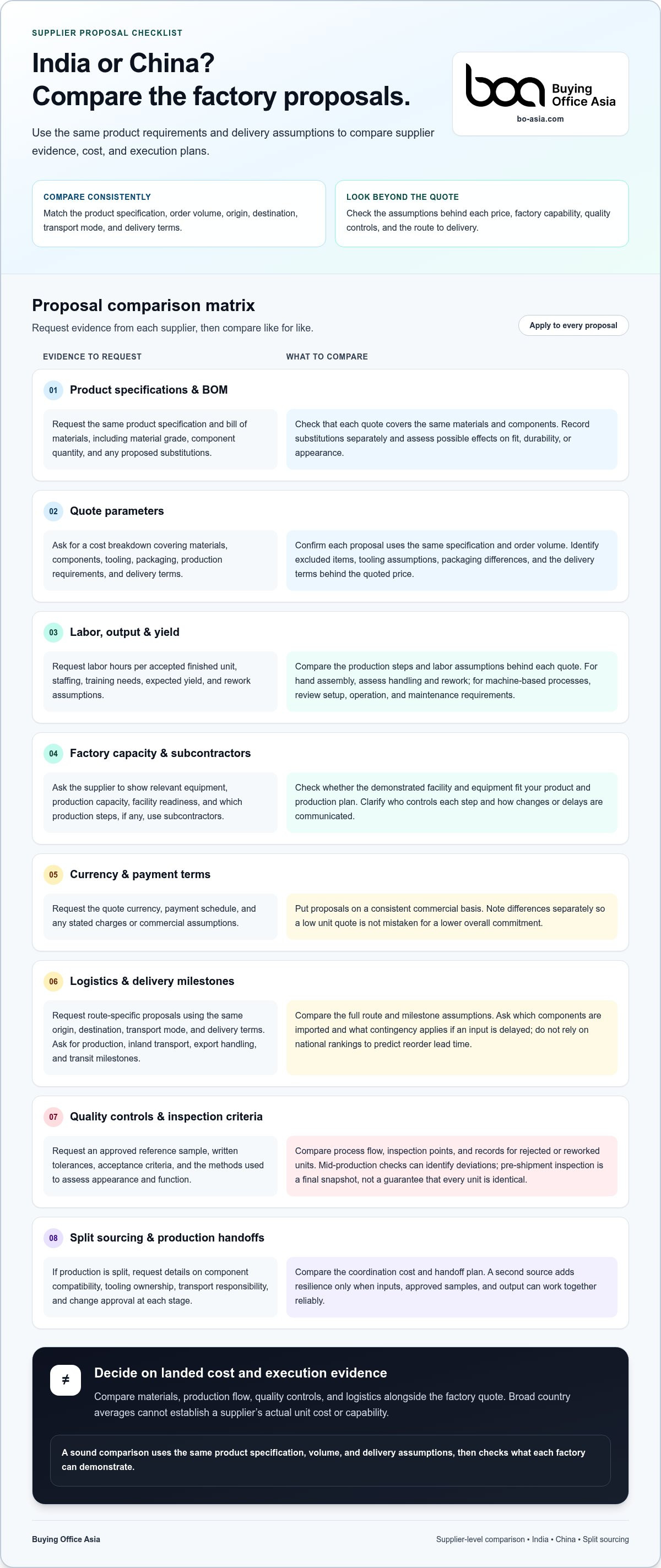
Use a matched quotation matrix: approved specification revision; bill of materials; tooling and setup; unit price and volume; yield and rework assumptions; packaging; quality checks; logistics; and payment terms. Record exclusions and substitutions explicitly.
Verify export readiness at supplier level. Request its proposed documentation responsibilities, packing plan, delivery terms and evidence of comparable shipments. Separate in-house operations from subcontracted work and confirm how the same quality requirements reach each site.
Compare suppliers at product level. A manufacturer serving domestic markets may have different export processes from one that regularly produces for foreign buyers. Ask for a production breakdown, identify which operations happen in-house and map subcontracted steps. For products with multiple components, establish how the factory coordinates inputs, assembly and final inspection.
For a practical comparison, place each supplier’s evidence alongside the same requirements:
match the product to established capabilities, such as Indian textiles or pharmaceuticals.
compare available production capacity with your required volume and schedule.
review the supplier’s experience preparing products for your destination markets.
treat sector incentives as context, not proof of lower costs or stronger execution.
Choose the proposal supported by product-specific evidence. A lower quotation is useful only if its specification, process, acceptance criteria and delivery assumptions remain comparable.
Buying Office Asia helps turn a country comparison into a managed sourcing plan. Its End-to-End Sourcing & Procurement service connects supplier selection, factory-direct price negotiations and production coordination, keeping decisions about cost, capacity and quality aligned. For larger production requirements, high-volume sourcing and procurement can support supplier planning across the order.
Turn to Buying Office Asia when comparing factories across India and China requires local coordination, or when supplier communication and production follow-up are stretching your team. A dedicated Asia procurement team works alongside your business to keep sourcing decisions and factory commitments visible. Start with your product specifications, target volume and production priorities.
Contact Buying Office Asia to discuss your sourcing requirements, or visit bo-asia.com.
A decision about manufacturing in India vs China becomes actionable when it reflects your product’s actual requirements. Before approaching suppliers, prepare a concise sourcing brief with the approved design, material requirements, target order volume, destination markets and quality acceptance criteria. Identify which details are fixed and where a manufacturer can propose alternatives.
Use the brief to request comparable proposals, then record each supplier’s assumptions alongside its price, production plan and responsibilities. This makes gaps easier to spot before they turn into changes during production. It also gives your team a practical basis for qualifying a supplier or planning a controlled production trial.
Buying Office Asia can help coordinate sourcing decisions and supplier relationships across Asia. If you’re ready to move from comparison to a defined procurement plan, contact Buying Office Asia to discuss your sourcing requirements.
Clear specifications and accountable decisions give you greater control over your manufacturing plan.
Yes. India is expanding as a producer of smart devices, automotive electronics and communication components. For a specific product, map its parts, assembly steps and testing needs, then identify factories experienced in those processes. A connected device, for example, may require separate capabilities for circuit boards, enclosures and final assembly. Evaluate each supplier’s role and coordination approach rather than assuming one factory handles every stage.
India can support large orders, but capacity depends on the product, factory and supplier network. When comparing manufacturing in India vs China for a high-volume order, confirm production lines, component supply, staffing and subcontracted operations. Ask how the factory would maintain output during peak periods and manage replenishment materials. A staged order can help assess execution before expanding volume, especially when the product requires several suppliers or assembly processes.
It can be, when the product’s materials, local supplier base and production process fit India’s capabilities. Compare complete quotations using the same product specification, order quantity and delivery assumptions. Include tooling, components, packaging, quality controls and costs associated with production changes. For example, a lower assembly quote may not offer better value if key parts require extra sourcing steps. Judge the proposal on total cost and execution plan.
Source from both countries when diversification serves a clear business need, such as reducing dependence on one production base or qualifying backup capacity. Keep China as the primary source if its supplier network fits your product, while developing an Indian source against the same specification. Before splitting orders, account for duplicated tooling, sample approvals, component compatibility and supplier management. Choose a single source if another factory would add complexity without a clear operational benefit.
Choose locations based on product sector and supplier capability, not one hub shortlist for every purchase. Identify where relevant manufacturers, component suppliers and production processes are concentrated, then compare factory expertise and export experience. For textiles, pharmaceuticals and electronics, investigate suppliers within the relevant sector networks. Also assess how components reach the factory and finished goods move onward, since location affects coordination and logistics planning.
For manufacturing in India vs China, choose the country whose qualified factory best fits your product, order volume, quality requirements and supply plan. China may suit products that depend on a mature electronics or machinery ecosystem; India may fit products aligned with its established strengths or developing sectors. Compare supplier evidence, not national reputation. If both countries meet your requirements, weigh diversification benefits against the extra work of managing two production bases.
Labour cost and productivity vary by factory, process and location. Ask each supplier for staffing, labour hours per accepted unit, training and expected yield. Compare sample quality and pilot-run output against the same acceptance criteria, then include rework in the cost calculation.
No single country-level cost figure captures every product and factory. Build a like-for-like comparison covering labor, materials, components, tooling, factory overhead, packaging and logistics. Land and utility costs depend on the factory’s location, facility and operating requirements, so compare them using supplier quotations and production assumptions. Keep currency, order volume and delivery terms consistent across proposals to make the comparison meaningful.

Distance can turn a small production issue into a coordination problem. The benefits of having a team on the ground in Asia include closer alignment between regional operations and your wider business. Local presence can connect strategy with supplier activity, product decisions, and day-to-day coll...

A container can be ready to move and still incur port charges. The practical question is what demurrage is and how to avoid it: demurrage is a charge for cargo left at a port or terminal beyond its agreed free time. The amount depends on the applicable rate and how long the cargo remains there.That...

Knowing how to manage overseas manufacturing projects starts with comparing total landed cost, not just the factory quote. Include tooling, freight, tariffs and duties, insurance, management time, and the cost of correcting problems. Weigh those expenses against product quality, delivery risks, and...