

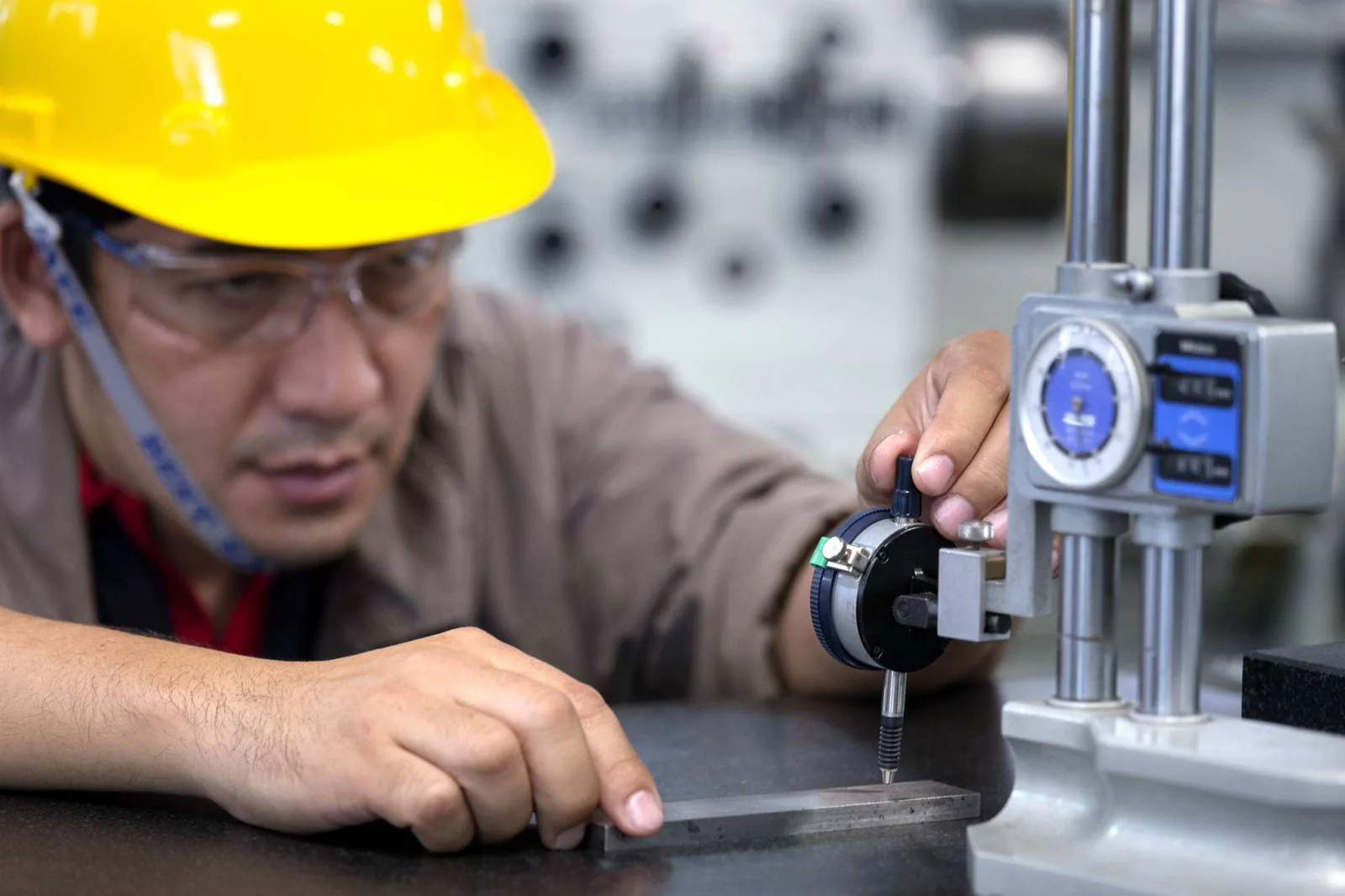
A factory inspection checklist is not a static document; it's a financial defense mechanism that safeguards your ROI by bridging the gap between theoretical capacity and physical reality. Manufacturing across Asia offers unparalleled scale, but the geographic distance often creates a visibility gap that leaves your brand vulnerable to quality drifts and ethical oversights. You already know that a single sub-standard batch can erode years of hard-won market trust and decimate your bottom line.
We're here to close that gap by acting as your seasoned eyes and ears on the ground. This guide provides the definitive 2026 framework for auditing manufacturers, ensuring you move from a position of anxiety to one of absolute control. You'll master the essential criteria for vetting suppliers to protect your product quality and brand reputation. We will walk through the critical pillars of on-site oversight, from verifying technical capacity and ESG compliance to identifying the hidden middlemen who inflate your costs. This briefing delivers a reliable roadmap for achieving 100% transparency and significantly reduced defect rates in your offshore facilities.
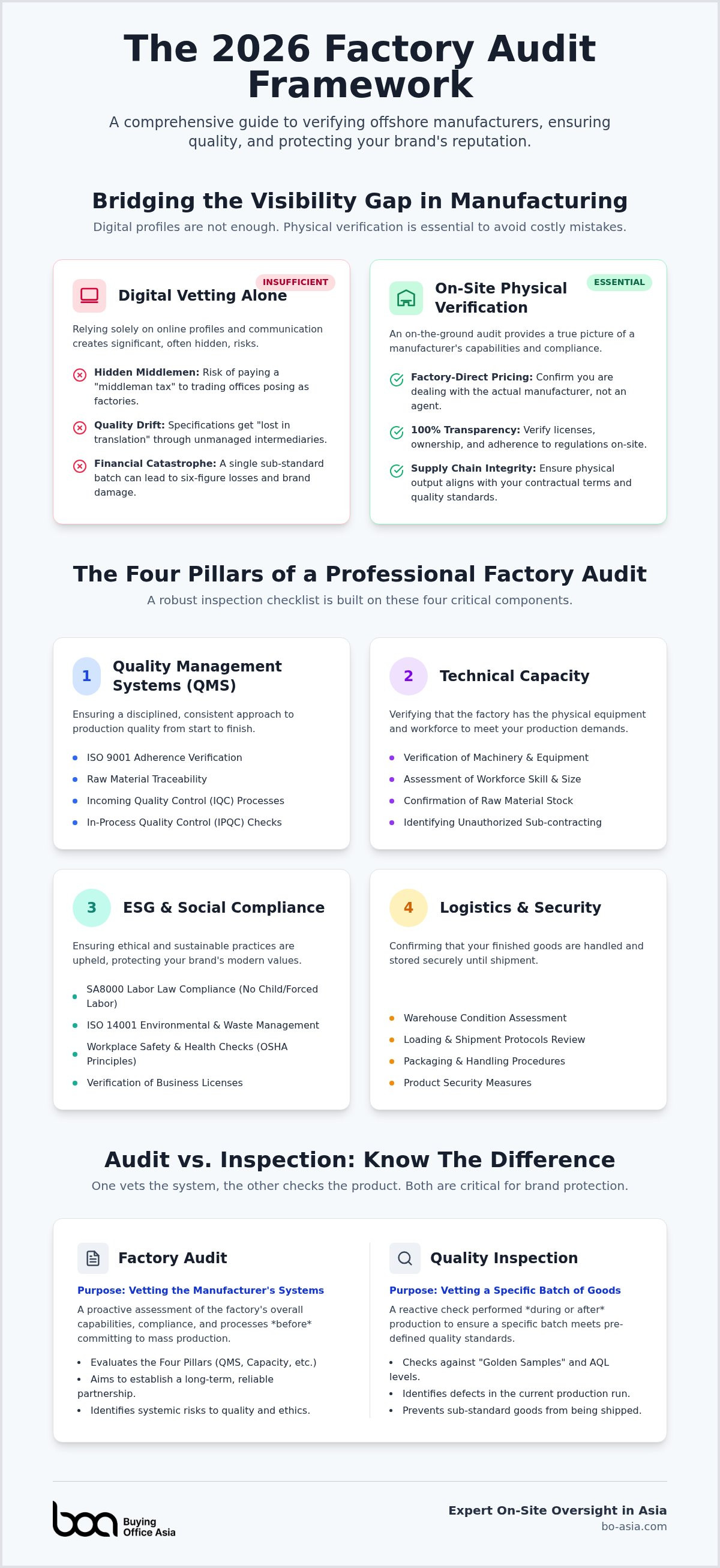
• Understand why digital vetting is insufficient for mass production and how physical verification secures your supply chain.
• Master the four pillars of a professional factory inspection checklist to evaluate a manufacturer’s technical capacity and ESG compliance.
• Learn the strategic difference between auditing a factory’s systems and inspecting a specific batch of goods to protect your brand reputation.
• Establish clear quality benchmarks by defining "Golden Samples" and AQL levels before production begins.
• Discover how on-site professional oversight identifies hidden middlemen and ensures 100% transparency in the manufacturing process.
A comprehensive factory inspection checklist serves as your primary defense against the operational fog of international trade. It's more than a simple audit; it's a strategic framework designed to verify a manufacturer's physical and technical capabilities before you commit significant capital. While digital platforms like Alibaba provide a convenient starting point, they're insufficient for mass production oversight in 2026. A polished online profile can easily mask a small trading office posing as a high-capacity facility. Without a physical verification of the shop floor, you risk paying a "middleman tax" to an entity that adds no value to your production.
Rigorous inspections ensure you maintain factory-direct pricing by confirming you're dealing with the actual manufacturer. This process involves a detailed Inspection in manufacturing to confirm that the machines, workforce, and raw materials mentioned in the contract actually exist. When you eliminate unmanaged intermediaries, you're not just saving on margins; you're securing a direct line of communication with the people actually making your products. This directness is the only way to ensure that your quality specifications aren't "lost in translation" between multiple layers of agents.
The cost of a professional audit is negligible when compared to the financial catastrophe of a failed production batch. If you bypass on-site verification, you're essentially gambling with your brand's reputation. Sub-standard goods lead to expensive recalls, lost market share, and legal liabilities that can dwarf your initial manufacturing savings. It's a simple calculation: a one-day audit vs. a six-figure loss in unsalable inventory. Supply Chain Integrity is the alignment of your contract terms with the physical factory output. You can't achieve this alignment through a computer screen or by relying on factory-sent photos that may not even be from the current production line.
A structured factory inspection checklist forces 100% transparency into the supplier relationship. It requires the manufacturer to open their books and their doors, allowing you to verify business licenses, ownership structures, and regulatory adherence on the ground. This level of scrutiny identifies risks that are invisible in digital documents, such as unauthorized sub-contracting to smaller, unvetted workshops. By operating as an extension of your team, we ensure that every box on that checklist is physically verified by experts who understand the regional landscape. For those looking to scale, mastering sourcing and procurement in Asia requires moving beyond trust and toward a culture of documented accountability.
Your audit must prioritize ISO 9001 adherence to ensure the factory maintains a disciplined approach to consistency. This involves verifying raw material traceability and Incoming Quality Control (IQC) to prevent sub-standard components from entering the line. We also monitor In-Process Quality Control (IPQC) to identify and rectify defects before they impact the final batch. Effective Supplier Vetting in Asia requires this level of granular oversight to protect your investment.
ESG (Environmental, Social, and Governance) standards have become a non-negotiable requirement for modern brands. A professional audit verifies labor law compliance and checks for violations related to child or forced labor under SA8000 standards. We also assess workplace safety and environmental waste management according to ISO 14001. While the OSHA inspection process provides a useful framework for safety, our on-site teams apply these principles to the unique regulatory environments of Asian manufacturing hubs. You can review the BOA ESG commitment to see how we benchmark ethical sourcing for our clients.
Assessing a manufacturer's technical capacity goes beyond counting machines. You must evaluate machinery age, maintenance logs, and actual production throughput to ensure they can meet your volume requirements. This is especially critical for projects involving custom product and tooling development, where the factory's R&D facilities and engineering staff qualifications determine the success of your design. We verify these technical credentials on-site to ensure the factory isn't outsourcing your specialized work to unvetted third parties. If you're ready to secure your supply chain with a seasoned insider, reach out to our Hong Kong team for a consultation.
Relying solely on a one-time audit can be dangerous. Industry reports often discuss the limitations of supply chain audits when they aren't backed by a continuous on-site presence. A factory might pass an initial vetting process but fail to maintain those standards during the heat of mass production. This is why we employ a "defense-in-depth" strategy. By combining periodic audits with rigorous product inspections, we create multiple layers of protection that prevent sub-standard batches from ever reaching your warehouse. This dual approach ensures that your brand reputation remains intact and your defect rates stay near zero.
The PPA is your first line of defense. It focuses on vetting the supplier’s legitimacy and financial stability before any deposits are paid. During this phase, your factory inspection checklist should prioritize the verification of valid export licenses and ownership structures to ensure you aren't dealing with a shell company or an unauthorized sub-contractor. Establishing this baseline of trust is a prerequisite for successful manufacturing. For more details on selecting the right partner, see the definitive guide to choosing a China sourcing company.
Once production begins, the focus shifts from the facility to the output. During Production (DUPRO) inspections allow us to catch systematic defects when only 10% to 20% of the order is completed, saving weeks of potential rework. The final safeguard is the Final Random Inspection (FRI), where we verify batch consistency, packaging, and labeling against your approved "Golden Sample." Our on-site quality control teams ensure that shipping documentation and customs compliance are handled with professional rigor, preventing costly delays at the port. This methodical approach ensures that what you've paid for is exactly what arrives at your door.
Execution is where strategy meets reality. Your factory inspection checklist becomes a live document the moment you step into the facility. Preparation begins long before the audit date. You must establish a "Golden Sample" as the physical benchmark for all production. This sample, signed and sealed by both parties, removes ambiguity during the inspection process. It acts as the final word on color, texture, and functionality, ensuring the factory has a clear target to hit.
Statistical sampling is the industry standard for high-volume manufacturing. You don't need to check every unit to understand the health of a batch. Instead, you define Acceptable Quality Levels (AQL) to set limits for critical, major, and minor defects. A critical defect might be a safety hazard, while a minor defect is a slight cosmetic flaw. AQL is the mathematical threshold of trust in mass production. It provides a clear, data-driven basis for accepting or rejecting a shipment without the inefficiency of a 100% inspection.
The opening meeting sets the professional tone for the entire visit. You should use this time to align expectations with factory management and review production schedules. Modern manufacturing hubs often integrate advanced AV infrastructure from providers like Averett Pte. Ltd. to facilitate these high-stakes strategy sessions with international clients. A seasoned auditor doesn't just follow the guided tour. You must insist on a full factory walkthrough to compare the checklist against the actual production floor reality. This is where you identify "staged" production lines or signs of unauthorized outsourcing that could compromise your brand reputation.
Managing factory relations requires a balance of firm oversight and local cultural intelligence. Factories may attempt to hide subcontractors or falsify maintenance logs if they feel unmonitored. Having a dedicated Asia procurement team that speaks the local language is your greatest advantage. They can spot inconsistencies in verbal reports and cross-reference them with physical evidence. We use the checklist as a roadmap for supplier management and development, turning audit failures into structured corrective actions rather than just transactional rejections.
If a factory fails a checklist item, you must issue a formal Corrective Action Plan (CAP). This document outlines the specific steps the manufacturer must take to rectify the issue and the timeline for a follow-up inspection. This systematic approach ensures your supply chain remains resilient and transparent. Contact us today to ensure your next factory audit is executed with professional rigor and local expertise.
A factory inspection checklist is a tool, not a solution. Its value depends entirely on the expertise of the person executing it on the shop floor. While digital templates and mobile apps offer a veneer of organization, they can't replicate the seasoned intuition of an on-site auditor. Relying on remote verification or factory-sent photos is a high-risk strategy that often results in "staged" production lines. An app doesn't have the regional expertise to spot unauthorized sub-contracting or identify when a facility is hiding its true operational state behind a closed door. We act as your physical extension in Asia, ensuring that the physical reality of the factory matches the technical data in your reports.
The gap between a static document and a successful shipment is often filled by regional presence. Without a dedicated team to verify every line item, your checklist remains a theoretical exercise. Professional oversight provides the calm assurance that your capital is protected by experts who understand the nuances of Asian manufacturing hubs. This hands-on partnership moves your business away from the anxieties of unmanaged sourcing and toward the steady confidence of a stabilized supply chain.
Local presence in Hong Kong and across Asia allows for immediate response times when production drifts occur. Our European-managed model, led by our Helsinki headquarters, combines corporate rigor with deep Asian operational power. This proximity is a critical lever for factory-direct price negotiations. It signals to manufacturers that you're an informed, permanent fixture in the region rather than a distant, vulnerable buyer. We leverage this regional authority to dismantle the obscured costs often found in traditional intermediary models.
Once your quality approval is secured, the data from your inspection reports flows directly into your logistics and shipping management. This integration ensures that only 100% verified goods move into the final consolidation and documentation phase. Investing in professional quality control and inspection services delivers a measurable ROI by eliminating the financial drain of rework, recalls, and shipping delays. Your supply chain becomes a lean, efficient engine for growth. Contact Buying Office Asia to upgrade your oversight from a static factory inspection checklist to a comprehensive defense strategy.
A robust factory inspection checklist is your most effective defense against the operational risks of international trade. By moving beyond digital vetting and establishing a physical presence on the factory floor, you ensure that your product quality and brand reputation remain uncompromised. You've learned that success in Asian manufacturing requires a clear distinction between auditing a partner's systems and inspecting the physical output of your mass production. This dual approach provides the visibility needed to eliminate hidden costs and maintain 100% transparency throughout your supply chain.
Execution is the final bridge between a strategic plan and a profitable shipment. As an extension of your team, Buying Office Asia provides the European-managed oversight and regional expertise necessary to navigate complex global markets. We specialize in high-volume mass production and operate with a commitment to total transparency, removing the middlemen that inflate your expenses. It's time to replace anxiety with the calm assurance of professional on-the-ground management. Secure Your Supply Chain with Buying Office Asia and take full control of your manufacturing future. Your path to a resilient, high-performing supply chain starts with a single, expert-led audit.
Common red flags include inconsistent documentation, poorly maintained machinery, and a lack of raw material traceability. High-performing factories often prioritize the use of quality components for their equipment—such as those distributed by Sealparts Ltd—to prevent the maintenance failures that lead to production delays. If a manufacturer is hesitant to grant access to certain production floors, it often indicates they're hiding unvetted subcontractors. You should also watch for workers who appear unfamiliar with the production equipment. These indicators suggest that the facility's operational reality doesn't match the theoretical capacity promised in your initial contract negotiations.
For a long-term supplier, you should perform a comprehensive audit at least once per year to ensure standards haven't slipped. However, if you're scaling production or introducing new product lines, more frequent visits are necessary. Regular on-site presence prevents quality fade, where a manufacturer gradually cuts corners to increase their margins. A consistent factory inspection checklist schedule reinforces your commitment to quality and keeps the manufacturer's management team accountable.
Remote video inspections are inherently flawed because they allow the factory to control exactly what you see. They can easily hide safety violations, unorganized workshops, or unauthorized personnel behind the camera lens. For high-volume mass production, there's no substitute for physical, on-the-ground presence. A seasoned auditor uses their senses to detect issues that a digital camera misses, such as the smell of improper chemical storage or the sound of failing machinery.
An ISO 9001 audit verifies that a factory has a standardized quality management system in place, but it doesn't guarantee the quality of your specific goods. A custom factory inspection is tailored to your unique technical requirements, tooling needs, and brand standards. While ISO certification is a good baseline, a custom audit provides the granular oversight needed to verify that the facility can actually execute your specific production design without defects.
If a factory fails your factory inspection checklist, you must immediately issue a formal Corrective Action Plan (CAP). This document details the specific failures and outlines the required remedial steps with a strict deadline for completion. You don't necessarily need to terminate the relationship, but you must withhold final approval until a follow-up inspection confirms the issues are resolved. This systematic approach ensures your supply chain remains resilient and transparent.
Detecting unauthorized subcontracting requires a thorough walkthrough of the facility to match the output with the available machinery and workforce. If the factory's inventory of raw materials is low but production is supposedly high, they're likely outsourcing the work. Our on-site teams check for inconsistent labeling, varied worker uniforms, and shipping documents from third-party workshops. This level of scrutiny is the only way to ensure 100% transparency in your manufacturing process.
Acceptable Quality Level (AQL) is a statistical standard used to determine the maximum number of defects allowed in a production batch sample. You choose your AQL based on the risk profile of your product; for example, safety-critical items require a much stricter AQL than cosmetic accessories. It's the mathematical threshold of trust that allows you to accept or reject large shipments based on a representative sample rather than checking every single unit.
The cost of a professional inspection depends on the factory's location, the complexity of your product, and the depth of the audit required. Rather than focusing on a flat fee, you should consider the ROI of preventing a failed batch. A single day of professional oversight is a fraction of the cost of a full recall or a shipment of unsalable goods. We focus on providing financial security through rigorous, on-site verification.

A factory audit can look reassuring while leaving a critical question unanswered: will the same materials, processes and controls be used for your production run? Responsible toy manufacturing in China requires more than reviewing a certificate. You need to understand factory conditions, subcontract...

A final inspection can show you what came off the production line, but it can’t change the decisions that shaped it. That’s the key distinction in standalone quality inspections vs procurement services: one checks product output at a defined point, while the other can coordinate work across supplier...

A factory quote is not a shipment plan. Sourcing products from China to USA involves more than finding a manufacturer and agreeing on a unit price. Unclear specifications, samples that differ from production, or overlooked packaging and freight details can put quality and commercial viability at ris...