


What is AQL? It’s a sampling rule for deciding whether an inspected production lot meets agreed quality criteria. ISO 2859-1:2026 uses the acceptance quality limit as an index for selecting a sampling scheme. It helps set defect limits and sample sizes, but it doesn’t guarantee every unit is defect-free.
It’s understandable to want a clear pass-or-fail threshold before goods leave the factory. What is AQL? It is a structured way to assess a sample, classify defects and decide whether to accept or reject a lot, while making the limits of sampling clear.
This article explains how critical, major and minor defects differ, how inspection levels affect sample size, and how acceptance and rejection numbers work in practice. You’ll also learn how to use sampling results in quality management, from setting specifications to following up on recurring defects, so inspection findings guide production decisions.
• Separate critical, major and minor defects so acceptance criteria reflect the impact of each issue.
• Use the lot size and chosen inspection level to find the sample size in the applicable sampling tables.
• Set acceptance and rejection numbers before inspection, then apply them consistently to the sampled lot.
• Turn inspection findings into quality-management actions by tracking recurring defects and following up with suppliers.
• Coordinate specifications, supplier management and production oversight to address quality risks before final inspection.
In manufacturing, the question “what is AQL?” refers to a sampling criterion for deciding whether a production lot meets agreed quality requirements. ISO 2859-1:2026 uses the acceptance quality limit as an index for selecting a sampling scheme. It supports consistent inspection decisions, but it doesn’t guarantee that every unit is defect-free.
Acceptance sampling assesses a selected portion of a lot instead of examining every item. ISO 2859-1 provides a standardized framework for making lot decisions through inspection by attributes. The term was formerly known as Acceptable Quality Level. For procurement teams, the key distinction is between the quality limit used in a sampling plan and the actual condition of every product in the shipment.
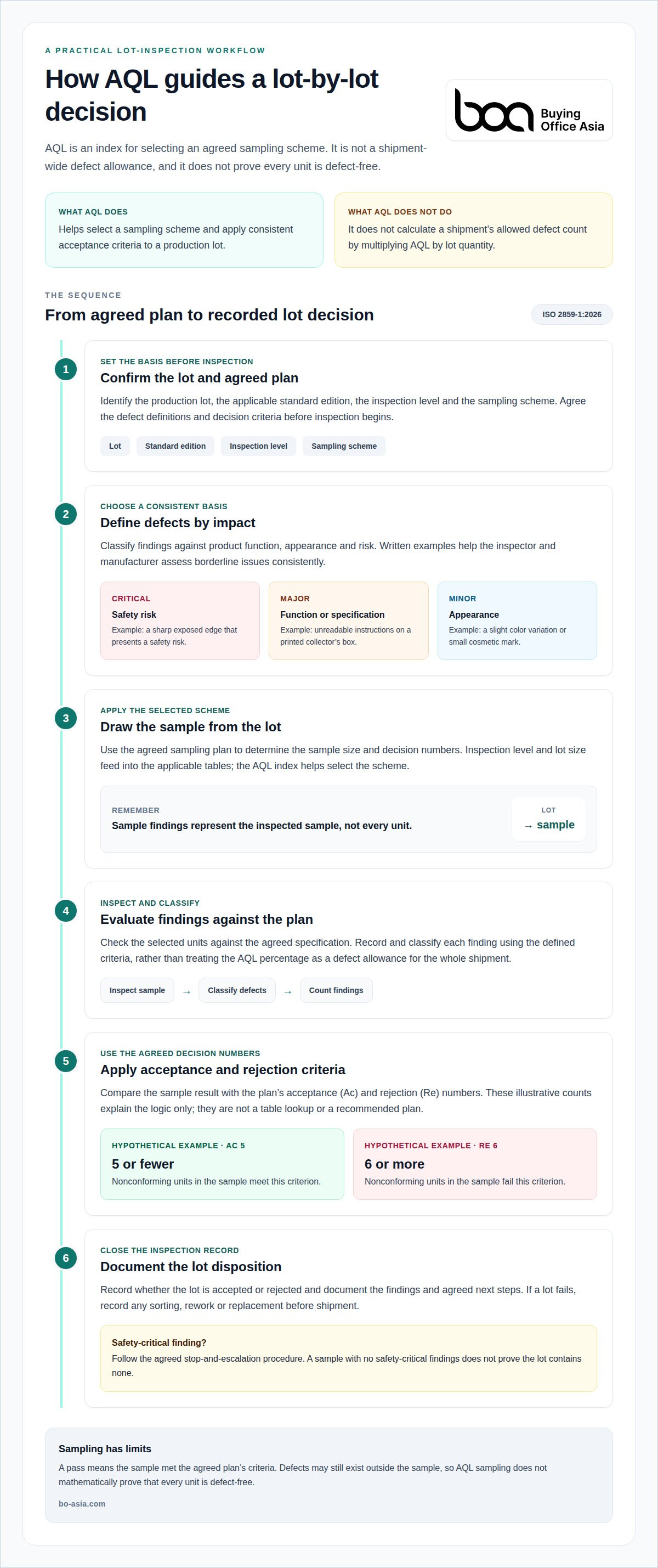
AQL links a production lot, a sample and a decision rule: findings in the sample determine whether the lot is accepted or rejected. A pass means the sample met the plan’s criteria, not that every item is flawless. Agreeing on the inspection plan before production is complete gives the buyer and manufacturer a shared basis for deciding what happens next.
Defect thresholds define how many findings the plan allows before a batch is rejected. Agree on the sampling plan and defect classifications before inspection. For a safety-critical finding, define an explicit stop and escalation rule; a sample with no such findings does not prove the lot has none. Define each category against product function, appearance and risk.
For a printed collector’s box, unreadable instructions could be major, while a small cosmetic mark might be minor. A sharp exposed edge could be critical if it creates a safety risk. Written examples help inspectors classify borderline findings consistently, particularly when one product combines artwork, assembled components and packaging.
Sampling numbers connect the selected AQL and inspection level to a sample size and acceptance or rejection numbers. For an illustration of decision logic only, assume an agreed plan specifies Ac 5 and Re 6 for nonconforming units. Five or fewer meets that criterion; six or more fails it. These example counts are not a table lookup or a recommended plan.
A percentage alone doesn’t determine the lot decision. Do not multiply the AQL value by the lot quantity to calculate how many nonconforming units may be shipped. The sample size and decision numbers govern the inspection result. If a lot fails, document the decision and any sorting, rework or replacement before shipment.
Sampling carries risk for both buyer and supplier because defects may exist outside the inspected sample. Define defects, the inspection level and the decision numbers before inspection. This provides a consistent basis for lot decisions and follow-up if findings point to a production issue.
Set defect thresholds according to product risk, intended use and the consequences of failure. AQL sampling checks a defined sample, unlike 100% inspection, which checks every unit; other sampling plans can use different decision rules and risk assumptions.
Critical, major and minor categories rank defects by their impact on safety, function or appearance. A critical defect can create a serious hazard; a major defect can make a product unusable or materially different from its approved specification; a minor defect usually affects appearance without preventing normal use. Clear definitions give inspectors consistent criteria instead of relying on subjective judgments.
For a printed collector’s box, an unreadable instruction could be major, while a slight color variation might be minor. A sharp, exposed edge could be critical if it presents a safety risk. Include examples and guidance for borderline cases in the inspection specification, so the manufacturer and inspector can record defects consistently.
Industry thresholds vary because the consequences of defects vary. For a children’s product, assess foreseeable use and safety hazards. For electronics, distinguish cosmetic marks from faults that affect function or safety. For industrial components, document the consequences of a failure in use.
A cosmetic issue on a display item differs from a fault in an electrical function. For toys and collectibles, age group, small parts, assembly and decoration can shape defect criteria. Define defects against the approved sample, drawings and product requirements, rather than applying another industry’s thresholds without adjustment.
AQL also differs from broader quality systems. Six Sigma focuses on reducing process variation and defects. Total Quality Management (TQM) is an organization-wide approach to quality, while statistical process control (SPC) monitors process variation during production. AQL is a lot-acceptance tool, not a substitute for these systems.
“Zero defects” expresses an aspiration, while an AQL plan sets sample-based acceptance criteria. You can specify a zero critical-defect threshold, but sampling still cannot prove that every unit is defect-free. Match the plan to the product risk, inspection purpose and agreed specification.
For help translating product requirements into inspection criteria, discuss your quality-control needs.
Inspection level helps determine the sample size relative to lot size. Normal, tightened and reduced inspection are separate scheme states governed by switching rules. ISO 2859 tables use lot size, inspection level and AQL to determine the code letter, sample size and decision numbers.
ISO 2859-1 and ANSI/ASQ Z1.4 sampling tables use a code letter to connect the lot size and inspection level with a sample size. The letter isn’t the AQL itself. Confirm the agreed standard and edition, then follow its table instructions and any arrows for the specific plan.
Once the sample size is set, the applicable table uses the chosen AQL to identify acceptance and rejection numbers. Keep the inspection level, AQL and sampling plan consistent in the written inspection instructions. Changing one can alter the sample size or decision criteria.
Batch size is the lot quantity entered into the sampling table, not a direct multiplier for the sample. The sample size and acceptance number depend on the lot size, inspection level and AQL.
Define the inspection lot correctly and use the right table before selecting units. A production order may contain separate product types or batches; combining them can hide differences in materials, production dates or specifications. Record the lot, code letter, sample size and defect categories so the manufacturer knows exactly what the decision covers.
Inspection levels offer different sampling approaches, with higher levels generally involving a larger share of the lot. The sample-to-lot ratio increases from Level I to Level III, so the chosen level affects inspection coverage and the chance of detecting defects.
Apply the inspection plan consistently rather than choosing a smaller sample simply to save time. The appropriate level depends on the inspection purpose and agreed plan; special sampling levels serve specific purposes, such as destructive checks. A change in production performance may also prompt a review of the sampling approach.
Sampling provides a structured decision without examining every unit, but it carries risk for both buyer and supplier. A sample can miss defects elsewhere in the lot, so AQL acceptance does not prove that every item conforms. Pair inspection results with production records and corrective-action follow-up, especially when failures recur across lots.
ISO 2859-1 provides a framework for acceptance sampling by attributes, where inspected items are classified against defined criteria. Its AQL definition helps buyers and manufacturers set a consistent basis for lot decisions.
According to the International Organization for Standardization, ISO 2859-1:2026 uses the acceptance quality limit as an index for selecting a sampling scheme. The name was formerly Acceptable Quality Level. This term describes a sampling-plan benchmark, not a promise that every item in a shipment meets specification.
That distinction matters in procurement. An agreed AQL makes inspection criteria visible before the lot is assessed, but the sample remains a limited view of production. For example, the parties can agree on defect classifications and a sampling plan, then use the acceptance number to make a consistent lot decision.
Choose AQL levels with the defect type and product requirements in mind. A lower value represents a more demanding quality limit in the sampling plan; it does not mean the sample will reveal every defect. Distinguish the AQL benchmark from the actual defect rate observed in a particular inspection.
ISO 2859-1 standardizes how a sample can support acceptance or rejection of an inspection lot. It connects lot size, inspection level and AQL to a sampling plan, helping buyers and manufacturers apply the same decision method across production batches.
The standard also defines the lot being assessed. Identify exactly which units make up the inspection lot before drawing the sample. That definition makes lot boundaries important. A mixed lot can contain production with different materials, dates or conditions, so the inspection record should identify the units covered.
In practice, state the lot, inspection level, AQL and defect categories in the inspection agreement. Then apply the relevant ISO 2859-1 tables to establish the sample and decision numbers. A level II plan, for example, identifies a sampling route; it does not independently define acceptable product quality. The product specification supplies that context.
AQL provides a consistent sampling decision, not a substitute for production controls or a guarantee of a defect-free shipment. Use inspection results alongside the approved specification and production records. If a lot fails the agreed criteria, document the findings and decide whether sorting, rework or another corrective action is appropriate before release.
An AQL inspection is useful when its criteria guide decisions before, during and after production. Define product requirements, identify the inspection lot, select the sampling plan, inspect and classify defects, then record the result and any corrective actions.
Use approved drawings, specifications, packaging requirements and a signed sample as quality references. For a custom figurine, document acceptable paint variation, component fit and assembly expectations. This gives inspectors observable criteria instead of relying on personal judgment.
Record which production units the inspection covers and their lot size. Specify whether the check occurs during production or before shipment. A clearly bounded lot helps keep results tied to the relevant batch, rather than blending separate production runs.
Record the AQL, inspection level, sample size and acceptance and rejection numbers. Use the selected table consistently. Plan how units will be drawn across available cartons or bags, so the sample does not represent only the easiest-to-reach products.
Check the sampled units using the agreed defect definitions and functional checks. For a board game, that could include verifying component counts, print legibility and assembly. Record each finding by defect category, with clear evidence and the affected sample unit.
Compare recorded defects with the plan’s acceptance number. Report whether the lot passes or fails, and retain the inspection record with the production reference. A passing sample is evidence for that sampling decision, not proof that every unit is defect-free.
For a failed lot, document the containment decision, the cause identified and the agreed remedy, such as sorting or rework. Track repeat findings by product, supplier and production run. That turns inspection records into quality-control inputs for the next manufacturing cycle.
When setting criteria, make them practical for both the manufacturer and the consumer-facing business. Separate appearance, function and safety requirements, then specify a clear inspection method for each. If changes to materials, tooling or artwork affect the approved reference, update the criteria before assessing the next lot.
Use AQL as one control within a broader process, not as a substitute for production follow-up. For example, repeated paint defects may call for reviewing the process and approved sample, while a single lot inspection only records what it found. Discuss an AQL inspection plan for your product and production lot.
Buying Office Asia helps businesses connect AQL criteria with the sourcing and production decisions that shape product quality. Its end-to-end sourcing and procurement service supports supplier selection, factory-direct price negotiations and coordination of quality expectations across high-volume orders.
AQL inspection gives you a structured view of a production lot, while coordinated procurement helps align specifications and supplier communication before inspection. Buying Office Asia’s dedicated Asia procurement team supports that continuity, carrying agreed requirements from sourcing discussions into manufacturing.
If you’re setting inspection criteria for an upcoming production order or reviewing your sourcing process, contact Buying Office Asia to discuss your requirements.
Understanding what AQL is gives you a starting point; the next step is making quality criteria part of everyday production decisions. Treat inspection findings as operational feedback: identify recurring issues, assign corrective actions and carry approved changes into the next production run. This links the product you specify more clearly to the goods prepared for shipment.
Before production begins, gather the product specification, approved sample, defect definitions and inspection plan. Use them to align everyone responsible for supplier communication, quality review and release decisions. If a lot fails, document the response and what must change before the next assessment. AQL is most useful when results lead to a clear decision and traceable follow-up, not just a pass-or-fail report.
For support connecting sourcing decisions with production requirements, contact Buying Office Asia to discuss your project. A well-defined process gives your team a stronger basis for the next manufacturing decision.
AQL means Acceptance Quality Limit. In a purchase specification, it identifies the agreed benchmark for making a lot decision from inspection findings. Keep it distinct from the product’s full quality specification: the specification describes required features, while the AQL plan governs how sampled findings affect acceptance. This distinction helps procurement teams avoid treating a passing inspection as proof that every unit meets every requirement.
Choose an inspection level by considering product risk, inspection purpose and the amount of checking appropriate for the decision. For a first production run, a new component or a changed process, your team may need closer scrutiny than for a well-understood, unchanged product. Document why the selected level fits, then apply it consistently to comparable lots so results remain useful over time.
To report the percentage of sampled units that do not conform, divide the number of nonconforming units by the number inspected and multiply by 100. If the plan counts individual nonconformities instead, report that measure separately. For example, if an inspector finds defects in a portion of the sample, that calculation describes the sample’s observed rate. It is not, by itself, the lot’s acceptance decision. The sampling plan’s decision numbers determine whether the inspection passes.
Check whether the inspection followed the written plan and whether findings were recorded against the correct product reference. Review defect classifications, functional test results, sample identity and required measurements. A report should distinguish an observed defect from a counting or documentation error. For instance, record a missing game component against the approved component list, not as a visual flaw.
No single AQL value applies to every product or purchase. Appropriate limits depend on intended use, the consequences of defects and the agreement between buyer and manufacturer. A packaging specification may prioritize print and presentation, while a component specification may focus on fit or function. Record the chosen limits and defect examples in the inspection agreement rather than relying on an unwritten default.
Consider intended use, user age group where relevant, defect consequences, product complexity and how clearly the approved sample shows acceptable variation. A multi-component tabletop game, for example, needs a clear reference for component identity and completeness. For licensed merchandise, approved artwork and decoration standards can also shape inspection criteria. These details help identify which findings matter most to the product and its customers.
AQL stands for Acceptance Quality Limit. The term used in ISO 2859-1 is a quality benchmark for acceptance sampling, rather than a product specification or a promise of flawless output. In purchasing documents, spell out the term alongside the selected inspection criteria. This reduces confusion for teams reviewing supplier records, inspection reports and lot-release decisions, especially when documents use older terminology.
Start with product requirements and defect categories, then record the agreed limits in the inspection instructions. Calculate the inspection outcome from the actual findings and the relevant plan’s acceptance criteria. Keep a dated record of the specification version, approved sample and inspection report. If artwork, materials or product construction change, update the reference documents before assessing a later lot.

Distance can turn a small production issue into a coordination problem. The benefits of having a team on the ground in Asia include closer alignment between regional operations and your wider business. Local presence can connect strategy with supplier activity, product decisions, and day-to-day coll...

A container can be ready to move and still incur port charges. The practical question is what demurrage is and how to avoid it: demurrage is a charge for cargo left at a port or terminal beyond its agreed free time. The amount depends on the applicable rate and how long the cargo remains there.That...

Knowing how to manage overseas manufacturing projects starts with comparing total landed cost, not just the factory quote. Include tooling, freight, tariffs and duties, insurance, management time, and the cost of correcting problems. Weigh those expenses against product quality, delivery risks, and...