

What if the traditional "hands-off" approach to custom tooling development China is now the single greatest threat to your 2026 profit margins? You're likely aware that while China's machine tool exports reached nearly $23 billion early this year, the operational risks have never been more complex. Between the 12.5% Section 301 tariffs and the evolving 13% VAT landscape, the margin for error has vanished. You want high-precision molds that meet export standards, yet the fear of IP theft and unforeseen fabrication delays often stalls critical projects.
We understand the frustration of losing control once a design enters the factory floor. This guide promises to transform your procurement strategy from remote vendor management to a sophisticated, on-site partnership. You'll learn how to navigate the new 15th Five-Year Plan for IP protection and the latest CCC implementation rules to ensure total compliance. We'll preview a transparent framework for risk mitigation and cost optimization that positions your procurement team as a physical, protective extension of your own brand.
• Identify why a rigorous Design for Manufacturability (DFM) report is the essential first step to prevent structural defects before mold fabrication begins.
• Discover how a dedicated on-site presence eliminates the "middleman trap," providing 100% transparency and direct factory oversight throughout the production cycle.
• Master the strategic implementation of NNN agreements to secure your intellectual property during the high-risk custom tooling development China phase.
• Understand the critical 2026 regulatory updates, including new CCC requirements, that impact mold certification and export compliance for precision components.
• Gain a professional framework for transitioning from successful T1 tooling samples to scalable, high-volume OEM manufacturing with guaranteed supply chain stability.
Custom tooling development China serves as the essential bridge between your initial product design and high-volume mass production. In 2026, China remains the global epicentre for precision manufacturing, with machine tool exports reaching $22.9 billion in the first quarter alone. This dominance isn't just about scale; it's about the sophisticated infrastructure that allows tool and die makers to execute complex geometries with extreme repeatability. Successful procurement requires a shift from viewing tooling as a sunk cost to seeing it as a strategic investment. You're balancing initial Capital Expenditure (CAPEX) against the long-term Operational Expenditure (OPEX) of your production run. While a "cheap" mold might appear attractive on a spreadsheet, it often results in expensive production failures, high scrap rates, and missed delivery windows.
The primary advantage lies in the mature ecosystem of steel suppliers and specialized machining centers found in hubs like Shenzhen and Dongguan. You gain access to high-tier technology and skilled labor at a significant cost reduction compared to Western alternatives. When managed with professional oversight, this allows for high-precision outcomes that meet strict export standards. China’s integrated supply chain creates a unique tooling advantage by enabling rapid iteration cycles that can compress your time-to-market by weeks. For teams also developing a digital interface for their hardware, you can discover Buuuk to better estimate the software development lifecycle alongside your manufacturing timeline.
One of the most frequent errors in custom tooling development China is failing to specify the correct mold grade for the intended production volume. You must distinguish between "prototype" molds, designed for short runs, and "production" molds built for millions of cycles. This distinction is vital for oem manufacturing success, as the wrong material choice can lead to catastrophic failure mid-run.
Steel selection is the foundation of your ROI. Choosing P20 steel might work for a 50,000-unit run, but high-volume precision components often require hardened H13 steel to maintain dimensional stability over time. Don't be fooled by exceptionally low-cost factory quotes; these often hide the use of recycled steel or inferior heat treatments. Without on-site verification, you risk receiving a tool that deforms prematurely, forcing you into a costly "re-tooling" phase that erases your initial savings.
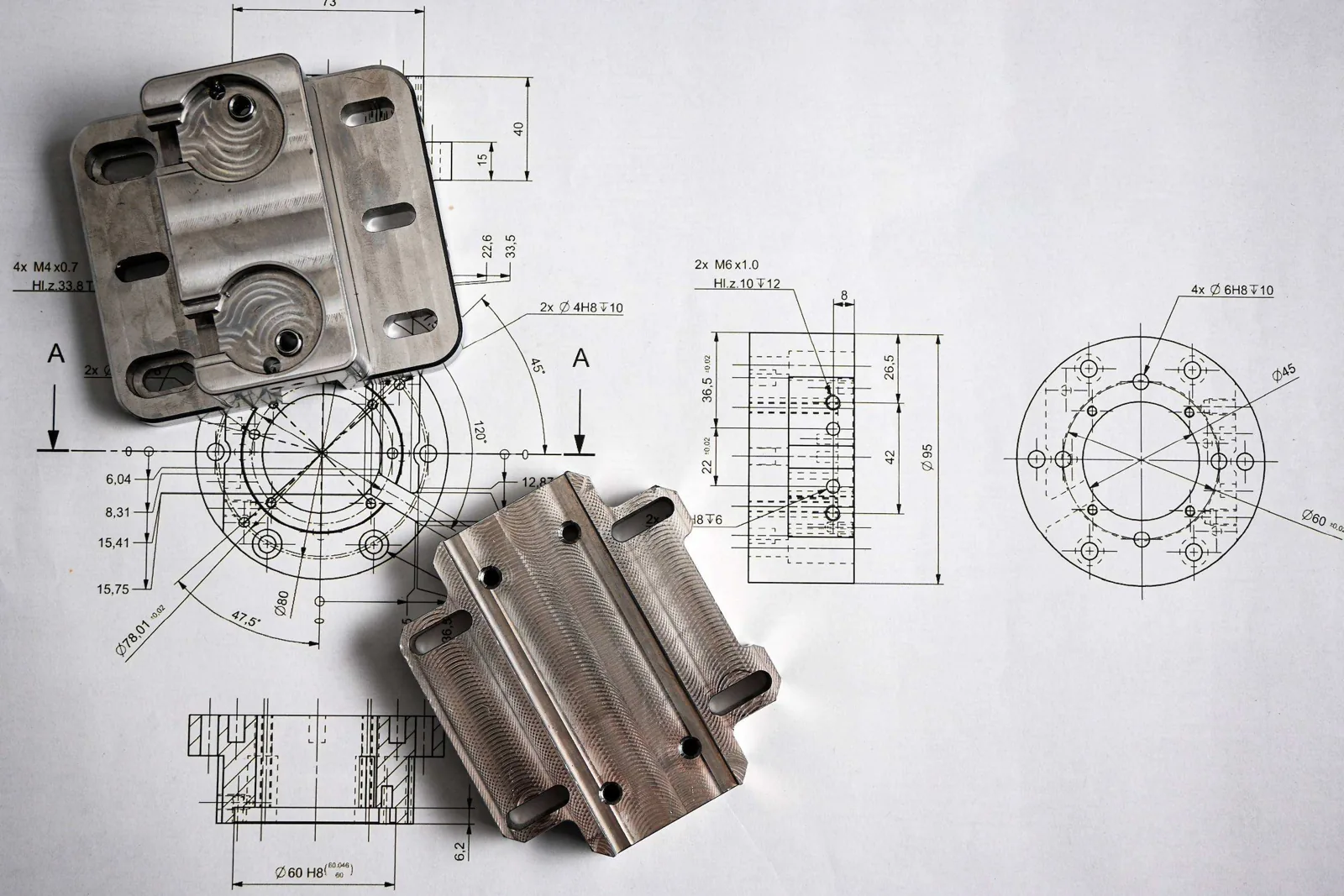
The transition from a digital CAD file to a physical steel mold is a high-stakes technical progression. Successful custom tooling development China requires more than just placing an order; it demands a structured lifecycle that prioritizes engineering precision over speed. Before any steel is cut, a comprehensive Design for Manufacturability (DFM) report must be completed. This document acts as the final sanity check for your project. It identifies potential failure points such as insufficient draft angles, uneven wall thicknesses, or suboptimal gate placements that could lead to structural weaknesses. A rigorous DFM reduces material waste and optimizes cycle times, which is essential for effective mass production oversight later in the process.
Your tooling design must be compatible with the specific injection molding machines used by your chosen factory. During the DFM phase, we analyze the cooling channel layout and ejection system to prevent part warping. By catching these issues early, you avoid the "re-tooling" cycles that often plague unmanaged projects. This phase is also the most critical window for Protecting Intellectual Property, as it is the moment your proprietary designs are first shared with the fabrication team.
Once the design is locked, the fabrication sequence begins. This involves rough machining of the mold base, followed by heat treatment to achieve the necessary Rockwell hardness for your production volume. Precision Electrical Discharge Machining (EDM) then carves the intricate details of the cavity. On-site oversight during these weeks is vital. It prevents "ghost delays" where a factory might deprioritize your project in favor of a larger client without your knowledge.
The "T-series" testing is the ultimate validation of the tool's performance. T0 is the initial trial for internal factory adjustments, but the T1 sample is the first part sent for your review. When evaluating a T1 sample, you must look for flash, sink marks, and dimensional deviations. Professional quality control and inspections during these trials ensure the tool meets export-grade tolerances. Once refinements are made, we establish a "Golden Sample." This sample serves as the immutable standard for all future production runs. If you want to ensure your next project starts with this level of technical rigor, consult with our engineering team to review your designs.
Managing custom tooling development China from a distance is an operational gamble that few businesses can afford in 2026. While digital communication has bridged some gaps, it cannot replace the physical verification of a mold's progress on the factory floor. China's evolving industrial policy is driving a shift toward high-precision manufacturing, yet the decentralized nature of the tool-making industry still exposes unmanaged projects to significant procurement risks. You need a partner who acts as a stabilizing force, ensuring that your technical specifications are translated into physical reality without compromise.
The "Middleman Trap" is a common pitfall where trading companies pose as manufacturers while outsourcing your project to unvetted sub-contractors. This practice obscures actual factory capabilities and inflates your costs through hidden markups. Establishing 100% transparency is non-negotiable for complex custom product development. By securing direct factory access, you ensure your technical requirements aren't lost in translation. This direct line of accountability with the tool shop owner prevents the miscommunications that lead to expensive rework and missed deadlines.
Email updates are easily fabricated, making "on-the-ground" presence the only reliable way to verify mold progress. A dedicated Asia procurement team ensures your project isn't sidelined when a factory decides to prioritize a larger client's order. Our physical presence functions as a signature promise of accountability in a digital world. Regular physical inspections on the factory floor prevent the use of substandard mold bases or recycled steel that a remote buyer would never detect. This proactive oversight allows for real-time problem solving, where design flaws are fixed on-site instead of through weeks of frustrating email chains. This elite level of oversight protects your brand from the operational setbacks and financial risks inherent in unmanaged supply chains.
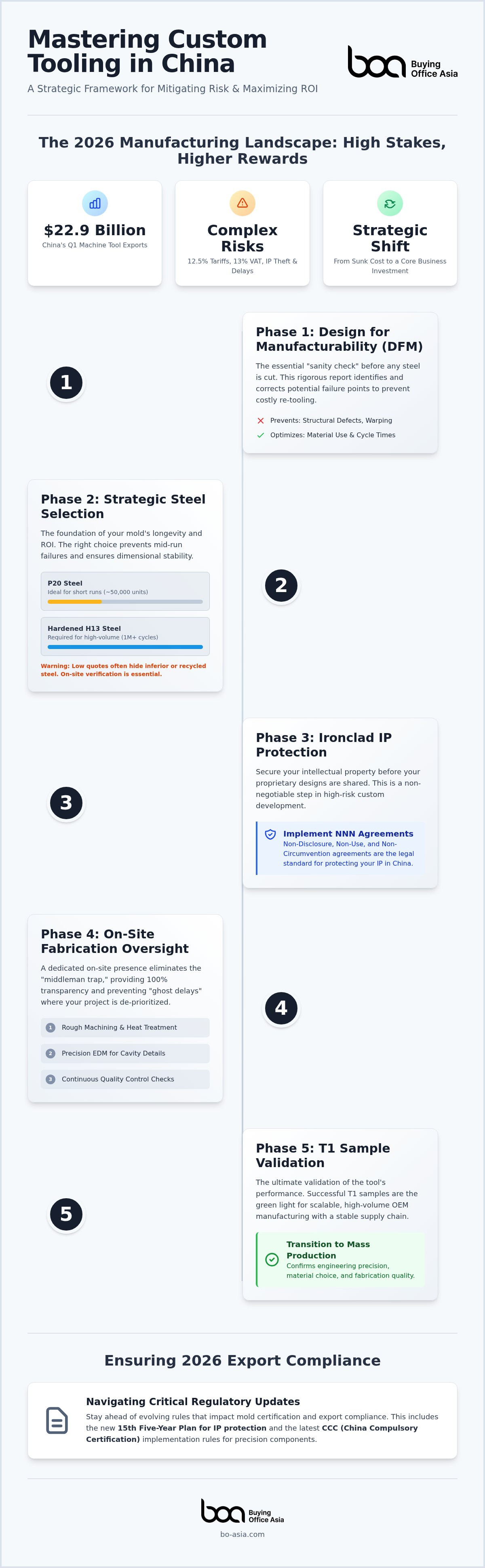
The tooling phase is the most vulnerable period for intellectual property (IP) leakage. It's the moment your proprietary CAD files are first shared with external engineers and fabrication teams. In custom tooling development China, securing your designs requires more than just trust. You must implement robust NNN (Non-Disclosure, Non-Use, Non-Circumvention) agreements that are specifically drafted to be enforceable under Chinese law. These contracts should be finalized only after conducting rigorous supplier vetting to confirm the factory's reputation and legal standing. This defensive posture is essential as China implements its 15th Five-Year Plan for IP Protection, released on July 31, 2026, which aims to strengthen enforcement for foreign innovators.
Ownership of the mold is another critical risk area. Many buyers mistakenly assume that paying for a tool automatically grants them legal and physical possession. Without explicit contract clauses, a factory might claim ownership of the technical design or refuse to release the mold for use at another facility. We ensure you legally own the physical steel and the associated IP, including the right to move the tool at any time. This protects your brand from being "held hostage" by a single supplier.
Protecting your design often involves a strategy of compartmentalization. By dividing the production of different tooling components between separate, unlinked shops, you prevent any single entity from having the complete blueprints to your product. This defense is bolstered by ensuring your trademarks and patents are registered within the Chinese jurisdiction, adhering to the "first-to-file" system. If your supply chain extends into Southeast Asia, you can discover Henry Goh & Co for expert guidance on regional trademark and patent registration. A local partner provides the necessary oversight to audit a factory's digital security protocols, ensuring your files aren't stored on unsecured servers or shared with unauthorized third parties.
Quality control doesn't end with the approval of a T1 sample. High-volume tools require a documented maintenance schedule to prevent wear from affecting part tolerances. We verify mold life guarantees through independent on-site audits, checking for signs of fatigue or improper lubrication. It's also vital to ensure that any physical modifications made to the tool during the testing phase are accurately reflected in updated CAD drawings. This ensures that if you ever need to replicate the tool, your data is current. To protect your designs and secure your production future, reach out to our IP and quality experts today.
Successful tool approval doesn't guarantee a successful product launch. The transition from a single validated sample to a full production run is where many unmanaged projects fail. Integrating your custom tooling development China into a broader procurement strategy ensures that the precision achieved in the mold shop is maintained on the assembly line. This is the foundation of oem manufacturing success. Without a professional oversight team, you risk "quality fade," where the factory slowly relaxes tolerances as the production run progresses. Professional supply chain management acts as a defensive barrier, protecting your margins from the high costs of defective batches and production downtime.
Moving from tool approval to batch production requires a shift in quality standards. You aren't just checking one part; you're managing statistical process control across thousands of units. Sometimes, the best toolmaker isn't the best mass producer. We manage the delicate logistics of moving your proprietary molds between different manufacturing facilities if a specialized production environment is required. This transition must be perfectly aligned with your logistics and shipping management to prevent inventory gaps. Stability in the supply chain is built on this seamless integration of technical performance and operational timing.
The ROI of a professional procurement partner is measured in the risks you never have to face. Unmanaged sourcing often leads to hidden markups, IP leakage, and production delays that can bankrupt a product launch. Buying Office Asia functions as an integrated extension of your own team, offering the same level of oversight usually reserved for major enterprises. Our European-managed structure in Helsinki and Hong Kong provides a sophisticated defense against the operational setbacks of a complex global market. We possess the regional expertise and networks that your internal team might lack, providing a physical presence that functions as a signature promise of accountability.
We explicitly reject the traditional intermediary model that thrives on obscured costs and inefficiency. Instead, we offer a 100% transparency model that ensures every dollar of your investment is visible and optimized. By positioning ourselves as your on-the-ground partner, we provide the steady confidence of an established expert in a volatile manufacturing landscape. Our role is to methodically dismantle industry objections and secure your financial health through documented outcomes. Contact Buying Office Asia today to secure your custom tooling development China and stabilize your 2026 manufacturing strategy.
Precision in custom tooling development China is the foundation of every successful product launch. We've explored how a rigorous DFM process and on-site oversight transform manufacturing from a high-risk gamble into a predictable, scalable asset. By prioritizing transparency and direct factory accountability, you eliminate the hidden markups and "ghost delays" that often plague unmanaged supply chains. You deserve a procurement process that values technical accuracy as much as your bottom line.
Buying Office Asia serves as your stabilizing force in this complex market. Our European leadership in Helsinki combined with our on-the-ground expertise in Hong Kong and China provides a unique defensive layer for your intellectual property. We offer the end-to-end supply chain management necessary to move from initial tooling to mass production without sacrificing quality or financial viability. It's time to move beyond transactional sourcing and build a long-term partnership that prioritizes your growth. Secure Your Custom Tooling with Buying Office Asia and take control of your 2026 procurement strategy today.
Average lead times for precision molds in 2026 typically range between 35 and 55 days for standard projects. This timeline accounts for the initial design for manufacturability phase and the integration of AI assisted planning now common in Shenzhen machining centers. While high precision tools requiring specialized heat treatments may extend this period, our on site oversight ensures that fabrication remains on schedule by eliminating the communication barriers that typically stall unmanaged projects.
You ensure legal ownership by including explicit ownership clauses in your manufacturing contract that define the physical mold as your property. This must be supported by a valid NNN agreement that prevents the factory from using your tool for other clients. We verify this by ensuring the mold is clearly engraved with your identification. This protective measure allows you to physically move the tool to another facility at any time without legal interference.
High quality injection molds in 2026 primarily utilize P20 steel for general production runs and hardened H13 steel for high volume requirements. For components requiring high corrosion resistance or a mirror finish, S136 stainless steel is the professional standard. We perform on site verification to ensure the factory isn't substituting these with inferior recycled steel. Correct steel selection is the foundation of your ROI; it prevents premature mold wear and dimensional inaccuracies during mass production.
Buying Office Asia protects your designs during custom tooling development China by implementing NNN agreements that are strictly enforceable within the Chinese legal jurisdiction. We go beyond paperwork by auditing the factory's digital security protocols and using compartmentalization strategies to divide sensitive components between different shops. This approach prevents any single entity from accessing your full blueprints. Our European leadership ensures these protections align with global standards while navigating China's 15th Five-Year Plan for Intellectual Property.
Yes, you can move your custom tools between different Chinese factories if you have secured clear legal and physical ownership in your initial agreement. This flexibility is essential for maintaining a "China plus one" strategy or scaling production to a larger facility. We manage the logistics of these transfers, ensuring the tool is properly crated and documented. This process protects your manufacturing stability by ensuring you aren't "held hostage" by a single supplier's performance.
A T1 sample is the first part produced from the mold for your technical review; it identifies initial issues like flash or sink marks. The Golden Sample is the final, perfected part that has been approved for mass production. It serves as the immutable quality standard for all future batches. Establishing this benchmark is critical for mass production oversight; it ensures that every unit coming off the line matches your original design specifications exactly.
Traditional agents often lack the technical depth required for custom tooling development China. They frequently operate on a commission basis that incentivizes hidden markups and obscures the true capabilities of the tool shop. By contrast, our 100% transparency model provides direct factory access and price negotiations. We act as an integrated extension of your team; this ensures that your technical requirements are never lost in a chain of unvetted sub contractors.
On site inspections during the mold fabrication process are the only way to prevent "ghost delays." These occur when a factory deprioritizes your project in favor of a larger client without your knowledge. Our physical presence allows us to verify that the correct steel grades are being used and that rough machining milestones are met. These visits provide the steady confidence of an established expert; they ensure your project maintains its priority on the factory floor.

What if the factory’s lowest quote isn’t the lowest-cost option? A lower unit price can hide differences in materials, tooling, packaging, quality checks or production terms. Understanding how sourcing agents negotiate factory prices starts with making those differences visible, not simply asking a...
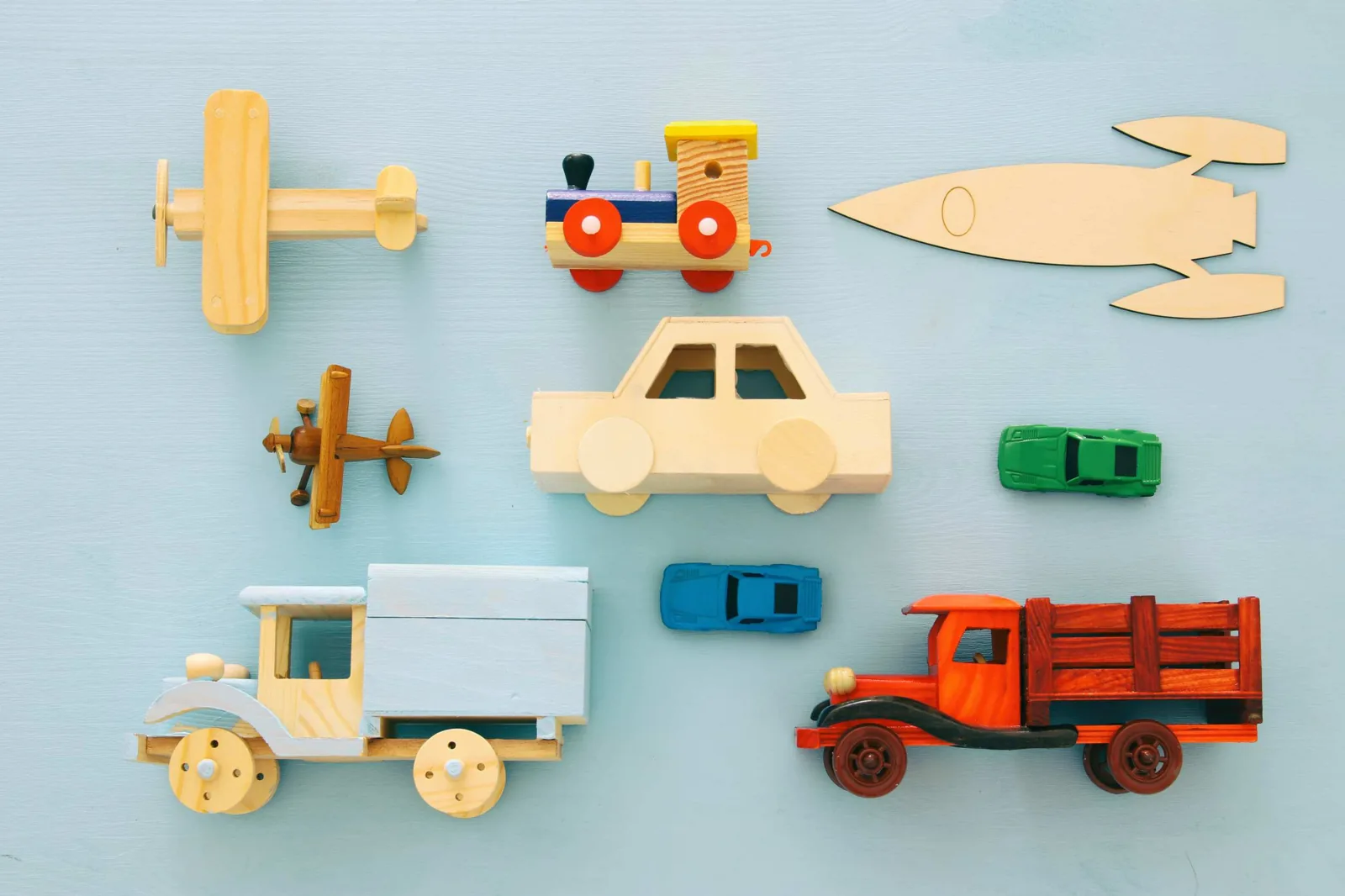
A factory audit can look reassuring while leaving a critical question unanswered: will the same materials, processes and controls be used for your production run? Responsible toy manufacturing in China requires more than reviewing a certificate. You need to understand factory conditions, subcontract...
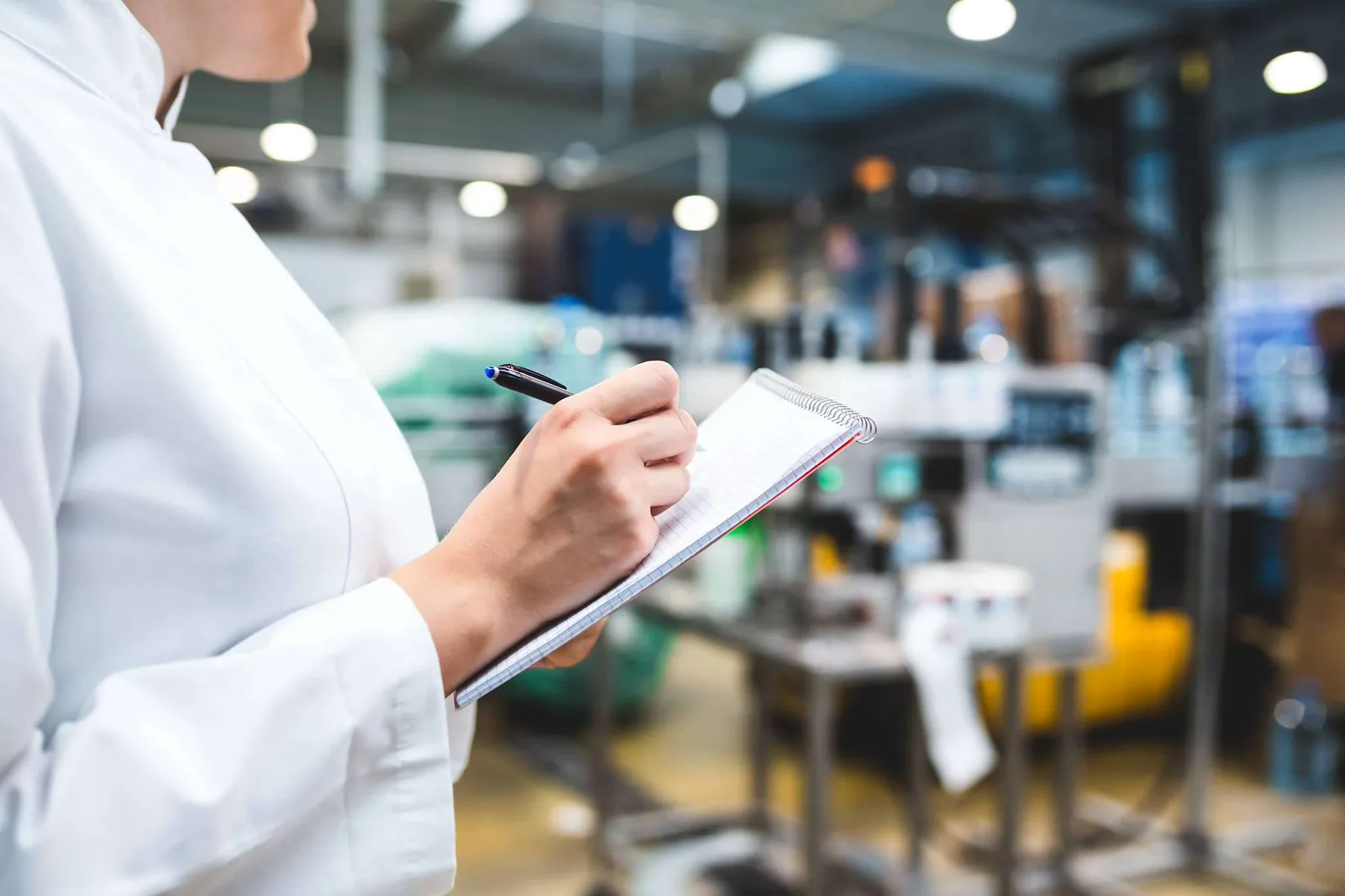
A final inspection can show you what came off the production line, but it can’t change the decisions that shaped it. That’s the key distinction in standalone quality inspections vs procurement services: one checks product output at a defined point, while the other can coordinate work across supplier...