

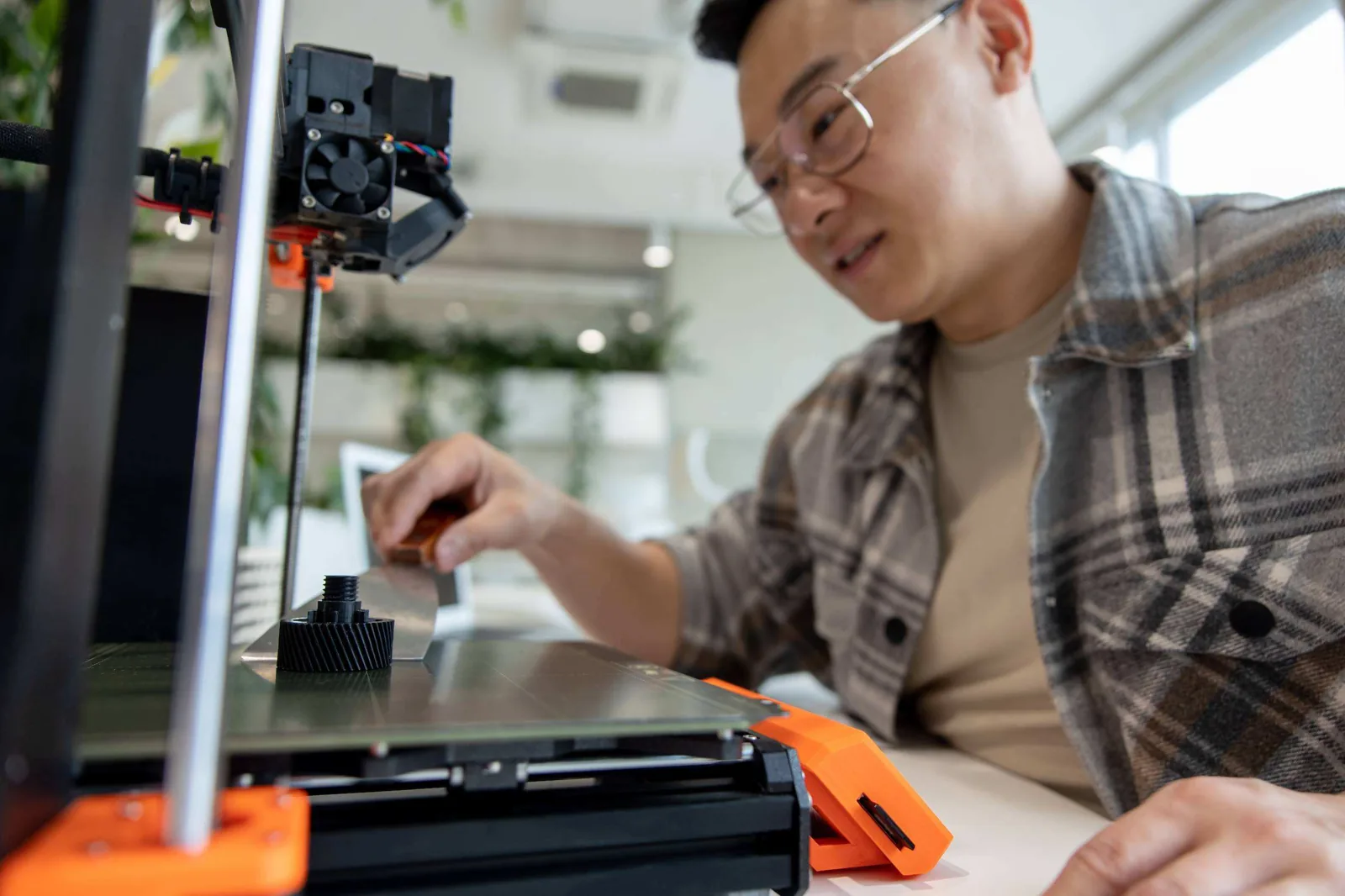
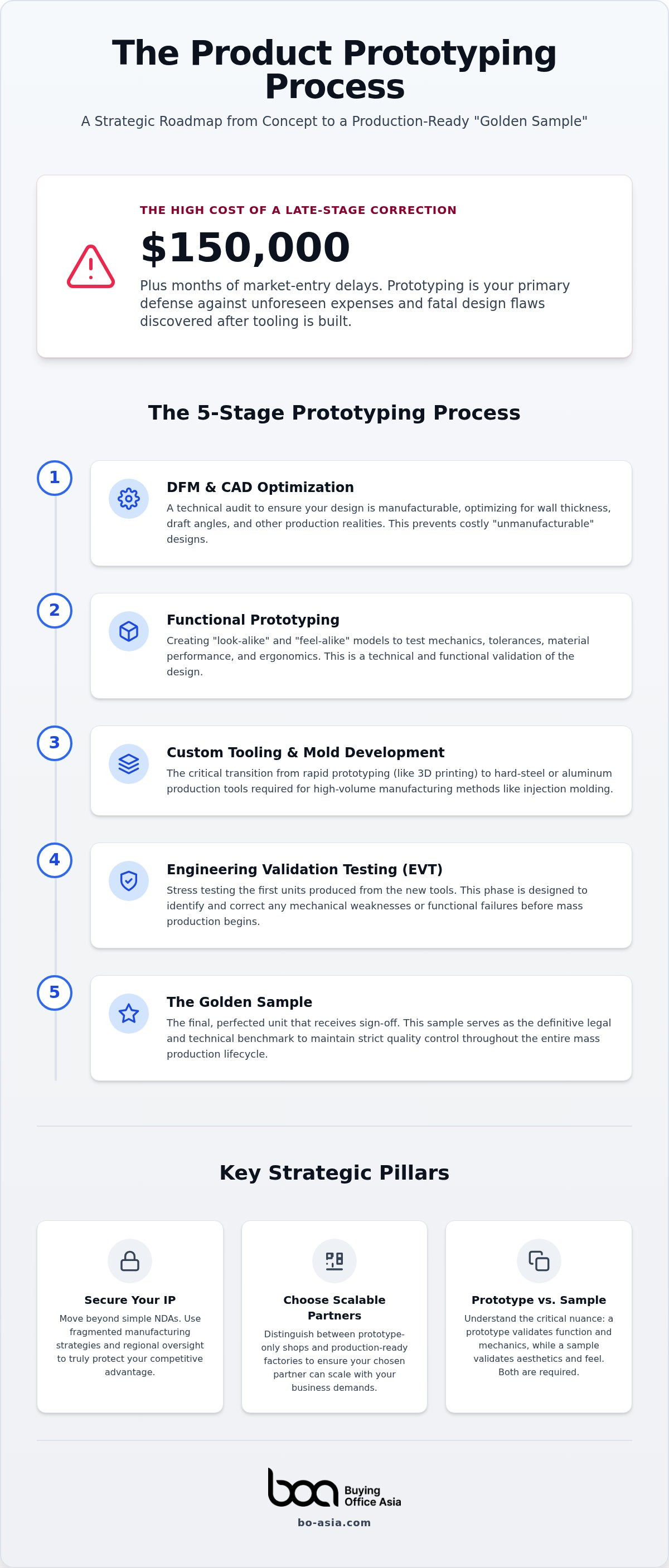
A single design correction discovered after your production tooling is built can cost you up to $150,000 and months of market-entry delays. In the high-stakes environment of 2026, the Product Prototyping Process with Asian Manufacturers is no longer just about seeing if a part fits together; it's a critical stress test for your entire supply chain architecture. You likely understand the anxiety of sending sensitive IP overseas or the frustration of receiving a sample that looks nothing like your vision. These risks are real, but they don't have to be your reality.
We've designed this strategic guide to help you bridge the gap between a conceptual design and a 100% production-ready Golden Sample. You'll learn how to navigate technical hurdles like Design for Manufacturability (DFM) and leverage the latest regional IP protection frameworks to keep your innovations secure. We'll also break down the specific steps to vet manufacturers who can scale with your business while maintaining total cost transparency. By the end of this briefing, you'll have a clear roadmap for managing tooling budgets and timelines with the steady confidence of a seasoned industry insider.
• Master the five stages of the Product Prototyping Process with Asian Manufacturers to bridge the gap between conceptual design and scalable production.
• Implement Design for Manufacturing (DFM) reviews early to prevent late-stage tooling corrections that can lead to significant financial losses and market delays.
• Secure your intellectual property through fragmented manufacturing strategies and regional oversight, moving beyond simple NDAs to protect your competitive advantage.
• Identify the critical differences between prototype-only shops and production-ready factories to ensure your partner is capable of scaling with your business.
• Define a "Golden Sample" as the definitive legal and technical benchmark to maintain strict quality control throughout the entire mass production lifecycle.
Prototyping is the critical bridge that transforms a conceptual CAD file into a scalable, high-yield product. In the Product Prototyping Process with Asian Manufacturers, this phase acts as a financial stress test for your entire business model. It's not merely about seeing a physical object; it's about validating that your design can be manufactured at scale without bankrupting your margins. If you skip this rigor, you risk discovering fatal flaws only after you've committed to thousands of units and expensive tooling. This stage is your primary defense against unforeseen expenses.
Treating this phase as a "supplier vetting" exercise is a hallmark of seasoned insiders. How a factory manages your prototype iterations tells you everything about their technical competence and communication style. If they can't handle a complex CAD revision now, they certainly won't handle a production crisis later. You aren't just buying a model; you're auditing the factory's problem-solving capabilities.
Asia has evolved far beyond the "cheap labor" narrative of previous decades. Today, hubs like China, Vietnam, and India represent an advanced manufacturing ecosystem that integrates rapid prototyping with deep supply chains. For instance, the electronics cluster in Shenzhen allows for 24-hour turnarounds on PCBAs that would take weeks elsewhere. However, this speed requires a nuanced trade-off. Choosing the wrong partner can lead to hidden costs in tooling or IP leaks. Having a local presence in Hong Kong or Helsinki ensures that these regional specializations work for you. Your timeline depends on being physically close to the machines making the parts.
Many procurement teams confuse these terms, which leads to costly misunderstandings at the negotiation table. To understand what is a prototype, you must view it as a functional and technical validation. It's built to test mechanics, tolerances, and material performance under stress. In contrast, a sample is often a visual or aesthetic model used for marketing or final color sign-off. You need both to secure factory-direct pricing. Without a functional prototype, you can't provide the technical specifications required for an accurate quote. Without a sample, you leave the "look and feel" to the factory's imagination. Mastering the Product Prototyping Process with Asian Manufacturers requires you to separate these two outputs to maintain control over your budget.
Execution is where most product launches succeed or fail. The Product Prototyping Process with Asian Manufacturers follows a rigorous, non-linear path designed to eliminate technical debt before you commit to high-volume production. This sequence isn't just a checklist; it's a strategic defense against manufacturing defects and financial waste. By moving through these five stages, you ensure that every dollar spent on development directly contributes to a stable, profitable final product.
This is the technical audit of your design.
Creating "look-alike" and "feel-alike" models to test ergonomics and assembly.
The transition from 3D printing to hard-steel or aluminum production tools.
Stress testing the first units off the tools to identify mechanical weaknesses.
The final specification sign-off that serves as the legal benchmark for mass production.
Your initial CAD files are often designed for aesthetics, not for the reality of the factory floor. Many designs are "unmanufacturable" because they ignore wall thickness requirements or draft angles necessary for injection molding. A comprehensive Bill of Materials (BOM) is essential here to secure accurate quotes and prevent price creep later. Design for Manufacturing (DFM) is the process of optimizing a product design for efficient, high-volume production. Sharing these files requires a strategy for mitigating IP risks, ensuring your innovation remains your own while the factory optimizes it for the machines.
Tooling is the most significant upfront cost in OEM manufacturing. You cannot skip this stage if you intend to achieve professional-grade tolerances and surface finishes. To protect your capital, you must explicitly negotiate tooling ownership in your contract. This ensures you can move your molds if the factory fails to meet quality standards. Reducing lead times requires a "T0 to T1" sampling strategy where iterations are handled on-site to avoid shipping delays. If you need an on-the-ground team to oversee these technical milestones, reach out to our Hong Kong office for a professional briefing.
Mastering the Product Prototyping Process with Asian Manufacturers requires a balance of technical rigor and legal protection. When you validate your engineering through EVT and iteration, you eliminate the "guesswork" that plagues unmanaged supply chains. The result is a Golden Sample that isn't just a pretty model, but a blueprint for a successful market entry.
Intellectual property protection is a primary concern for any business entering the Product Prototyping Process with Asian Manufacturers. Relying solely on a Non-Disclosure Agreement (NDA) is a strategy destined for failure. In many regional jurisdictions, a paper contract is difficult to enforce once a design has already been leaked. You need a proactive, operational defense that makes theft technically difficult rather than just legally prohibited. We view IP security as a foundational component of your financial viability.
One of the most effective methods for securing your "secret sauce" is fragmented manufacturing. By splitting your product into separate sub-assemblies and using different factories for each, no single supplier possesses the complete blueprint of your innovation. You only bring these components together at a final assembly point that you have personally vetted or managed. This seasoned insider approach ensures that your competitive advantage remains entirely within your control.
Design for Manufacturing (DFM) is equally critical for risk management. If you ignore DFM during the prototyping phase, you're likely to face defect rates of 30% or higher during mass production. These aren't just technical errors; they're financial liabilities that can drain your capital through rework and returns. Addressing these risks early is the only way to guarantee a seamless transition to high-volume output.
Never send your final assembly CAD to a single unvetted factory. This is the surest way to invite clones into the market before your official launch. On-site audits are the only reliable way to verify that a factory actually follows IP security protocols, such as restricted access to prototyping rooms and secure data handling. For a deeper dive into how to evaluate these facilities and their internal controls, see our guide on Supplier Vetting in Asia.
Material substitution is a hidden risk that often surfaces during the sampling phase. Factories may try to "optimize" costs by swapping your specified materials for cheaper alternatives without your consent. If you don't catch this now, your product's durability will suffer in the field. Tolerance analysis is also vital during custom product development to ensure that parts from different molds fit together perfectly every time. DFM is a defense against the operational setbacks that affect unmanaged supply chains. A seasoned insider doesn't just look at the machinery; they look at the factory's management culture and their willingness to provide raw material certifications without hesitation. This level of scrutiny prevents the "quality fade" that often occurs when oversight is removed.
Digital ratings and "Gold Supplier" badges on platforms like Alibaba are often mere marketing facades that obscure the actual capabilities of a facility. When you begin the Product Prototyping Process with Asian Manufacturers, you must distinguish between a dedicated prototype shop and a production-ready factory. A prototype shop excels at creating one-off models using 3D printing or CNC machining, but they often lack the industrial machinery and quality systems required for high-volume output. If your partner cannot scale, you'll be forced to restart the entire engineering process when you transition to mass production.
For those in specialized fields like medical technology, engaging a sophisticated partner like Fong’s Engineering & Manufacturing Private Limited ensures that your prototyping phase accounts for the stringent manufacturing requirements of a medical-grade device from the start.
Red flags during the initial Request for Quote (RFQ) process are usually subtle. If a factory provides a quote without asking for your tolerance requirements or material certifications, they're likely guessing at the cost. Vague timelines and a refusal to show the actual production line via video or on-site audit are clear indicators of a trading company posing as a manufacturer. A dedicated Asia procurement team removes this ambiguity by performing physical inspections to verify that the machines on the floor match the promises in the sales deck.
Test a factory's engineering depth by presenting a specific technical challenge before you sign a contract. Ask how they intend to manage a complex draft angle or a specific thermal requirement. Their response will reveal if they have internal engineers or if they're outsourcing the technical work. We utilize a "Communication Stress Test" to assess responsiveness and clarity under pressure. Bridging the gap between Western design expectations and Asian manufacturing realities requires the steady oversight of European leadership. Our Helsinki office provides the strategic management and accountability that local factories often struggle to maintain on their own.
Traditional sourcing agents often operate on a commission-based model that incentivizes them to hide the manufacturer's identity and inflate costs through hidden markups. This lack of transparency is a major risk to your financial health. We explicitly reject this intermediary model in favor of a fee-based service that aligns our interests with yours. This structure ensures you have factory-direct communication and full visibility into the actual cost of materials and labor. Verifying a manufacturer's physical location versus their trading office is a non-negotiable step in securing your supply chain. If you're ready to move beyond unmanaged sourcing and secure a transparent partnership, book a consultation with our procurement experts today.
The final sign-off is the moment your Product Prototyping Process with Asian Manufacturers transitions from an engineering exercise into a commercial reality. This isn't just about approving a pretty model; it's about establishing a legally binding standard for every unit that follows. The "Golden Sample" serves as the definitive reference point. If the mass-produced goods deviate from this sample, you have the contractual leverage to demand rework or refuse payment. Without this physical benchmark, quality control becomes a subjective argument you're likely to lose.
Scaling from a few hundred pieces to a run of 100,000 requires a shift in mindset. You're no longer testing the design; you're testing the factory's ability to replicate that design with surgical precision. This transition phase is where unmanaged supply chains often collapse under the weight of "quality fade." We prevent this by embedding our team directly into the factory's workflow during the most vulnerable stages of the launch. Our presence ensures that the technical rigor maintained during the Product Prototyping Process with Asian Manufacturers isn't abandoned once the machines start running at full capacity.
A robust QMS uses the data gathered during prototype iterations to create "limit samples." These are physical examples that define the absolute boundaries of acceptable variation for QC inspectors. For example, you might provide samples showing the maximum allowable surface blemish or the specific color variance that is still within tolerance. Performing on-site inspections during the first 10% of the production run is non-negotiable. This allows you to catch systemic errors before the entire batch is completed. For a comprehensive look at managing these operational details, read our guide on Mastering Sourcing and Procurement in Asia.
Your packaging prototype is just as critical as the product itself. Inadequate packaging leads to transit damage that can wipe out your margins before the goods even reach your warehouse. We use the final prototype's weight and volume to calculate your precise landed cost, ensuring no surprises in your financial modeling. Scaling with confidence means having a partner who manages the technical hand-off from engineering to the shipping dock. If you're ready to secure your next market launch, partner with Buying Office Asia for your next custom product development project. We provide the regional presence and European oversight needed to move from design to mass production without sacrificing your brand's integrity.
The Product Prototyping Process with Asian Manufacturers is the most critical phase for protecting your capital and your brand's reputation. By implementing rigorous Design for Manufacturing (DFM) checkpoints and securing a definitive Golden Sample, you eliminate the technical ambiguity that leads to costly production errors. Success in 2026 requires more than just a digital connection; it demands the physical accountability of a seasoned insider who understands the regional nuances of the supply chain. We've seen that those who prioritize technical validation early are the ones who scale without friction.
We provide the stabilizing force your business needs through European-managed oversight from our Helsinki office and a dedicated on-the-ground presence in Hong Kong. Our 100% factory-direct transparency model ensures that you remain at the center of every negotiation and technical iteration. Don't leave your innovation to chance or settle for the obscured costs of traditional intermediaries. You deserve a partner who acts as an integrated extension of your own team.
Get a Transparent Quote for Your Prototyping Project and take the first step toward a seamless, risk-managed market entry. Your vision deserves the security and precision of a professional partnership.
The cost of a prototype depends on material selection, mechanical complexity, and whether you require custom tooling or simple CNC machining. While industry averages vary widely based on the product category, your primary focus should be on the total cost of ownership, which includes Design for Manufacturing (DFM) reviews to prevent expensive production errors. Investing in high-quality functional models early protects your capital by identifying flaws before you commit to mass production molds.
The Product Prototyping Process with Asian Manufacturers can reduce development timelines by 30% to 50% compared to other global regions due to the density of the local supply chain. A simple functional model might take two weeks, while complex assemblies requiring custom tooling can take several months. Having an on-the-ground team in Hong Kong allows you to manage these iterations in real-time, cutting down the transit delays that often plague unmanaged projects.
Safety depends entirely on your operational security protocols and the vetting of your partners. While the ASEAN Intellectual Property Rights Action Plan 2026–2030 has strengthened regional legal frameworks, a "seasoned insider" relies on physical oversight rather than just contracts. We recommend fragmented manufacturing and on-site audits to ensure your sensitive CAD files aren't accessible to unauthorized personnel or unvetted sub-suppliers.
A prototype is a technical tool used to validate functionality, tolerances, and engineering assumptions during the development phase. In contrast, a pre-production sample is the final aesthetic and functional model used for a visual sign-off before the machines start running. You need the prototype to solve engineering problems and the sample to establish the "Golden Sample" benchmark for your quality control team.
3D printing is excellent for validating form and fit, but it doesn't replicate the material properties or structural integrity of injection-molded parts. You cannot rely on a printed model to test how a product will perform under the heat and pressure of actual use. Transitioning to a functional prototype made from production-grade materials is a mandatory step for any project intended for high-volume scaling.
Protecting your IP during the Product Prototyping Process with Asian Manufacturers requires a strategy of fragmented manufacturing. By using separate factories for different sub-assemblies, you ensure no single supplier has the complete design for your finished product. Combining this with regular on-site inspections from a dedicated procurement team creates a defensive barrier that paper-based NDAs simply cannot provide.
If a factory fails to meet specifications, you must have a clear technical roadmap for iterations and a contract that defines acceptable tolerances. This is why the "Golden Sample" is vital; it acts as your legal protection if the mass-produced goods don't match the approved prototype. We manage these disputes by being physically present at the facility to identify exactly where the manufacturing process deviated from the engineering files.
You don't need to fly to Asia personally if you have a trusted, European-managed team on the ground to act as your eyes and ears. We provide the regional presence and technical expertise needed to oversee CAD reviews and tooling development from our Hong Kong and Helsinki offices. This allows you to maintain total control and transparency over the project without the expense and logistical burden of international travel.
What if the first clear sign of a production problem arrives after the goods are packed? Manufacturing risk management in Asia works best when controls are connected from the start, not left to a final inspection or occasional supplier update. You need visibility into factory activity, early warning...

What if the lowest unit quote isn’t the lowest-cost way to make your board game? Board game manufacturing costs depend on more than the number of boxes ordered. Component materials, custom tooling, assembly, packaging and delivery scope can all change what a quote covers, making headline prices diff...

What if the factory’s lowest quote isn’t the lowest-cost option? A lower unit price can hide differences in materials, tooling, packaging, quality checks or production terms. Understanding how sourcing agents negotiate factory prices starts with making those differences visible, not simply asking a...